
_-_Flickr_-_dalbera.jpg)


.jpg)

1 min walk · Paris 8e Arrondissement
Maxim's
- High · Heritage site
- Restaurant or café
Language · 1 published
Historic monument · Paris 8e Arrondissement, Paris
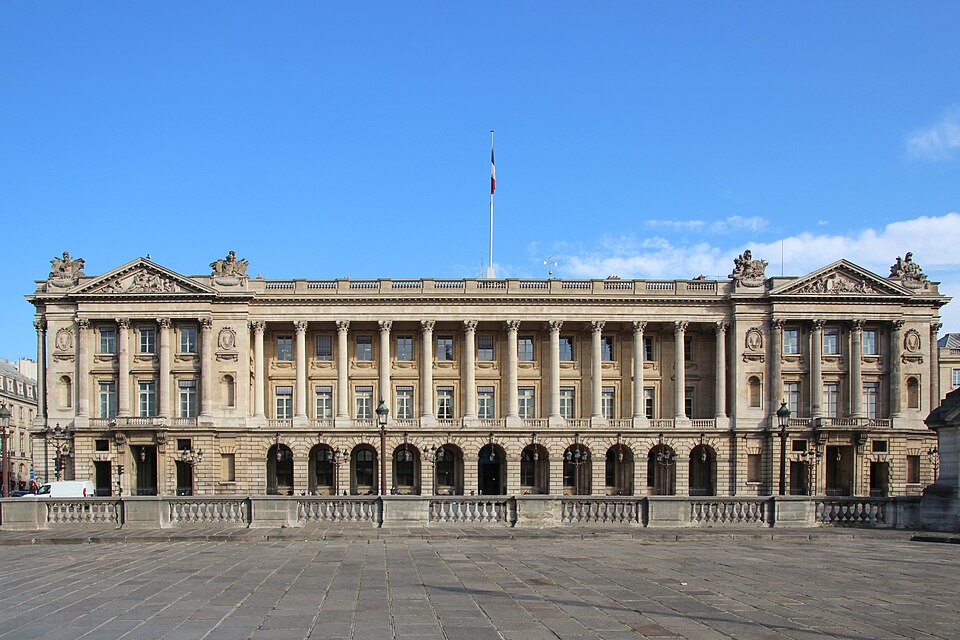
Hôtel de la Marine is a paid-ticket monument on Place de la Concorde, one of a matching pair of colonnaded palaces — its twin across the square today houses the Hôtel de Crillon — built between 1758 and 1774 to designs by Ange-Jacques Gabriel, the king's chief architect, as part of his wider design for the square itself. It opened as the Garde-Meuble de la Couronne, the royal storehouse and display rooms for the crown's furniture, tapestries and jewels, including the French crown jewels, and the ground-floor rooms were arranged so the public could view selected pieces of the collection even under the old regime.
In September 1792, during the Revolution, the building was broken into over several nights and much of the crown jewel collection was stolen, a theft historians link to the later trail of the Hope Diamond's ancestor stone, the French Blue, which vanished in the robbery and resurfaced decades later cut into a different shape. From 1789 until 2015 the building served as headquarters of the French Navy, which is where its name comes from, and generations of French naval administration passed through its rooms even as their original eighteenth-century decoration survived underneath later office use.
The Centre des Monuments Nationaux restored the eighteenth-century state rooms and reopened the building to the public in 2021, an unusually long and detailed restoration project that drew on the Garde-Meuble's own eighteenth-century inventories to reconstruct rooms whose original furniture had been dispersed for over two centuries.
Checked 2026-08-24 · Source
The restored apartments of the Intendant du Garde-Meuble — the official who oversaw the royal furniture collection — are furnished and decorated as close to their eighteenth-century state as the restoration could establish, room by room, with an audio guide included in the ticket that walks through the sequence of salons, dining rooms and private apartments in the order they were originally used. A loggia terrace runs along the Place de la Concorde side of the building, open to visitors as part of the route, and offers a view over the square that was designed as part of the same eighteenth-century plan as the building itself.
A separate wing holds rotating exhibitions from the Al Thani Collection, assembled by Sheikh Hamad bin Abdullah Al Thani, shown under a long-term arrangement with the monument and changing periodically rather than forming a fixed permanent display.
Checked 2026-08-24 · Source

Around ninety minutes to two hours for the state apartments with the included audio guide, plus another forty-five minutes if the Al Thani Collection galleries are part of the visit, and travellers pressed for time can skip the loggia terrace and still see the core apartments in under an hour.
Checked 2026-08-24 · Source

Weekday mornings run quieter than weekend afternoons. Because entry is by timed slot, the time of day matters less than booking ahead of the date itself, and the busiest slots tend to sell out first, well before the day of the visit itself.
Checked 2026-08-24 · Source
Paid entry, with an audio guide included in the state-apartments ticket; the Al Thani Collection can be a separate or combined ticket depending on the current exhibition. Current rates are not published on the sources this page uses and are not reproduced here.
Checked 2026-08-24 · Source
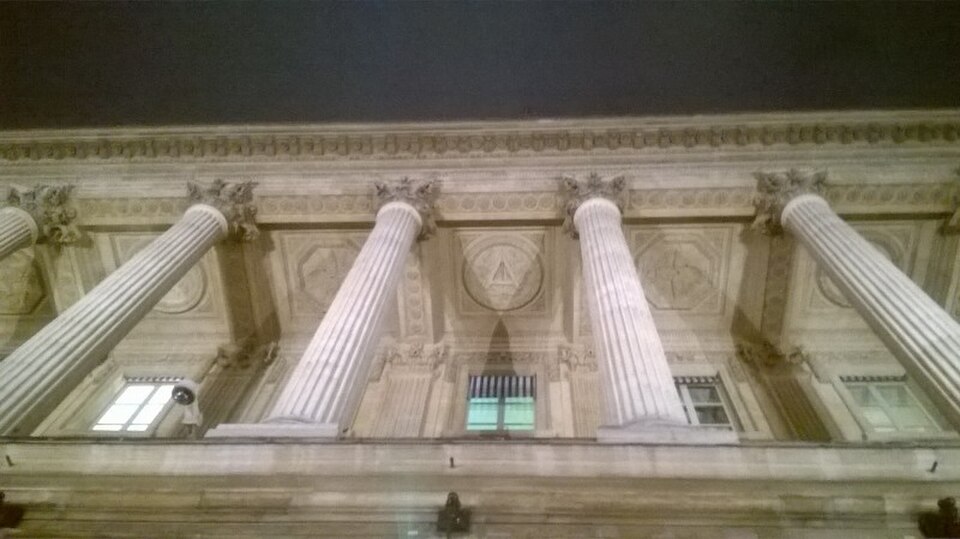
On Place de la Concorde. Métro Concorde, served by lines 1, 8 and 12, sits at the edge of the square, and the walk from the station across the square to the building's colonnade takes only a few minutes on foot. The square itself carries heavy traffic on all sides, so crossing to the entrance means using the marked pedestrian crossings rather than cutting directly across the roadway.
Checked 2026-08-24 · Source
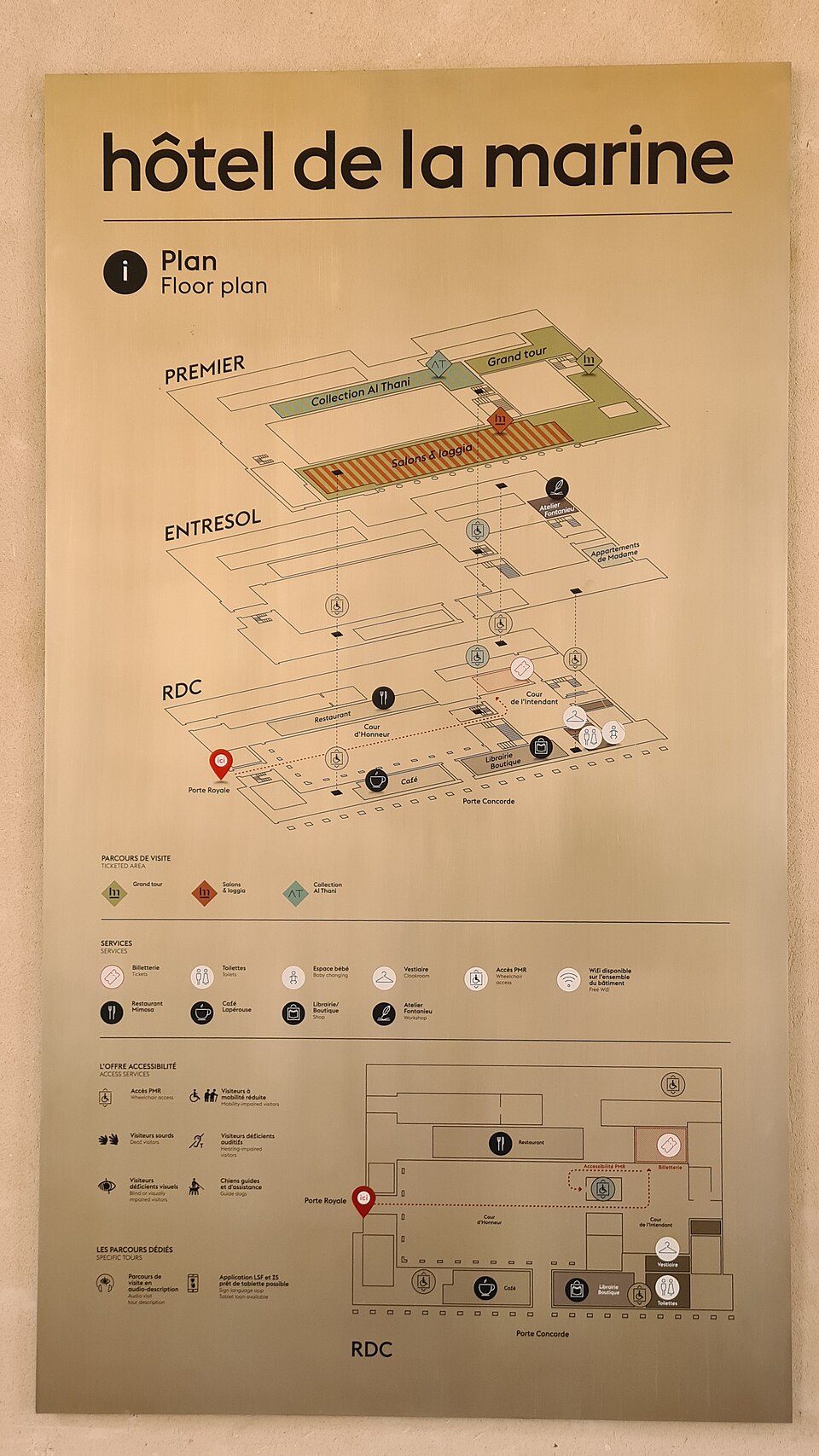
Entry is by timed slot booked in advance; turning up without a booking risks a wait or a sold-out day, especially in high season and around French public holidays. The loggia terrace is outdoors and its opening can depend on weather, so a wet day may mean that part of the route is closed. Some rooms are periodically closed in rotation for conservation work, which is standard practice for a restoration this recent and this detailed.
Checked 2026-08-24 · Source
The loggia terrace looking out over Place de la Concorde and the obelisk is the signature shot from inside the building, especially in the late afternoon when the light rakes across the square. Photography without flash is generally allowed through the state apartments; some Al Thani Collection galleries restrict it further to protect the objects on loan, so a visitor planning to photograph the whole visit should expect a mix of rules from room to room rather than one blanket policy.
Checked 2026-08-24 · Source
No — it is a paid monument with timed entry, not a free public building.
They were built as an architecturally matching pair by the same royal architect; the Crillon has been a hotel since the late eighteenth century, while the Marine building was the royal furniture store and later Navy headquarters, now a museum.
Much of the collection was stolen in a break-in during September 1792, in the middle of the Revolution.
No, the Navy moved its headquarters out in 2015, which is what made the restoration and public opening possible.
Yes, for the state apartments route.
Not recorded on the sources this page uses.
Loading the interactive map…
The interactive map could not be loaded.
Last updated:
Source: OpenStreetMap contributors, Wikidata ·