
.jpg)
.jpg)


1 min walk · Paris 8e Arrondissement
Buddha Bar
- High
- Restaurant or café
Language · 1 published
Historic monument · Paris 8e Arrondissement, Paris
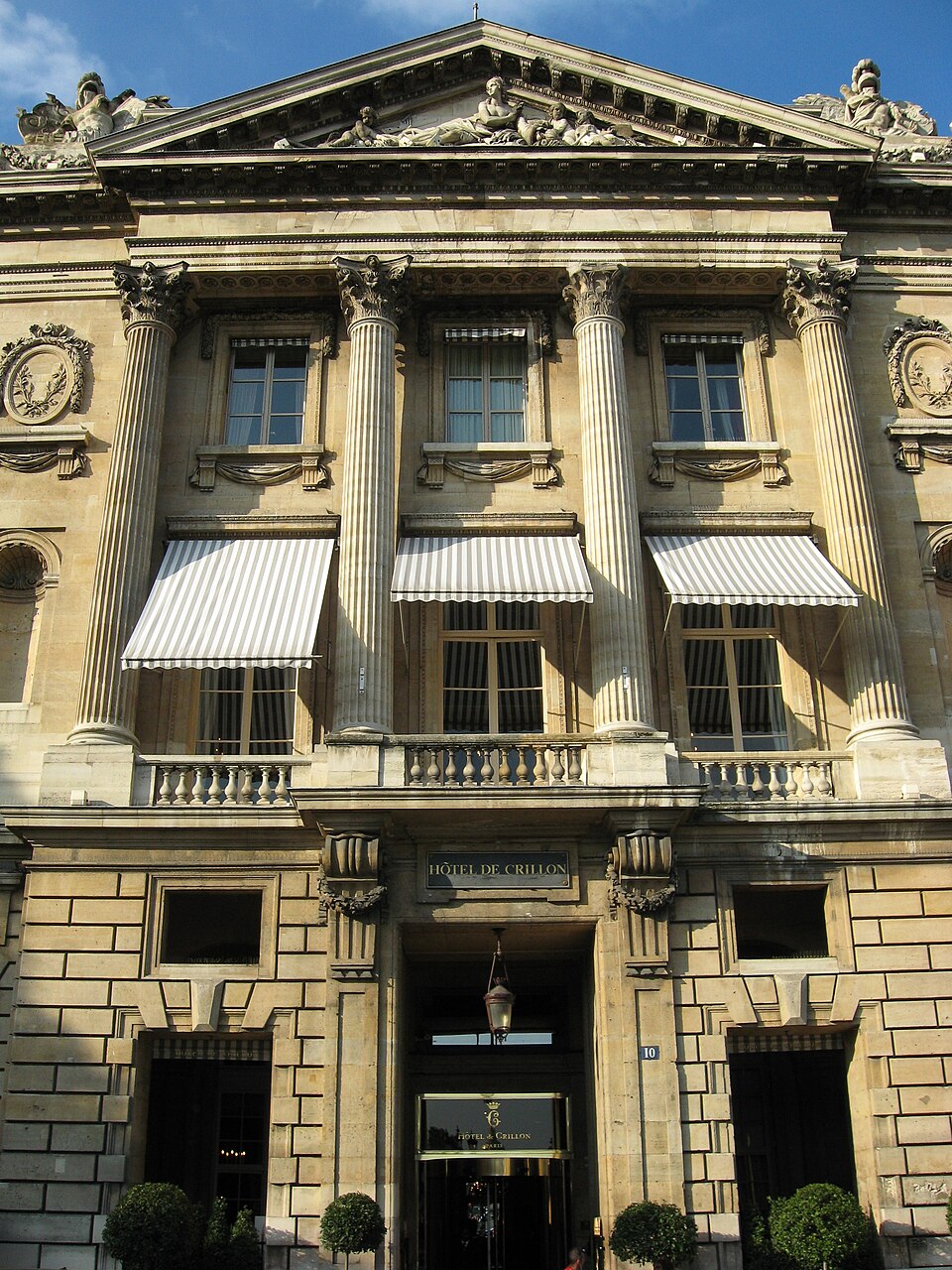
Hotel de Crillon opened as a hotel in 1909, but the building itself is a 1758 royal commission: Louis XV had Ange-Jacques Gabriel build two identical stone palaces flanking the Rue Royale on the new Place de la Concorde, and the western one became the Crillon.
The Cite family that gave the building its name, headed by Francois Felix de Crillon, bought it in 1788 and lost it to confiscation during the Revolution three years later; Louis XVI and Marie Antoinette used it before their execution on the square in front of it in 1793. The Crillon family got the building back and kept it until 1904, when the Societe du Louvre bought it and converted it into a hotel, opening on 11 March 1909.
A full renovation ran from 2013 to 2017, led by designer Aline d'Amman with Karl Lagerfeld designing its most expensive suites, and Rosewood has managed the property since it reopened on 5 July 2017.
Checked 2026-08-24 · Source
78 guest rooms and 46 suites sit behind the eighteenth-century facade, mixing the protected landmark rooms — the grand staircase, the Salon des Aigles built in 1775 — with the 2017 interiors. Three restaurants, a bar and a health club with a pool fill the ground floor and basement.
On 6 February 1778, in a room inside this building, Benjamin Franklin and Silas Deane signed the treaties that recognised American independence and opened a trade agreement between France and the newly declared United States — one of the few Paris buildings that hosted an actual founding document rather than a plaque about one.
From 1992 to 2012 the hotel hosted the Bal des Debutantes, an annual formalwear event that Forbes named one of the world's ten best parties in 2005, and its guest register over the decades runs from Theodore Roosevelt and Winston Churchill to Madonna and Taylor Swift. Ernest Hemingway used the hotel's lobby as a setting in The Sun Also Rises, and George Orwell's Down and Out in Paris and London describes his time working as a dishwasher in one of its kitchens under a fictionalised name.
Checked 2026-08-24 · Source
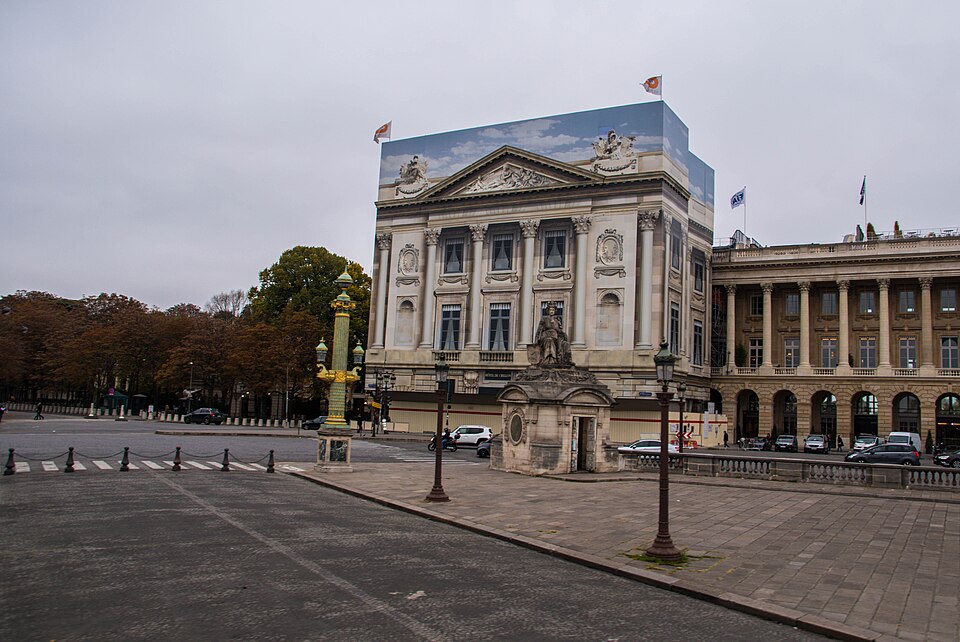
There is no ticketed visit; the honest answer is however long a coffee or a drink takes, since the interior is only open to guests and to patrons of the bar and restaurants. Twenty to forty-five minutes for a drink at the bar, longer for a meal.
The exterior facade on Place de la Concorde takes five minutes to see properly, paired with its twin, the Hotel de la Marine, across the Rue Royale.
Checked 2026-08-24 · Source

The bar and restaurants keep normal Paris service hours and get busiest at lunch and from early evening; a mid-afternoon visit finds the lobby quietest.
The facade is lit at night and reads well from across the square after dark, when traffic on the Place de la Concorde thins out.
Checked 2026-08-24 · Source
There is no admission ticket. This is a working luxury hotel, not a museum: entry to the lobby, bar and restaurants is free to paying customers, and room rates are set and published by the hotel itself, not researched here as a fixed price — they vary by date and season on Rosewood's own booking site.
Checked 2026-08-24 · Source
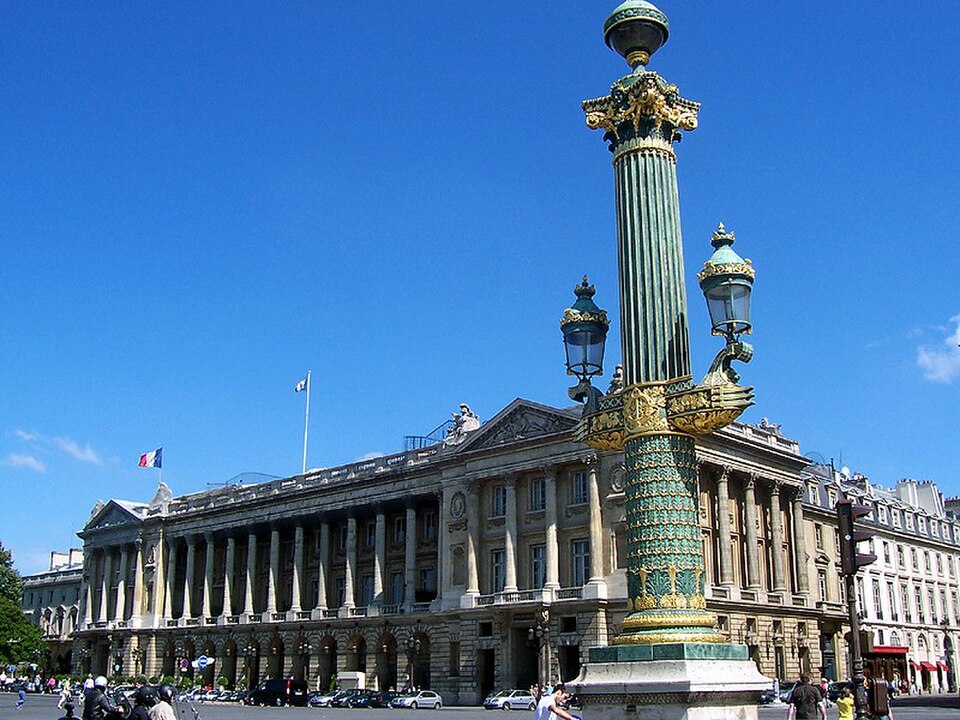
10 Place de la Concorde, 8th arrondissement, at the western corner of the square facing the Rue Royale.
Concorde station, lines 1, 8 and 12, sits directly beneath the square and is the closest stop; the walk across the Place de la Concorde from any exit takes about five minutes.
Checked 2026-08-24 · Source
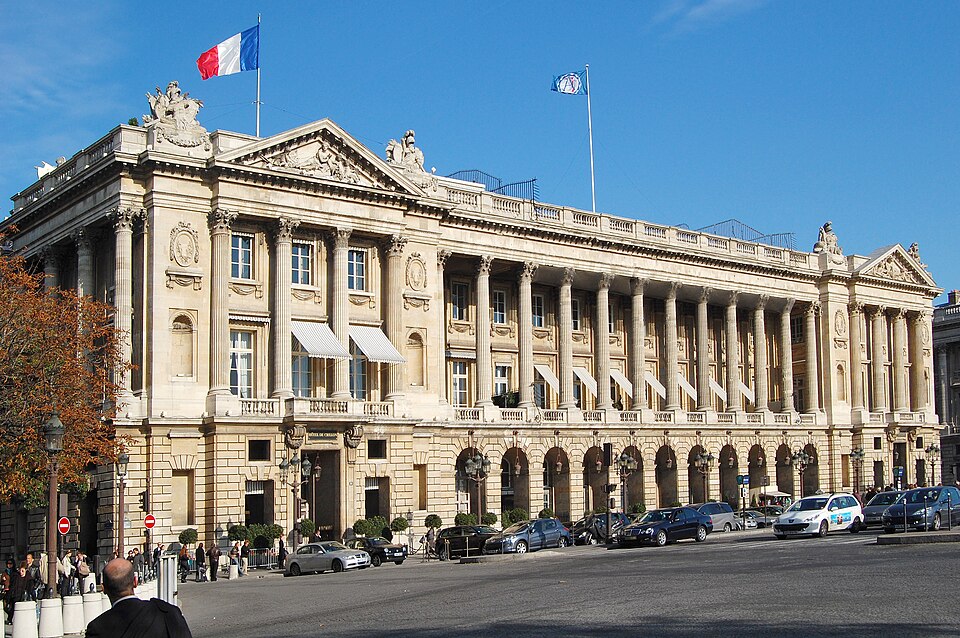
The interior is a working hotel: a doorman turns away anyone without a reservation or a clear reason to be at the bar or restaurant, particularly at busy service times, so this is not a walk-in sightseeing stop the way a museum is.
Smart-casual dress is expected in the bar and restaurants; beachwear, gym clothes or flip-flops will get a polite refusal at the door.
Checked 2026-08-24 · Source

The facade from across Place de la Concorde, with the Luxor Obelisk in the same frame, is the standard shot and works in daylight or after dark once the building is lit.
Photography inside the lobby and public rooms is generally tolerated for guests and patrons but discouraged of other guests without asking; there is no formal photography policy published by the hotel.
Checked 2026-08-24 · Source
Only as a paying guest, or a customer of its bar or restaurants; it is a working hotel, not a museum.
The building dates to 1758, commissioned by Louis XV; it became a hotel only in 1909.
Benjamin Franklin and Silas Deane signed the treaties recognising American independence in a room in this building, on 6 February 1778.
It was built as one of a matched pair of state buildings either side of the Rue Royale; the eastern twin is the Hotel de la Marine, former headquarters of the French Navy.
Concorde, on lines 1, 8 and 12, directly beneath the square the hotel faces.
Loading the interactive map…
The interactive map could not be loaded.
Last updated:
Source: OpenStreetMap contributors, Wikidata ·