The Louvre Pyramid is the glass entrance structure built in the museum's main courtyard in the 1980s, and it is a part of the Louvre — its main entrance and one of the more argued-over additions to central Paris — rather than a separate attraction in its own right.
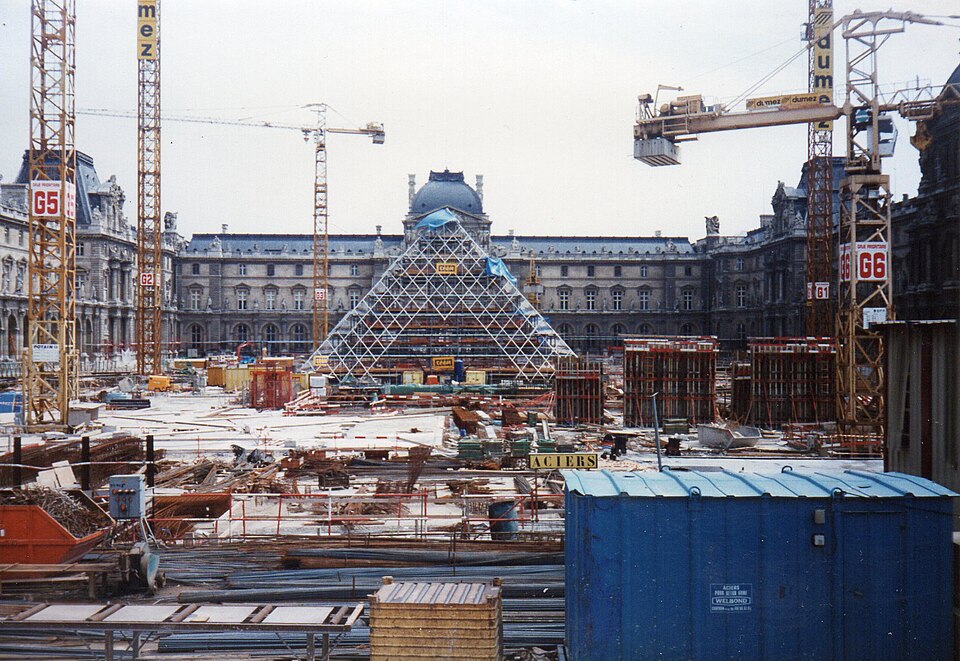
President François Mitterrand commissioned the Grand Louvre renovation to modernise a museum that had outgrown its 19th-century entrances, and chose the Chinese-American architect I. M. Pei to design the new entrance. Pei's glass-and-metal pyramid, standing over a new underground lobby that unified the museum's previously separate entrances, was completed in 1989.
The design provoked strong objections at the time — a modern glass structure set into the courtyard of a Renaissance and Baroque royal palace — much as the Eiffel Tower had a century earlier, and much like the tower it has since become one of the most photographed structures in Paris.
A 21.65 m glass pyramid over an underground lobby (the Hall Napoléon) that is the Louvre's central entrance and orientation point, not a gallery in itself.
Below the pyramid, the Hall Napoléon holds the ticket desks, information points, cloakroom and the three routes into the museum's three wings — Denon, Sully and Richelieu — making it the point almost every visitor to the Louvre passes through rather than a destination on its own. An inverted smaller pyramid, visible from inside the underground Carrousel du Louvre shopping level nearby, is a distinct, separate structure often confused with the main one.
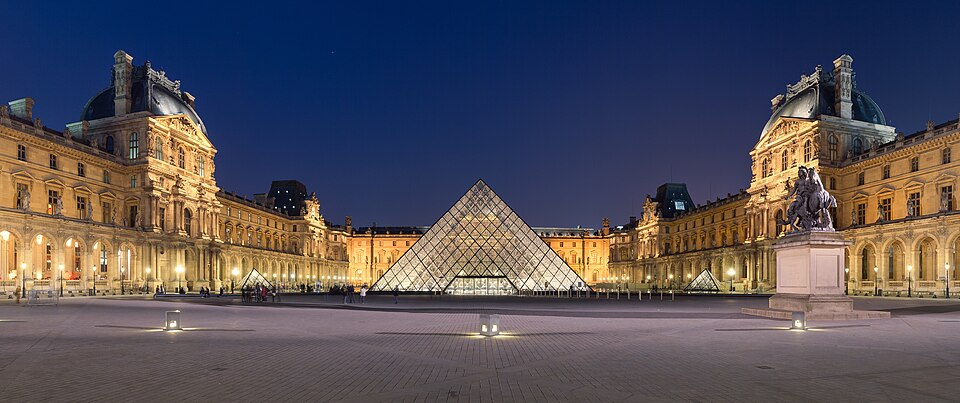
The pyramid sits in the Cour Napoléon, the Louvre's main courtyard, flanked by three smaller pyramids that light secondary stairwells, with the museum's wings enclosing the courtyard on three sides.
A few minutes to see and photograph the pyramid itself; the queue to enter through it is the real time cost, and the Louvre behind it is a half-day museum on its own.
The pyramid entrance can see long queues at peak times, since it is the main entrance point for a museum that draws some of the highest visitor numbers of any in the world; the underground Carrousel du Louvre entrance and timed online tickets both offer ways to reach the Hall Napoléon with less waiting.
Once inside, the pyramid itself is left behind — a visitor heads into the Denon, Sully or Richelieu wing for the collection, which is the Louvre's own subject rather than this structure's.
Early morning or the last entry slot of the day, both for the pyramid's queue and for the light it is photographed in.
The pyramid catches the low sun cleanly at both ends of the day, throwing long reflections across the courtyard's paving that midday sun does not produce. Evening, after the museum's late-opening days, sees the glass lit from within against a darkening sky, a different and popular version of the same shot.
Because the pyramid is the main entrance to one of the busiest museums on earth, its queue follows the museum's own opening hours and crowd pattern rather than having a separate schedule of its own.
The pyramid is not itself ticketed — it is a passage into the Louvre, and entry to the museum is what is ticketed. The figure shown on the museum's own page is the one currently published.
Timed online tickets to the museum, booked in advance, let a visitor go straight to security at the pyramid entrance rather than queueing to buy on the day.
The Paris Museum Pass covers the Louvre and is worth weighing against how many other collections are on a given route.
The Cour Napoléon, in the centre of the Louvre complex, on the Right Bank in the 1st arrondissement.
Palais-Royal–Musée du Louvre, served by Métro lines 1 and 7, opens directly into the underground Carrousel du Louvre shopping level, which connects straight through to the pyramid's Hall Napoléon without going back outside — often the faster route in on a wet or crowded day. The above-ground entrance through the pyramid itself is reached on foot from the Cour Napoléon.
The Tuileries Garden extends west from the Cour Napoléon toward Place de la Concorde, making the pyramid a natural start or end point for a walk along that axis.
The main pyramid entrance draws the longest queue of the Louvre's several entry points, and the underground Carrousel entrance or a pre-booked timed ticket both bypass much of it — worth knowing before joining the line at the glass itself out of habit.
Security screening at the pyramid entrance is standard airport-style, with bag checks that add time on the busiest days.
The pyramid is often confused with the smaller inverted pyramid inside the Carrousel du Louvre shopping level nearby; they are two distinct structures and only the main above-ground pyramid is the museum's principal entrance.
The pyramid framed by the Louvre's surrounding wings, shot from the far side of the courtyard with the whole Cour Napoléon in the same frame, is the standard wide shot and works well at both sunrise and sunset.
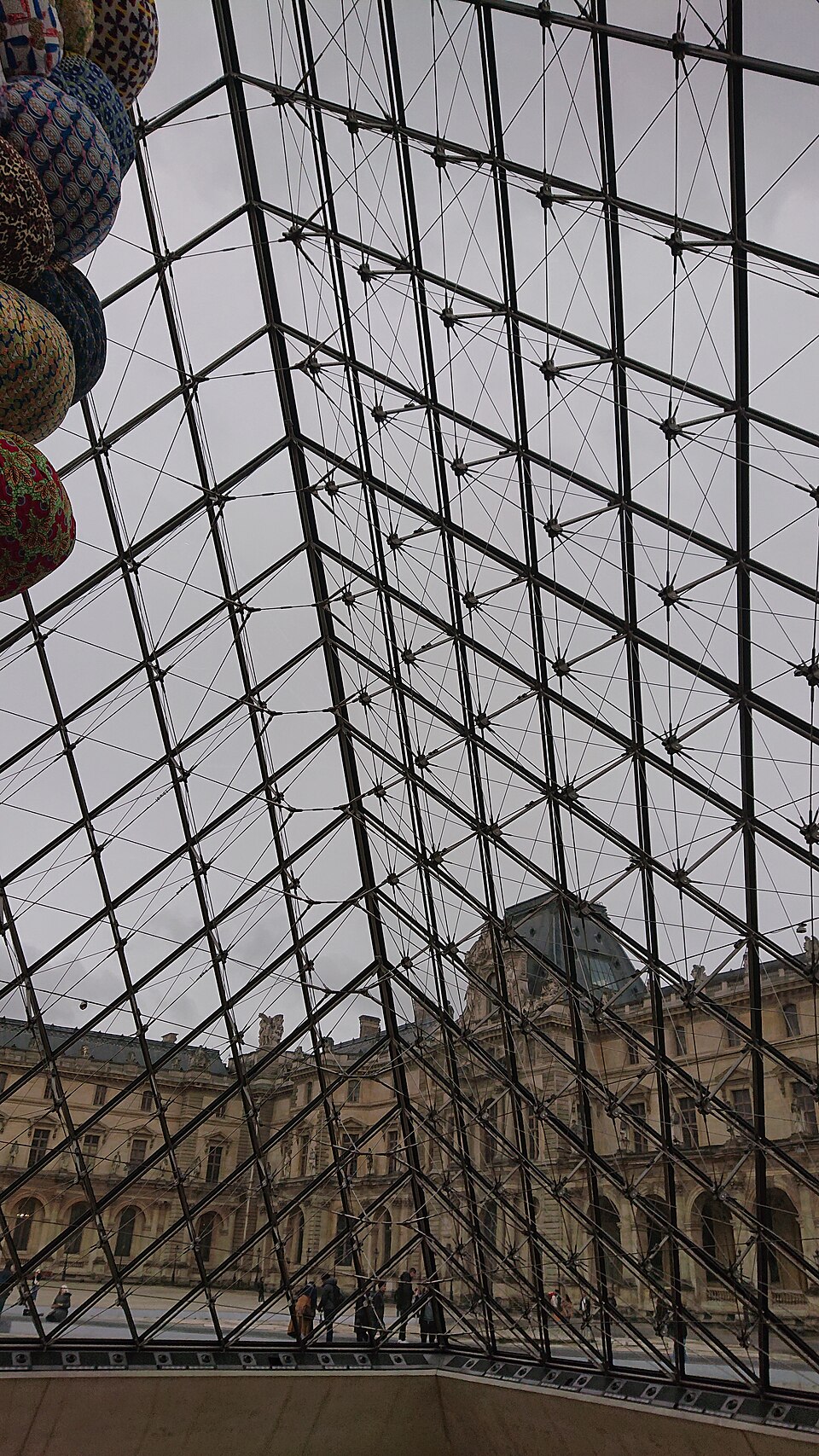
Reflections in the glass panes, especially of the surrounding palace facades, make close-up angles at the pyramid's base a different and often more distinctive image than the wide courtyard shot most visitors take first.
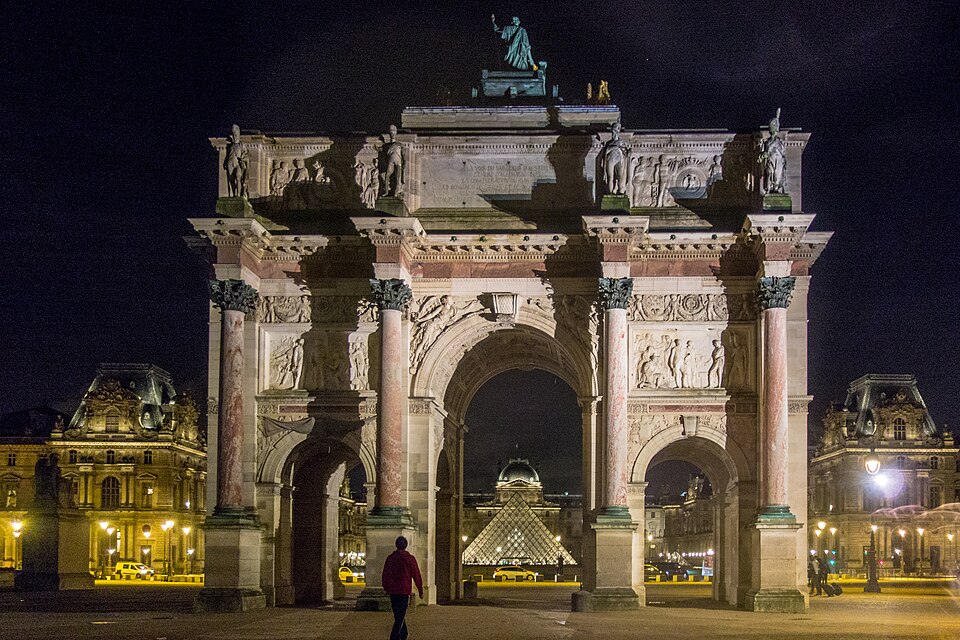
After dark, the pyramid lit from within against the illuminated Louvre facades behind it is a popular evening image, best taken from the courtyard's fountains looking back toward the glass.
Is the Louvre Pyramid a separate attraction from the Louvre?
No. It is the museum's main entrance, built over an underground lobby that leads into the same collection as any other Louvre entry point.
Who designed it and when was it built?
Architect I. M. Pei, as part of President François Mitterrand's Grand Louvre renovation; it was completed in 1989.
Do I need a separate ticket for the pyramid?
No. The pyramid is not itself ticketed — entry to the Louvre, which the pyramid leads into, is what is ticketed.
Is there a faster way in than the pyramid's queue?
Yes. The underground Carrousel du Louvre entrance, reached from Palais-Royal–Musée du Louvre station, and pre-booked timed tickets both avoid much of the pyramid entrance's queue.
Is the small inverted pyramid the same structure?
No, it is a separate, smaller structure inside the Carrousel du Louvre shopping level, often confused with the main above-ground pyramid.
Nothing non-essential is set before you choose, in regions where consent is required. If you decline, ads still appear but they are non-personalised, and analytics is switched off entirely.


.jpg)