The Bastille is a square where a prison used to be, and the prison held seven people on the day it was stormed.
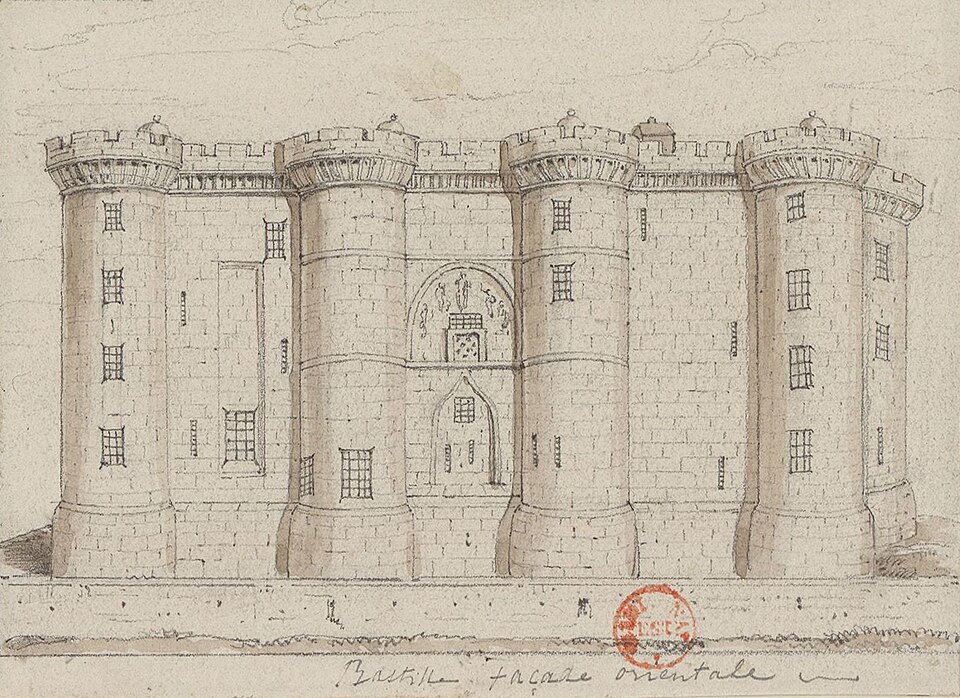
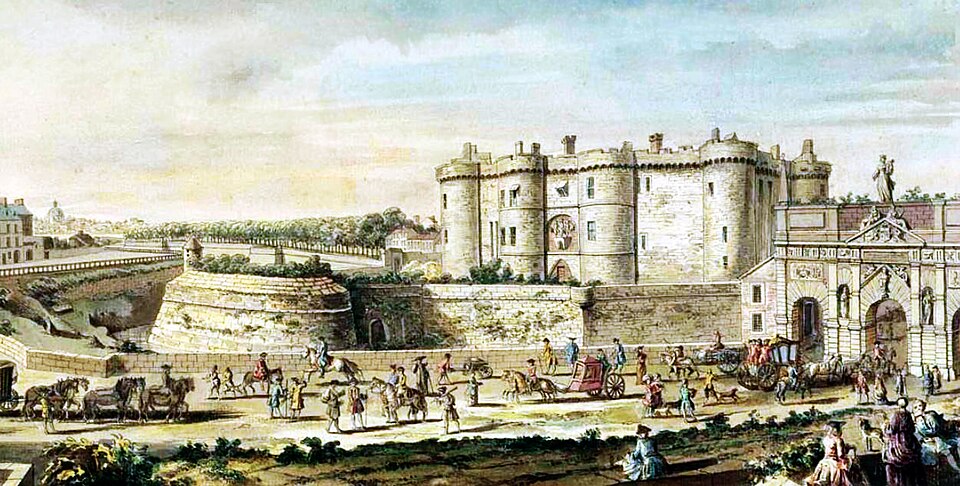
The fortress was built between 1370 and 1383 under Charles V. On 14 July 1789 a crowd took it from a garrison of around eighty veteran soldiers and thirty-two Swiss grenadiers. Inside were four counterfeiters, two men held for mental illness, and one aristocrat.
What mattered was not the rescue but the arsenal and the symbol. Demolition began the same day and finished on 14 July 1790.
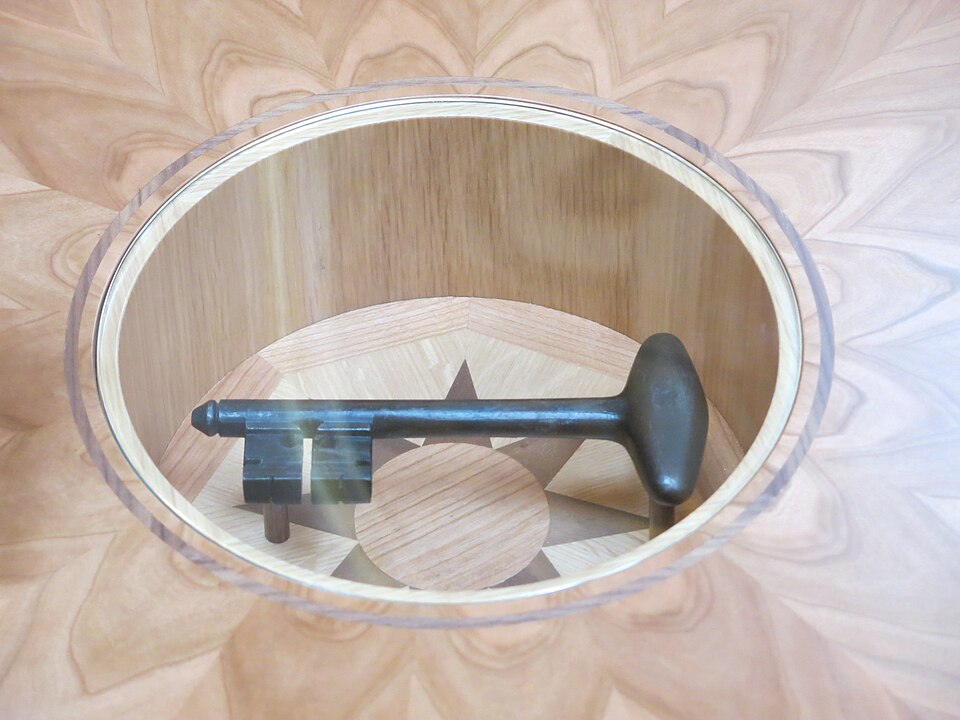
Nothing of the fortress stands. Bronze medallions set into the paving trace its outline, and fragments of a tower found during the Métro excavation of 1899 were moved to the Square Henri-Galli nearby.
The Colonne de Juillet in the middle was inaugurated in 1840 and commemorates the July Revolution of 1830, not 1789. The dead of that uprising are buried beneath it, which makes the column a tomb as well as a monument.
The Opéra Bastille opened in 1989 on the east side, where a railway station had stood until 1984. It is the main house of the Paris Opera and takes the opera programme the Palais Garnier no longer does.
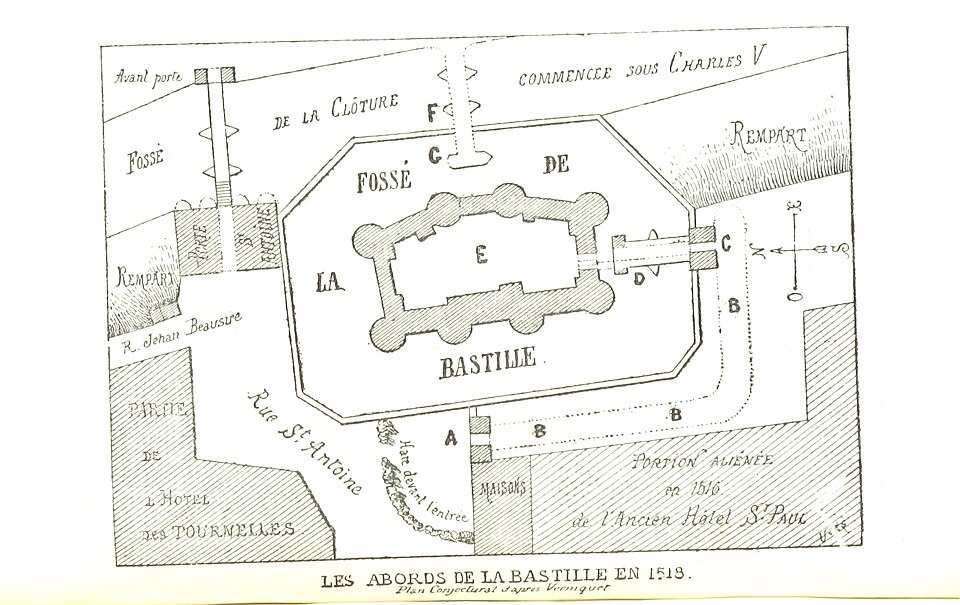
The Bassin de l'Arsenal to the south is the fortress ditch, converted into a marina for pleasure boats, and it is the quietest corner of the square by a long way.
Twenty minutes for the square, an hour if you walk down to the marina.
There is no monument to go inside and nothing to queue for. The visit is standing on the paving medallions, reading the column, and understanding that the most famous site of the French Revolution is a road junction.
The Bassin de l'Arsenal has a tree-lined walk along both quays down to the Seine and is fifteen minutes each way.
The Rue de la Roquette and the Rue de Lappe behind the square are the nightlife streets and are a different visit entirely.
Evening, when the surrounding streets fill and the square makes sense as a place people actually use.
By day it is a traffic interchange with a column in it. By night the bars behind it are among the busiest in Paris.
The redesign of 2019–21 removed a large road and created a pedestrian area south of the monument, which made the square walkable for the first time in a century.
14 July brings the Bastille Day crowds, although the parade itself is on the Champs-Élysées, not here.
The square is free and open. The July Column is not generally open to the public.
The Opéra Bastille sells its own performance tickets and runs guided tours of the building; the tour stood at 20 EUR per person on 24 August 2026, while a seat is priced by the production.
The Bassin de l'Arsenal is a public walkway and free.
Where the 4th, 11th and 12th arrondissements meet, at the eastern edge of the Marais.
Bastille station serves Métro lines 1, 5 and 8 and exits directly onto the square; the line 5 platform runs above ground beside the marina and is one of the more scenic platforms in the network.
The Métro runs 16 lines across 321 stations, with stations 548 m apart on average — a two-stop journey is usually faster walked.
There is nothing to see of the Bastille. Visitors who come expecting a fortress leave disappointed, and the paving medallions are easy to walk over without noticing.
The column commemorates 1830, not 1789. This confuses almost everyone who reads the inscription expecting the Revolution.
The square is a major traffic circle and the crossings are long even after the 2019–21 redesign.
It is a protest and demonstration site, and marches assemble here regularly; when they do, the square and the Métro exits close.
The nightlife streets behind are loud until very late.
The column against the sky from the new pedestrian area on the south side is the photograph, and it works at dusk when the gilded Génie on top catches the last light and the square lights come on.
The paving medallions marking the fortress outline are the harder and more interesting subject; they need to be shot from above with a person or a wheel in frame to explain what they are.
The Bassin de l'Arsenal with the moored boats and the column behind is the only composition here that reads as a place rather than as a junction.
The line 5 platform overlooks the marina and is the elevated position the square otherwise lacks.
Checked 2026-08-23
Common questions
Is the Bastille prison still there?
No. Demolition began on the day it was stormed, 14 July 1789, and finished exactly a year later. Bronze medallions in the paving trace its outline.
How many prisoners were freed?
Seven — four counterfeiters, two men held for mental illness, and one aristocrat. The crowd was after the arsenal, and the symbol.
What is the column for?
The July Revolution of 1830, not 1789. It was inaugurated in 1840 and the dead of that uprising are buried beneath it.
What is the Opéra Bastille?
The main house of the Paris Opera, opened in 1989 on the site of a railway station that stood until 1984. It takes the opera programme the Palais Garnier no longer does.
Is anything of the fortress left?
Fragments of a tower, found during the Métro excavation of 1899 and moved to the Square Henri-Galli nearby. The ditch survives as the Bassin de l'Arsenal.
Is it worth a visit?
Twenty minutes, and mostly for what is not there. Come in the evening, when the streets behind it are the point.
Nothing non-essential is set before you choose, in regions where consent is required. If you decline, ads still appear but they are non-personalised, and analytics is switched off entirely.

.jpg)


