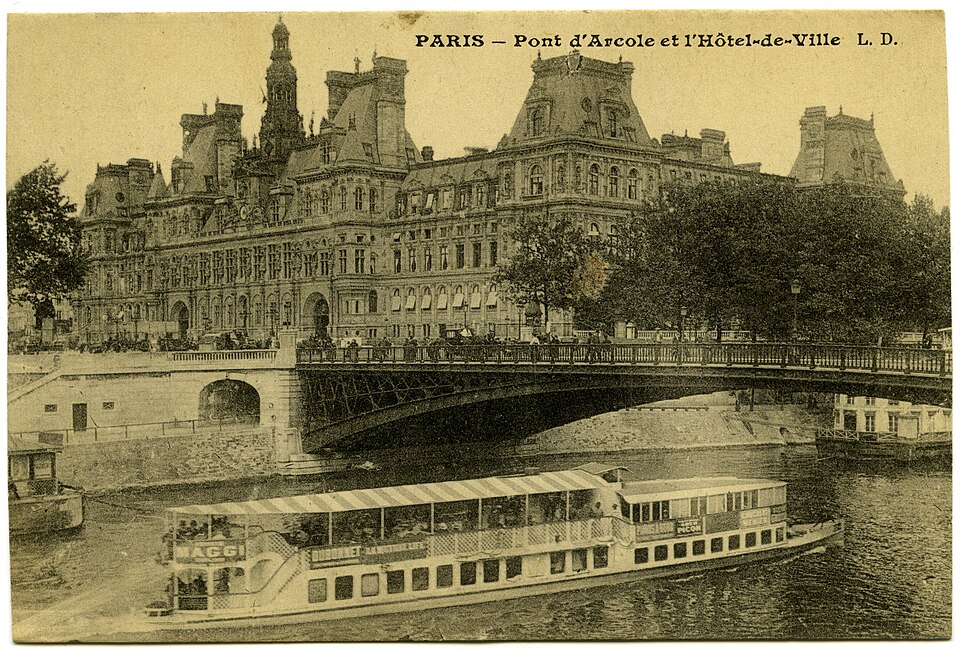
The Hôtel de Ville is Paris's city hall, seat of the mayor and the city council, on the square that carries its name. A building has served this function on the site since 1357, when the provost Étienne Marcel bought the original Maison aux Piliers for municipal use, making the square one of the longest continuously used seats of city government anywhere in Europe even though the building on it has been rebuilt more than once. That building and centuries of additions to it were burned down in May 1871 during the suppression of the Paris Commune, when Communards set it alight rather than let it fall intact to government troops, destroying not only the structure but municipal archives that had been kept there for centuries.
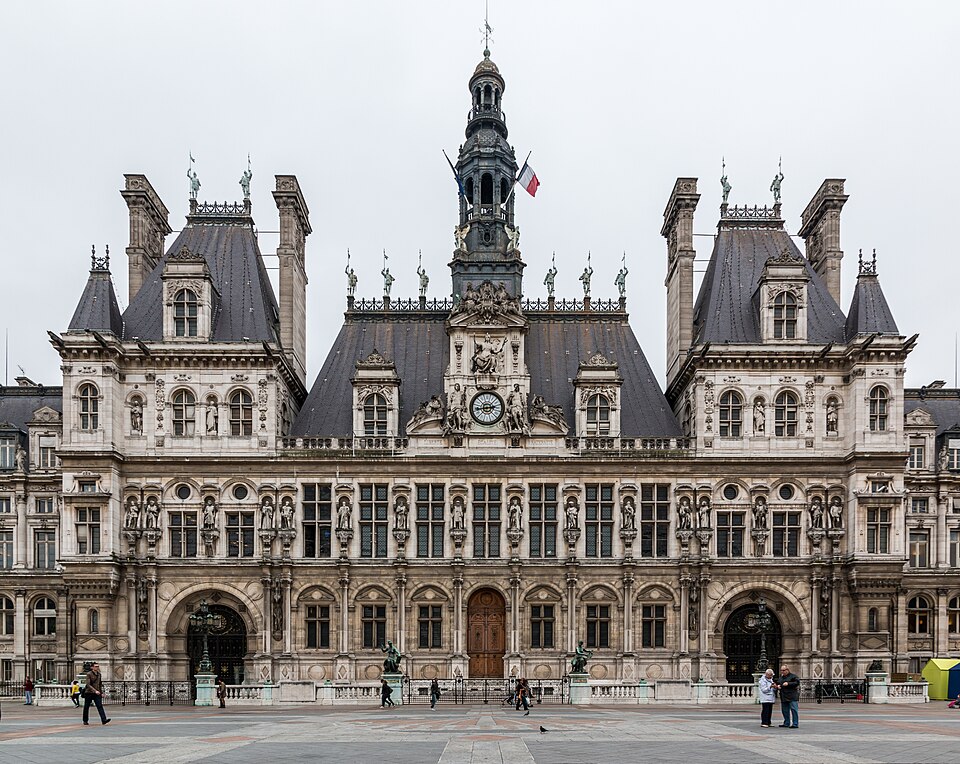
The current building was rebuilt between 1874 and 1882 by architects Théodore Ballu and Édouard Deperthes in a neo-Renaissance style that closely follows the outward form of the Renaissance building it replaced — most visitors are looking at a nineteenth-century reconstruction, not a medieval or Renaissance original, though the reconstruction was deliberately faithful enough that the building's silhouette on the square has changed very little across the intervening centuries.
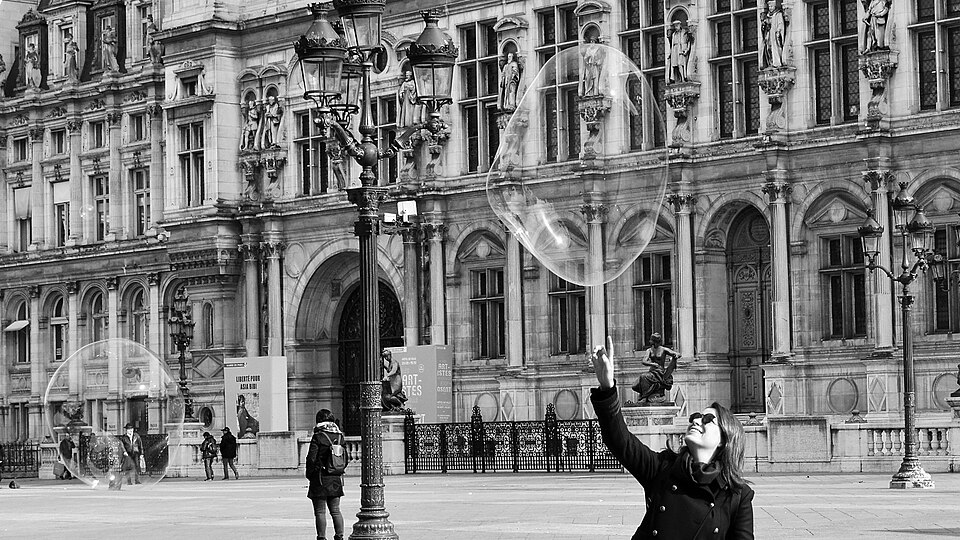
The square in front, Place de l'Hôtel-de-Ville, has itself been a site of public assembly and, in earlier centuries, public executions, long before it became the pedestrianised civic space it is today.
It is a working government building, not a visitor attraction in the ordinary sense: council chambers, ceremonial salons and administrative offices fill most of it, and access to those spaces is not open to the general public on an ordinary day. The Salle des Fêtes, the grand ceremonial hall used for official receptions, is modelled loosely on the Hall of Mirrors at Versailles and is one of the rooms shown to the public on the rare occasions the interior opens.
A ground-floor exhibition space does host free, changing exhibitions open to the public, run separately from the council's own working areas — past themes have ranged from Paris history to photography, and the programme changes several times a year, so what is showing depends entirely on the date of the visit.
Fifteen to twenty minutes covers the exterior and the square from a normal walking pace. A current exhibition, when one is on, adds another thirty to forty-five minutes, and a full Heritage Days visit to the state rooms, queue included, can run well over an hour given how much of the city turns out for that single weekend each year.
The exterior is visible and lit at any hour, and the floodlit facade at night is arguably a better sight than the same building at midday. The state and ceremonial rooms open to the public mainly during the Journées Européennes du Patrimoine, the European Heritage Days weekend each September, when queues run long given how rarely the interior is otherwise accessible. Outside that weekend, the ground-floor exhibition space keeps its own separate, more regular hours.
Free where the building is accessible at all — the ground-floor exhibitions and Heritage Days openings both carry no charge. There is no general paid tour of the working parts of the building, and no ticket exists that buys entry to the council chambers on an ordinary working day.
Métro Hôtel de Ville, on lines 1 and 11, opens directly opposite the square, so the walk from the platform to the building's front steps is a matter of moments rather than a route through streets, and several bus lines and a riverside bike-share station sit within a couple of minutes' walk as well.
Do not expect to walk into the council chambers on a normal visit; the state rooms are effectively closed except for Heritage Days, and turning up on an ordinary Tuesday expecting a tour is a common disappointment. Entering the public exhibition space involves a security check, as with most French public buildings. The square in front is regularly used for public events, including a winter ice rink some years and periodic markets or screenings, which can change what is visible or accessible on a given day and sometimes blocks the classic photograph of the full facade.
The facade carries 108 statues of notable Parisians in niches, each a different historical figure, and reads best photographed from across the square or from beside the fountains at its edge, where the whole width of the building fits in one frame. Interior photography is restricted, particularly during official council business and whenever the Salle des Fêtes is in ceremonial use.
Only the ground-floor exhibition space on an ordinary day; the ceremonial state rooms are open mainly during the Heritage Days weekend in September.
Who works there?
The Mayor of Paris and the Paris city council, along with municipal administrative staff.
Why was the building rebuilt?
The medieval and Renaissance building on the site burned down in May 1871 during the suppression of the Paris Commune; the current structure dates from 1874 to 1882.
Is entry free?
Yes, wherever the building is open to the public at all.
Is the ice rink there every winter?
It is a seasonal feature some years, not a permanent fixture — check ahead rather than assuming it is running.
Nothing non-essential is set before you choose, in regions where consent is required. If you decline, ads still appear but they are non-personalised, and analytics is switched off entirely.


.jpg)
_(30508558596).jpg)
.jpeg)
