
1 min walk
Eternal flame at Tsitsernakaberd
- High · Heritage site
- Historic monument
Language · 11 published
Nature site · Yerevan
Ծիծեռնակաբերդ

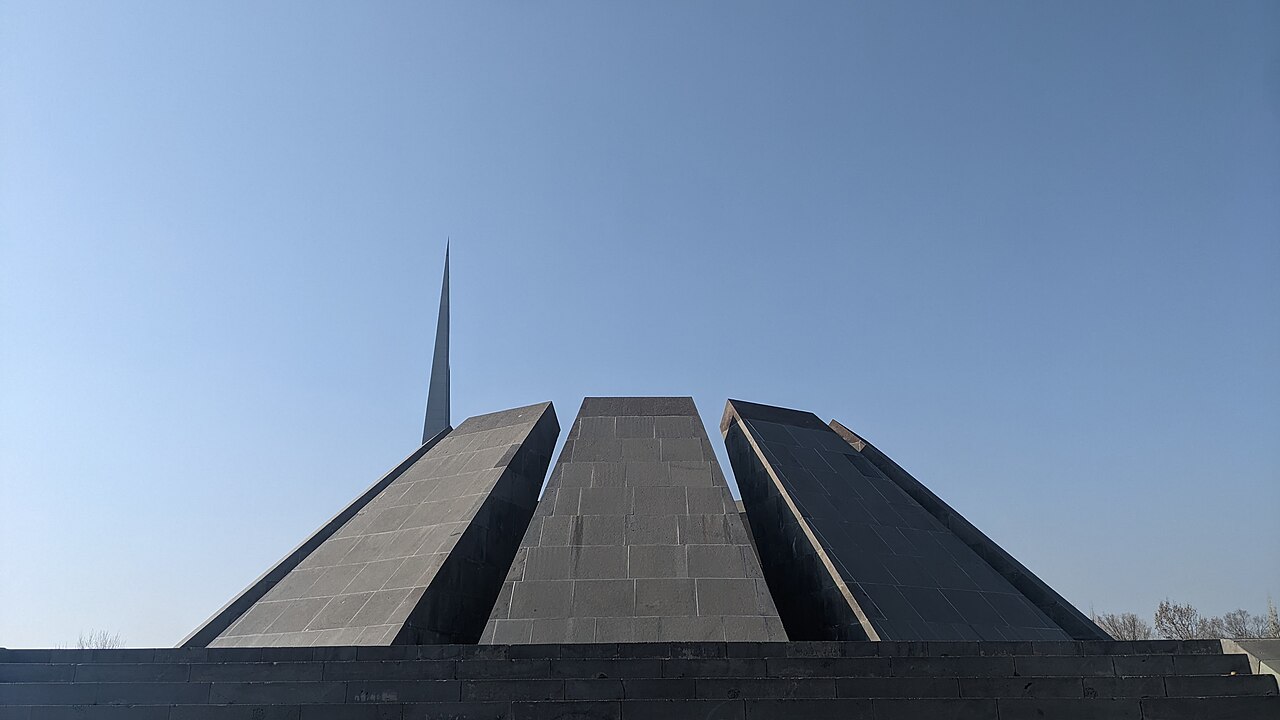
Tsitsernakaberd is the Armenian Genocide Memorial Complex situated on a hill overlooking Yerevan. The site serves as Armenia's official memorial to the victims of the Armenian Genocide of 1915. Established in 1967, it has become a major place of pilgrimage and remembrance. The memorial consists of an obelisk, an eternal flame, and a circular wall of basalt. The Armenian Genocide Museum-Institute opened later as part of the complex. The location on the Tsitsernakaberd hill provides panoramic views across the city toward Mount Ararat.
Checked 2026-08-28
The memorial complex contains several distinct elements. The central memorial features twelve sloping basalt slabs enclosing an eternal flame, representing the twelve lost provinces of historical Armenia. An obelisk of granite stands nearby. The Museum-Institute houses exhibits, archival materials, and documentation related to the genocide. Outdoor spaces include an alley of trees planted by foreign dignitaries and genocide survivors. The Wall of Remembrance contains inscriptions. Visitors should note that specific current exhibit details and museum interior arrangements are not recorded in the available sources and may require direct verification.
Checked 2026-08-28
Visitors typically allocate between one and two hours for the memorial grounds and outdoor monuments. Those intending to enter the Museum-Institute should allow additional time. The emotional weight of the site often causes visitors to move slowly and reflectively. A thorough visit combining the outdoor memorial with museum exhibits could extend to half a day. The expansive grounds and hillside location encourage unhurried pacing. Individual visiting duration depends significantly on personal engagement with the historical subject matter and whether audio guides or detailed reading are undertaken within museum spaces.
Checked 2026-08-28
Visitors should verify current opening times directly with the Armenian Genocide Museum-Institute before planning their visit. The outdoor memorial grounds may be accessible outside museum operating hours, though this should be confirmed locally. Seasonal considerations for Yerevan include hot summers and cold winters; spring and autumn generally offer moderate temperatures. April 24, Armenian Genocide Remembrance Day, draws particularly large crowds for commemorative events. Visitors seeking quieter reflection may prefer ordinary days outside major commemoration periods. Weather conditions on the exposed hillside can affect comfort. Check the operator's own site for the travel date before relying on a schedule or fare.
Checked 2026-08-28
Visitors should verify current admission policies directly with the Armenian Genocide Museum-Institute before visiting. Many genocide memorials worldwide operate with free admission, but this cannot be assumed without confirmation. Donation boxes or suggested contributions may exist. Any guided tour arrangements, audio guide availability, or special exhibition surcharges require direct inquiry. Group visits and educational programs may have separate protocols. International visitors should not rely on outdated online information regarding ticketing, as policies may have changed since any unofficial postings. Check the operator's own site for the travel date before relying on a schedule or fare.
Checked 2026-08-28
Tsitsernakaberd occupies a hilltop position in western Yerevan, approximately three to four kilometers from the city center. Multiple public bus routes serve the general area, though specific line numbers and schedules require local verification. Taxis and ride-hailing services operate widely in Yerevan and provide direct access. The approach involves uphill walking from the nearest transit stops, which visitors with mobility limitations should consider. Road access exists for private vehicles. Signage from central Yerevan directs toward the memorial. Visitors should consult current local transport resources for precise routing, as services and infrastructure may have evolved since source documentation.
Checked 2026-08-28
The memorial addresses genocide and mass atrocity; visitors should prepare for emotionally intense content and atmosphere. Photography restrictions may apply within museum interiors; visitors must observe posted guidelines and staff instructions. The hillside location involves uneven surfaces and exposure to weather. Large crowds gather on April 24, affecting movement and parking. Visitors should dress and conduct themselves with appropriate solemnity. The eternal flame and memorial structures deserve respectful distance. Personal belongings require standard vigilance. Information panels and exhibits contain graphic historical documentation. Parents should exercise judgment regarding children's exposure to disturbing material.
Checked 2026-08-28
The striking architectural forms of the memorial against the backdrop of Mount Ararat offer significant photographic interest. The twelve basalt slabs and eternal flame create strong geometric compositions, particularly at dawn and dusk. The obelisk and wall inscriptions provide detail subjects. Wide-angle lenses accommodate the memorial's scale. The panoramic city views from the hilltop extend photographic possibilities beyond the memorial itself. Interior museum photography may be restricted; visitors must verify current policies on-site. The eternal flame requires careful exposure handling. Respectful distance from mourners and commemorative activities remains essential. Tripod use may require permission.
Checked 2026-08-28
Visitors should verify current schedules directly with the Armenian Genocide Museum-Institute.
Visitors should verify current admission policies directly with the Armenian Genocide Museum-Institute before visiting. Check the operator's own site for the travel date before relying on a schedule or fare.
Parents should exercise judgment. The memorial addresses genocide and contains graphic historical documentation that may disturb young visitors.
Interior museum photography may be restricted. Visitors must verify current policies on-site and observe all posted guidelines and staff instructions.
Public buses, taxis, and ride-hailing services serve the area. Specific routes require local verification. The site involves uphill walking from nearest transit stops.
April 24, Armenian Genocide Remembrance Day, draws particularly large crowds for commemorative events. Visitors seeking quieter reflection may prefer ordinary days.
Loading the interactive map…
The interactive map could not be loaded.

Last updated:
Source: OpenStreetMap contributors, Wikidata ·