


22 min walk · Yunusemre
Mescit
- Notable
- Place of worship
Language · 1 published
Historic monument · Yunusemre, Manisa
Kuva-yi Milliye ve Cumhuriyet Anıtı
| Monday | 00:00 – 23:59 |
|---|---|
| Tuesday | 00:00 – 23:59 |
| Wednesday | 00:00 – 23:59 |
| Thursday | 00:00 – 23:59 |
| Friday | 00:00 – 23:59 |
| Saturday | 00:00 – 23:59 |
| Sunday | 00:00 – 23:59 |
Parsed from OpenStreetMap opening hours on 2026-08-25.
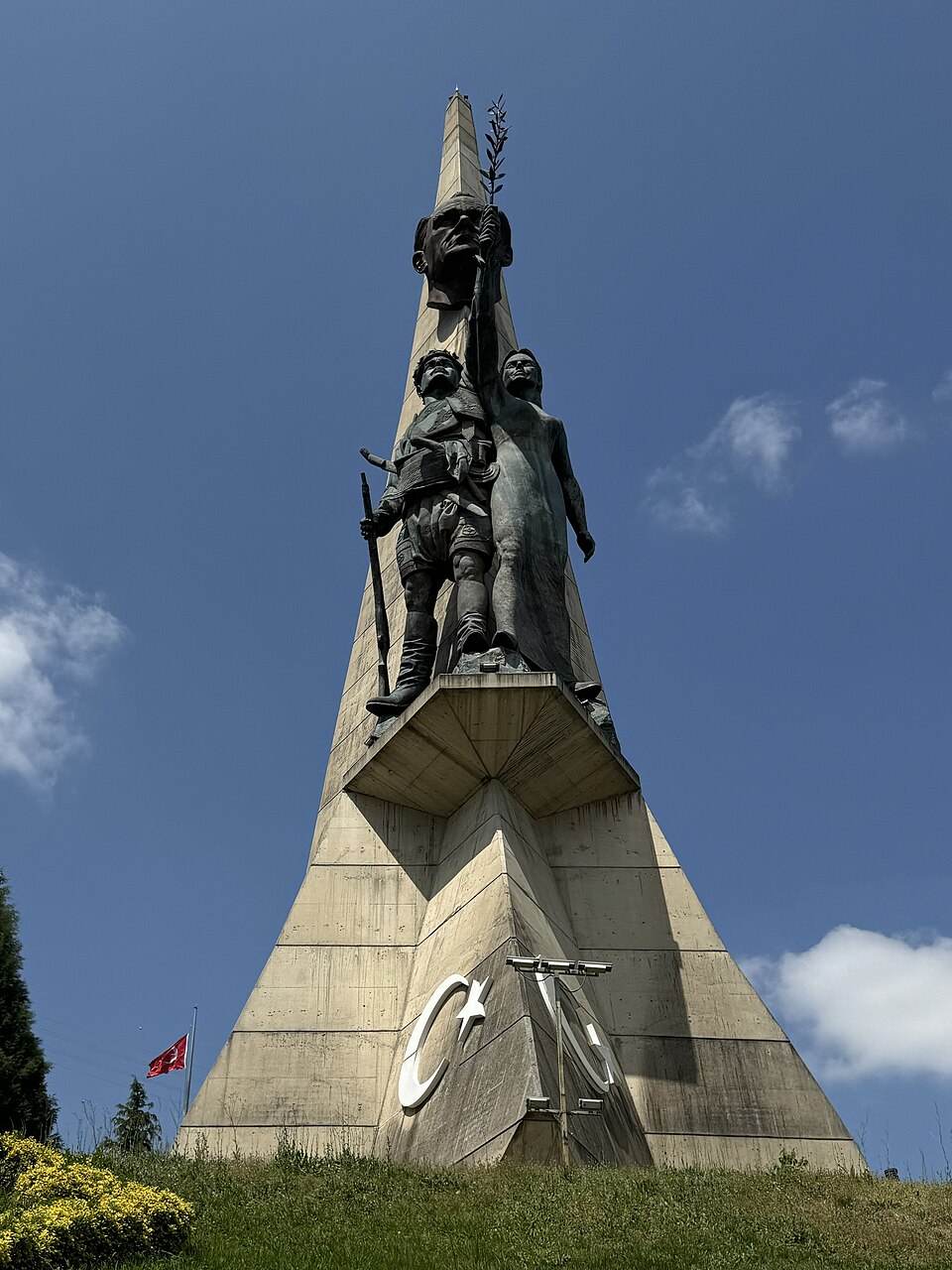
The Kuva-yi Milliye ve Cumhuriyet Anıtı is a 63-metre monument on the southern approach to Manisa, and it is the tallest thing a visitor arriving by road will see.
The sculptor Tankut Öktem designed and executed it. Work began in 2001 and finished in 2004, and it opened officially on 23 April 2004 — Turkey's National Sovereignty and Children's Day, the anniversary of the first Grand National Assembly.
It commemorates the Kuvâ-yi Milliye, the irregular national forces of the War of Independence, and Mustafa Kemal Atatürk.
Checked 2026-08-23 · Source
A concrete block carrying bronze, and the figures are the point.
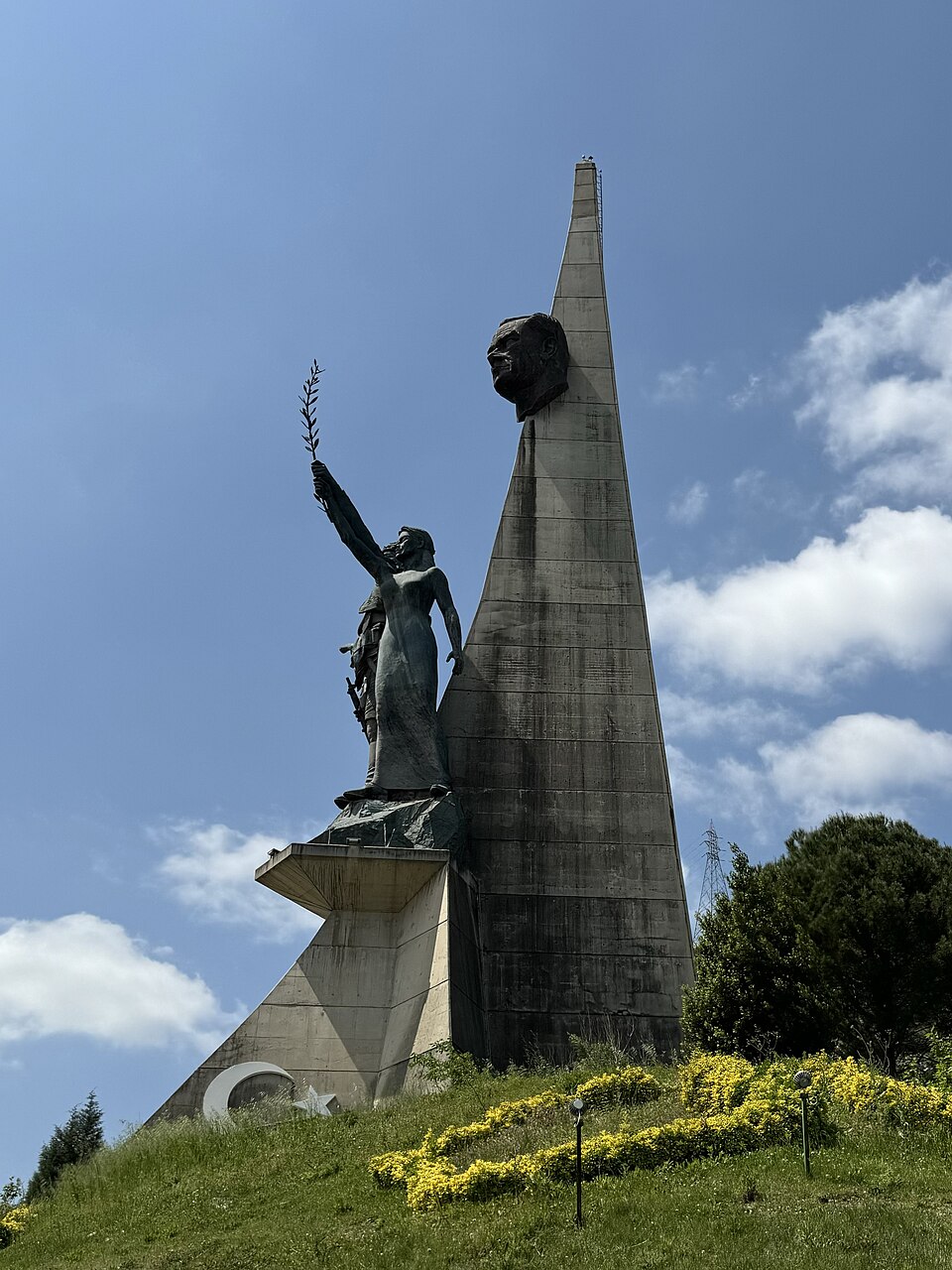
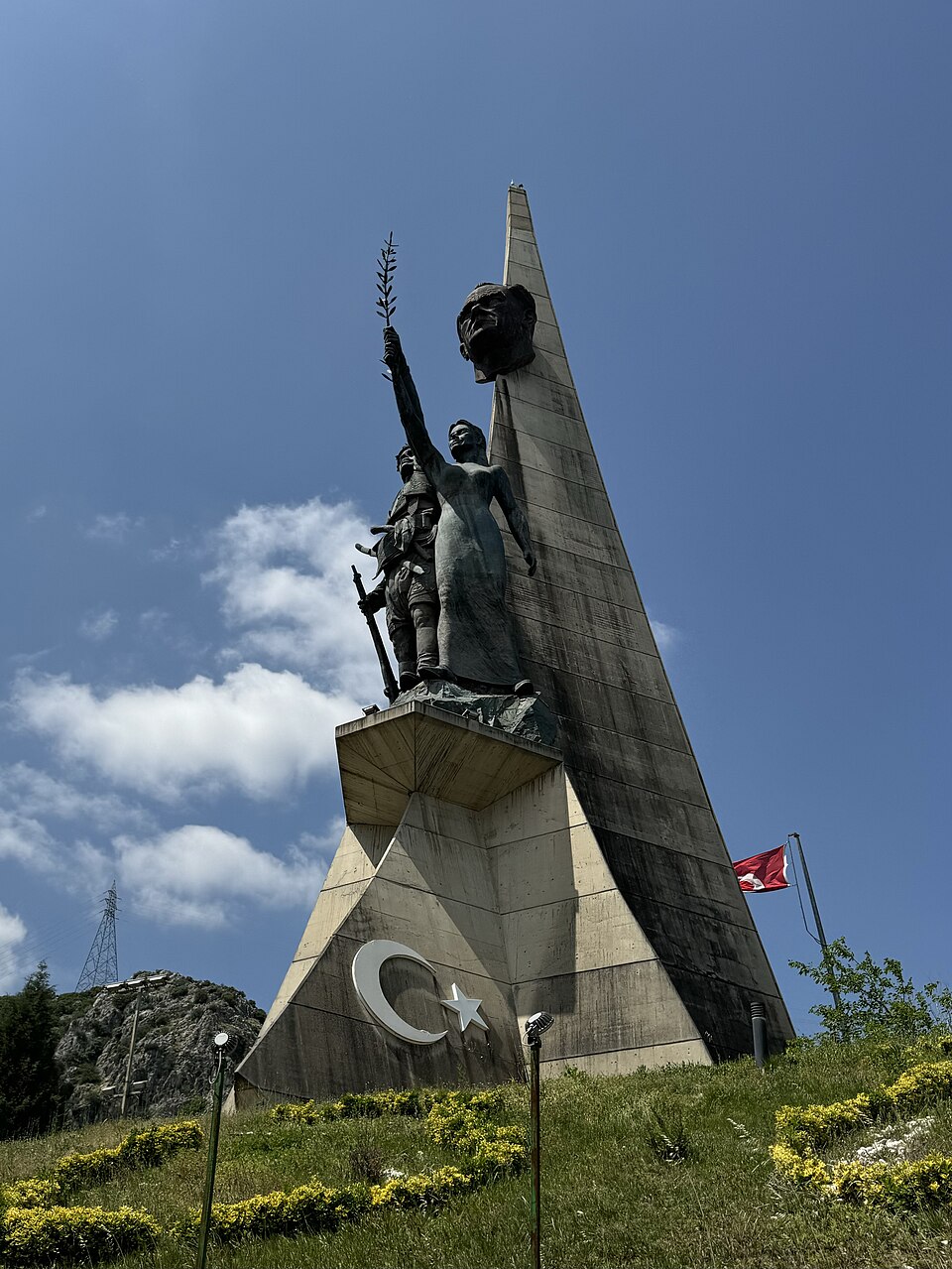
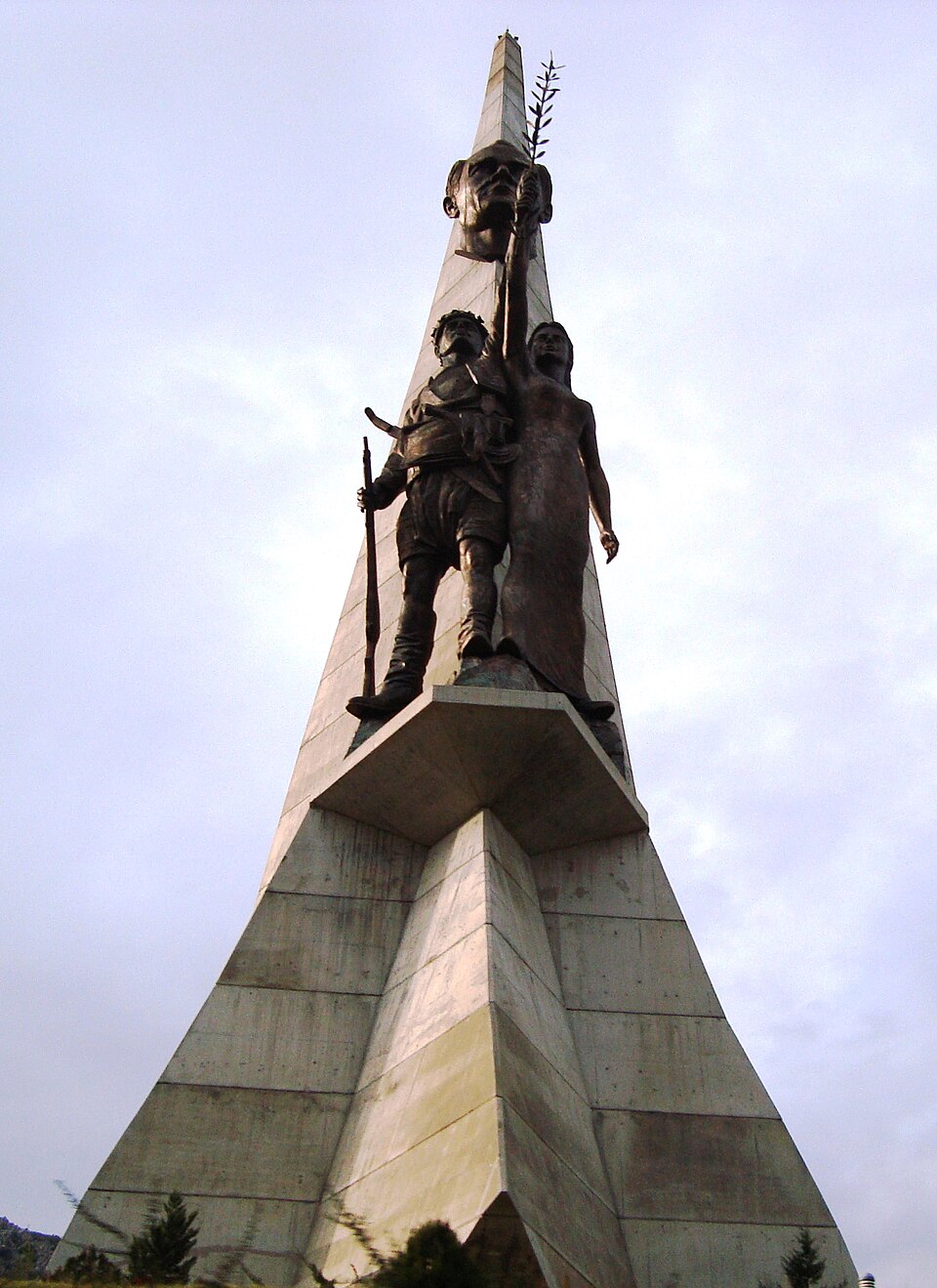
Two sculptures stand 20 metres each: a traditional Manisa fighter, and a modern woman holding an olive branch. Above them a 7-metre bust carries Atatürk's portrait. The whole assembly reaches 63 metres.
The pairing is the argument the monument makes — the irregular fighter of 1919 and the republic's citizen, set under the man who joined them. It is a twentieth-century statement in a city whose other monuments are all Ottoman.
Scale is the other half of the argument. Manisa's Ottoman buildings are provincial in size — the Muradiye's minarets stand 45 metres, the tallest thing in the historic quarter. The monument on the southern approach is 63 metres, and it was built to be seen from the highway rather than from the street.
Checked 2026-08-23 · Source
Fifteen minutes, and most people see it from a car window.
It stands at the southern entrance to Manisa, west of the D565, in the Kayapınar neighbourhood of Yunusemre. There is no interior, no exhibition and nothing to queue for.
Worth a deliberate stop if you are driving in or out anyway; not worth a journey across the city.
Checked 2026-08-23 · Source
Any time. It is outdoors, unenclosed and never closed.
The 23 April anniversary of its opening is also a national holiday, and the monument is a focus for ceremonies then. Anyone wanting it quiet should pick another day.
Light matters more than season for a bronze on a concrete mass; early morning and the hour before sunset both work, and the middle of the day flattens it.
It also makes a natural first or last stop on a Manisa day, since it stands on the road in and the road out rather than anywhere you would walk to.
Checked 2026-08-23
Free. It is a public monument on a roadside, with no gate, no ticket and no opening hours.
There is no visitor centre, no shop and no facilities of any kind at the site.
Parking arrangements are not published on the sources this page uses; the monument sits beside a state highway on the edge of the city.
Checked 2026-08-23
On the southern entrance to Manisa, west of the D565, in the Kayapınar neighbourhood of Yunusemre district.
This is a road location rather than a walking one. Driving in from İzmir or the south, it is unavoidable; from the city centre it is a taxi or a town bus toward the southern edge.
Reaching Manisa: four trains a day from İzmir Basmane take about 90 minutes, local buses cover the 40 km in about 35 minutes, and İzmir Adnan Menderes airport is roughly 65 km away.
Checked 2026-08-23 · Source
It is beside a highway. The monument stands west of the D565 on the southern approach to the city, and the traffic there moves at road speed.
There is nothing at the site — no shade, no water, no toilet, no shop. It is a monument on a verge, not an attraction with an infrastructure.
On 23 April, and on other national days, ceremonies take place here and access may be restricted or the area crowded.
Turkish law protects monuments to Atatürk specifically, and conduct around them is taken seriously. This is not a place to treat as a backdrop for anything irreverent.
Checked 2026-08-23
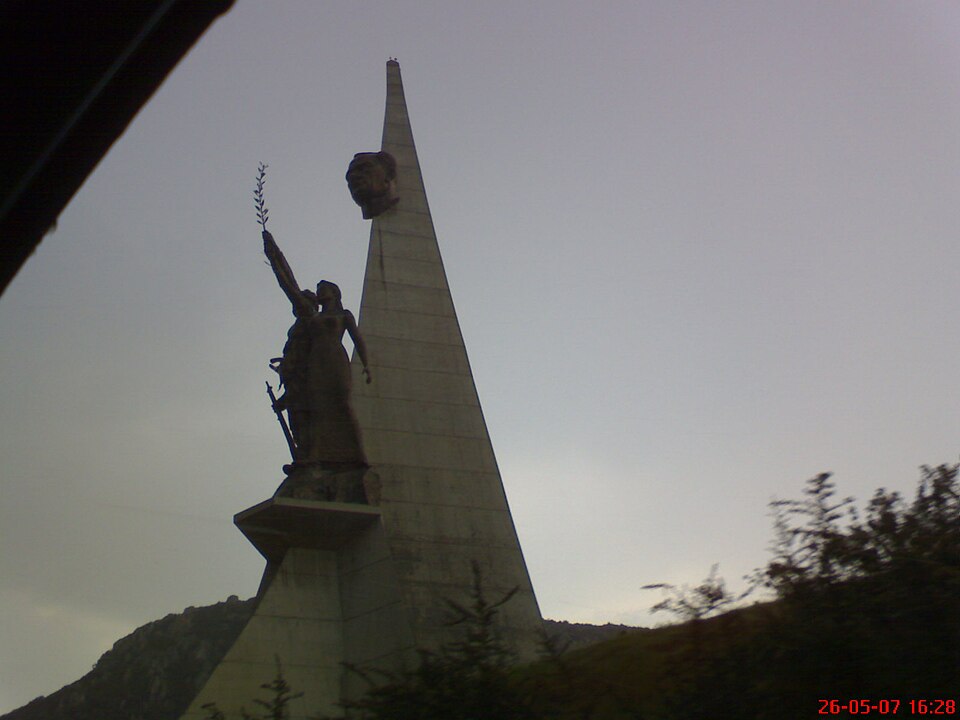
Sixty-three metres does not fit in a casual frame. Getting the whole monument means standing well back, which on a highway verge takes some care about where you put yourself.
The two 20-metre figures reward a longer lens more than the full height does: the fighter and the woman with the olive branch are legible as sculpture only when they fill the frame.
Bronze against concrete wants directional light. Early morning and late afternoon give the figures their modelling; noon gives a silhouette.
No photography restriction is recorded for the monument.
Checked 2026-08-23
The Kuvâ-yi Milliye — the irregular national forces of the Turkish War of Independence — and Mustafa Kemal Atatürk.
63 metres. Two sculptures stand 20 metres each, and a 7-metre bust sits above them on a concrete block, with bronze elements throughout.
The sculptor Tankut Öktem. Work began in 2001, finished in 2004, and the monument opened on 23 April 2004.
A traditional Manisa fighter and a modern woman holding an olive branch, with Atatürk's portrait on the bust above them.
On the southern entrance to Manisa, west of the D565, in the Kayapınar neighbourhood of Yunusemre district.
No. It is a public monument on a roadside, with no gate, no ticket and no opening hours.
Loading the interactive map…
The interactive map could not be loaded.
Last updated:
Source: OpenStreetMap contributors, Wikidata ·