
4 min walk · Yunusemre
Lunapark
- Notable
- Entertainment venue
Language · 1 published
Museum · Yunusemre, Manisa
Manisa Müzesi
| Monday | 08:30 – 17:30 |
|---|---|
| Tuesday | 08:30 – 17:30 |
| Wednesday | 08:30 – 17:30 |
| Thursday | 08:30 – 17:30 |
| Friday | 08:30 – 17:30 |
| Saturday | 08:30 – 17:30 |
| Sunday | 08:30 – 17:30 |
Checked 2026-08-24 · Source
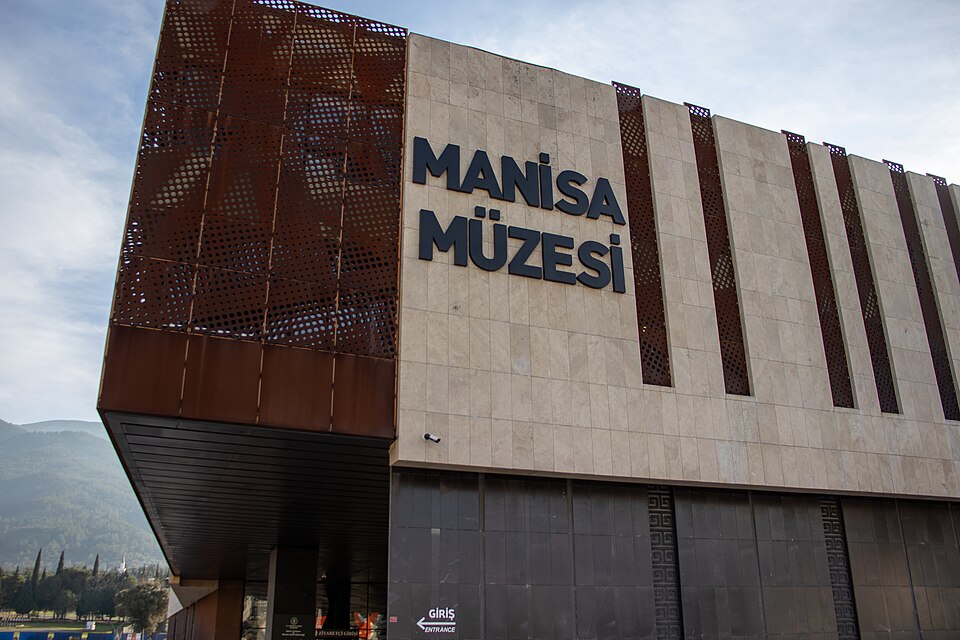
The Manisa Museum is the archaeological and ethnographic collection of the province, and as of 17 May 2025 it no longer stands where earlier guides to Manisa describe it. The museum moved out of the sixteenth-century Muradiye imaret it had occupied since 1937 and into a purpose-built new building at Akmescit Mahallesi, Mimar Sinan Bulvarı No. 159, in Yunusemre — roughly 7,600 square metres of enclosed space, opened by the Minister of Culture and Tourism during the Culture Road Festival.
The collection itself is unchanged in character: regional rather than national, drawing on ancient Magnesia, on Sardis, and on the other antique towns of the Gediz valley, spanning prehistory to the Ottoman period across roughly 1,700 objects. What has changed is the building around it — a modern, purpose-built museum rather than a repurposed Ottoman charity kitchen — and, with the move, its physical separation from the Muradiye Mosque, which stays where it was.
Checked 2026-08-24 · Source
The display runs chronologically across two floors: archaeological material on the ground floor, archaeological and ethnographic material together on the first. The span goes from Paleolithic-era footprints through Lydian, Hellenistic, Roman and Byzantine material to the Ottoman period, with roughly 2,362 square metres of exhibition space and 1,240 square metres of storage behind it.
Sardis is the name most visitors recognise. The Lydian capital, thirty-odd kilometres east up the Gediz valley, supplies a good part of the collection, alongside material from Aigai and from Magnesia itself — Roman sarcophagi and gladiator stelae, Lydian lion sculptures, mosaics, idol fragments and bronze figurines, and a 2.6-metre statue of the goddess Hestia from ancient Aeolis.
The Ottoman-era rooms cover roughly 1,700 objects touching the daily life of the Ottoman şehzades who governed from Manisa, including material on the sancak tradition and on mesir macunu, the spiced paste with its own Manisa festival. The ethnography once housed in a separate building beside Muradiye now sits within the same new complex rather than next door to the mosque.
Checked 2026-08-24 · Source
An hour and a half to two hours for an unhurried visit across both floors — longer than the single hour an older, smaller building supported, since the new museum has considerably more exhibition space (2,362 square metres) than the imaret it replaced.
Because the museum no longer stands inside the Muradiye complex, it no longer makes sense to plan it as one two-hour stop together with the mosque; the two are now a short drive or taxi ride apart rather than a few steps across a courtyard, and each is its own outing.
Checked 2026-08-24
The museum is open every day, 08:30 to 17:30, with ticket sales closing at 17:00 — there is no weekly closing day recorded for it, unlike many Turkish state museums.
A museum is the right thing to do in Manisa in the middle of a summer afternoon, when outdoor sites and the mountain are too hot to enjoy, and it is the reliable indoor option in winter rain. Because it now keeps a fixed daily schedule with no closed day, it is also a safer anchor to plan a day around than sites with variable or unpublished hours.
Checked 2026-08-24 · Source
Foreign visitors pay €3. Turkish citizens enter with Müzekart rather than a separate ticket price — the museum's own booking page routes both foreign ticket sales and Müzekart use through muze.gov.tr.
Turkish state museums are covered by the wider Museum Pass system, which is worth checking if visiting several sites in the region — Sardis and Ephesus are both within reach of Manisa.
The Muradiye Mosque, which the museum shared a compound with until 2025, is free — but it is now a separate destination rather than a few steps from the museum's door, so its free admission is no longer a reason to combine the two stops for cost reasons alone.
Checked 2026-08-24 · Source
By car or taxi, to Akmescit Mahallesi, Mimar Sinan Bulvarı No. 159, in Yunusemre — a different location from the Ottoman core in Şehzadeler where the museum used to stand beside the Muradiye Mosque. Older directions that route a visitor to Muradiye for the museum are out of date as of the 17 May 2025 move.
Reaching Manisa itself is unchanged: four trains a day from İzmir Basmane take about 90 minutes, local buses cover the 40 km in about 35 minutes, and İzmir Adnan Menderes airport is roughly 65 km away.
Checked 2026-08-24 · Source
The move itself is the trap for anyone working from an older guide, a map pin, or a memory of a previous visit: the museum is not in the Muradiye complex any more, and arriving there expecting to find it will mean a second trip across town.
Labelling in a provincial Turkish museum is often Turkish-first, with English shorter or absent; reading the collection properly is easier with Sardis and Magnesia looked up beforehand. The new building is purpose-built rather than a repurposed historic structure, so — unlike the old imaret — it should be assumed to have standard modern circulation and step-free access, though no source consulted for this page states that explicitly.
Checked 2026-08-24
Photography rules in Turkish state museums vary by institution and change; the specific rule for the new building is not published on the sources this page uses. Assume flash and tripods are not welcome and ask at the desk.
The new building itself is worth a frame or two: a purpose-built museum structure rather than a repurposed monument, its architecture reads very differently from the vaulted Ottoman imaret that housed the collection until 2025, and photographs of the two would not be interchangeable.
Checked 2026-08-24
Yes. On 17 May 2025 it moved from the sixteenth-century Muradiye imaret it had occupied since 1937 to a new purpose-built building at Akmescit Mahallesi, Mimar Sinan Bulvarı No. 159, in Yunusemre.
08:30 to 17:30, every day, with ticket sales closing at 17:00. No weekly closing day is recorded.
€3 for foreign visitors. Turkish citizens enter with Müzekart rather than paying a separate ticket price.
No, not since the May 2025 move. The mosque stays in the Muradiye complex in Şehzadeler; the museum is now in Yunusemre, a short drive or taxi ride away rather than a few steps across the same courtyard.
An hour and a half to two hours for an unhurried visit — longer than the single hour the older, smaller building supported, since the new museum has considerably more exhibition space.
Regional archaeology and ethnography from prehistory to the Ottoman period, roughly 1,700 objects, with Sardis, Magnesia and Aigai as the main sources — Lydian lion sculptures, mosaics, a 2.6-metre Hestia statue, and Ottoman-era material on the şehzade governors of Manisa.
Loading the interactive map…
The interactive map could not be loaded.
Last updated:
Source: OpenStreetMap contributors, Wikidata ·