_2,_Akhisar,_Manisa.jpg)


1 min walk · Akhisar
Akhisar Halkevi Binası
- Notable
- Historic monument
Language · 1 published
Place of worship · Akhisar, Manisa
Yeni Cami
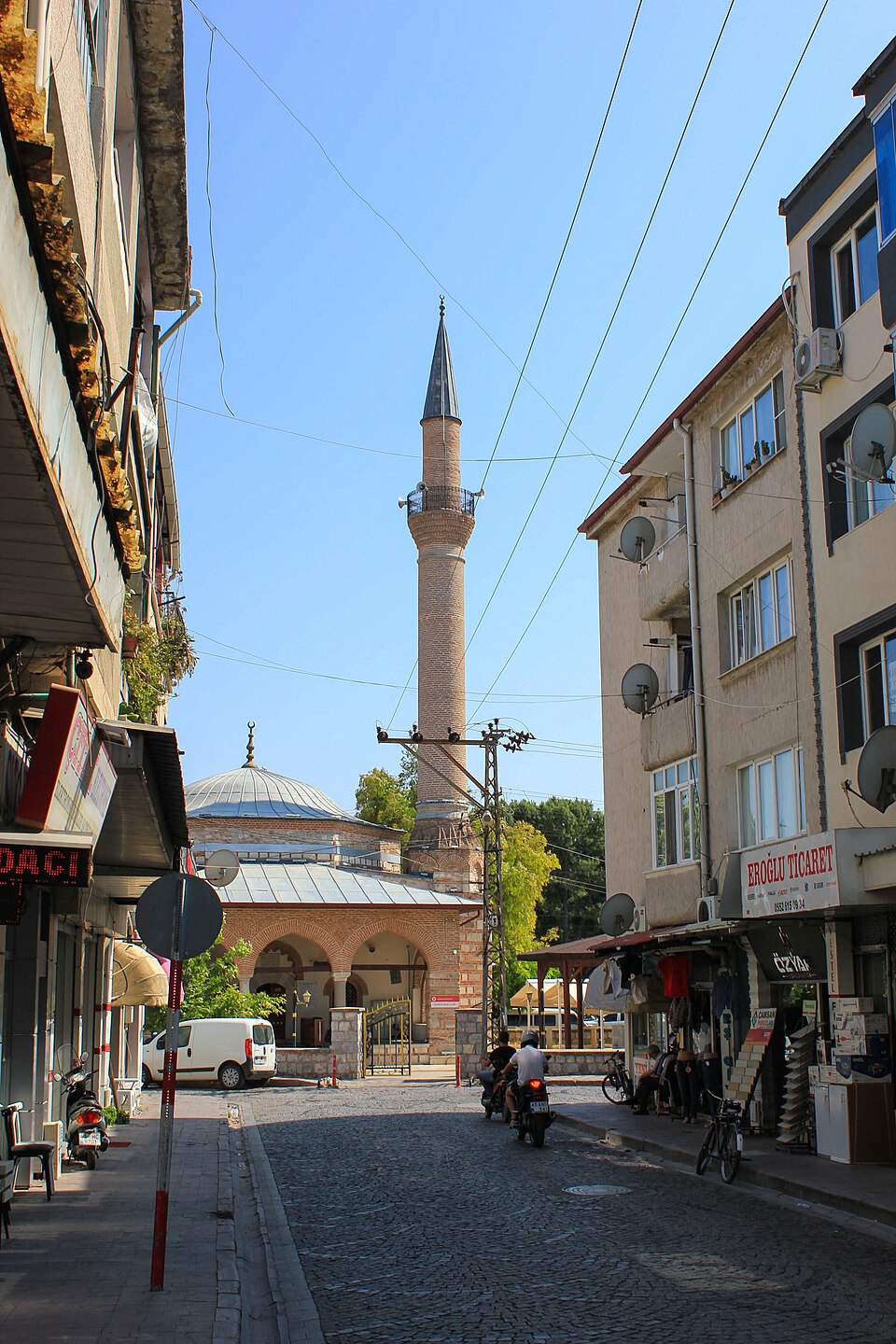
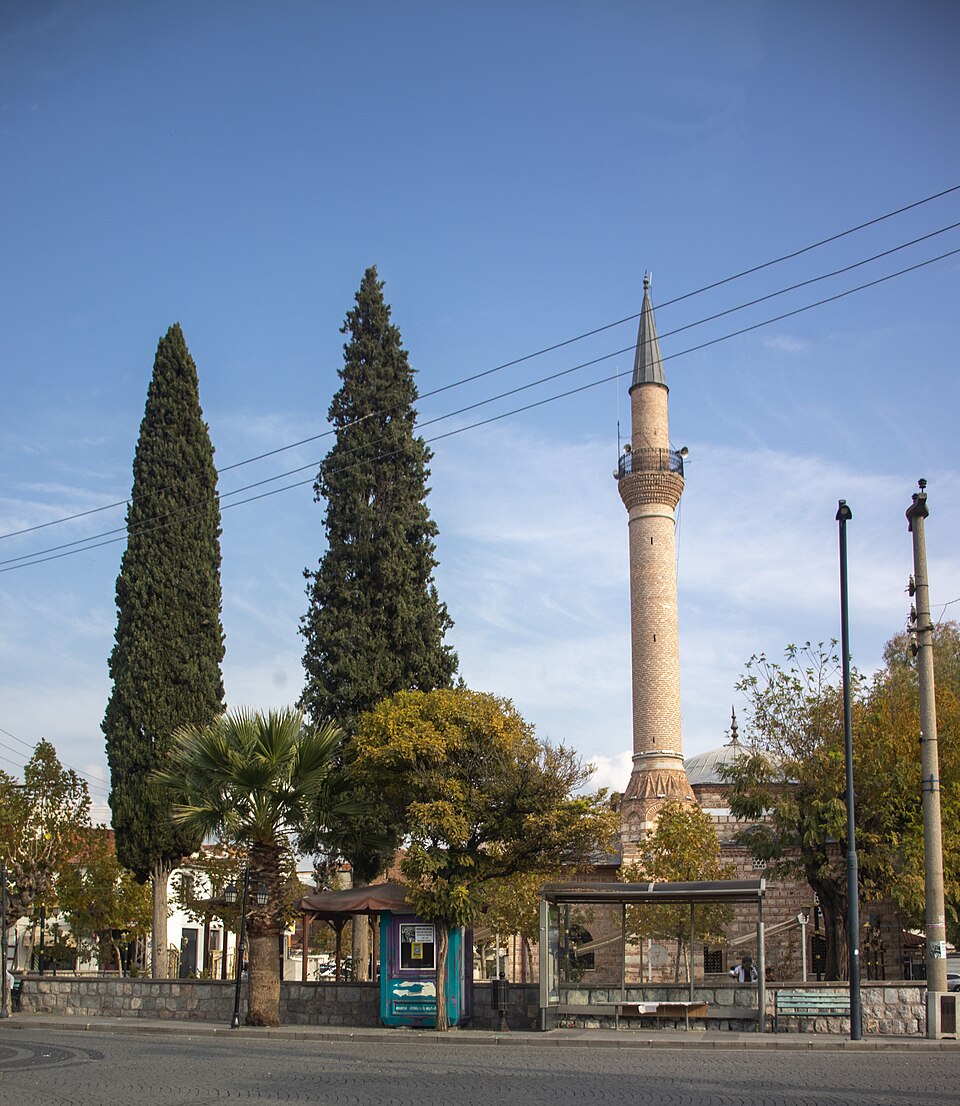
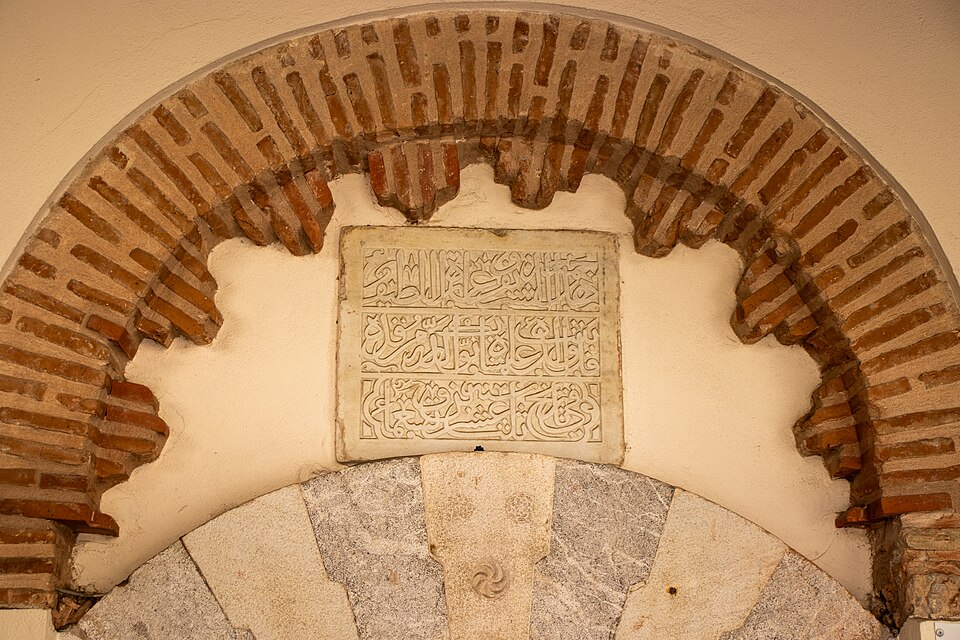
Gülruh Sultan Mosque, also known locally as Yeni Cami, was founded by Gülruh Hatun, a consort of Sultan Bayezid II and mother of Şehzade Alemşah, the prince who governed the Saruhan (Manisa) province in the early 1500s. Building a mosque in her son's provincial seat and its district towns was the kind of endowment expected of a valide-adjacent consort, and the entrance inscription is read either as 1503 or as the Hijri year 923, corresponding to 1517 — the two readings disagree, but both place the mosque in the first two decades of the 16th century, after Ulu Camii and before Dombaycıoğlu Han.
Alemşah died in 1510 still governing from Manisa, and Gülruh Hatun spent her later years in Bursa, where she is buried in a mausoleum she had built there. The Akhisar mosque that carries her name is a rare surviving trace of a woman's architectural patronage from that period, standing today in the town's Hashoca neighbourhood, near the Ulu Camii and Dombaycıoğlu Han.
Checked 2026-08-23 · Source
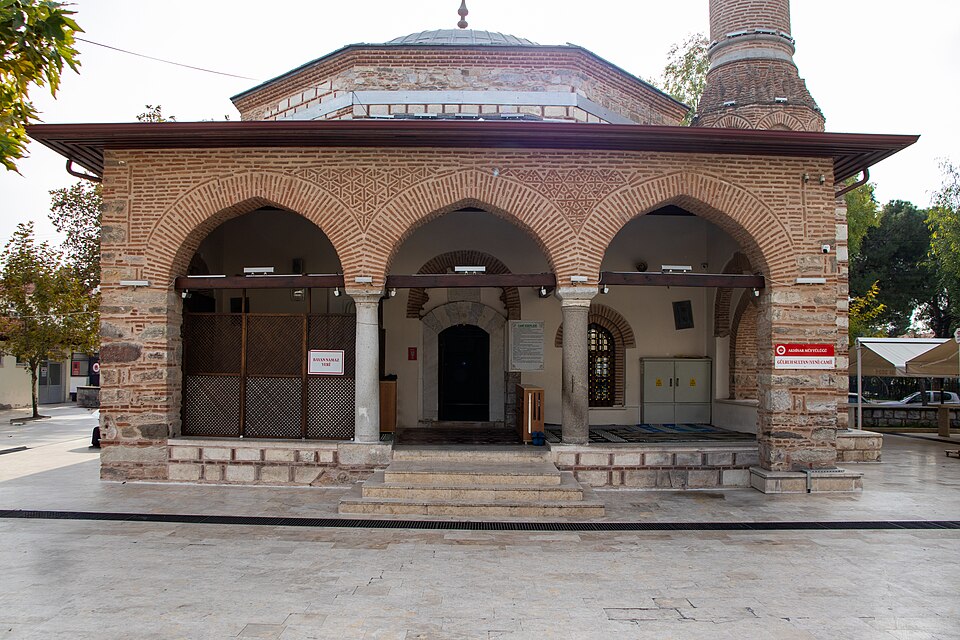
The mosque is a single-domed, square-plan building with a three-arched outer portico (son cemaat yeri) at its entrance, walled in alternating courses of stone and brick that reuse older building material — a construction method continuing the local Beylik-period tradition rather than breaking from it. The plan is modest next to Ulu Camii's multi-domed hall: one dome over one prayer space.
The building has been repaired more than once, and each repair changed something. Work by the Directorate of Foundations in 1940 replaced the domed outer portico with a plain wooden-roofed porch, added iron ties into the walls, rearranged some windows, plastered over the original dome and transition-zone decoration, and added a women's prayer section on the east side. New cracks opened in 2017, and the mosque closed for a restoration that included excavation to establish what the building looked like originally, reopening in April 2021. What is seen today is therefore a mix of early-16th-century fabric and a 1940s reworking, not a single unbroken original. It was originally the centre of a larger endowment that also included a bathhouse, a poorhouse and a school; only the mosque and the bathhouse remain.
Checked 2026-08-23 · Source
Ten to fifteen minutes is enough: the building is a single small dome over one room, without the multiple domed bays of Ulu Camii to walk through. Most of what is worth noticing — the portico, the wall construction, the mihrab — is visible from just inside the entrance.
Checked 2026-08-23
Avoid the five daily prayer times, and especially Friday midday prayer, when the building is in active communal use. Outside those windows the mosque is generally open through the day. No seasonal hours are published on the sources this page uses, so none are given here.
Checked 2026-08-23
Entry is free, as at every working mosque in Turkey. There is no ticket desk, no admission charge and no booking system of any kind — a visitor simply walks in outside prayer times. Current opening hours are not published on the sources this page uses and are not reproduced here; the mosque's rhythm follows the five daily prayers rather than a printed visitor timetable.
Checked 2026-08-23
The mosque stands in central Akhisar, about 55 km north of Manisa city, within a short walk of both Ulu Camii and Dombaycıoğlu Han — the three sit close enough together to see in one stop on foot. Akhisar has no metro and no useful rail service; intercity buses or a car from Manisa or İzmir are the way in, with everything in the town centre covered on foot from there.
Checked 2026-08-23
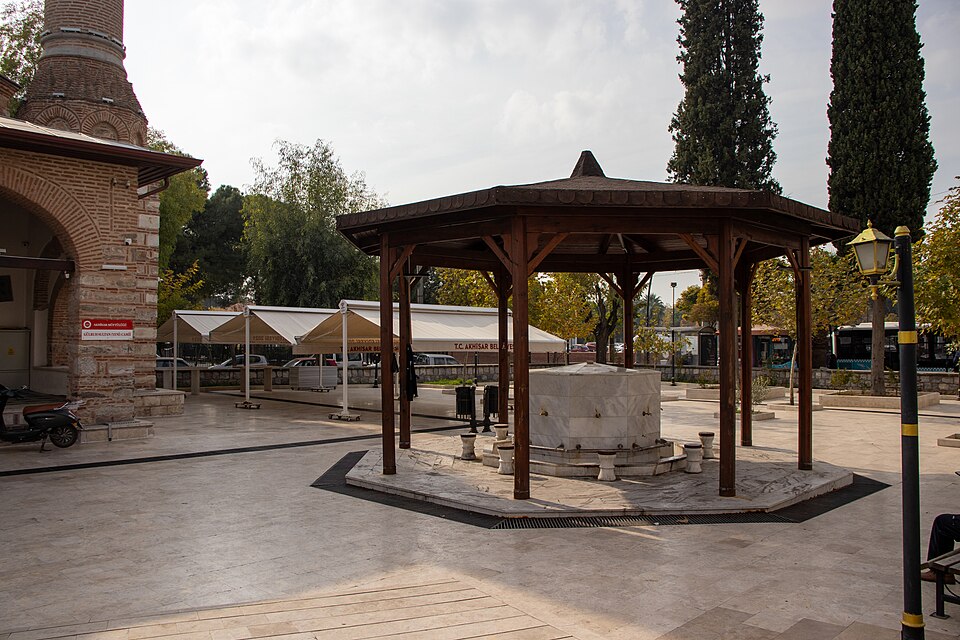
This is a working neighbourhood mosque, and the conduct that applies at any working mosque applies here without exception: shoes off, shoulders and knees covered, and a headscarf for women. Do not plan a visit around one of the five daily prayer times, and stay away entirely at Friday midday, when the building is full for the week's main congregational prayer. There is no English signage, no visitor desk and no facilities such as toilets — this is a functioning place of worship, not a site curated for tourists, even though it carries real architectural and historical interest.
Checked 2026-08-23
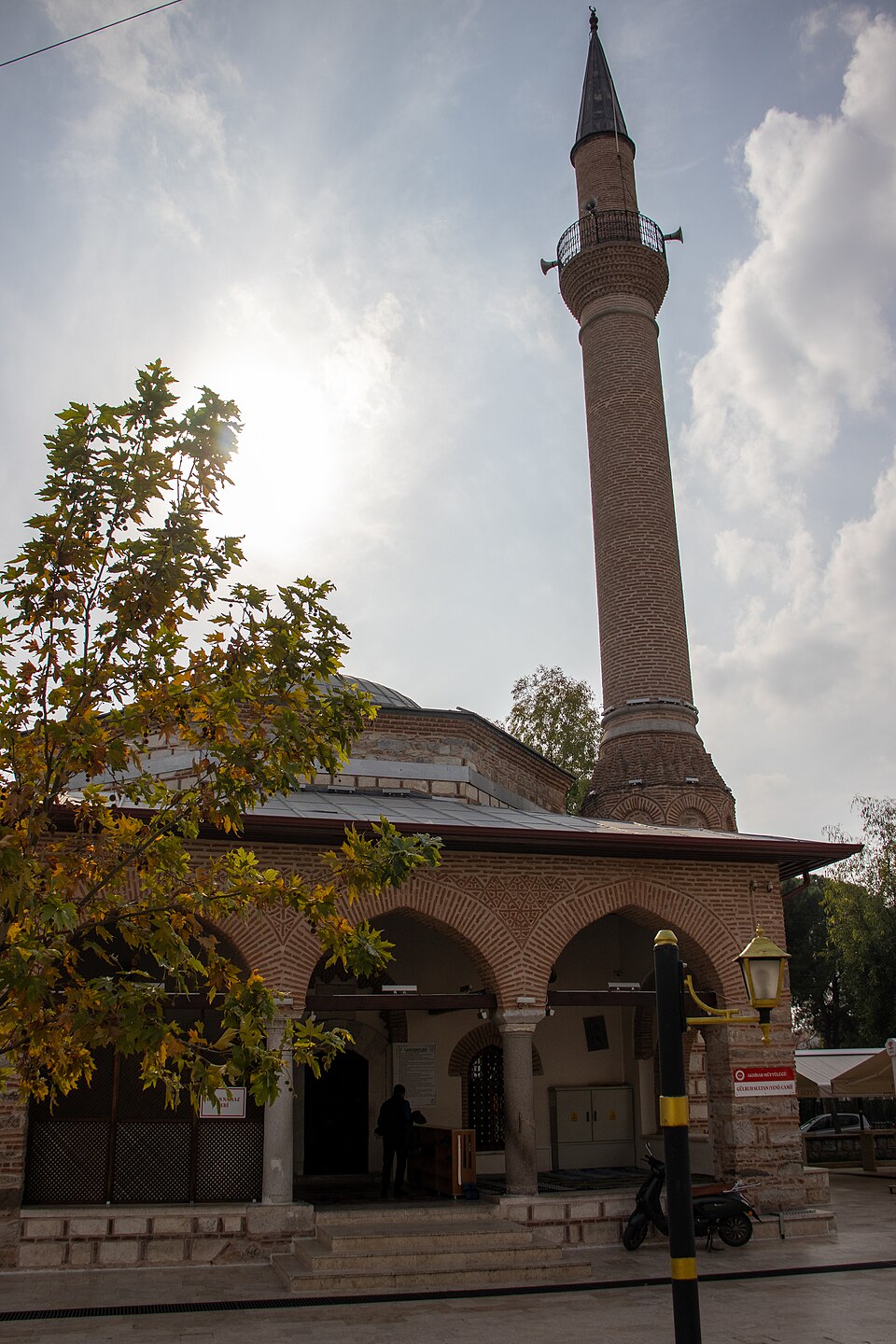
The three-arched entrance portico and the stone-and-brick wall pattern are the most photographable exterior features, best caught in morning or late-afternoon light rather than the flat glare of midday. Inside, the single dome and the mihrab area are worth a frame when the mosque is empty of worshippers — check that no prayer is in progress before photographing the interior, and keep it brief and unobtrusive.
Checked 2026-08-23
Gülruh Hatun was a consort of Sultan Bayezid II and the mother of Şehzade Alemşah, who governed the Saruhan province from Manisa. She founded this mosque in the province's Akhisar district and, after her son's death in 1510, spent her later years in Bursa, where she was buried in a mausoleum of her own commissioning.
The entrance inscription is read either as the year 1503 or as the Hijri year 923, equal to 1517 — the two readings disagree, but both place the foundation in the early 16th century.
No. A 1940 repair by the Directorate of Foundations replaced the domed outer portico with a plain roof, plastered over the original dome decoration and altered the windows; a further restoration ran from 2017 to 2021 after new cracks appeared.
Yes. Entry to a working mosque in Turkey is free, and no ticket or booking applies here.
The mosque was the centre of a larger foundation that also included a bathhouse, a poorhouse and a school. Only the mosque and the bathhouse survive today.
All three stand within a few hundred metres of each other in central Akhisar and can be visited on foot in one stop.
Loading the interactive map…
The interactive map could not be loaded.
Last updated:
Source: OpenStreetMap contributors, Wikidata ·