


2 min walk · Akhisar
Sasa Bey Hammam
- High
- Family attraction
Language · 1 published
Place of worship · Akhisar, Manisa
Akhisar Ulu Cami
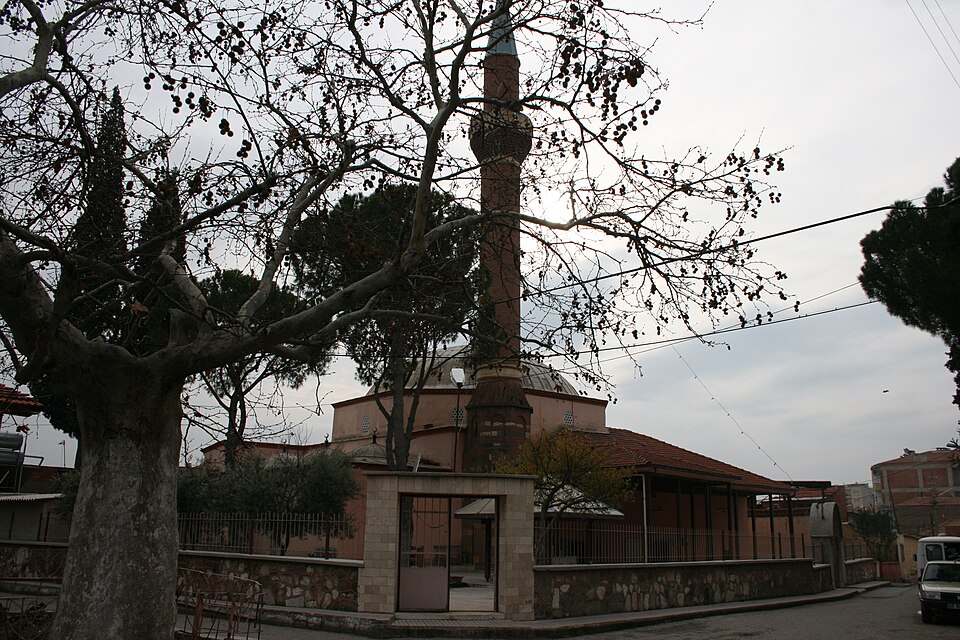
The Grand Mosque of Akhisar, Akhisar Ulu Camii, stands on the site of a Byzantine church in the centre of the district, a few streets from Gülruh Sultan Mosque and Dombaycıoğlu Han. No foundation inscription survives, so the exact year it was built is not recorded, but its plan, materials and decoration place it in the last quarter of the 15th century, among the early examples of the centrally planned Ottoman mosque type.
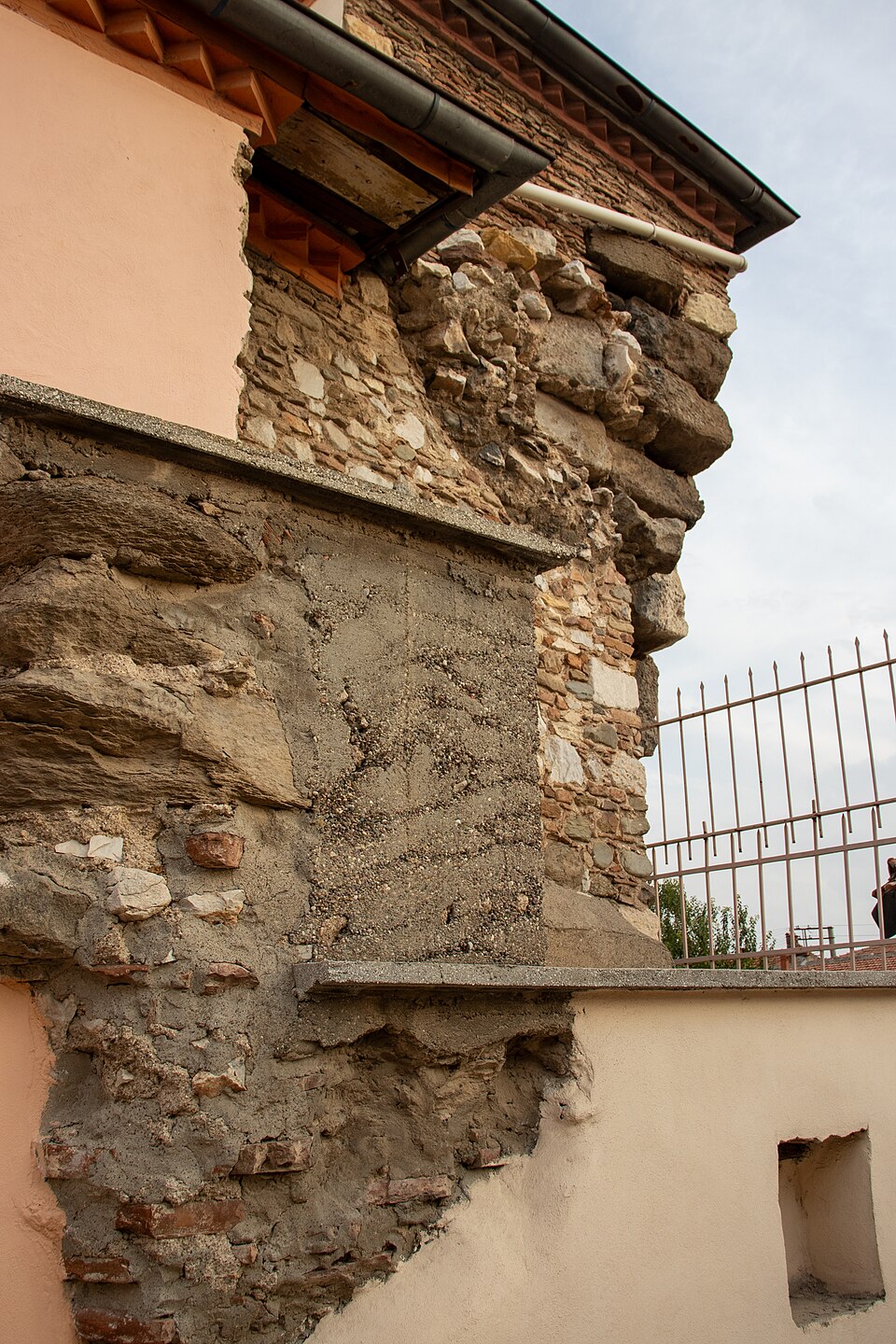
The building reused the older church rather than clearing the site. The south wall still carries stone blocks and an arched section from that earlier structure, left unplastered while the other walls are finished. A half-circular foundation on the east wall is thought to be what remains of the church's apse, and four marble columns inside, carved with the "knotted column" technique and dated to between the 11th and 14th centuries, were carried over from Byzantine buildings rather than cut for the mosque. Some accounts of the town's conquest by the Saruhan beylik identify this mosque as the one where the first Friday prayer was said afterwards, though that tradition is separate from the dating of the fabric standing today.
Checked 2026-08-23 · Source
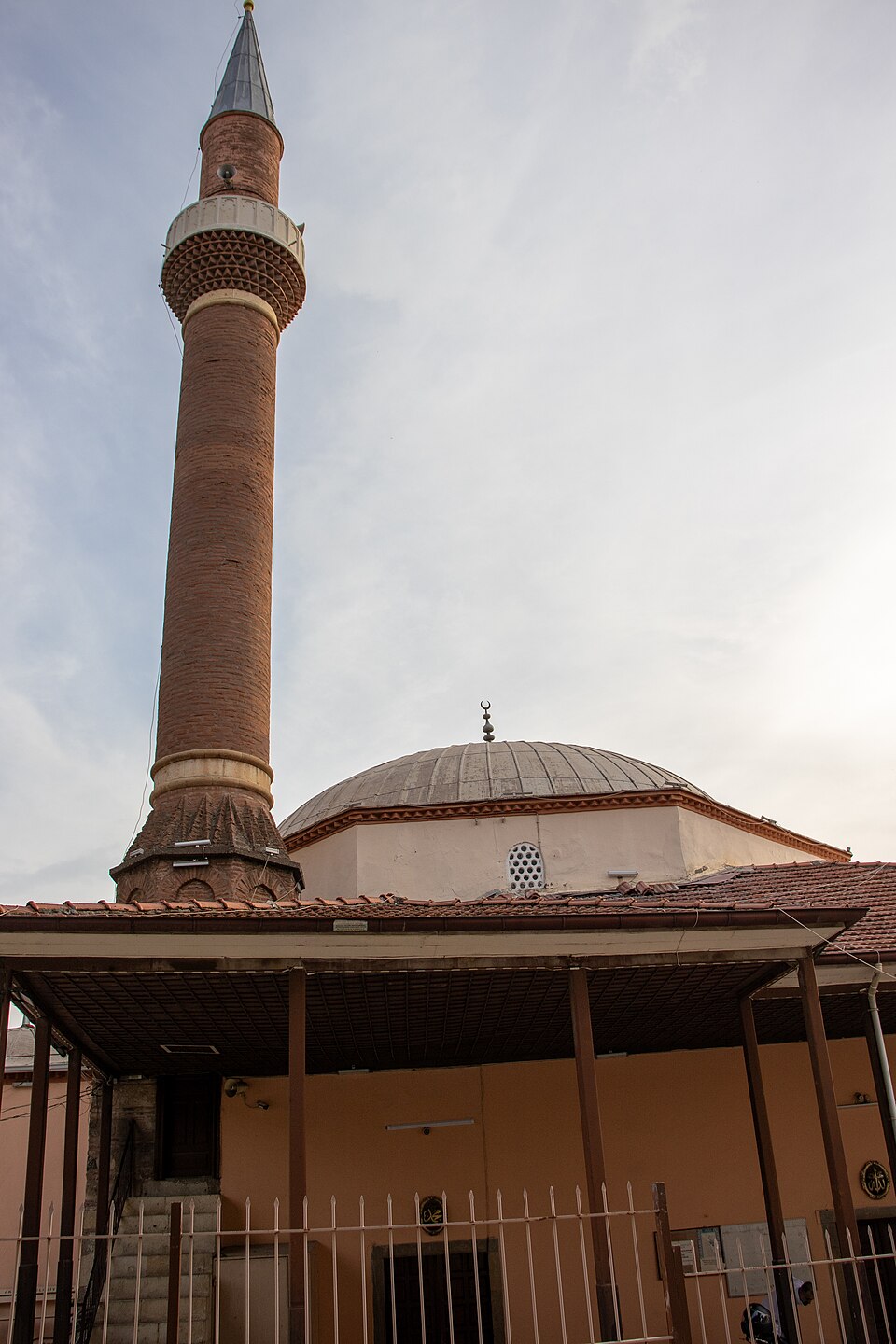
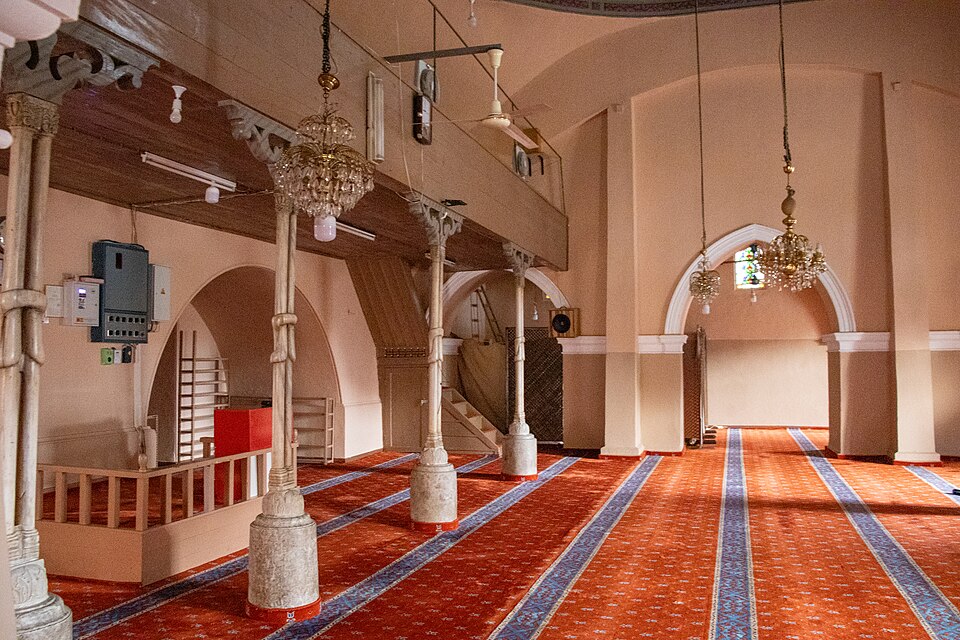
The prayer hall is a square chamber carrying a single large dome on an octagonal drum, flanked by three smaller domed bays on each side and separated from them by broad east–west arches — a centrally planned layout rather than the long hypostyle hall common in earlier Anatolian mosques. A three-arched entrance portico runs along the east front, and a square-based minaret of alternating stone and brick courses rises at the northeast corner, reached by a stair to a raised platform.
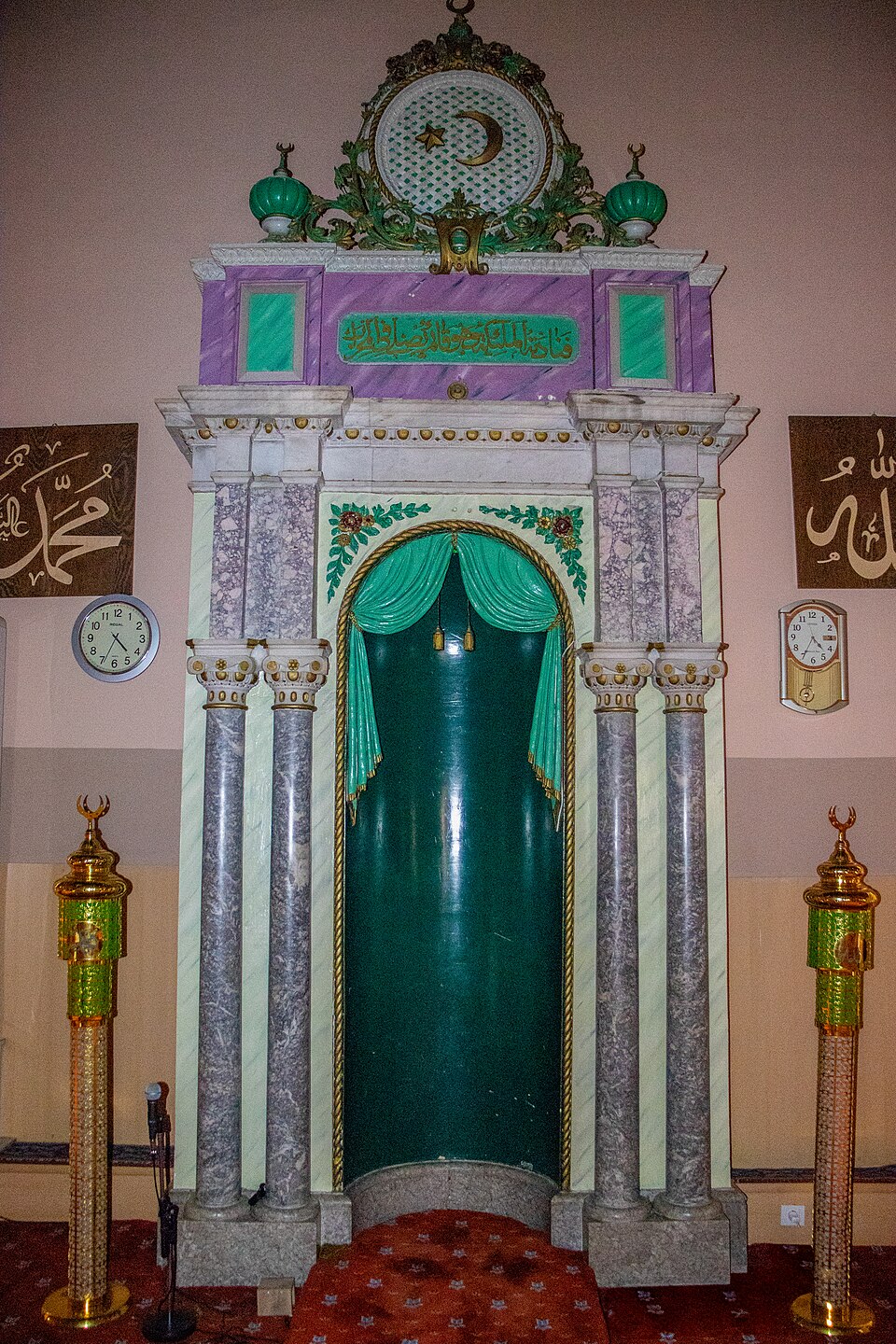
Decoration is concentrated on the dome, the drum and the mihrab, in a plasterwork style associated with the Ottoman Westernisation period: acanthus leaves, rosettes and crescent motifs arranged in sixteen segments around the dome. The four reused marble columns are the most visibly older element inside. A cemetery beside the mosque holds 67 gravestones and five sarcophagi dated between 1488 and 1918, a record of continuous burial rather than a single period. A hadith school, a Quran school, a lecture hall and a Naqshbandi lodge once stood around the courtyard; none of them survive.
Checked 2026-08-23 · Source
Fifteen to twenty minutes covers the building: a look at the exterior and the reused south wall, a turn through the prayer hall past the four marble columns, and a pass through the cemetery. It is not a museum with a route to follow, so there is nothing to queue for and nothing timed.
Checked 2026-08-23
Go outside the five daily prayer times and, in particular, outside Friday midday, when the building fills for the week's main communal prayer and is not the moment for a visitor to look around. Overcast or early-morning light is kinder to the plain stone south wall than the flat glare of midday. No seasonal opening pattern for the mosque is published on the sources this page uses, and none is reproduced here.
Checked 2026-08-23
Entry is free, as at every working mosque in Turkey. No ticket, booking or entry fee applies. Current published opening hours are not on the sources this page uses and are not reproduced here; the mosque follows the rhythm of the five daily prayers rather than a fixed visitor timetable.
Checked 2026-08-23
The mosque sits in central Akhisar, about 55 km north of Manisa city and roughly 51 km by road according to one local source, within a few hundred metres of both Gülruh Sultan Mosque and Dombaycıoğlu Han — close enough to cover all three on foot in one stop. Akhisar has no metro and no useful rail connection; it is reached from Manisa or İzmir by intercity bus or by car, then covered on foot once in the town centre.
Checked 2026-08-23 · Source
This is a working mosque, not a monument kept for visitors, so the usual conduct applies and is not optional: shoes off before the carpeted floor, shoulders and knees covered, and a headscarf for women. Visiting during any of the five daily prayers, and especially the crowded Friday midday prayer, is not appropriate — come outside those windows. There is no ticket desk, no signage in English and no visitor facilities such as toilets or a shop; this is a neighbourhood mosque that happens to be architecturally significant, not a tourist site built around one.
Checked 2026-08-23
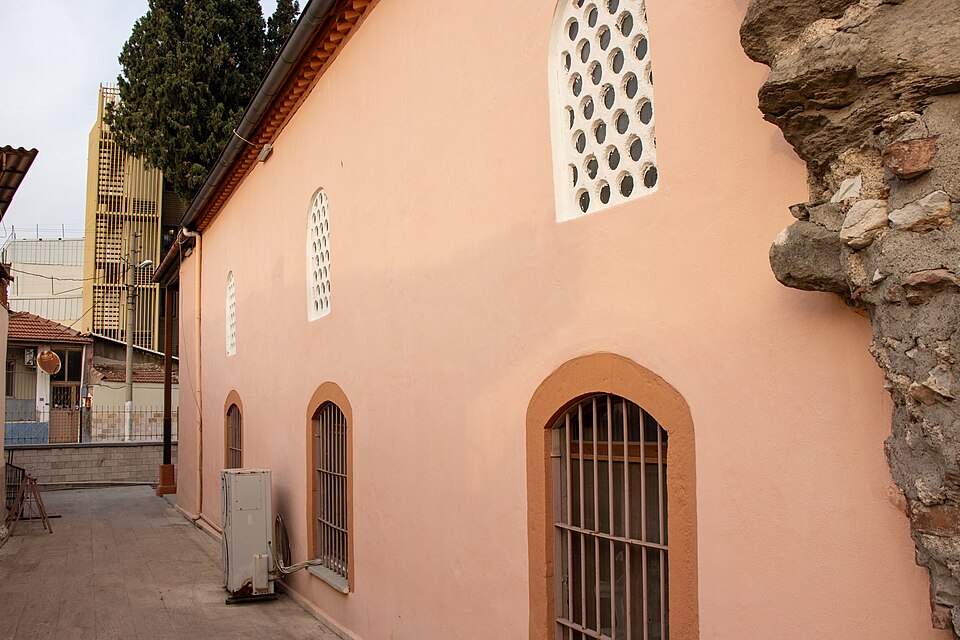
The unplastered south wall, with its reused stone blocks and arched section from the older church, is the most distinctive single view and reads best in low, raking light rather than midday sun. Inside, the domed prayer hall and the four Byzantine marble columns are worth a frame if the mosque is not in use for prayer at the time — check first and be unobtrusive rather than working the room. The cemetery, with gravestones spanning more than four centuries, photographs well in soft light and needs no permission to walk through respectfully.
Checked 2026-08-23
It stands on the site of one and reused parts of it. The south wall keeps stone blocks and an arched section from the earlier church, a half-circle foundation on the east wall is thought to be the old apse, and four marble columns inside were carried over from Byzantine buildings dated to the 11th–14th centuries. The mosque itself was newly built around and over these remains, not simply converted wholesale.
No foundation inscription survives, so there is no recorded date. Its plan, materials and decoration place its construction in the last quarter of the 15th century.
No. Entry to a working mosque in Turkey is free, and no ticket or booking applies here.
Its upper sections, the honeycomb transition and the conical cap, collapsed in the 1913 earthquake and were rebuilt afterwards; the lower shaft, in alternating stone and brick, is the older fabric.
All three stand within a few hundred metres of each other in central Akhisar and can be covered on foot in a single visit.
There is no metro and no useful rail link. Intercity buses and driving are the practical options for the roughly 55 km north from Manisa city.
Loading the interactive map…
The interactive map could not be loaded.
Last updated:
Source: OpenStreetMap contributors, Wikidata ·