Smart Self-Managed Tours

City guide · Switzerland

Zurich

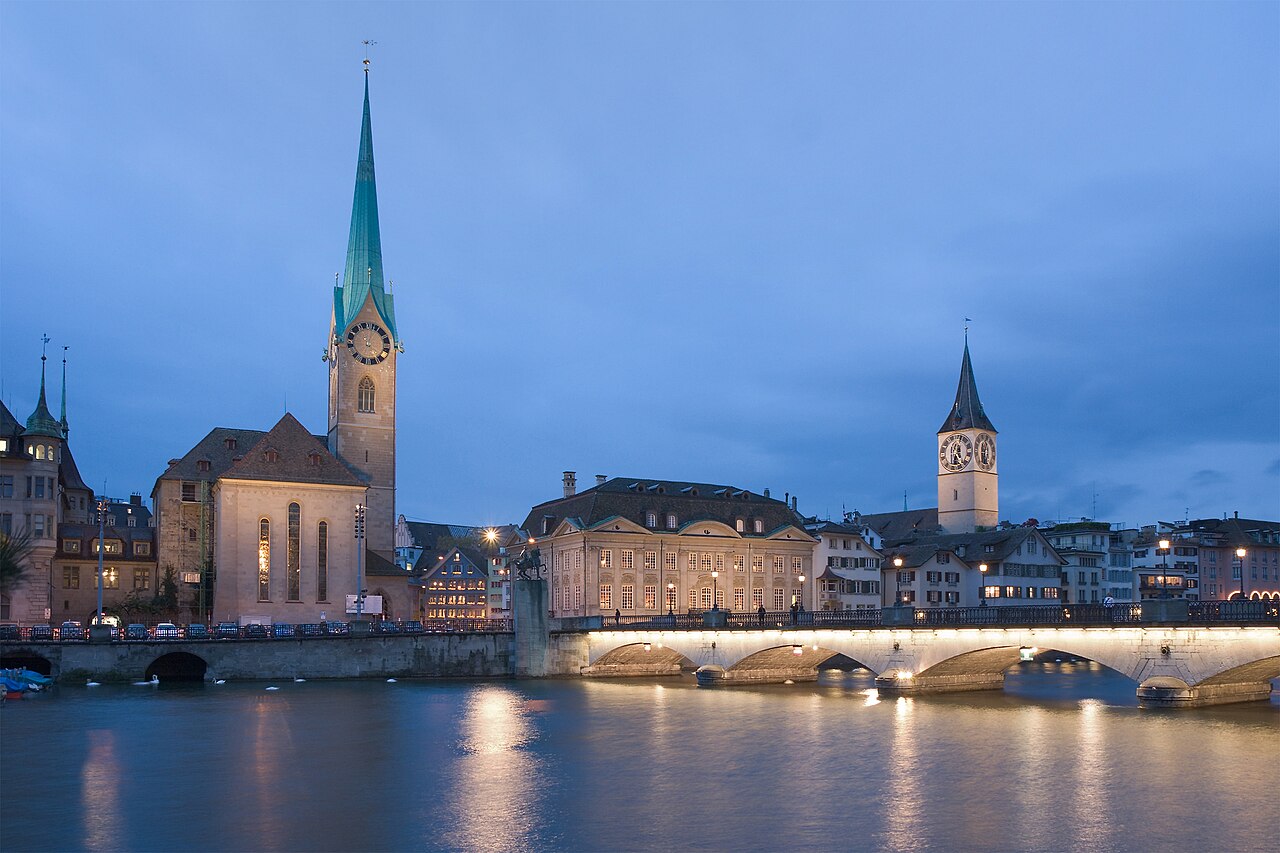
A photograph of Zurich
Photograph · Ikiwaner · CC BY-SA 3.0

Zurich’s centre is compact and organised around the Limmat River, the lakefront and the main railway station. The Old Town occupies both riverbanks, while the university terraces rise east and the former industrial districts extend west. Trams, S-Bahn trains, buses, boats and funiculars share an integrated zonal network. Walk the historic core, then use public transport for Uetliberg, outer neighbourhoods and longer lake connections.

Practical information

Language spoken
German, French, Italian and Romansh
National practical orientation; regional and minority languages may also be used
Dialling code
+41
International calling code; local area and mobile prefixes still apply
Currency
Swiss franc (CHF)
Use the official local currency; card acceptance varies by place
Emergency number
112 · 117 police · 144 ambulance
Use only for an emergency; tourist assistance may use a separate number
Plug type
Type C and J · 230 V
Check that chargers support the recorded voltage before using an adapter
Tap water
Safe from the mains
Public drinking water is controlled under Swiss food-safety rules

Planning a visit

Suggested stay
2-3 days
Getting around
Tram, S-Bahn, bus, boat, funicular and walking
  1. January: seasonal closure recorded
  2. February: seasonal closure recorded
  3. March: seasonal closure recorded
  4. April: seasonal closure recorded
  5. May: seasonal closure recorded
  6. June: seasonal closure recorded
  7. July: seasonal closure recorded
  8. August: seasonal closure recorded — this month
  9. September: seasonal closure recorded
  10. October: seasonal closure recorded
  11. November: seasonal closure recorded
  12. December: seasonal closure recorded

Top things to see

Ranked by importance — sitelinks, pageviews and heritage status, not editor preference.

  1. Bauschänzli
    02 1 hour

    Bauschänzli

    Bauschänzli is a small artificial island and public park situated in the Limmat River in central Zurich. Its name derives from historical fortifications, with "Bauschänzli" referring to a bulwark or bastion that once stood at this location.

    • Must see
    • Restaurant or café
  2. Zunfthaus zur Meisen
    03 1 hour

    Zunfthaus zur Meisen

    Zunfthaus zur Meisen is a historic guild house located in Zurich, Switzerland. It stands as a testament to the city's medieval guild system, which played a central role in Zurich's political and social structure for centuries.

    • High
    • Restaurant or café
  3. Zunfthaus zur Waag
    04 1 hour

    Zunfthaus zur Waag

    Zunfthaus zur Waag is a historic guild house situated in central Zurich, Switzerland. The building represents traditional Swiss guild architecture and serves as a preserved cultural landmark within the city's old town area.

    • High
    • Restaurant or café
  4. Zunfthaus zur Zimmerleuten
    05 1 hour

    Zunfthaus zur Zimmerleuten

    Zunfthaus zur Zimmerleuten is a historic guild house in Zurich, Switzerland. It stands along the Limmatquai, the prominent riverside promenade in the city centre. The building belongs to the carpenters' guild, one of Zurich's traditional craft associations with medieval origins.

    • High
    • Restaurant or café
  5. blindekuh
    06 1 hour

    blindekuh

    • Notable
    • Restaurant or café
  6. Blaue Ente
    10 1 hour

    Blaue Ente

    • Notable
    • Restaurant or café
  7. Ornellaia
    13 1 hour

    Ornellaia

    • Notable
    • Restaurant or café
  8. Pavillon
    16 1 hour

    Pavillon

    • Notable
    • Restaurant or café

Source: OpenStreetMap contributors, Wikidata ·

How the city is laid out

The main station anchors the northern edge of central Zurich. Bahnhofstrasse runs south toward Lake Zurich, with Lindenhof and the western Old Town between it and the Limmat. Niederdorf and the eastern Old Town climb toward the university and Polyterrasse. Enge and the lake promenades continue south, while Zurich West occupies converted industrial ground beyond the centre. Uetliberg, the zoo and farther lake destinations are separate excursions reached efficiently by rail or tram.

Checked 2026-08-26

Getting around

Use the ZVV network for trams, buses, S-Bahn trains, boats and funicular railways. Zurich Tourism notes that one zonal ticket can cover these modes within the selected zones, which makes transfers straightforward. The central Old Town and lakefront are best walked, while rail is the practical choice for Uetliberg and the airport. Check the zones before travel and do not assume a scenic boat or mountain connection uses the same validity area.

Checked 2026-08-26

Common questions

How many days does Zurich need?

Two to three days are enough for a first visit. Two cover the Old Town, lakefront and central museums; add a third for Uetliberg, the zoo or a longer trip on the lake.

When is the best time to visit Zurich?

May through September gives longer daylight for the lakefront, viewpoints and outdoor district walks. Winter is better suited to museums and shorter central routes unless snow activities are the main purpose.

Is Zurich easy to explore on foot?

The Old Town, Bahnhofstrasse, lakefront and university terraces fit into connected walking routes. Use transit for Zurich West, the zoo, Uetliberg and other destinations beyond the compact centre.

Does one ticket cover different transport modes?

Within the relevant ZVV zones, tickets can cover trams, buses, trains, boats and funicular or cable connections included in the network. Confirm the required zones for longer journeys.

Which Zurich areas combine well?

Combine both sides of the Old Town with Bahnhofstrasse and the lakefront. Give Zurich West, Uetliberg or a longer lake trip its own block to avoid repeated crossings through the main station.

Turn this list into a plan

Set your days, your pace and the hours you actually want to be out. The planner works around closing days and travel time, and leaves room to eat.

Plan Zurich