Smart Self-Managed Tours

City guide · Spain

Barcelona

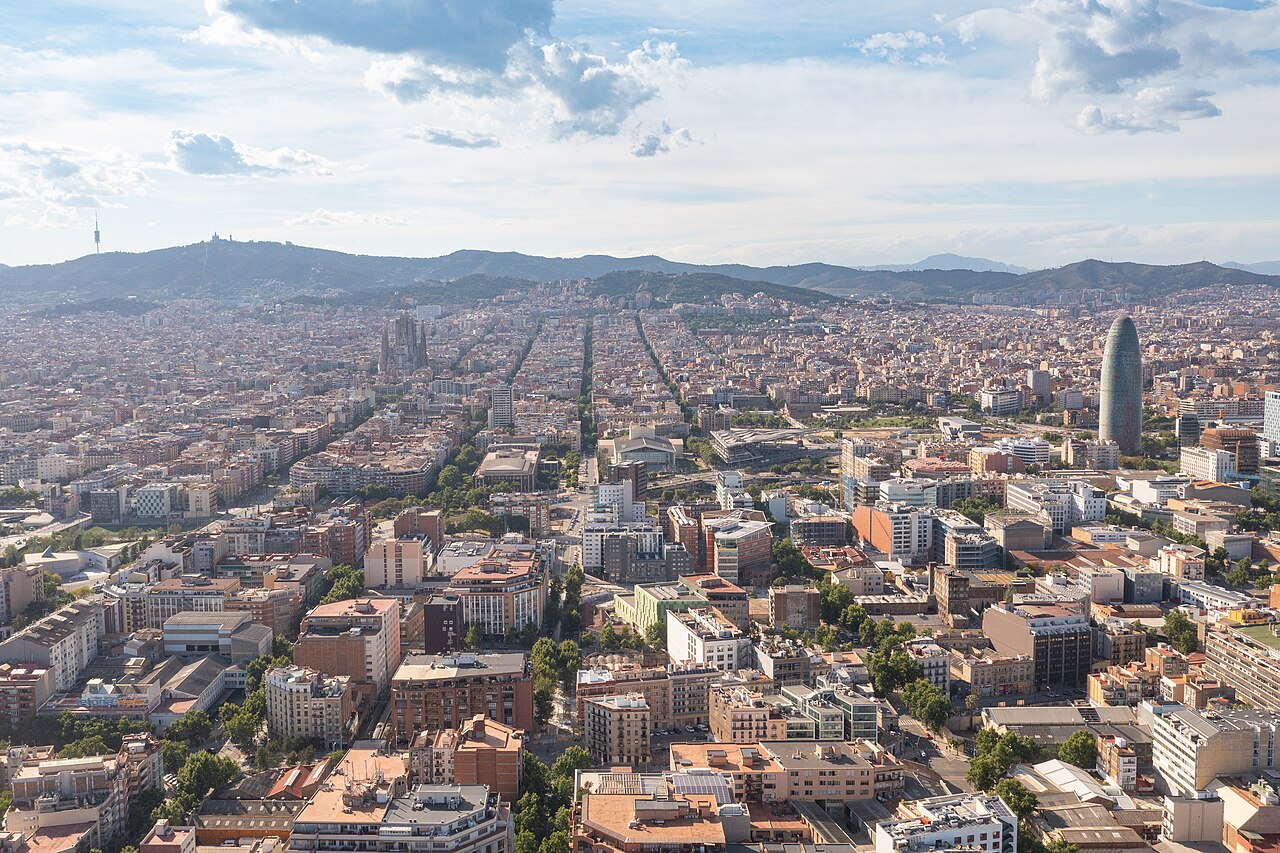
A photograph of Barcelona
Photograph · dronepicr · CC BY 2.0

Barcelona is Catalonia's capital on Spain's Mediterranean coast. Its visitor core combines the irregular lanes of Ciutat Vella, the nineteenth-century Eixample grid, the waterfront at Barceloneta, and the cultural sites on Montjuïc. Catalan and Spanish are both used across the city, while signs and place names commonly appear first in Catalan. The ranked attractions span Roman and medieval streets, Modernista architecture, markets, museums, beaches, and hilltop viewpoints rather than a single compact monument zone.

Practical information

Language spoken
Spanish; co-official regional languages include Catalan, Galician and Basque
National practical orientation; regional and minority languages may also be used
Dialling code
+34
International calling code; local area and mobile prefixes still apply
Currency
Euro (EUR)
Use the official local currency; card acceptance varies by place
Emergency number
112
Use only for an emergency; tourist assistance may use a separate number
Plug type
Type C and F · 230 V
Check that chargers support the recorded voltage before using an adapter
Tap water
Not recorded
No verified nationwide visitor statement was recorded

Planning a visit

Suggested stay
Not recorded
Getting around
Walk, metro and bus
  1. January: seasonal closure recorded
  2. February: seasonal closure recorded
  3. March: seasonal closure recorded
  4. April: no seasonality data recorded
  5. May: no seasonality data recorded
  6. June: no seasonality data recorded
  7. July: no seasonality data recorded
  8. August: no seasonality data recorded — this month
  9. September: no seasonality data recorded
  10. October: no seasonality data recorded
  11. November: seasonal closure recorded
  12. December: seasonal closure recorded

Top things to see

Ranked by importance — sitelinks, pageviews and heritage status, not editor preference.

  1. Casa de les Punxes
    02 1 hour

    Casa de les Punxes

    Casa de les Punxes is a distinctive modernist building in Barcelona, designed by architect Josep Puig i Cadafalch.

    • Must see
    • Art and culture venue
  2. Casa Amatller
    03 1 hour

    Casa Amatller

    Casa Amatller is a modernist building in Barcelona, designed by architect Josep Puig i Cadafalch. It stands on Passeig de Gràcia, adjacent to Casa Batlló.

    • Must see
    • Art and culture venue
  3. Casa Calvet
    04 1 hour

    Casa Calvet

    Casa Calvet is a modernist building in Barcelona, designed by Antoni Gaudí. Constructed between 1898 and 1900, it was built as a residential and commercial property for the Calvet family, who were textile manufacturers.

    • Must see
    • Art and culture venue
  4. Dona i Ocell
    05 1 hour

    Dona i Ocell

    Dona i Ocell is a public sculpture located in Barcelona, Spain. The local name is Dona i Ocell, which translates from Catalan as Woman and Bird.

    • Must see
    • Art and culture venue
  5. Topos V
    06 1 hour

    Topos V

    • Must see
    • Art and culture venue
  6. Casa Martí
    07 1 hour

    Casa Martí

    • Must see
    • Art and culture venue
  7. Els mistos
    09 1 hour

    Els mistos

    • Must see
    • Art and culture venue
  8. Desolation
    11 1 hour

    Desolation

    • High
    • Art and culture venue
  9. El Molino
    14 1 hour

    El Molino

    • High
    • Art and culture venue
  10. La Gamba
    16 1 hour

    La Gamba

    • High
    • Art and culture venue
  11. Font de Canaletes
    27 1 hour

    Font de Canaletes

    Font de Canaletes is a historic fountain located on La Rambla in Barcelona, Spain. It stands as one of the city's most recognizable landmarks and serves as a traditional meeting point for both locals and visitors.

    • High
    • Art and culture venue
  12. L'Empordà
    38 1 hour

    L'Empordà

    • High
    • Art and culture venue
  13. Mamut
    57 1 hour

    Mamut

    • High
    • Art and culture venue
  14. Peace bell
    65 1 hour

    Peace bell

    • High
    • Art and culture venue
  15. Teatreneu
    81 1 hour

    Teatreneu

    • High
    • Art and culture venue
  16. Carmela
    83 1 hour

    Carmela

    • Notable
    • Art and culture venue
  17. El Llantiol
    84 1 hour

    El Llantiol

    • Notable
    • Art and culture venue
  18. La Puntual
    87 1 hour

    La Puntual

    • Notable
    • Art and culture venue
  19. The A
    95 1 hour

    The A

    • Notable
    • Art and culture venue

Source: OpenStreetMap contributors, Wikidata ·

How the city is laid out

Ciutat Vella is the historic nucleus beside the old harbour. La Rambla separates the Gothic Quarter and La Ribera from El Raval, while Barceloneta occupies the seaward edge. North of the old city, the broad Eixample grid carries much of Barcelona's Modernista architecture, including the Passeig de Gràcia corridor and the Sagrada Família area. Montjuïc rises southwest of the centre with museums, gardens and Olympic sites. Gràcia and Poblenou reward separate neighbourhood visits rather than being treated as extensions of the Gothic core.

Checked 2026-08-26

Getting around

Walk within Ciutat Vella and along the central Eixample corridors, then use metro or bus between neighbourhood clusters. TMB operates the main urban network, and its metro connects the city's districts and principal visitor areas. Line 9 Sud links the airport with the metro system. The integrated visitor products described by TMB also cover buses and other participating services, but airport and regional journeys can have different ticket conditions. Check the operator's current route and fare information before choosing a pass.

Checked 2026-08-26

Common questions

How many days should I spend in Barcelona?

A fixed stay length is not recorded. Build the visit by clusters: Ciutat Vella and the waterfront, the Eixample Modernista sites, Montjuïc, then Gràcia or another outer neighbourhood if time remains.

Which area contains Barcelona's historic centre?

Ciutat Vella contains the Gothic Quarter, La Ribera, El Raval and Barceloneta. It is compact enough to explore mainly on foot, although the lanes are irregular and major roads form useful boundaries.

What is the easiest way to move between districts?

Use the TMB metro for longer cross-city trips and walk within each sightseeing cluster. Buses are useful where a direct metro connection is inconvenient or where the street-level view matters.

Is the airport connected to the metro?

Yes. TMB identifies Line 9 Sud as the airport connection into the metro network. Check the current ticket conditions because airport journeys can be treated differently from ordinary urban travel.

Should I visit Montjuïc as part of the old city walk?

Treat Montjuïc as a separate cluster. Its museums, gardens, viewpoints and Olympic sites sit southwest of the historic centre and are better combined with dedicated transport than folded into a Ciutat Vella walk.

Turn this list into a plan

Set your days, your pace and the hours you actually want to be out. The planner works around closing days and travel time, and leaves room to eat.

Plan Barcelona