


1 min walk · Vračar
Roman Catholic Archdiocese of Belgrade
- Must see
- Place of worship
Language · 1 published
Place of worship · Градска општина Врачар, Belgrade
Црква Криста Краља
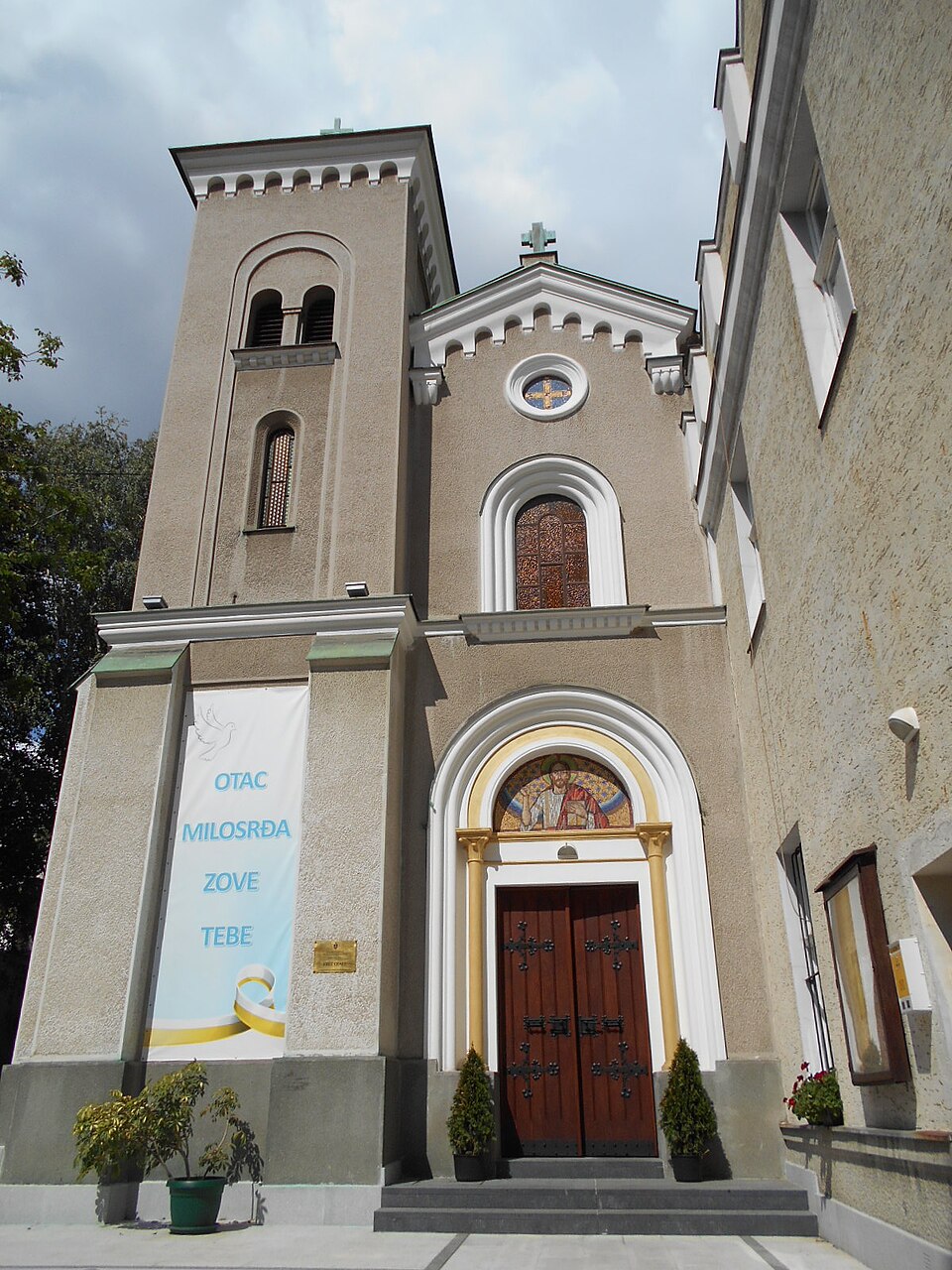
The Co-cathedral of Christ the King on Krunska street is the oldest Catholic place of worship in Belgrade, a city where the Catholic minority has always shared ground with an Orthodox majority.
Negotiations between the Holy See and the Serbian government over building it started in 1914; construction itself began in 1924. The new church was dedicated first to Saint Ladislaus and consecrated that same year by the Apostolic Nuncio Ermenegildo Pellegrinetti, then raised to cathedral rank for the newly created Archdiocese of Belgrade.
It reached its present size in 1926, when it was expanded and rededicated to Christ the King; a new pipe organ and bells were installed the following year. Between 1966 and 1971, while Ciril Zajec served as the cathedral's vicar, the parish grew and the presbytery was rebuilt to the post-conciliar liturgical layout set by the Second Vatican Council.
In 1988 the newly built Cathedral of the Blessed Virgin Mary took over as the archdiocese's main seat, and Christ the King was downgraded — administratively, not architecturally — to co-cathedral. Today it hosts diplomatic receptions, requiem Masses and interreligious meetings more often than an ordinary Sunday congregation would fill it.
Checked 2026-08-24 · Source
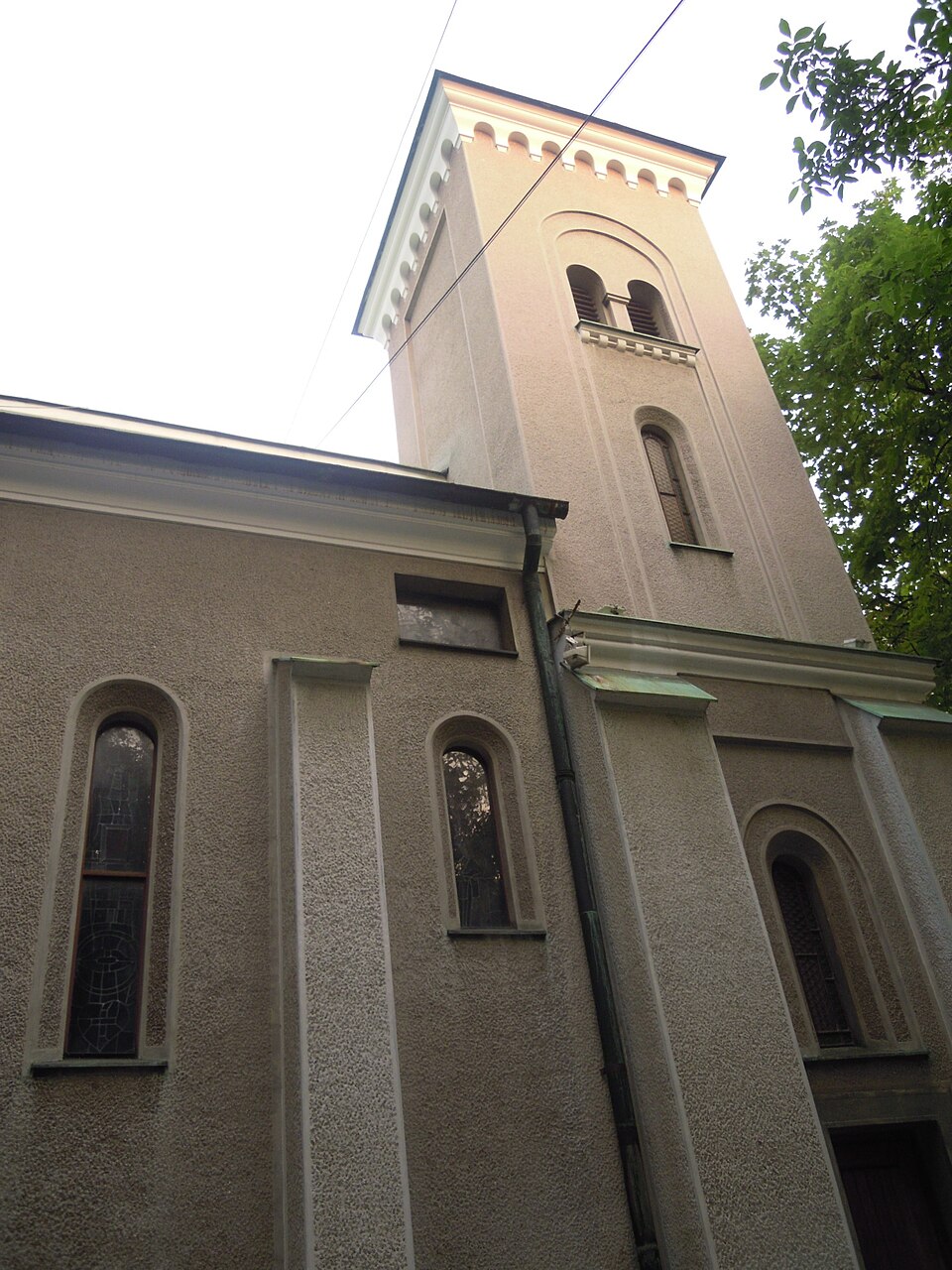
A small churchyard behind a wrought iron gate leads to both the church and its rectory. The facade splits into two registers on a stucco cornice: a lower portal on two Corinthian columns, topped by a lunette mosaic of Christ Blessing, and an upper register with a round-arched window under a band of hanging arches. A bell tower with a three-window belfry stands to the left; a two-storey rectory with four rectangular windows sits to the right.
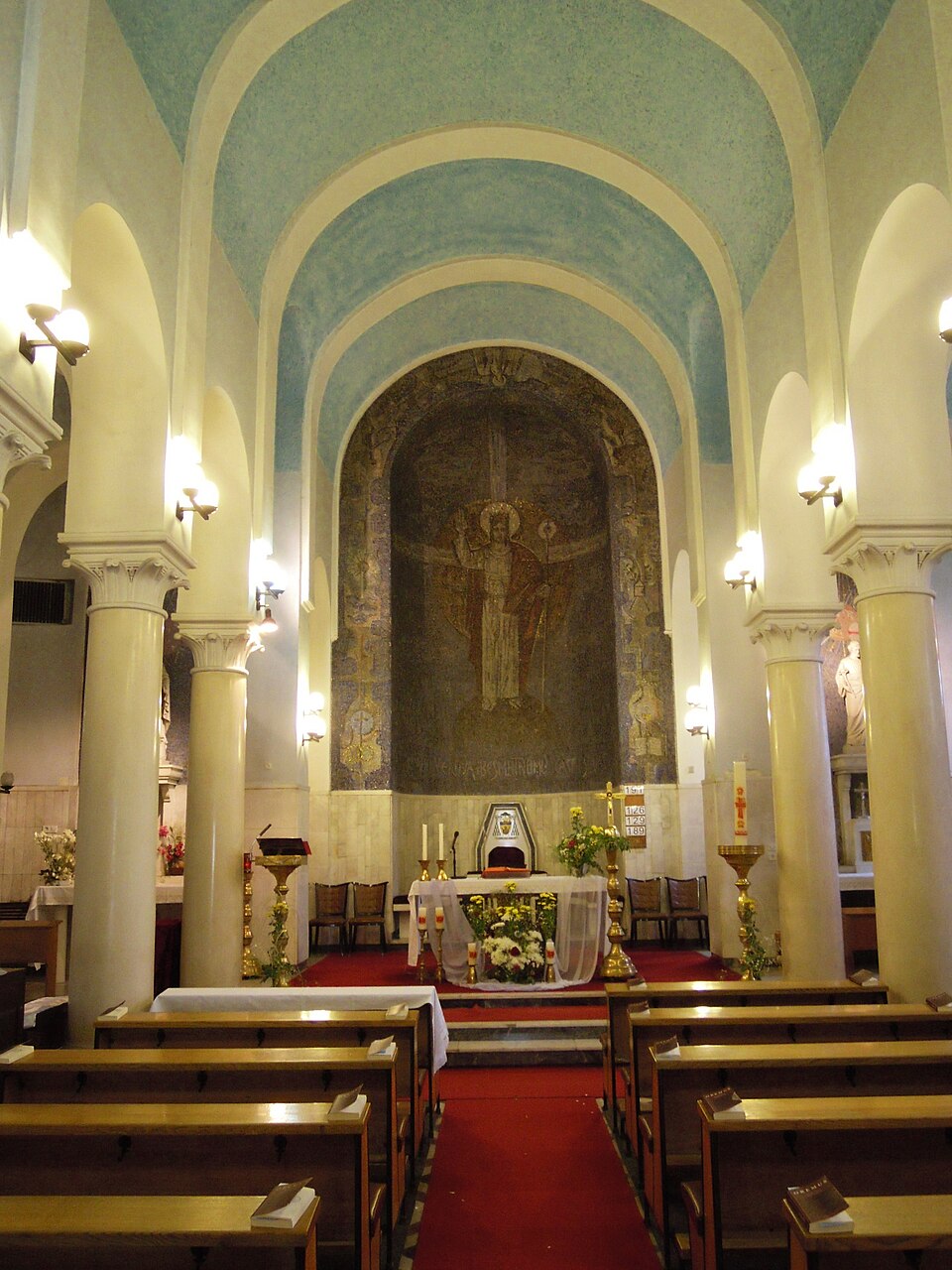
Inside, three naves run under a barrel vault above a band of white Carrara marble, carrying wooden Stations of the Cross and stained-glass windows depicting scenes from the lives of Jesus and Mary. The side aisles end in a transept with two shallow semicircular apses: the right altar is dedicated to Saint Joseph, the left to Our Lady of Lourdes and doubles as the Blessed Sacrament chapel.
The presbytery was rebuilt to its current post-conciliar form in the 1960s. Along its central axis stand the main altar and a marble bishop's throne, under an apse mosaic of Christ the King finished in the same period. The choir loft above the central portal holds a 1927 pipe organ by Franc Jenko, fourteen stops across two keyboards and a pedal board.
Checked 2026-08-24 · Source
Twenty to thirty minutes covers the interior at a walking pace: the three naves, the two side altars and the apse mosaic. A visitor stopping to read the Stations of the Cross or study the stained glass in sequence should allow closer to forty-five minutes.
Checked 2026-08-24 · Source

The co-cathedral is a working parish church, so a weekday visit outside Mass avoids competing with a service in progress. Exact public opening hours are not recorded here; the operator is the Archdiocese of Belgrade, and its own site is the source to check before a visit rather than any aggregator.
Checked 2026-08-24 · Source
Entry is free — it is a parish church, not a ticketed museum, and its co-cathedral status brings no admission charge with it. No fee is recorded, and none is expected of a working place of worship rather than an attraction run for visitors.
Checked 2026-08-24 · Source
The church stands on Krunska street in central Belgrade. No public-transport route is recorded here; the Archdiocese's own site or a current city transit map is the source to check, since a stop number copied from memory would be exactly the kind of guessed fact this page refuses to print.
Checked 2026-08-24 · Source

Because the co-cathedral now hosts diplomatic and interreligious functions as much as regular worship, it is sometimes closed to casual visitors for a private event with no public notice. Dress modestly and keep quiet during a service in progress; a Mass in session is not the moment to walk the nave for the stained glass.
Checked 2026-08-24 · Source

The interior mosaics, the stained-glass cycle and the marble bishop's throne are the obvious subjects, and daylight through the round-arched windows lights the nave well in the middle of the day. No photography restriction is recorded here, but flash and photography during an active Mass are refused by convention at any working church, not only this one.
Checked 2026-08-24 · Source
No. It was the archdiocese's cathedral from 1924 until 1988, when the new Cathedral of the Blessed Virgin Mary took over as the main seat and Christ the King became a co-cathedral.
Construction began in 1924 on a site negotiated between the Holy See and the Serbian government since 1914; it reached its current size after an expansion in 1926.
Saint Ladislaus, at its 1924 consecration. It was rededicated to Christ the King in 1927, after the 1926 expansion.
Roman Catholic, under the jurisdiction of the Archdiocese of Belgrade.
No. It is a parish church, open for worship rather than ticketed as a museum.
It was built in 1927 by Franc Jenko and has fourteen stops across two keyboards and a pedal board.
Loading the interactive map…
The interactive map could not be loaded.
Last updated:
Source: OpenStreetMap contributors, Wikidata ·