

.jpg)

2 min walk
Santa Maria dei Miracoli
- Must see
- Place of worship
Language · 1 published
Art and culture venue · Venice
Malibran
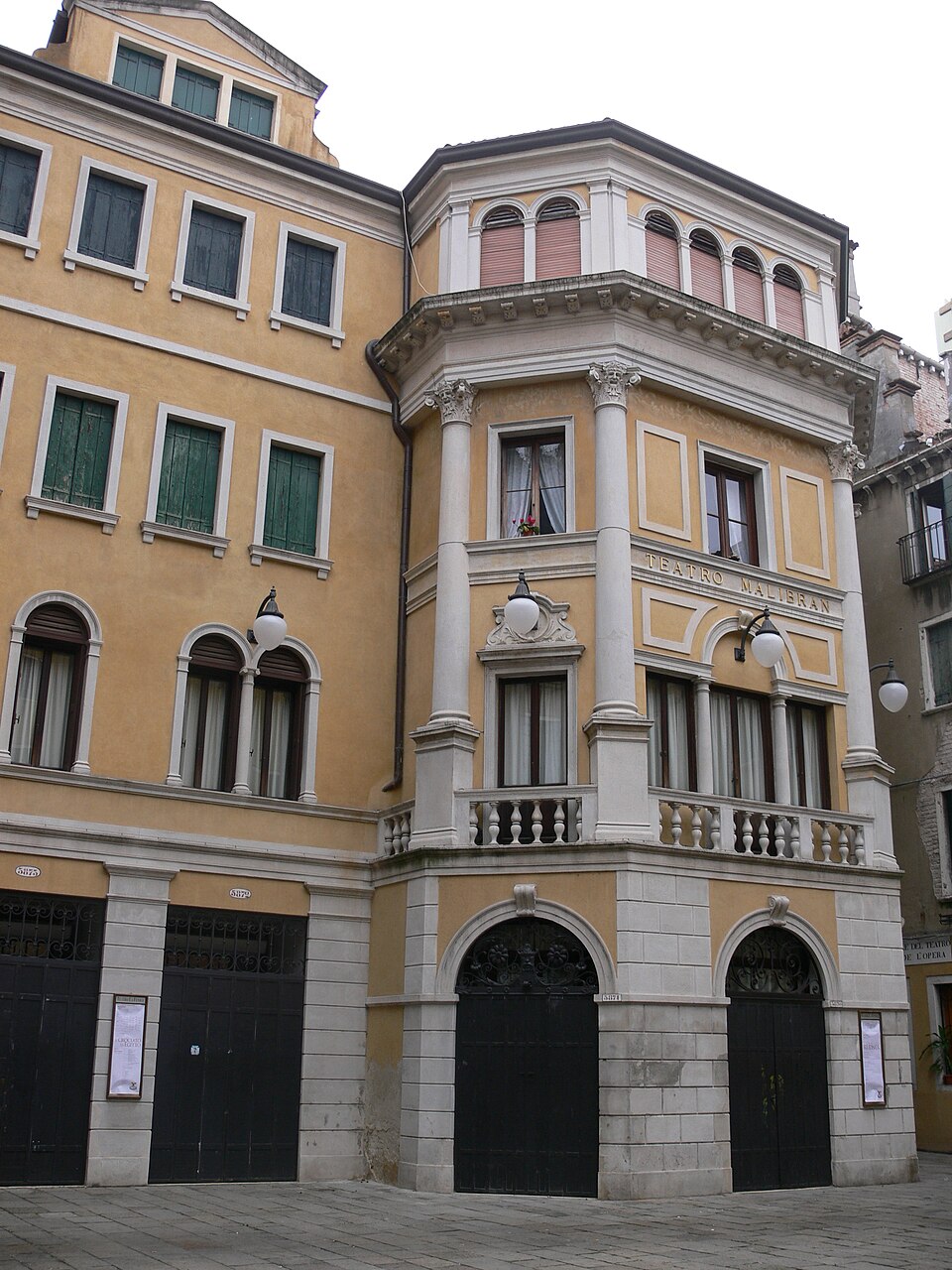
Teatro Malibran is a historic opera house in Venice, Italy, situated in the Cannaregio district. Originally opened as Teatro San Giovanni Grisostomo in 1678, it was later renamed in honour of the celebrated Spanish mezzo-soprano Maria Malibran. The theatre occupies a significant place in Venetian cultural heritage, having hosted premieres of works by composers including George Frideric Handel. Following extensive damage and periods of closure, the building underwent major restoration in the late twentieth century. It now functions as an important venue for opera, concerts, and ballet performances, operated in conjunction with La Fenice.
Checked 2026-08-26
The interior of Teatro Malibran preserves elements of Baroque theatrical architecture while incorporating modern technical facilities installed during restoration. The auditorium features traditional tiered seating arrangements typical of Italian opera houses, with multiple levels of boxes surrounding the stalls. Decorative schemes reflect historical Venetian aesthetic traditions. Backstage areas were reconstructed to accommodate contemporary production requirements. The theatre retains a relatively intimate scale compared to larger European opera houses, which influences acoustic properties and audience experience. Performance spaces include the main stage and associated technical areas necessary for opera and ballet productions.
Checked 2026-08-26
A typical visit to Teatro Malibran for a scheduled performance extends between two and a half and four hours, depending upon the production and whether intervals are included. Visitors attending daytime events or guided tours when available should allow approximately forty-five to ninety minutes for exploration of the premises. The duration of any visit varies considerably according to individual purpose. Those with specific architectural or historical interests may wish to allocate additional time for observation of decorative details. Evening performances conclude at times determined by individual production schedules, which visitors should verify in advance.
Checked 2026-08-26
The Teatro Malibran operates a seasonal programming schedule with performances typically concentrated between autumn and spring, though specific operator-confirmed hours are Not recorded pending review. The Venetian opera season traditionally avoids peak summer months when heat and tourist congestion present challenges. Visitors seeking to attend performances should consult current programming through official channels. Daytime access for non-performance purposes depends upon scheduled tours and operational arrangements that vary throughout the year. Advance planning remains essential given Venice's popularity and the theatre's limited capacity relative to demand for major productions.
Checked 2026-08-26
Admission to performances at Teatro Malibran requires purchase of tickets through authorised sales channels, though specific operator-confirmed prices are Not recorded pending review. Pricing structures typically vary according to seating category, with boxes and stalls commanding premium rates compared to upper gallery positions. Reduced rates for certain categories of visitor may be available subject to verification. Tickets for popular productions sell rapidly, particularly during carnival periods and when renowned performers appear. Visitors should acquire tickets exclusively through official sources to avoid fraudulent transactions. Subscription packages for multiple performances may offer advantages for extended stays.
Checked 2026-08-26

Teatro Malibran stands in Cannaregio, accessible from the Rialto vaporetto stop followed by walking through characteristic Venetian calli. Alternative approaches involve alighting at Ca' d'Oro and navigating northward through the district's narrow passages. The theatre's location lacks immediate proximity to major landmarks, requiring attentive navigation through Venice's complex pedestrian network. Visitors unfamiliar with the city's layout should allow generous time for wayfinding and consult detailed maps. Waterborne transport connects to broader Venetian transit infrastructure. The absence of vehicular access throughout Venice necessitates walking as the final mode of approach regardless of origin point within the lagoon.
Checked 2026-08-26
Visitors should anticipate variable acoustic conditions depending upon seating position within the auditorium, a characteristic of historic theatre design. The intimate dimensions create sightline challenges from certain upper-level seats. Flooding acqua alta events may disrupt access, particularly during autumn and winter months when performance seasons coincide with elevated tidal risk. The surrounding Cannaregio district contains numerous distractions that may cause delayed arrival. Venetians generally observe formal dress conventions for opera attendance that visitors may wish to respect. Mobile telephone use during performances attracts strong disapproval. Latecomers may face delayed admission until appropriate intervals in the programme.
Checked 2026-08-26

Photographic practices within Teatro Malibran are restricted during performances to prevent disturbance to performers and audience members. Flash photography remains prohibited throughout operational hours due to conservation concerns and safety considerations. Visitors wishing to photograph architectural features should ascertain whether non-flash photography is permitted during daytime access periods or intervals. Professional photographic equipment may attract additional scrutiny from venue staff. Recording of performances violates standard theatrical regulations and intellectual property protections. Visitors should observe posted guidance and staff instructions regarding image capture. External photography of the building facade presents fewer restrictions though narrow surrounding streets limit optimal vantage points.
Checked 2026-08-26
No. Teatro Malibran and Teatro La Fenice are distinct venues, though they operate under unified management. Malibran serves as a secondary performance space within the same organisational structure.
Daytime access depends upon scheduled tours and operational arrangements that vary throughout the year. Visitors should consult official channels regarding current availability of non-performance visits.
The venue hosts opera, concerts, and ballet productions, continuing traditions established since its seventeenth-century origins.
Historic Venetian buildings including theatres typically present challenges due to stairs and absence of lifts. Visitors requiring accessible facilities should contact operators directly to ascertain current provisions.
Specific visitor services are Not recorded pending review. Visitors should consult official channels regarding available interpretive resources.
Specific amenities are Not recorded pending review. Historic theatres of this scale may offer limited refreshment facilities compared to modern purpose-built venues.
Loading the interactive map…
The interactive map could not be loaded.
Last updated:
Source: OpenStreetMap contributors, Wikidata ·