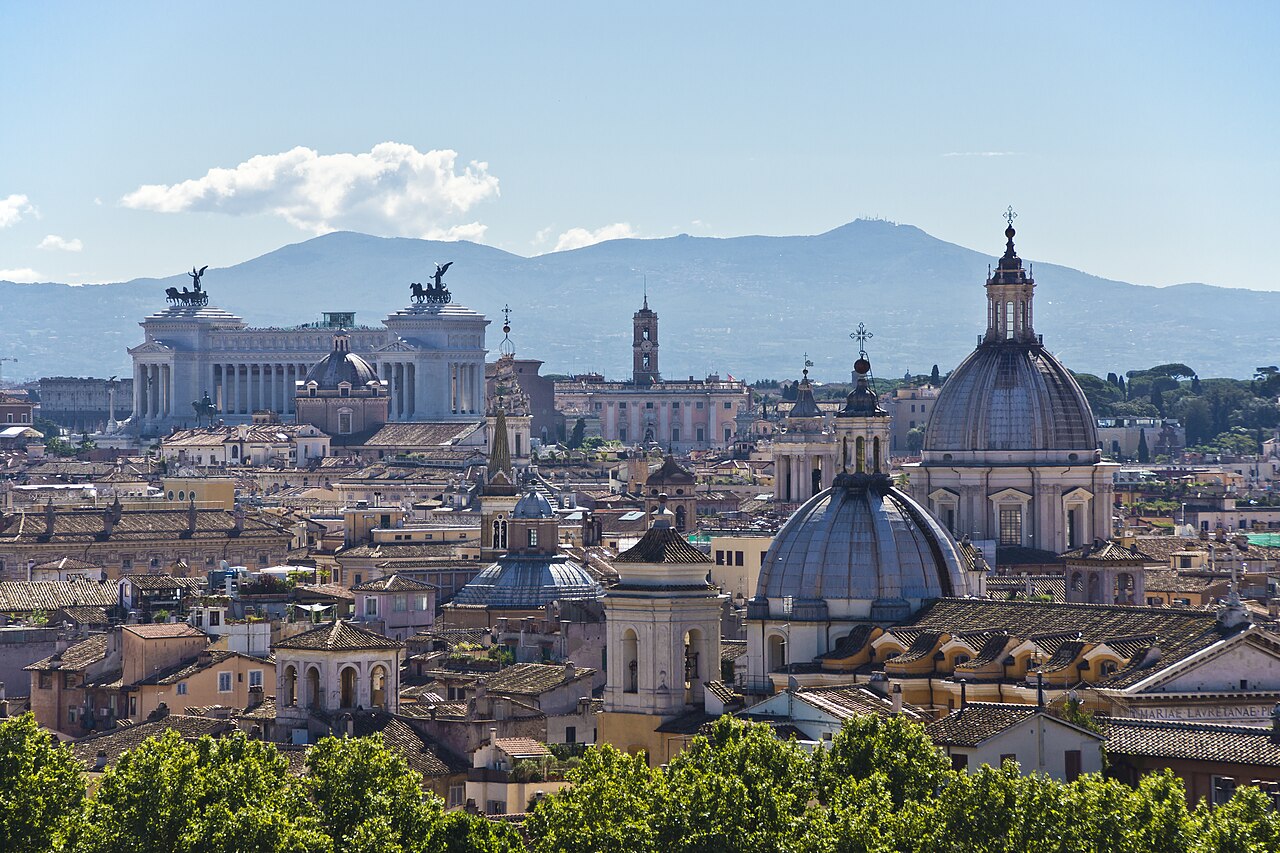
Rome is a broad historic city whose central archaeological, papal and baroque districts are close enough to walk but too dense to compress into one route. The Colosseum and forums, the Pantheon-Navona core, Vatican-Prati and Trastevere form separate clusters. Public transport handles longer links, yet much of a visit still happens on foot over uneven surfaces. Plan fewer major interiors per day and keep each route on one side of the Tiber where possible.
Practical information
Language spoken
Italian
National practical orientation; regional and minority languages may also be used
Dialling code
+39
International calling code; local area and mobile prefixes still apply
Currency
Euro (EUR)
Use the official local currency; card acceptance varies by place
Emergency number
112
Use only for an emergency; tourist assistance may use a separate number
Plug type
Type C, F and L · 230 V
Check that chargers support the recorded voltage before using an adapter
Tap water
Not recorded
No verified nationwide visitor statement was recorded
The historic centre lies east of the Tiber around the Pantheon, Piazza Navona, Campo de' Fiori and the Trevi-Spanish Steps axis. Southeast, the Colosseum, Roman Forum, Palatine, Aventine and Baths of Caracalla form the main archaeological corridor. Across the river, Vatican City and Prati sit north of Trastevere and the Janiculum. Termini, Monti and Esquilino form the transport-facing eastern centre, while the Appian Way, EUR and Ostia Antica are separate outings beyond the core. The official tourism map treats these as distinct visitor zones for good reason.
Walk within the historic centre and use metro, tram or bus for the longer jumps. Rome's official tourism service notes that the public network connects the principal visitor sites, while the Metrebus system provides the common ticket framework. Metro coverage is useful for Termini, the Colosseum, the Vatican side and selected outer districts, but many central sights sit between stations. Buses fill those gaps and are vulnerable to road traffic. For the Appian Way or Ostia Antica, plan the complete outward and return connection before leaving the centre.
Four to five days suit a first visit. Three days can cover the ancient core, the baroque centre and the Vatican side, while extra time allows the Appian Way, Ostia Antica or less compressed museum visits.
When is the best time to visit Rome?
April through May and September through October generally offer more comfortable walking weather than midsummer. Rome remains busy in these periods, but lower heat matters because the historic centre is best explored on foot.
Is Rome easy to explore on foot?
The central clusters are walkable, but the whole city is not. Use walking for the Pantheon-Navona area, the forums or Trastevere, then use public transport between those zones rather than linking every district on foot.
Which Rome sights should be grouped together?
Keep the Colosseum, Forum and Palatine together; pair the Pantheon with Piazza Navona and Campo de' Fiori; and give the Vatican-Prati side its own day. Trastevere works naturally after a central river crossing.
Do visitors need a car in Rome?
No. Walking and the public transport network cover the principal visitor areas, while a car adds parking and restricted-access complications in the historic centre. Outer trips are generally better planned by rail, metro or bus.
Turn this list into a plan
Set your days, your pace and the hours you actually want to be out. The planner works around closing days and travel time, and leaves room to eat.
Nothing non-essential is set before you choose, in regions where consent is required. If you decline, ads still appear but they are non-personalised, and analytics is switched off entirely.
.jpg)