Smart Self-Managed Tours

City guide · Italy

Milan

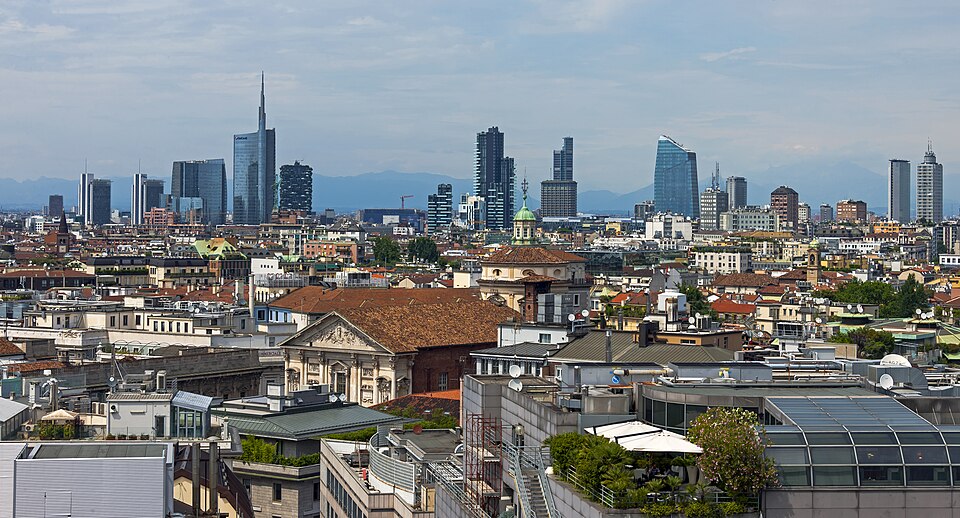
A photograph of Milan
Photograph · Daniel Case · CC BY-SA 3.0

Milan is organised around a compact historic centre, with the Duomo, Galleria Vittorio Emanuele II and La Scala close enough to combine on foot. Brera lies immediately north, the Navigli canals sit to the southwest, and the modern Porta Nuova district rises around Garibaldi station. Longer journeys connect the centre with Santa Maria delle Grazie, San Siro and outer design districts.

Practical information

Language spoken
Italian
National practical orientation; regional and minority languages may also be used
Dialling code
+39
International calling code; local area and mobile prefixes still apply
Currency
Euro (EUR)
Use the official local currency; card acceptance varies by place
Emergency number
112
Use only for an emergency; tourist assistance may use a separate number
Plug type
Type C, F and L · 230 V
Check that chargers support the recorded voltage before using an adapter
Tap water
Not recorded
No verified nationwide visitor statement was recorded

Planning a visit

Suggested stay
Not recorded
Getting around
Walk, metro, tram and bus
  1. January: seasonal closure recorded
  2. February: seasonal closure recorded
  3. March: seasonal closure recorded
  4. April: no seasonality data recorded
  5. May: no seasonality data recorded
  6. June: no seasonality data recorded
  7. July: no seasonality data recorded
  8. August: no seasonality data recorded — this month
  9. September: no seasonality data recorded
  10. October: seasonal closure recorded
  11. November: seasonal closure recorded
  12. December: seasonal closure recorded

Top things to see

Ranked by importance — sitelinks, pageviews and heritage status, not editor preference.

  1. Aumai
    07 45 min

    Aumai

    • Notable
    • Market
  2. Coin
    12 45 min

    Coin

    • Notable
    • Market
  3. Coin
    13 45 min

    Coin

    • Notable
    • Market
  4. Coin
    14 45 min

    Coin

    • Notable
    • Market
  5. Muji
    36 45 min

    Muji

    • Notable
    • Market
  6. Muji
    37 45 min

    Muji

    • Notable
    • Market
  7. Upim
    42 45 min

    Upim

    • Notable
    • Market
  8. Upim
    43 45 min

    Upim

    • Notable
    • Market
  9. Luini
    45 45 min

    Luini

    • Notable
    • Market
  10. Aumai
    46 45 min

    Aumai

    • Notable
    • Market
  11. Aumai
    47 45 min

    Aumai

    • Notable
    • Market
  12. Coin
    63 45 min

    Coin

    • Notable
    • Market
  13. DHL
    64 45 min

    DHL

    • Notable
    • Market
  14. Muji
    87 45 min

    Muji

    • Notable
    • Market
  15. Olly
    89 45 min

    Olly

    • Notable
    • Market
  16. Tigros
    95 45 min

    Tigros

    • Notable
    • Market
  17. Upim
    96 45 min

    Upim

    • Notable
    • Market
  18. Upim
    97 45 min

    Upim

    • Notable
    • Market
  19. Upim
    98 45 min

    Upim

    • Notable
    • Market
  20. Upim
    99 45 min

    Upim

    • Notable
    • Market

Source: OpenStreetMap contributors, Wikidata ·

How the city is laid out

Use the Duomo as the central reference point. The fashion quadrilateral and Brera are north of it, Castello Sforzesco and Parco Sempione are west, and the Navigli and Porta Ticinese districts are south and southwest. Milano Centrale is northeast of the old centre, while Porta Garibaldi serves the Porta Nuova business district. Grouping sights by these zones avoids repeated cross-city travel.

Checked 2026-08-26

Getting around

Walk inside the historic centre and use ATM metro, tram and bus services for longer moves. Milan has five metro lines, while surface routes connect neighbourhoods beyond the rail corridors. Contactless bank cards and mobile devices can be used on ATM services, and the system calculates the applicable fare. Check the operator map before travelling to outer sites or changing fare zones.

Checked 2026-08-26

Common questions

How many days should I spend in Milan?

A fixed stay length is not recorded. Build the visit around the historic centre, Brera and the castle, then add Navigli, Porta Nuova or an outer attraction as time allows.

Can I explore central Milan on foot?

Yes. The Duomo, Galleria Vittorio Emanuele II, La Scala, Brera and Castello Sforzesco form a practical walking core, although the metro is useful for crossing between wider districts.

What public transport serves Milan?

ATM operates the city's metro, tram, bus and trolleybus network. Use rail for cross-city movement and surface services where the metro does not directly reach the destination.

Can I pay contactless on Milan public transport?

Yes. ATM accepts supported contactless cards and mobile devices on its services and calculates the applicable fare, provided the same payment method is used throughout the journey.

Which Milan areas should be planned separately?

Treat Navigli, Porta Nuova, San Siro and other outer districts as separate clusters. They sit beyond the compact Duomo-Brera-castle core and usually require a dedicated transit leg.

Turn this list into a plan

Set your days, your pace and the hours you actually want to be out. The planner works around closing days and travel time, and leaves room to eat.

Plan Milan