City guide · Indonesia
Jakarta
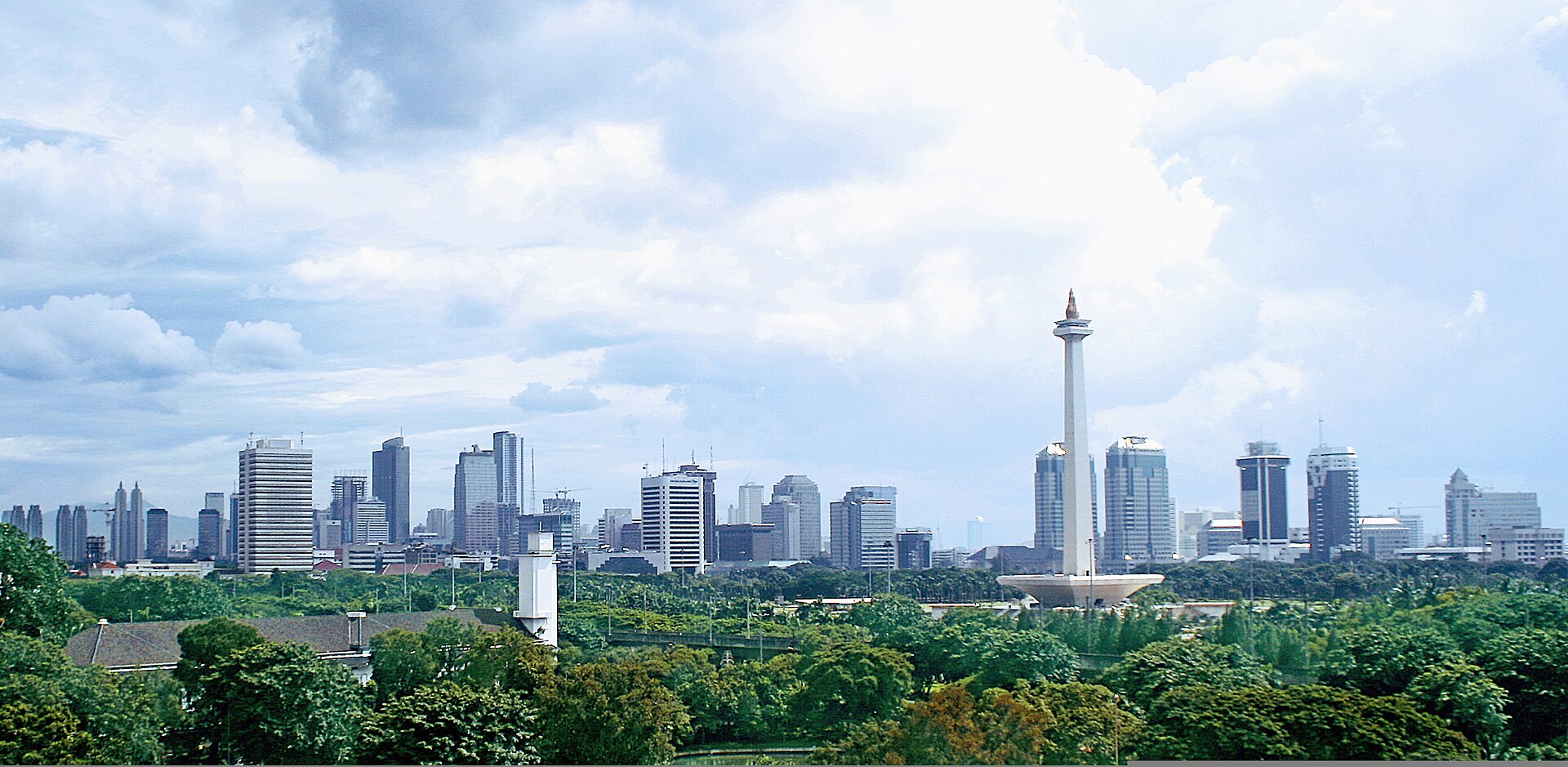

Jakarta is a large metropolitan city whose visitor sights are divided among distinct corridors. Kota Tua and Glodok form the historic northern cluster, Monas and major national institutions anchor Central Jakarta, and the modern business, shopping and cultural axis continues south through Menteng, Sudirman and Blok M. Use the integrated rail and bus network to connect clusters rather than planning a single cross-city walk.
Practical information
Practical information
- Language spoken
- Indonesian
- National practical orientation; regional and minority languages may also be used
- Dialling code
- +62
- International calling code; local area and mobile prefixes still apply
- Currency
- Indonesian rupiah (IDR)
- Use the official local currency; card acceptance varies by place
- Emergency number
- 112 where available · 110 police
- Use only for an emergency; tourist assistance may use a separate number
- Plug type
- Type C and F · 230 V
- Check that chargers support the recorded voltage before using an adapter
- Tap water
- Not recorded
- No verified nationwide visitor drinking-water statement was recorded
Planning a visit
- No data recorded for this month
- The current month
- Suggested stay
- Not recorded
- Getting around
- MRT, LRT, TransJakarta, KRL and walking
- January: no seasonality data recorded
- February: no seasonality data recorded
- March: no seasonality data recorded
- April: no seasonality data recorded
- May: no seasonality data recorded
- June: no seasonality data recorded
- July: no seasonality data recorded
- August: no seasonality data recorded — this month
- September: no seasonality data recorded
- October: no seasonality data recorded
- November: no seasonality data recorded
- December: no seasonality data recorded
Top things to see
Ranked by importance — sitelinks, pageviews and heritage status, not editor preference.
Filter the list
0 places match
0 places match
Nothing in Jakarta matches all of those filters
The list is built from real place data, so an empty result means the combination genuinely has no match — not that the page failed. Loosen one filter and the ranking returns.
Clear all filtersSource: OpenStreetMap contributors, Wikidata ·
All places in this city
Browse the complete catalogue
How the city is laid out
Kota Tua, Sunda Kelapa and Glodok sit in the north. Monas, the National Museum and government landmarks form a central block, while Menteng and the Hotel Indonesia roundabout lead into the Sudirman corridor. Blok M and southern creative districts are farther south. The Thousand Islands require a separate boat plan and should never be treated as an extension of a central-city day.
Checked 2026-08-26
Getting around
Use MRT, LRT, TransJakarta and KRL Commuter Line for longer journeys, then walk within individual sightseeing clusters. Jakarta’s official visitor service describes these modes as an integrated public-transport system, and the official tourism guide links key destinations along MRT and TransJakarta corridors. Allow extra transfer time and consult current operator information before setting out.
Checked 2026-08-26
Common questions
How many days should I spend in Jakarta?
A fixed official stay length is not recorded. Plan separate blocks for Kota Tua, Central Jakarta and the southern corridor, then add further districts according to time.
What is the best way to get around Jakarta?
Use the integrated MRT, LRT, TransJakarta and KRL networks for longer journeys, then walk within each sightseeing cluster.
Which Jakarta sights combine well?
Kota Tua and Glodok form one northern route, while Monas and the National Museum form a central cluster. The Sudirman and Blok M corridor is a separate southern route.
Can I use public transport for a Jakarta sightseeing day?
Yes. Jakarta’s official tourism guide presents a route linking Kota Tua, Monas and southern stops using MRT and TransJakarta.
Are the Thousand Islands part of a central Jakarta route?
No. They require a separate boat plan and should be scheduled independently from mainland museum and neighbourhood clusters.
Turn this list into a plan
Set your days, your pace and the hours you actually want to be out. The planner works around closing days and travel time, and leaves room to eat.