City guide · Germany
Berlin
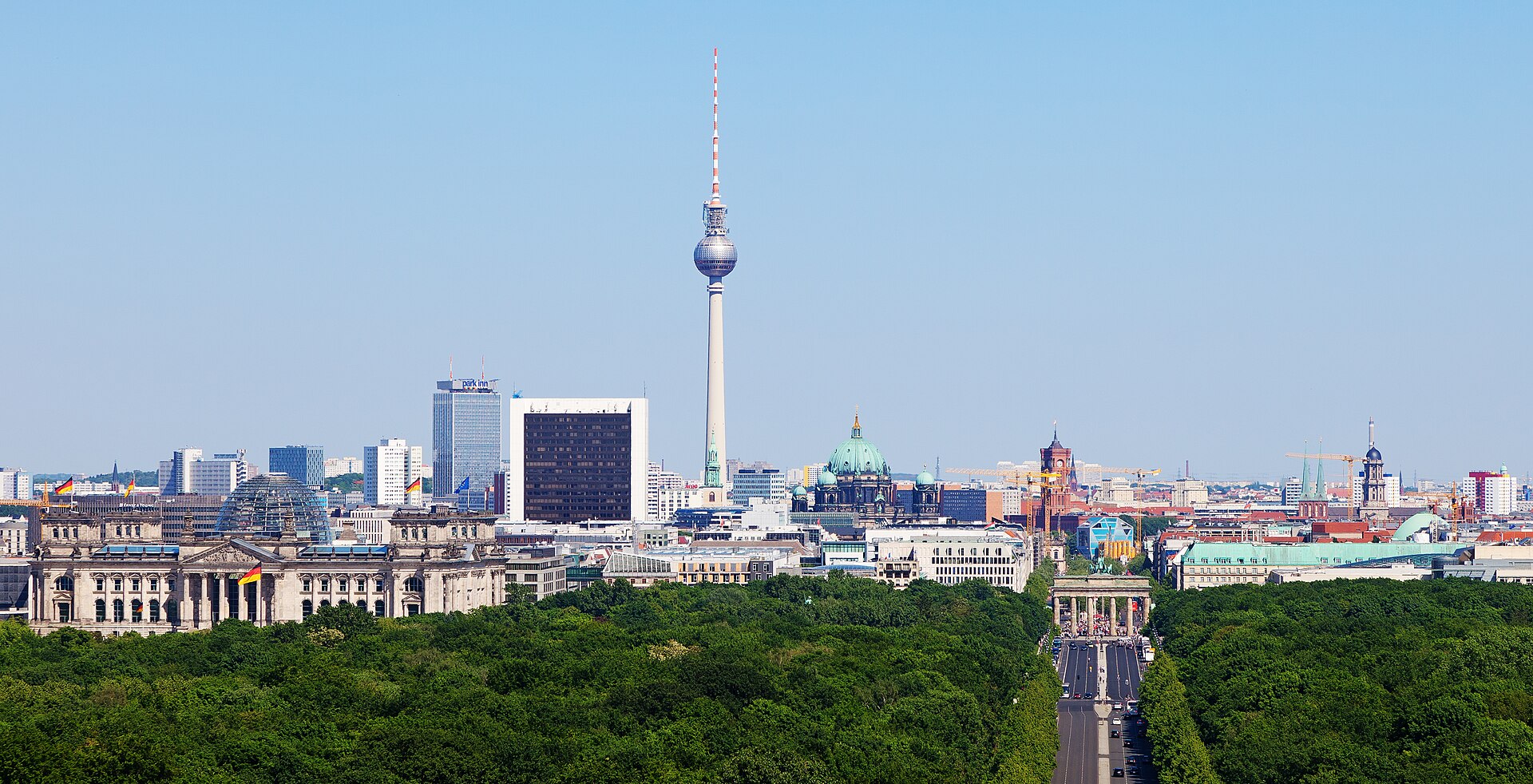

Berlin covers 891.3 km² — large enough to be one of Germany's federal states as well as a city — and the 2022 census counted 3,596,999 residents, with 4,679,500 in the urban area. Twelve boroughs, cut down from 23 in the 2001 administrative reform, sit along the Spree. Two of them founded the place: the merchant settlements of Berlin and Cölln, the second on the island now called Museum Island. That island is one of the city's three UNESCO World Heritage Sites, with the Potsdam palaces and the Modernism Housing Estates. Most of what a first visit covers — the Brandenburg Gate, the Reichstag, the Wall Memorial — records the division that ended on 9 November 1989.
Practical information
Practical information
- Language spoken
- German
- National practical orientation; regional and minority languages may also be used
- Dialling code
- +49
- International calling code; local area and mobile prefixes still apply
- Currency
- Euro (EUR)
- Use the official local currency; card acceptance varies by place
- Emergency number
- 112 medical/fire · 110 police
- Use only for an emergency; tourist assistance may use a separate number
- Plug type
- Type C and F · 230 V
- Check that chargers support the recorded voltage before using an adapter
- Tap water
- Safe from the mains
- Public drinking water is regulated under national drinking-water rules
Turn this list into a plan
Set your days, your pace and the hours you actually want to be out. The planner works around closing days and travel time, and leaves room to eat.
Planning a visit
- Suggested stay
- Not recorded
- Getting around
- S-Bahn, U-Bahn, tram, bus and walking
- January: viable with meaningful trade-offs
- February: viable with meaningful trade-offs
- March: good time to visit
- April: best time to visit
- May: best time to visit
- June: good time to visit
- July: best time to visit
- August: best time to visit — current month
- September: best time to visit
- October: good time to visit
- November: viable with meaningful trade-offs
- December: viable with meaningful trade-offs
- Best time
- Good time
- Viable with trade-offs
- Difficult conditions
Sources
- www.dwd.de Checked 2026-08-28
Top things to see
Ranked by importance — sitelinks, pageviews and heritage status, not editor preference.
Filter the list
0 places match
0 places match
Category
Typical visit duration
Interests
Nothing in Berlin matches all of those filters
The list is built from real place data, so an empty result means the combination genuinely has no match — not that the page failed. Loosen one filter and the ranking returns.
Clear all filtersSource: OpenStreetMap contributors, Wikidata ·
How the city is laid out
Not recorded No editorial orientation text has been written for this city yet. It will appear here once the city guide is reviewed.Getting around
Not recorded No transit lines, fares or ticket types are ingested yet. This section will populate once a public-transport data source is added.Common questions
How many days should I spend in Berlin?
A fixed duration is not recorded. Plan by district: Mitte, a western cluster, an eastern or southern neighbourhood, and any specialised museum or outer site that matters to you.
Is Berlin's historic centre compact?
Mitte contains many headline sights, but Berlin is polycentric. Charlottenburg, Kreuzberg, Friedrichshain and outer memorial or palace sites require separate rail journeys.
Which transport modes should I use in Berlin?
Use S-Bahn and U-Bahn for cross-city travel, then trams, buses or walking within districts. One zonal ticket can cover participating modes for the chosen validity area.
Which Berlin fare zone includes the airport?
Berlin Brandenburg Airport is in zone C. A journey between the airport and the central city therefore needs a ticket whose zones include C as well as the destination area.
Should Potsdam be combined with central Berlin?
Treat Potsdam as a separate excursion. It lies outside Berlin's central districts and in fare zone C, so it needs dedicated travel time and the correct ticket coverage.