
_-_btv1b6924970d.jpg)
_01.jpg)
_02.jpg)
_03.jpg)
_05.jpg)
2 min walk · Paris 7e Arrondissement
Athena
- Notable
- Art and culture venue
Language · 1 published
Historic monument · Paris 7e Arrondissement, Paris
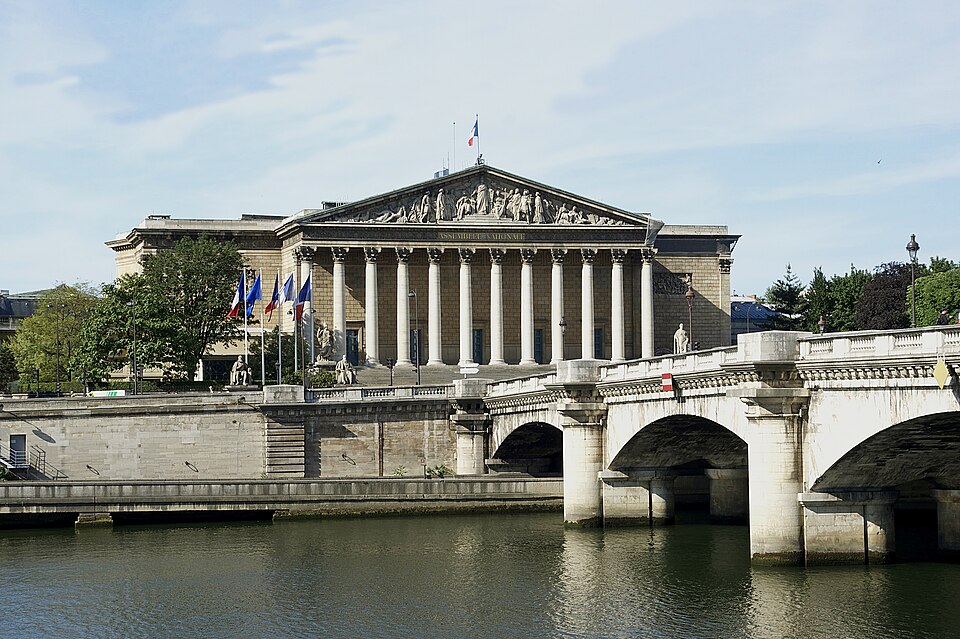
The Palais Bourbon, on the Left Bank facing Place de la Concorde across the Seine, is the seat of the French National Assembly, the lower house of Parliament — a working legislature, not a former palace turned museum.
It was built in 1722-1728 for the Duchesse de Bourbon, a legitimised daughter of Louis XIV, and passed through several private and revolutionary-era owners before the legislature took it over. Its river-facing neoclassical colonnade, added in 1806-1807 under Napoleon, was designed to visually answer the facade of La Madeleine church across the river, part of Napoleon's plan to give the axis from the Madeleine through the Place de la Concorde to the Palais Bourbon a unified classical face.
Because it is an active seat of government, access is limited and structured very differently from a museum with open daily hours.
Checked 2026-08-24 · Source
The debating chamber, the Salle des seances, is a semicircular hall where the 577 deputies sit and vote; a public gallery above it allows visitors to watch live sessions under the reservation system below.
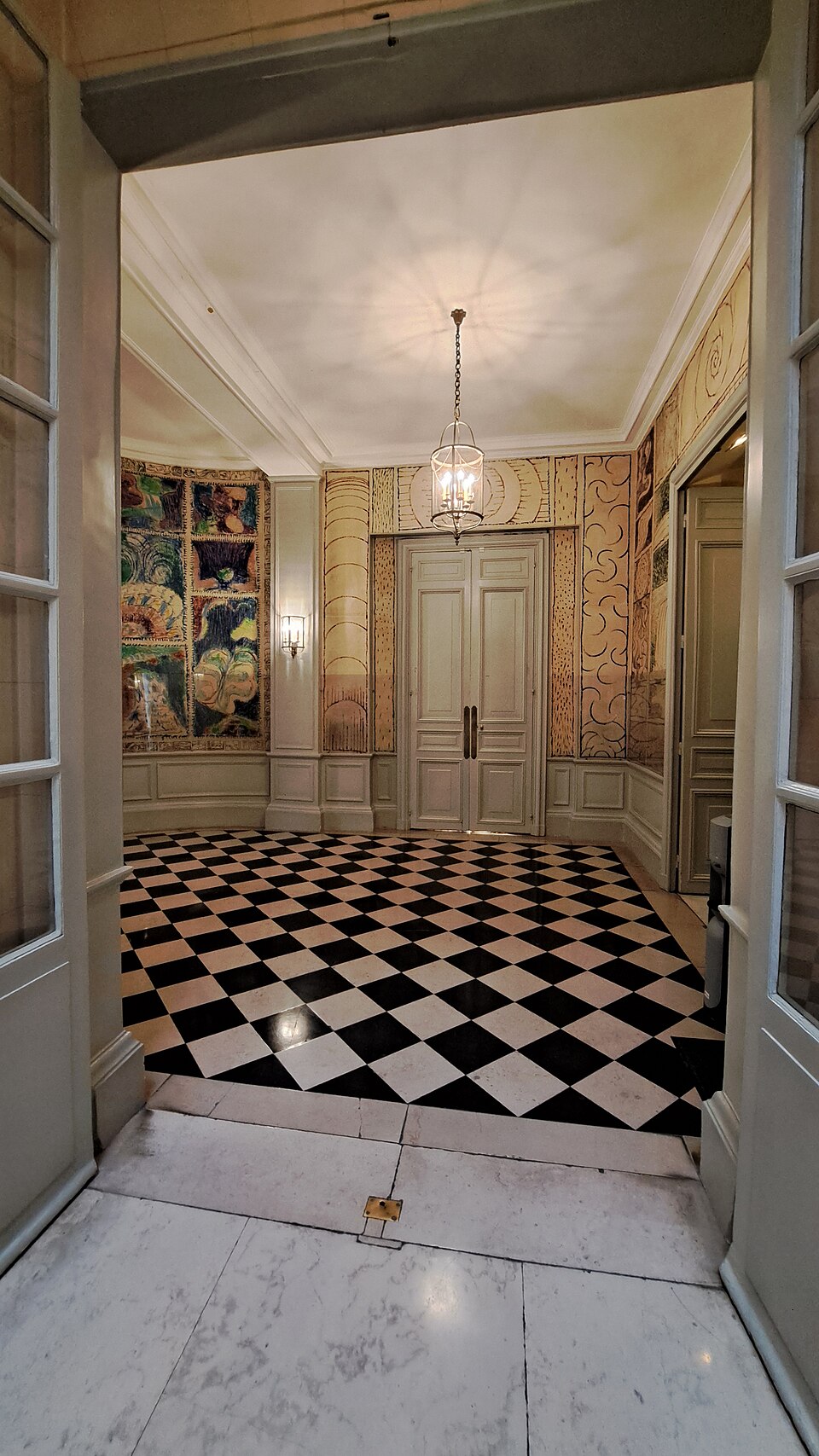
The building also holds a set of grand 18th- and 19th-century state rooms, including the Bibliotheque with ceiling paintings by Eugene Delacroix, which are shown only on the guided-tour dates rather than to gallery visitors watching a session.
The complex also incorporates the Hotel de Lassay next door, the residence of the Assembly's President, connected internally to the main building; it is not part of either the standard guided tour or the gallery visit and is not open to the public on any regular basis.
Checked 2026-08-24 · Source

A guided tour of the state rooms and library runs roughly one and a half hours. Watching a live session from the public gallery is a shorter, more variable visit, since it depends on how long that day's proceedings run once inside.
Security screening ahead of either visit adds time beyond the tour or session itself, so the total time on site is longer than the guided portion alone suggests, particularly on a day when several groups are being processed through the same checkpoint.
Checked 2026-08-24 · Source
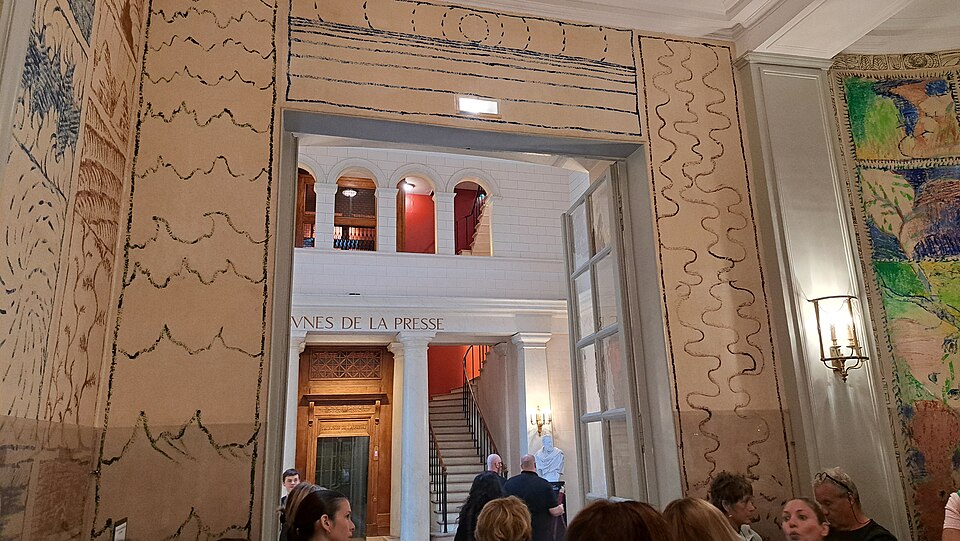
Guided tours run on a limited number of Saturdays a year, announced by the Assembly in advance, and require booking ahead — this is not a walk-in visit. Watching a public session from the gallery is possible when the Assembly is sitting, generally on scheduled sitting days during the parliamentary calendar, which excludes recess periods.
Check the Assemblee nationale's own visitor page for the current year's tour dates and sitting calendar before planning around either option.
Checked 2026-08-24 · Source
There is no paid ticket for either route inside: guided tours and public-gallery access are free but require advance booking or a formal request, and identification is required on the day.
The exact booking procedure — an online form for tours, and a written request through a sitting deputy or an online reservation for the gallery, depending on the year's system — should be confirmed on the Assembly's official site before planning a visit around it.
Checked 2026-08-24 · Source

Metro line 12 to Assemblee Nationale stops directly outside, and RER C to Invalides is a short walk. The building faces the Pont de la Concorde, so it is a natural stop when crossing between the Place de la Concorde and the Invalides.
Visitors arriving for a booked tour or gallery session should allow extra time before the scheduled entry for the mandatory security screening, which functions like an airport checkpoint and can queue during busy sitting days.
Checked 2026-08-24 · Source
This is an active government and security building: airport-style security screening, a photo ID requirement and no walk-up access apply to every route inside, including the public gallery.
Confusing this with a general Paris landmark that can be seen on a whim is the main trap — both routes inside require booking well ahead, and arriving without a reservation means seeing only the exterior colonnade from the pavement.
Checked 2026-08-24 · Source

The river-facing colonnaded facade, best seen from across the Seine at the Pont de la Concorde or from the Place de la Concorde itself, is the classic view and pairs the building visually with La Madeleine on the opposite axis.
Photography inside the chamber and state rooms is generally restricted or controlled during both tours and sessions for security reasons; the facade and forecourt are the reliable photographic subject for a visit without a booked interior access.
Checked 2026-08-24 · Source
No. It is an active seat of government; both the guided tour and public-gallery access require advance booking and identification, and there is no walk-in visit.
No, both the guided tour and gallery access are free, but each requires advance booking or a formal request rather than a ticket purchase.
The National Assembly's semicircular debating chamber, plus grand 18th- and 19th-century state rooms including a library with ceiling paintings by Eugene Delacroix.
The river-facing colonnade was added in 1806-1807 under Napoleon to visually answer La Madeleine church across the Seine, unifying the classical facades along that axis.
Yes, from the public gallery, on days the Assembly is sitting, subject to the booking system and security screening in place that year.
The Duchesse de Bourbon, a legitimised daughter of Louis XIV, in 1722-1728, before it later became the legislature's seat.
Loading the interactive map…
The interactive map could not be loaded.
Last updated:
Source: OpenStreetMap contributors, Wikidata ·