The Louvre Palace is the building itself: the fortress-turned-royal-residence that the Musee du Louvre now occupies. Philip II began it as a fortress around 1190 to defend Paris on its western edge; Charles V made it a royal residence in the 1360s; and after the medieval fortress was largely demolished under Francis I, that king began the Renaissance palace on the site in 1546 that Henry II, Catherine de Medici and every subsequent dynasty kept enlarging for three more centuries, well after the court itself had moved to Versailles in 1682. Even after the court left, the palace stayed in royal and state use: the Academie Royale held its Salon exhibitions in the Grand Galerie from 1725, which is the origin of the word salon for an art exhibition still used today.
poi_containments records it, together with the Arc de triomphe du Carrousel and the glass pyramid, as standing inside the Musee du Louvre complex; it is the container building the museum fills rather than a rival attraction standing next to it.
The palace itself is the museum's shell, so what is inside it is the Louvre Museum's own collection across three wings: Denon, Sully and Richelieu, arranged around the Cour Carree and the later Cour Napoleon. The medieval fortress's foundations, including the base of its keep, were excavated in the 1980s during construction of the pyramid's underground lobby and are left visible to visitors below the Cour Carree today.
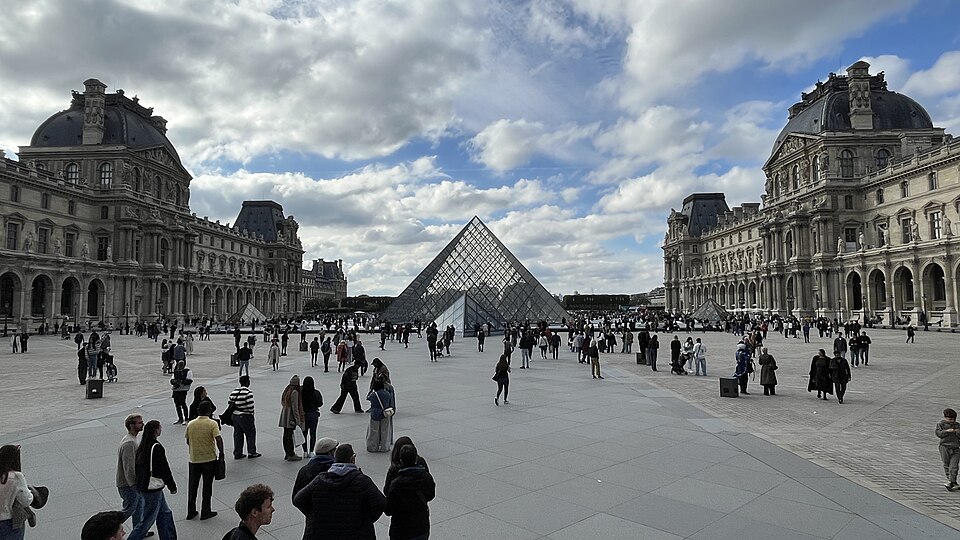
The courtyards and facades themselves record work by successive architects across three centuries, from Pierre Lescot's Renaissance wing under Francis I to the ornate Second Empire additions completed under Napoleon III in the 1850s, which added the wings framing the Cour Napoleon where the pyramid now stands and finally joined the Louvre to the since-demolished Tuileries Palace.
As a building, the palace is seen through the museum visit itself; a three-hour Louvre visit is the practical figure, the same duration recorded for the Musee du Louvre entry, since a visit to the palace is in practice a visit to the museum it now houses rather than a separate, shorter architectural tour.
The building follows the Louvre Museum's own hours: 09:00 to 18:00 daily except Tuesday, with late closing at 21:00 on Wednesday and Friday, checked against the museum's own site on 24 August 2026, because the palace has no separate schedule from the museum it contains.
Entry to the palace is the Louvre Museum's own admission, 22 EUR per person, checked on the museum's own site on 24 August 2026; there is no separate ticket for the building apart from the museum ticket that covers everything inside it. Booking a timed-entry slot online in advance is the more reliable route on any day with a long outdoor queue at the pyramid.
Palais-Royal - Musee du Louvre, on lines 1 and 7, sits directly beneath the palace; the underground Carrousel du Louvre entrance connects from this station without surfacing outdoors, which is useful in bad weather and also bypasses the outdoor queue at the pyramid. Louvre-Rivoli, one stop further on line 1, is a slightly longer walk but avoids the busiest station exit at peak times.
Because the palace and the museum are the same visit, the queue, the security check and the crowding described for the Musee du Louvre entry apply here without a separate, quieter route in; arriving at opening remains the main way to shorten the wait rather than any trick specific to the building's own entrances. The building's sheer scale also means a visitor aiming to see it all in one day, rather than choosing one wing, risks running out of time before running out of galleries.
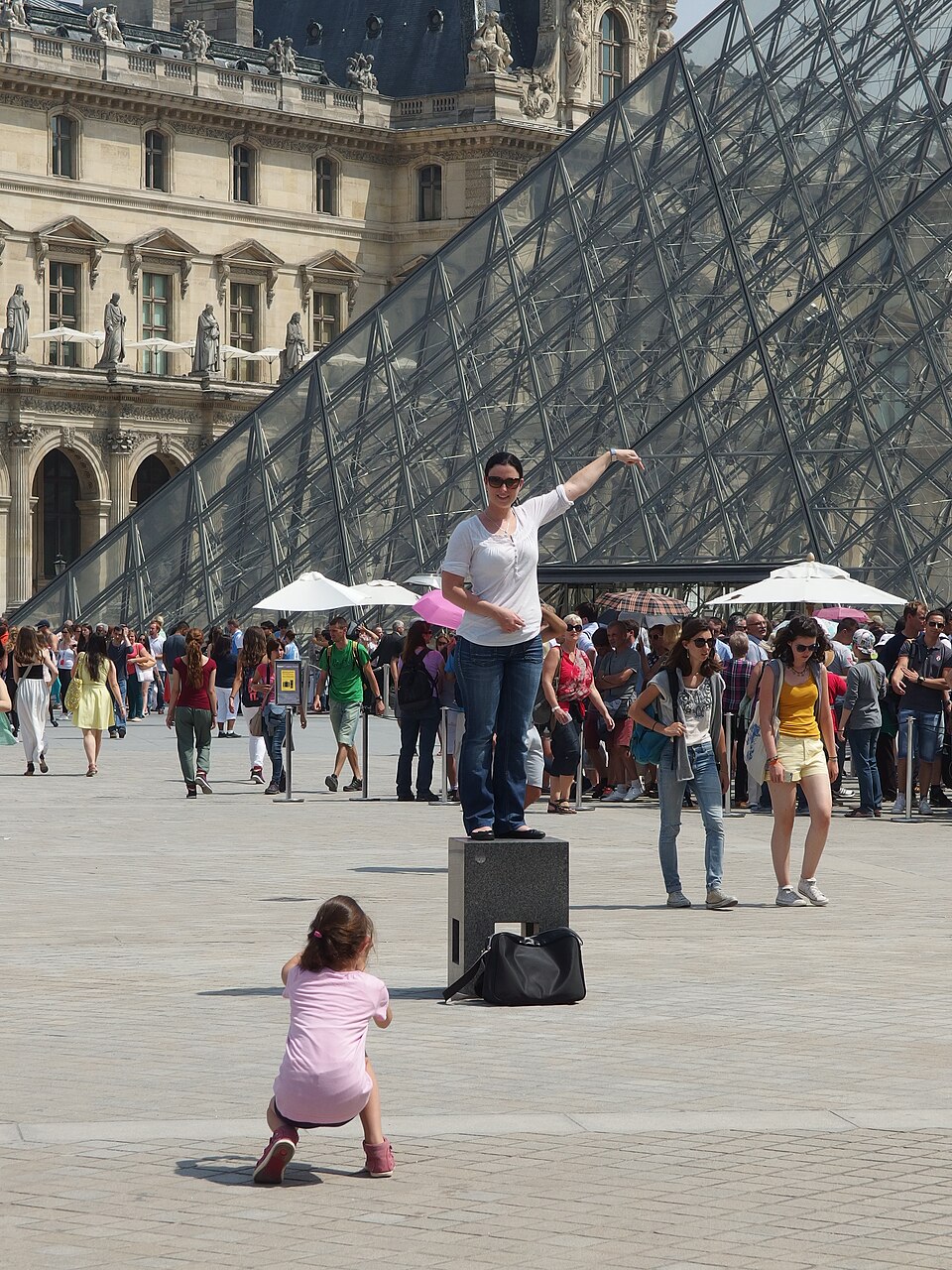
The palace's exterior facades and courtyards, including the Cour Carree and Cour Napoleon, are freely photographable from outside at any hour the courtyards are accessible; photography rules for the interior galleries follow the Musee du Louvre's own policy rather than a separate one for the building itself. The pyramid's own glass and metal structure, by contrast, is a modern addition rather than part of the historic palace fabric and is usually photographed as a deliberate contrast with the surrounding stone facades, an intentional juxtaposition the architect I. M. Pei defended against significant public criticism when it was first unveiled in 1989.
Is the Louvre Palace a different attraction from the Louvre Museum?
No, it is the building the museum occupies; poi_containments lists it as standing inside the Musee du Louvre complex rather than as a separate site.
How old is the building?
Its origins go back to around 1190 as a fortress; the Renaissance palace on the site began under Francis I in 1546 and was enlarged for three centuries after.
Can I see the medieval fortress remains?
Yes, the excavated foundations of the original fortress, including the base of its keep, are on display below the Cour Carree as part of the museum visit.
Do I need a separate ticket for the palace?
No, entry is the Louvre Museum's own 22 EUR admission ticket; there is no separate palace ticket.
What are the opening hours?
09:00 to 18:00 daily except Tuesday, with late closing at 21:00 on Wednesday and Friday.
Nothing non-essential is set before you choose, in regions where consent is required. If you decline, ads still appear but they are non-personalised, and analytics is switched off entirely.


.jpg)
.jpg)
