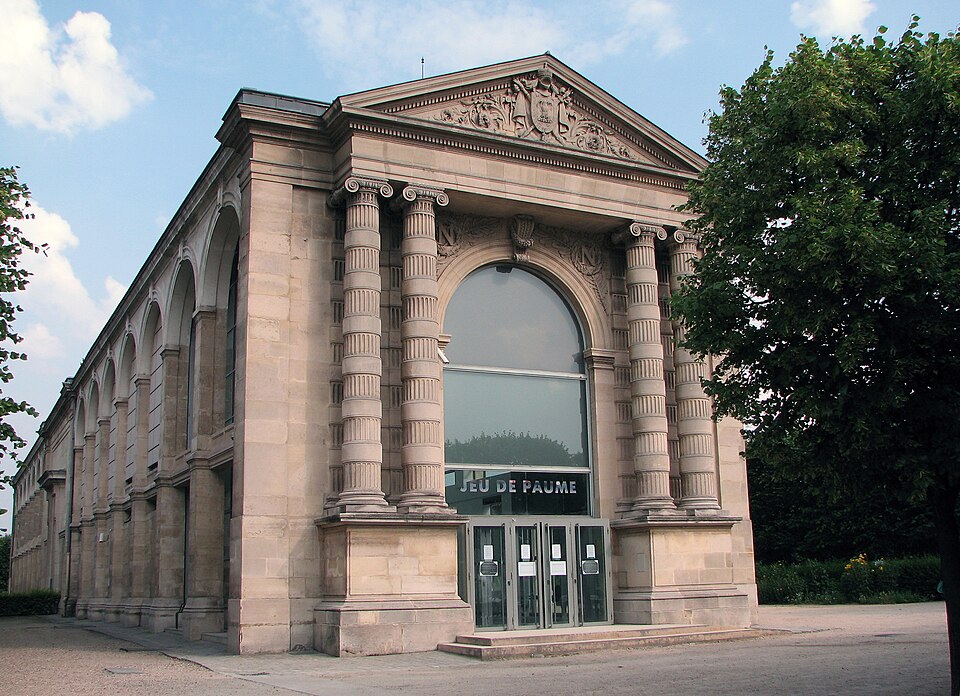
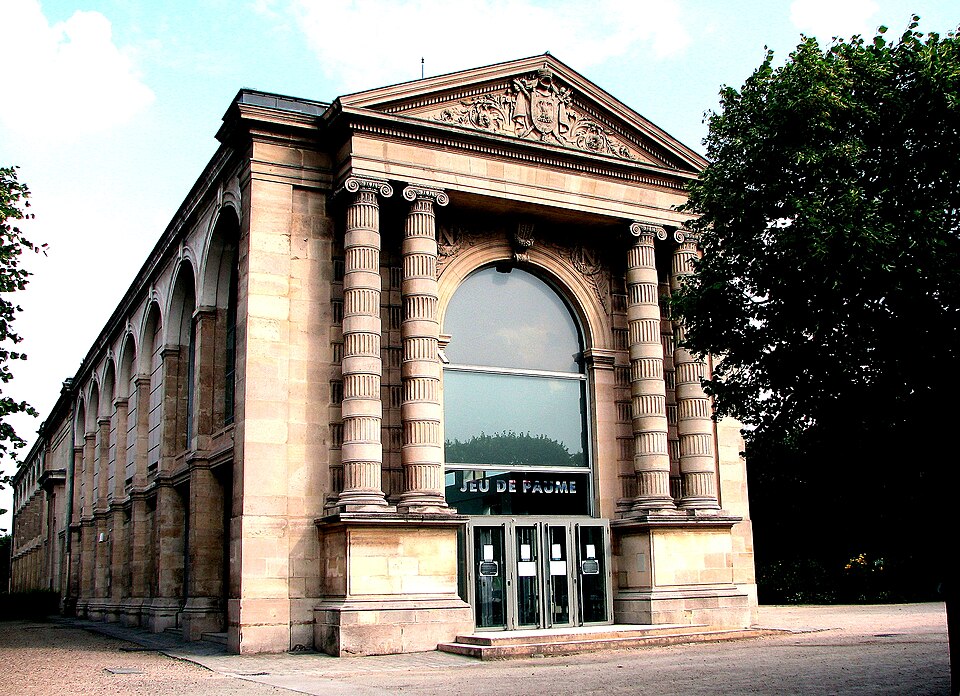
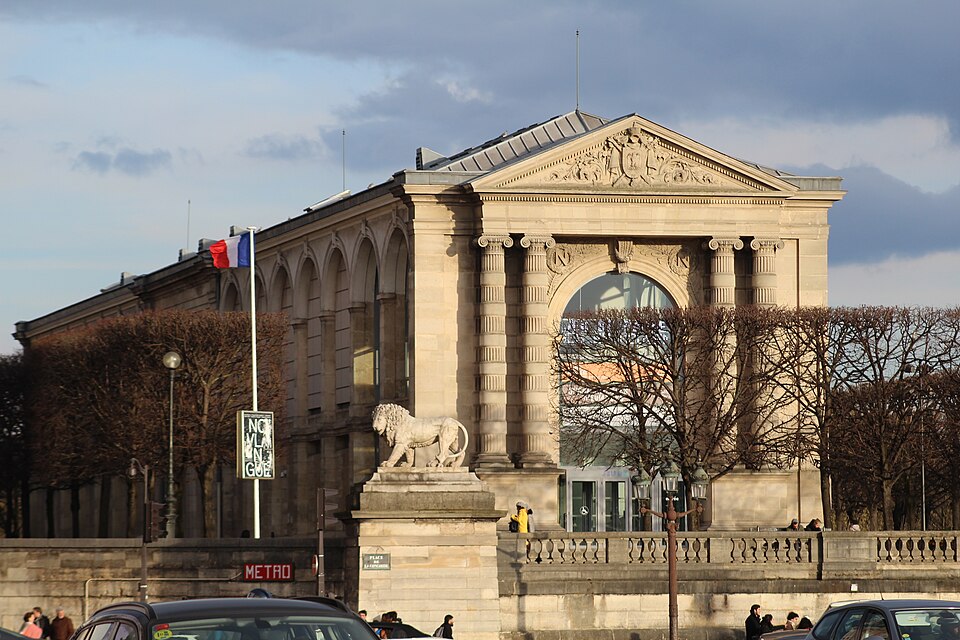
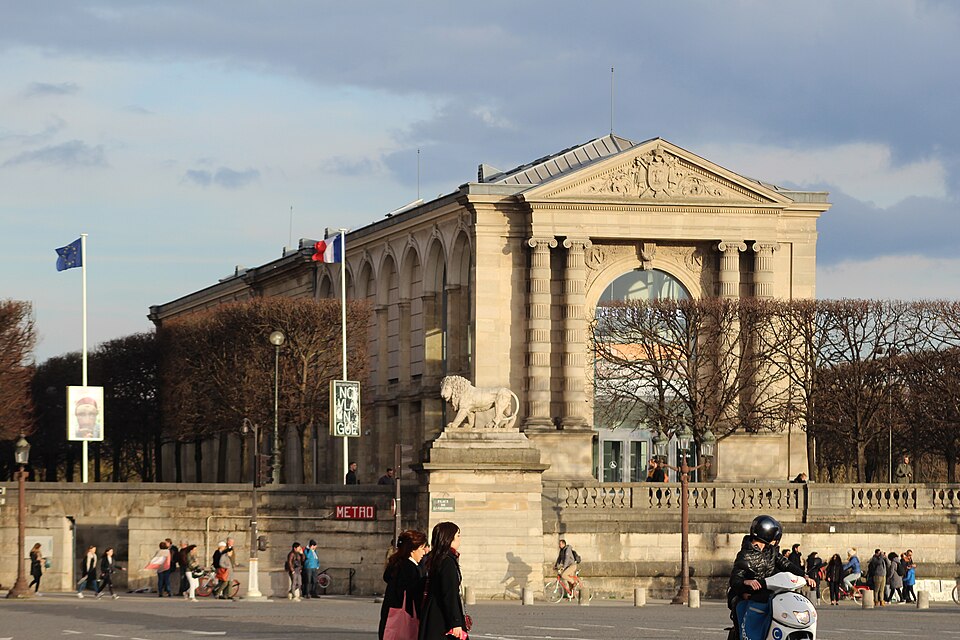
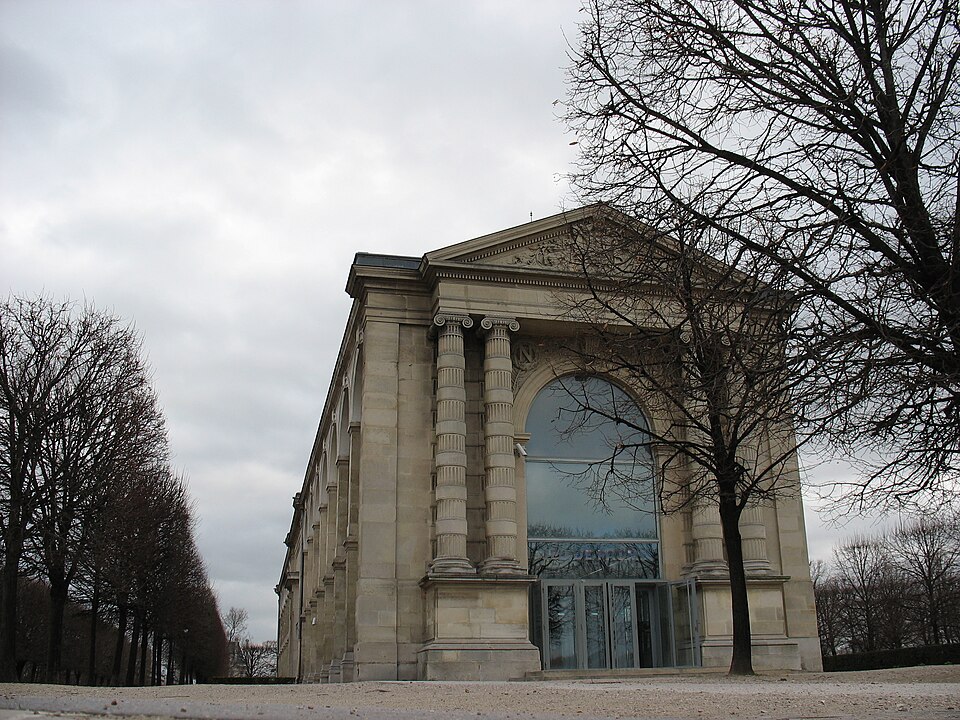
The Jeu de Paume is a photography and moving-image gallery in the Tuileries Garden's north-west corner, in a building constructed in 1861 as a court for jeu de paume, the indoor precursor of tennis played by Napoleon III's court.
It sits at the mirror position, across the garden, from the Musee de l'Orangerie in the south-west corner — the two are separate institutions with separate collections and separate tickets, and sharing the garden is the only thing they have in common.
The building held the national collection of Impressionist paintings from 1947 until that collection moved to the Musee d'Orsay in 1986; since 2004 it has operated under its current identity as a dedicated venue for photography, film and other image-based media, run by an independent association rather than as a state painting museum.
There is no permanent collection on view; the galleries run a changing programme of temporary exhibitions dedicated to photography and the moving image, drawn from historic and contemporary practitioners.
The building's single-block, top-lit exhibition halls were adapted from the original court rather than purpose-built, so the galleries are fewer and more compact than at the larger Left Bank photography venues, and a visit covers whichever one or two exhibitions are running rather than a broad survey of the medium's history.
One to one and a half hours covers a typical exhibition programme, since the building holds only a handful of gallery rooms rather than a sprawling permanent collection.
There is no cafe inside comparable to the larger Tuileries-adjacent museums, so a visit here is usually a single, self-contained stop rather than the start of a longer museum session on site.
A show built around a single photographer's archive can be seen in under an hour; a group exhibition surveying several artists or a full retrospective with an accompanying film programme can run closer to two hours for a visitor who reads the wall text in full.
Weekday afternoons are quieter than weekends, and the gallery's programme changes several times a year, so the specific draw on any visit depends on which exhibition is running — check the current programme before planning around a particular photographer or theme.
Because the whole visit is indoors, it works as a wet-weather alternative to walking the Tuileries itself.
A separate ticket from the Musee de l'Orangerie is required — the two do not share admission despite standing in the same garden — and it is sold at the gallery's own desk and website.
Current prices are not recorded here; because the gallery runs temporary exhibitions rather than a fixed permanent collection, the rate can also vary by exhibition, so the operator's own site is the only reliable source before travelling.
Metro line 1, 8 or 12 to Concorde stops a short walk from the Tuileries' north-west corner entrance nearest the building. It is also a five-minute walk from the Musee de l'Orangerie across the garden's western end, which makes visiting one after the other convenient despite the separate tickets.
The nearest entrance to the Tuileries from Concorde metro is a flat, step-free gate, and the path across the garden to the gallery's own door is level gravel rather than stairs, which makes the walk over straightforward regardless of mobility.
Visitors arriving expecting the Impressionist paintings once shown here — a collection that moved to the Musee d'Orsay in 1986 — will not find them; the building's current programme is entirely photography and moving image.
Photography of the artworks on display is typically restricted inside temporary exhibitions to protect copyright on recent and living photographers' work, unlike an older permanent painting collection where flash-free photography is usually allowed.
The gallery closes between exhibitions for a hanging changeover, usually for a few days, during which the building is shut to visitors entirely; this is a separate closure from its regular weekly closing day, so check the current programme dates rather than only the usual weekday pattern before a trip built around a specific show.
The building's own exterior — a plain 1861 stone pavilion at the edge of the formal Tuileries parterre — is a modest subject next to the garden's fountains and the Place de la Concorde obelisk beyond it, and most visitors photograph the garden rather than the gallery building itself.
Inside, restrictions vary by exhibition and are posted at the entrance for the show currently running.
Is the Jeu de Paume the same as the Musee de l'Orangerie?
No. They are two separate institutions at opposite corners of the Tuileries Garden, each with its own collection, its own ticket and its own admission.
Are the Impressionist paintings still here?
No. The Jeu de Paume held the national Impressionist collection from 1947 to 1986, when it moved to the Musee d'Orsay; the building is now dedicated to photography and film.
What was the building originally built for?
A court for jeu de paume, the indoor precursor of tennis, built in 1861 for Napoleon III's court.
Is there a permanent collection to see?
No, the gallery runs a changing programme of temporary photography and moving-image exhibitions rather than a fixed permanent display.
How long does a visit take?
One to one and a half hours for a typical exhibition, since the building holds a compact set of gallery rooms rather than a sprawling collection.
Where exactly is it in the Tuileries?
The north-west corner of the garden, nearest Place de la Concorde and the Rue de Rivoli side, mirroring the Musee de l'Orangerie in the south-west corner.
Nothing non-essential is set before you choose, in regions where consent is required. If you decline, ads still appear but they are non-personalised, and analytics is switched off entirely.