
_%E0%B8%A7%E0%B8%B1%E0%B8%94%E0%B8%9E%E0%B8%A3%E0%B8%B0%E0%B8%A8%E0%B8%A3%E0%B8%B5%E0%B8%A1%E0%B8%AB%E0%B8%B2%E0%B8%98%E0%B8%B2%E0%B8%95%E0%B8%B8%E0%B8%A7%E0%B8%A3%E0%B8%A1%E0%B8%AB%E0%B8%B2%E0%B8%A7%E0%B8%B4%E0%B8%AB%E0%B8%B2%E0%B8%A3_%E0%B9%80%E0%B8%82%E0%B8%95%E0%B8%9A%E0%B8%B2%E0%B8%87%E0%B9%80%E0%B8%82%E0%B8%99_%E0%B8%81%E0%B8%A3%E0%B8%B8%E0%B8%87%E0%B9%80%E0%B8%97%E0%B8%9E%E0%B8%A1%E0%B8%AB%E0%B8%B2%E0%B8%99%E0%B8%84%E0%B8%A3_(1).jpg)
_%E0%B8%A7%E0%B8%B1%E0%B8%94%E0%B8%9E%E0%B8%A3%E0%B8%B0%E0%B8%A8%E0%B8%A3%E0%B8%B5%E0%B8%A1%E0%B8%AB%E0%B8%B2%E0%B8%98%E0%B8%B2%E0%B8%95%E0%B8%B8%E0%B8%A7%E0%B8%A3%E0%B8%A1%E0%B8%AB%E0%B8%B2%E0%B8%A7%E0%B8%B4%E0%B8%AB%E0%B8%B2%E0%B8%A3_%E0%B9%80%E0%B8%82%E0%B8%95%E0%B8%9A%E0%B8%B2%E0%B8%87%E0%B9%80%E0%B8%82%E0%B8%99_%E0%B8%81%E0%B8%A3%E0%B8%B8%E0%B8%87%E0%B9%80%E0%B8%97%E0%B8%9E%E0%B8%A1%E0%B8%AB%E0%B8%B2%E0%B8%99%E0%B8%84%E0%B8%A3_(10).jpg)
_%E0%B8%A7%E0%B8%B1%E0%B8%94%E0%B8%9E%E0%B8%A3%E0%B8%B0%E0%B8%A8%E0%B8%A3%E0%B8%B5%E0%B8%A1%E0%B8%AB%E0%B8%B2%E0%B8%98%E0%B8%B2%E0%B8%95%E0%B8%B8%E0%B8%A7%E0%B8%A3%E0%B8%A1%E0%B8%AB%E0%B8%B2%E0%B8%A7%E0%B8%B4%E0%B8%AB%E0%B8%B2%E0%B8%A3_%E0%B9%80%E0%B8%82%E0%B8%95%E0%B8%9A%E0%B8%B2%E0%B8%87%E0%B9%80%E0%B8%82%E0%B8%99_%E0%B8%81%E0%B8%A3%E0%B8%B8%E0%B8%87%E0%B9%80%E0%B8%97%E0%B8%9E%E0%B8%A1%E0%B8%AB%E0%B8%B2%E0%B8%99%E0%B8%84%E0%B8%A3_(11).jpg)
_%E0%B8%A7%E0%B8%B1%E0%B8%94%E0%B8%9E%E0%B8%A3%E0%B8%B0%E0%B8%A8%E0%B8%A3%E0%B8%B5%E0%B8%A1%E0%B8%AB%E0%B8%B2%E0%B8%98%E0%B8%B2%E0%B8%95%E0%B8%B8%E0%B8%A7%E0%B8%A3%E0%B8%A1%E0%B8%AB%E0%B8%B2%E0%B8%A7%E0%B8%B4%E0%B8%AB%E0%B8%B2%E0%B8%A3_%E0%B9%80%E0%B8%82%E0%B8%95%E0%B8%9A%E0%B8%B2%E0%B8%87%E0%B9%80%E0%B8%82%E0%B8%99_%E0%B8%81%E0%B8%A3%E0%B8%B8%E0%B8%87%E0%B9%80%E0%B8%97%E0%B8%9E%E0%B8%A1%E0%B8%AB%E0%B8%B2%E0%B8%99%E0%B8%84%E0%B8%A3_(12).jpg)
_%E0%B8%A7%E0%B8%B1%E0%B8%94%E0%B8%9E%E0%B8%A3%E0%B8%B0%E0%B8%A8%E0%B8%A3%E0%B8%B5%E0%B8%A1%E0%B8%AB%E0%B8%B2%E0%B8%98%E0%B8%B2%E0%B8%95%E0%B8%B8%E0%B8%A7%E0%B8%A3%E0%B8%A1%E0%B8%AB%E0%B8%B2%E0%B8%A7%E0%B8%B4%E0%B8%AB%E0%B8%B2%E0%B8%A3_%E0%B9%80%E0%B8%82%E0%B8%95%E0%B8%9A%E0%B8%B2%E0%B8%87%E0%B9%80%E0%B8%82%E0%B8%99_%E0%B8%81%E0%B8%A3%E0%B8%B8%E0%B8%87%E0%B9%80%E0%B8%97%E0%B8%9E%E0%B8%A1%E0%B8%AB%E0%B8%B2%E0%B8%99%E0%B8%84%E0%B8%A3_(2).jpg)
52 min walk · เขตจตุจักร
Museum of Contemporary Art
- Must see
- Museum
Language · 1 published
Place of worship · เขตบางเขน, Bangkok
วัดพระศรีมหาธาตุ
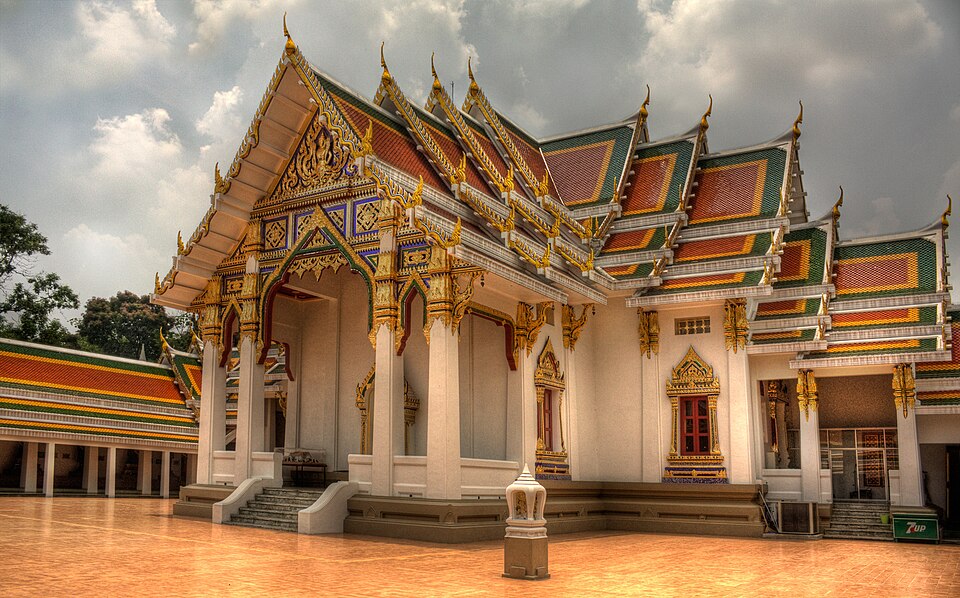
Wat Phra Si Mahathat Woramahawihan is Bangkok's political temple. Construction began in 1940 on Phahon Yothin Road at the eighteen-kilometre marker, in what is now Bang Khen district, under the People's Party government of Field Marshal Plaek Phibunsongkhram, and its first name was Wat Prachathipatai — Democracy Temple. It was conceived as a monument to constitutional government rather than as a royal foundation, which makes it almost unique among the major monasteries of the capital: no king built it, and its founding logic was a political settlement. It was consecrated as a royal monastery on 24 June 1942, the anniversary of the 1932 revolution that ended absolute monarchy, by which point it had been renamed Wat Phra Si Mahathat after the relics installed in it.
Checked 2026-08-25 · Source
Wat Phra Si Mahathat holds objects obtained in 1940 by a Thai diplomatic mission led by Rear Admiral Luang Thamrong Nawasawat, sent to the British Commonwealth territories in Asia. From the Indian government the mission secured Buddha relics recovered at the Dharmarajika stupa at Taxila, five cuttings from the Bodhi tree at Bodh Gaya, and soil from the four principal sites of the Buddha's life — his birth, his enlightenment, his first sermon and his passing. The relics are enshrined in the Phra Chedi Si Mahathat, a stupa 38 metres high, and the Bodhi cuttings were planted in the grounds. The chedi's distinctive feature is administrative rather than devotional: its outer wall carries 112 niches, set aside for the ashes of persons of national service approved by the government and parliament, so the monument doubles as a state ossuary of the constitutional era.
Checked 2026-08-25 · Source
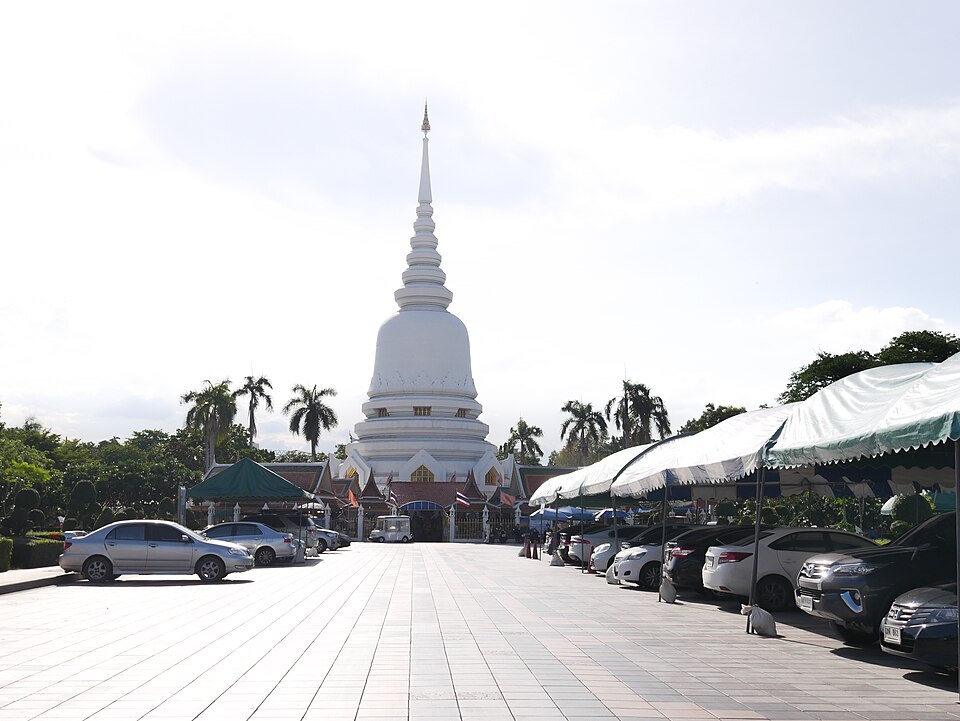
Forty-five minutes covers Wat Phra Si Mahathat for a visitor who knows what to look for. The grounds are large and level, and the sequence that makes sense is the ordination hall, then the chedi with its band of memorial niches, then the descendants of the Bodh Gaya cuttings in the grounds. Reading the niche inscriptions — which are the reason the temple is interesting rather than merely large — adds fifteen to twenty minutes for anyone with an interest in twentieth-century Thai politics. Because the temple sits directly at a rail interchange, it works well as a thirty-minute stop bolted onto a journey rather than as an expedition, which is not true of most outer-Bangkok temples.
Checked 2026-08-25
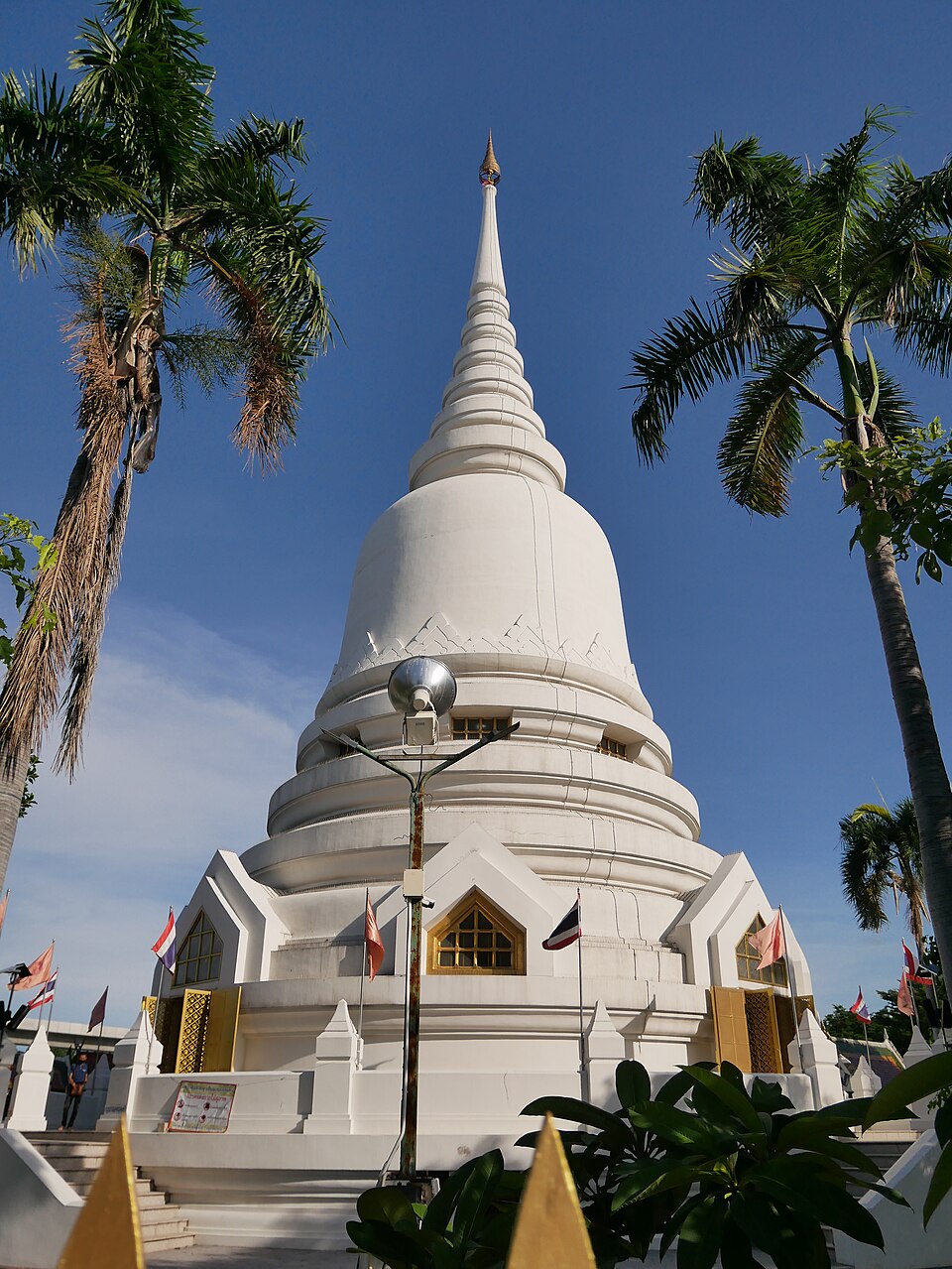
Mornings on a weekday are the quietest hours at Wat Phra Si Mahathat, because the temple's busiest periods are driven by funerals and merit-making rather than by tourism, and those cluster in the late afternoon and at weekends. The site is open ground with mature trees, so shade is available even at midday, but the walk from the station is exposed. Two dates carry weight here: 24 June, the anniversary of both the 1932 revolution and the temple's 1942 consecration, and the major Buddhist holy days, when the grounds fill. ssmtour holds no operator-published opening hours for the temple, so daylight is the safe assumption and the gate should be treated as the authority.
Checked 2026-08-25
ssmtour records no admission for Wat Phra Si Mahathat, and none should be read into that. No operator page could be reached on 25 August 2026: the monastery has no website recorded in OpenStreetMap, and the Thai Wikipedia article used for the temple's history states nothing about entry. The admission is not stated on this page for that reason. Visitors should expect the possibility of a donation box rather than a ticket counter, and should not rely on a figure quoted by a tour operator or a listings site, none of which is an operator source. If a fee is charged for a specific building rather than for the grounds, that will be posted at that building's door.
Checked 2026-08-25
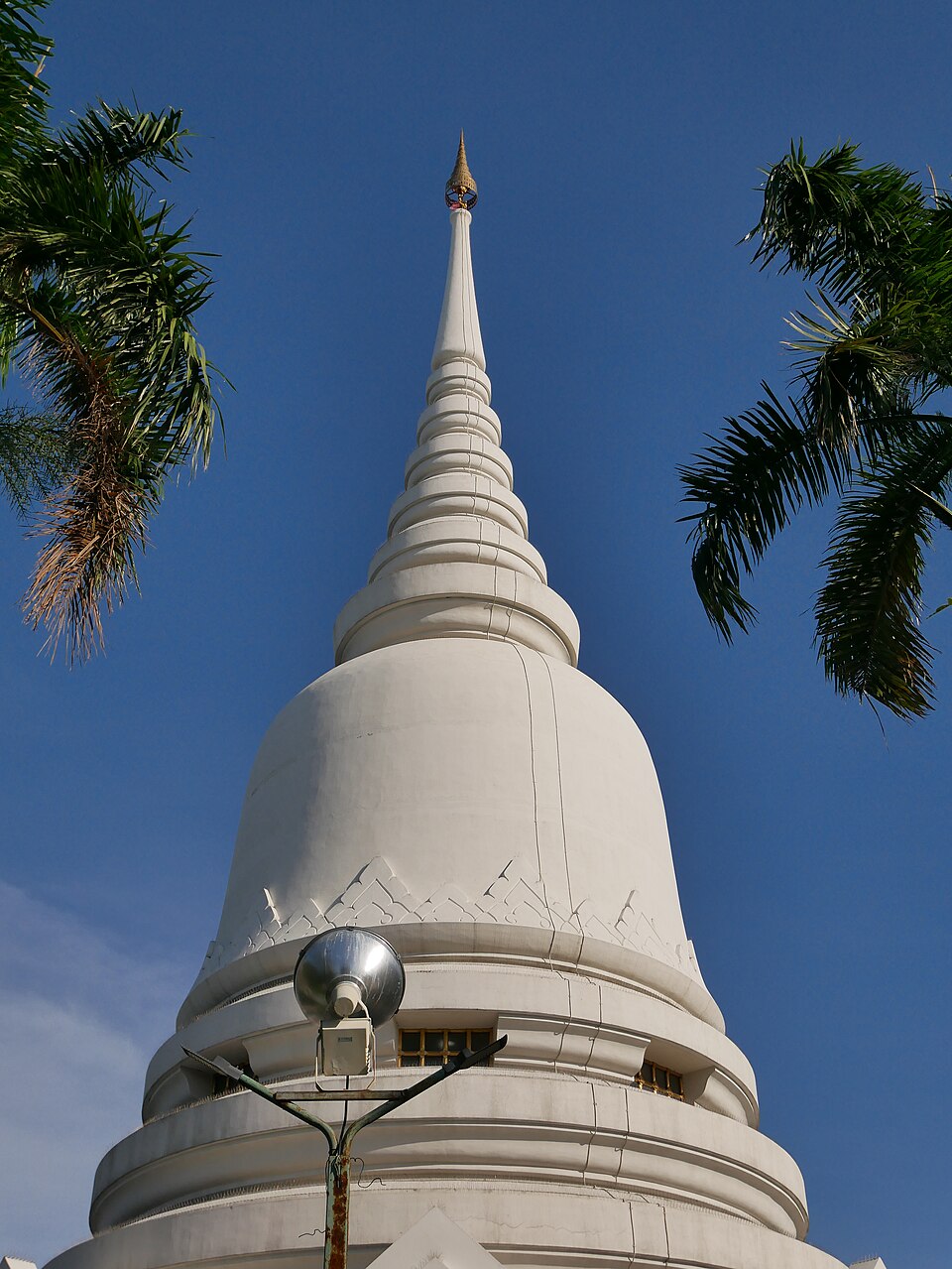
Wat Phra Si Mahathat is one of the easiest large temples in Bangkok to reach by rail. Wat Phra Sri Mahathat station sits above the Bang Khen roundabout where Phahon Yothin, Ram Inthra and Chaeng Watthana roads meet, and it is an interchange: the BTS Sukhumvit Line calls there as N17, having opened on 5 June 2020 with the northern extension, and the MRT Pink Line monorail calls there as PK16, having begun trial operation on 21 November 2023. Passengers can transfer between the two lines inside the paid area without buying a second ticket. An elevated walkway runs from the station to Wat Phra Si Mahathat itself, along with the district office and the neighbouring shopping centre, so the last stretch is covered and step-free.
Checked 2026-08-25 · Source
Wat Phra Si Mahathat is a busy funeral temple, and that governs how a visitor should behave. On any given afternoon one or more of the pavilions will hold a wake or a cremation; those are private occasions, the mourners are not scenery, and walking into a pavilion to look is an intrusion regardless of intent. Dress covers shoulders and knees and shoes come off inside halls, as elsewhere. The 112 memorial niches on the chedi commemorate individuals from a contested period of Thai political history, and the sensible course for a foreign visitor is to read and not to editorialise on site. Practically, the Bang Khen roundabout beneath the station is a fast multi-road junction — use the elevated walkway rather than crossing at ground level.
Checked 2026-08-25
The frame worth having at Wat Phra Si Mahathat is the 38-metre chedi with its band of memorial niches close enough to read as individual plaques, which turns a plain white stupa into a document. A short telephoto from thirty or forty metres compresses the niches into a legible grid; from close up they disappear into texture. The elevated walkway from the station gives an unusual raised angle over the compound that ground-level temple photography rarely offers. Do not photograph funeral pavilions, mourners, coffins or cremation smoke — this is the single rule that matters here, and it is not negotiable. Inside the ordination hall, ask before photographing monks, and skip flash entirely.
Checked 2026-08-25
It was begun in 1940 under the People's Party government of Field Marshal Plaek Phibunsongkhram as a monument to constitutional government, and was first named Wat Prachathipatai, Democracy Temple. It was consecrated on 24 June 1942, the anniversary of the 1932 revolution.
A Thai mission led by Rear Admiral Luang Thamrong Nawasawat obtained from the Indian government in 1940 Buddha relics recovered at the Dharmarajika stupa at Taxila, five cuttings from the Bodhi tree at Bodh Gaya and soil from the four principal sites of the Buddha's life. The relics are enshrined in the 38-metre chedi.
The outer wall of the Phra Chedi Si Mahathat carries 112 niches set aside for the ashes of persons of national service approved by the government and parliament, which makes the stupa a state ossuary of the constitutional era as well as a reliquary.
Wat Phra Sri Mahathat station serves it directly: BTS Sukhumvit Line station N17, open since 5 June 2020, and MRT Pink Line station PK16, in trial operation from 21 November 2023, with an elevated walkway from the station to the temple.
ssmtour records no admission. No operator page was reachable on 25 August 2026 and the monastery has no website recorded in OpenStreetMap, so the fee is not stated here and no third-party figure is repeated.
The grounds and the chedi are fine. Funeral pavilions, mourners and cremations are not — the temple hosts funerals daily, and those are private occasions rather than sights.
Loading the interactive map…
The interactive map could not be loaded.
Last updated:
Source: OpenStreetMap contributors, Wikidata ·