
_%E0%B8%9E%E0%B8%A3%E0%B8%B0%E0%B8%A3%E0%B8%B2%E0%B8%8A%E0%B8%A7%E0%B8%B1%E0%B8%87%E0%B9%80%E0%B8%94%E0%B8%B4%E0%B8%A1_%E0%B9%80%E0%B8%82%E0%B8%95%E0%B8%9A%E0%B8%B2%E0%B8%87%E0%B8%81%E0%B8%AD%E0%B8%81%E0%B9%83%E0%B8%AB%E0%B8%8D%E0%B9%88_%E0%B8%81%E0%B8%A3%E0%B8%B8%E0%B8%87%E0%B9%80%E0%B8%97%E0%B8%9E%E0%B8%A1%E0%B8%AB%E0%B8%B2%E0%B8%99%E0%B8%84%E0%B8%A3_(10).jpg)
_%E0%B8%9E%E0%B8%A3%E0%B8%B0%E0%B8%A3%E0%B8%B2%E0%B8%8A%E0%B8%A7%E0%B8%B1%E0%B8%87%E0%B9%80%E0%B8%94%E0%B8%B4%E0%B8%A1_%E0%B9%80%E0%B8%82%E0%B8%95%E0%B8%9A%E0%B8%B2%E0%B8%87%E0%B8%81%E0%B8%AD%E0%B8%81%E0%B9%83%E0%B8%AB%E0%B8%8D%E0%B9%88_%E0%B8%81%E0%B8%A3%E0%B8%B8%E0%B8%87%E0%B9%80%E0%B8%97%E0%B8%9E%E0%B8%A1%E0%B8%AB%E0%B8%B2%E0%B8%99%E0%B8%84%E0%B8%A3_(11).jpg)
_%E0%B8%9E%E0%B8%A3%E0%B8%B0%E0%B8%A3%E0%B8%B2%E0%B8%8A%E0%B8%A7%E0%B8%B1%E0%B8%87%E0%B9%80%E0%B8%94%E0%B8%B4%E0%B8%A1_%E0%B9%80%E0%B8%82%E0%B8%95%E0%B8%9A%E0%B8%B2%E0%B8%87%E0%B8%81%E0%B8%AD%E0%B8%81%E0%B9%83%E0%B8%AB%E0%B8%8D%E0%B9%88_%E0%B8%81%E0%B8%A3%E0%B8%B8%E0%B8%87%E0%B9%80%E0%B8%97%E0%B8%9E%E0%B8%A1%E0%B8%AB%E0%B8%B2%E0%B8%99%E0%B8%84%E0%B8%A3_(12).jpg)
_%E0%B8%9E%E0%B8%A3%E0%B8%B0%E0%B8%A3%E0%B8%B2%E0%B8%8A%E0%B8%A7%E0%B8%B1%E0%B8%87%E0%B9%80%E0%B8%94%E0%B8%B4%E0%B8%A1_%E0%B9%80%E0%B8%82%E0%B8%95%E0%B8%9A%E0%B8%B2%E0%B8%87%E0%B8%81%E0%B8%AD%E0%B8%81%E0%B9%83%E0%B8%AB%E0%B8%8D%E0%B9%88_%E0%B8%81%E0%B8%A3%E0%B8%B8%E0%B8%87%E0%B9%80%E0%B8%97%E0%B8%9E%E0%B8%A1%E0%B8%AB%E0%B8%B2%E0%B8%99%E0%B8%84%E0%B8%A3_(18).jpg)
_%E0%B8%9E%E0%B8%A3%E0%B8%B0%E0%B8%A3%E0%B8%B2%E0%B8%8A%E0%B8%A7%E0%B8%B1%E0%B8%87%E0%B9%80%E0%B8%94%E0%B8%B4%E0%B8%A1_%E0%B9%80%E0%B8%82%E0%B8%95%E0%B8%9A%E0%B8%B2%E0%B8%87%E0%B8%81%E0%B8%AD%E0%B8%81%E0%B9%83%E0%B8%AB%E0%B8%8D%E0%B9%88_%E0%B8%81%E0%B8%A3%E0%B8%B8%E0%B8%87%E0%B9%80%E0%B8%97%E0%B8%9E%E0%B8%A1%E0%B8%AB%E0%B8%B2%E0%B8%99%E0%B8%84%E0%B8%A3_(19).jpg)
2 min walk · เขตบางกอกใหญ่
Wat Moli Lokkayaram
- High · Heritage site
- Place of worship
Language · 1 published
Historic monument · เขตบางกอกใหญ่, Bangkok
พระราชวังเดิม
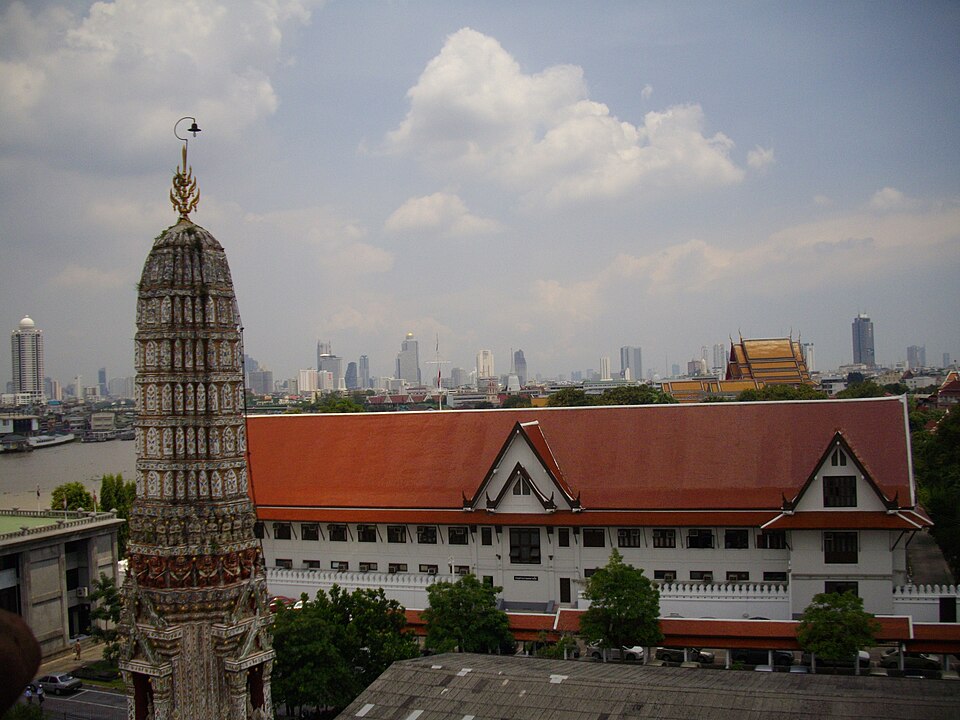
Phra Racha Wang Derm — the Old Palace, or Thonburi Palace — is the palace King Taksin had built in 1767 on the west bank of the Chao Phraya at the mouth of Bangkok Yai canal, and it was his only palace during the whole Thonburi period. The site was chosen for war, not for display: it sits inside the walls of an existing fort at a bend that controls the river traffic, close enough to the sea for a defeated king to escape by boat. After Taksin, several senior members of the Chakri dynasty lived here, the last of them Prince Krom Phra Chakrapatradipongse. When he died, King Rama V gave the palace to the Royal Thai Navy to house a naval academy, which he inaugurated on 20 November 1905; when the academy moved out, the compound became the Royal Thai Navy Headquarters, which it still is. That is the fact that governs a visit: the oldest royal palace in Bangkok stands inside an operating military headquarters, cared for by the Phra Racha Wang Derm Restoration Foundation, and it is not entered off the street.
Checked 2026-08-25 · Source
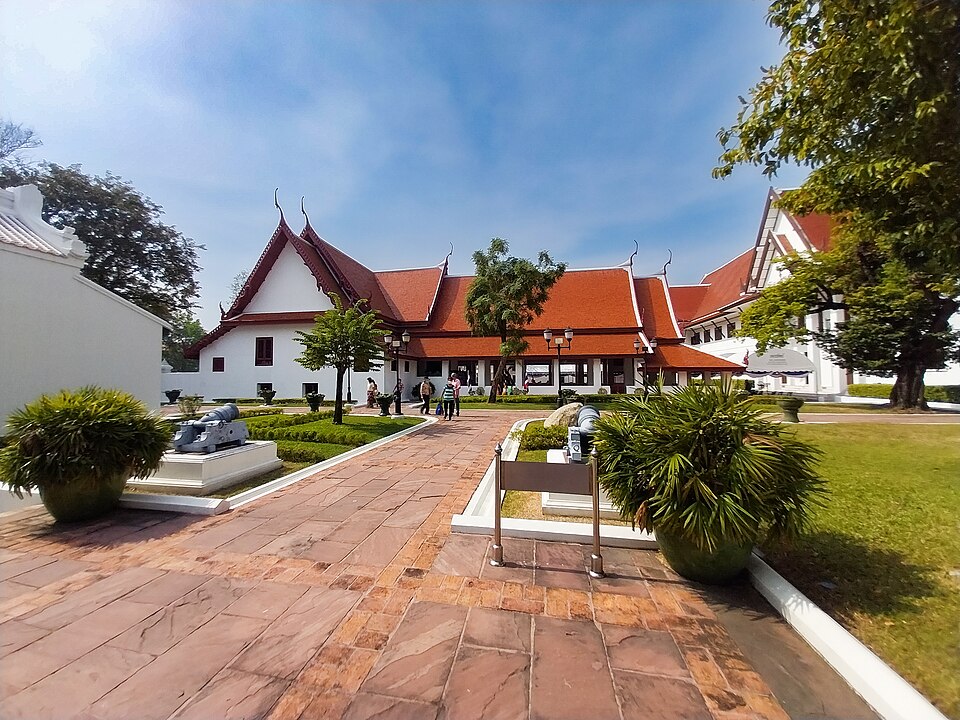
The Throne Hall was built in 1768, at the moment Thonburi became the capital: two adjoining Thai-style buildings forming a T, the northern one an open pavilion where the king held court, the southern one his private quarters. The navy still uses the Throne Hall for ceremonies and the southern building as a reception room. Wichaiprasit Fort, on the river, was built in King Narai's reign as Wichayen Fort and renamed when Taksin made Thonburi his capital; the navy fires ceremonial cannon from it and flies the flags of the Commander-in-Chief and of the Royal Thai Navy from its pole. Two Chinese-style residences stand in the compound: the smaller, built when the future Rama II was Prince Krom Luang Isara Sunthorn and lived here, now holds a collection of traditional Thai weapons and material on Taksin's campaigns; the larger, in a mixed Thai and Chinese manner, is believed to date from King Pinklao's residence here between 1824 and 1851 and holds an exhibition on the social, economic and cultural life of Taksin's reign together with antiques and paintings. King Pinklao's own residence, the first Western-style building in Thailand used as a royal family home and American in influence, has his life and work upstairs with a Thonburi-period reference library, and antique ceramics and old Thai coinage and currency downstairs. The shrine of King Taksin, holding a statue of the king with his sword, was built when Prince Chakrapatradipongse lived here between 1881 and 1900; the older shrine on whose base a new building was raised in 1999 fell into ruin on 11 April 1900, the night the prince died, and the 1999 building houses whale bones found beneath it during the restoration.
Checked 2026-08-25 · Source
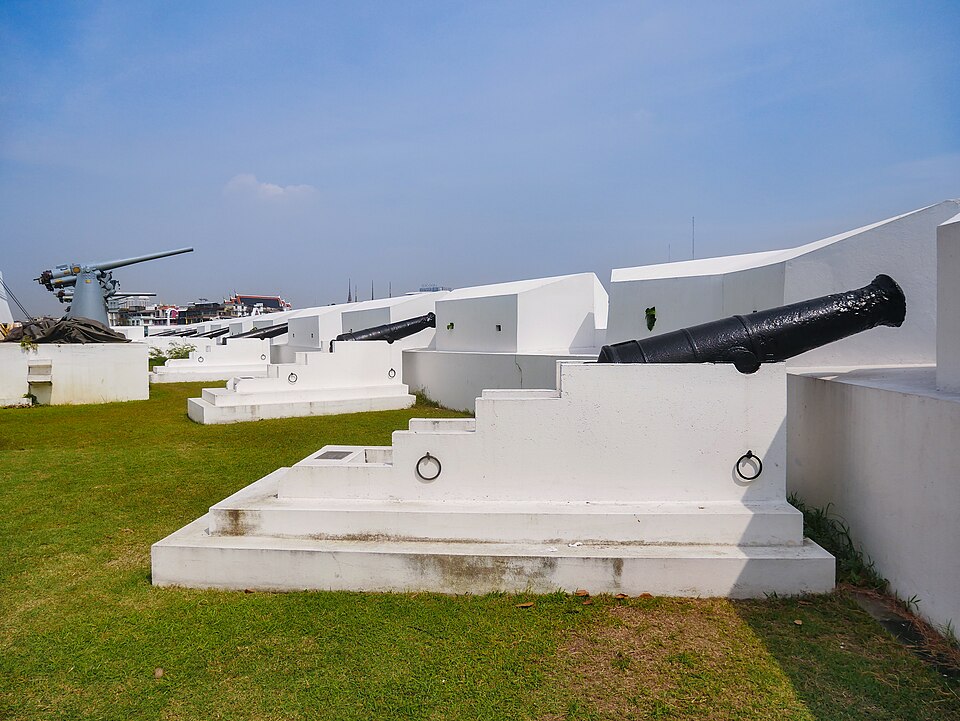
Allow ninety minutes once inside. Phra Racha Wang Derm is not a single building but six or seven separate ones spread across a walled riverside compound, and four of them hold exhibitions that reward reading: the weapons collection, the Taksin-reign exhibition, King Pinklao's rooms with the ceramics and currency downstairs, and the Taksin shrine. Add the Throne Hall and Wichaiprasit Fort, both of which are looked at rather than entered, and the walk between them. Ninety minutes is the figure recorded here. A group visit accompanied by a guide typically runs longer than an unaccompanied one would, because the sequence is set by the guide rather than by the visitor.
Checked 2026-08-25
Whenever the foundation can take a booking, because that — not the weather and not the season — is what decides whether a visit happens at all. The palace stands inside the Royal Thai Navy Headquarters, and the foundation's site publishes no opening hours, no daily admission window and no walk-up arrangement; it publishes a postal address, an email address and three telephone numbers, and says the fax is answered during office hours. Arrange the visit first and fit the date to the answer. Two practical notes follow from the setting: the compound is on the river and largely in the open, so the hot middle of the day is punishing between March and May, and the navy uses Wichaiprasit Fort for ceremonial cannon fire on state occasions, which is when access is least likely to be granted.
Checked 2026-08-25 · Source
No admission is recorded for Phra Racha Wang Derm and no opening hours are recorded: the fee is not stated anywhere on the site the operator controls. Both the English and the Thai pages of wangdermpalace.org were read for this page — the introduction, the ancient sites descriptions, the exhibition pages, the map page and the contact page — and none of them names a price, a daily opening time or a closed day. What the site does give is the way in. The Phra Racha Wang Derm Restoration Foundation has its office on the ground floor of King Pinklao's residence inside the palace, at the Royal Thai Navy Headquarters, Arun Amarin Road, Bangkok 10600, and publishes the telephone numbers 0-2475-4117, 0-2466-9355 and 0-2472-7291 with the fax on 0-2466-9355. Contact the foundation and ask; do not turn up expecting a ticket desk.
Checked 2026-08-25 · Source
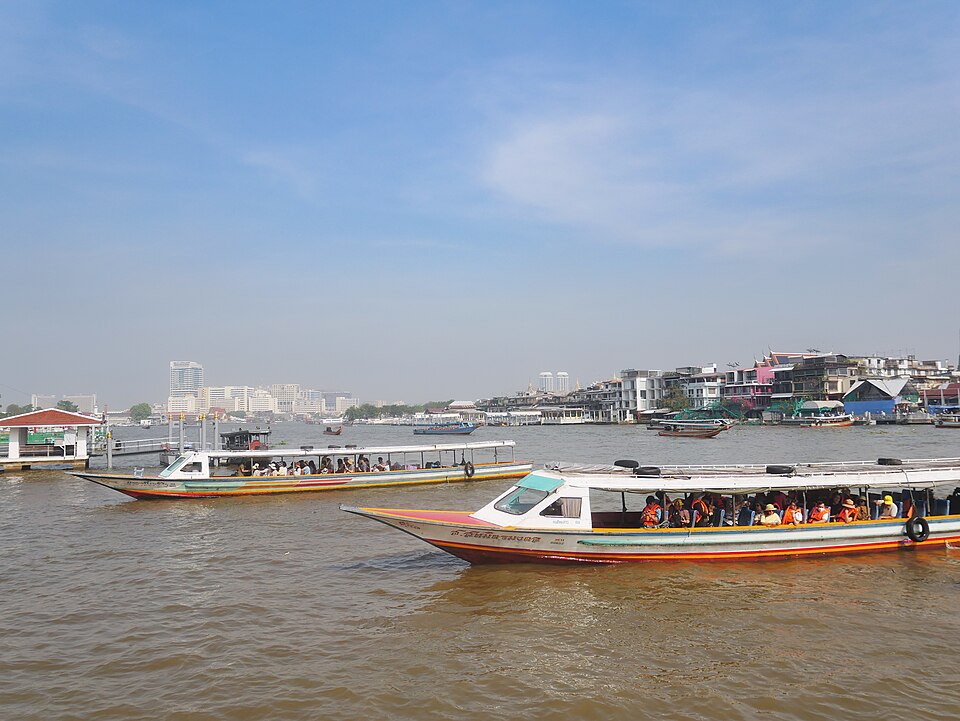
The palace is on Arun Amarin Road in Bangkok Yai, on the Thonburi bank immediately south of Wat Arun, and the foundation gives three ways in. By bus, public route 57 passes in front of the Royal Thai Navy. By car, private vehicles can be parked inside the Royal Thai Navy complex. By boat, a regular ferry runs between Tha Tien pier on the Bangkok side and the Wat Arun pier, called Tha Yai Puek, which the foundation's map page prices at 3 baht per person — a figure printed on a page whose copyright line reads 2013, so treat it as the operator's stated fare rather than today's. From the Wat Arun landing the palace wall is a short walk south along the river. Arriving by taxi means naming the navy headquarters rather than the palace, which many drivers will not know by its own name.
Checked 2026-08-25 · Source
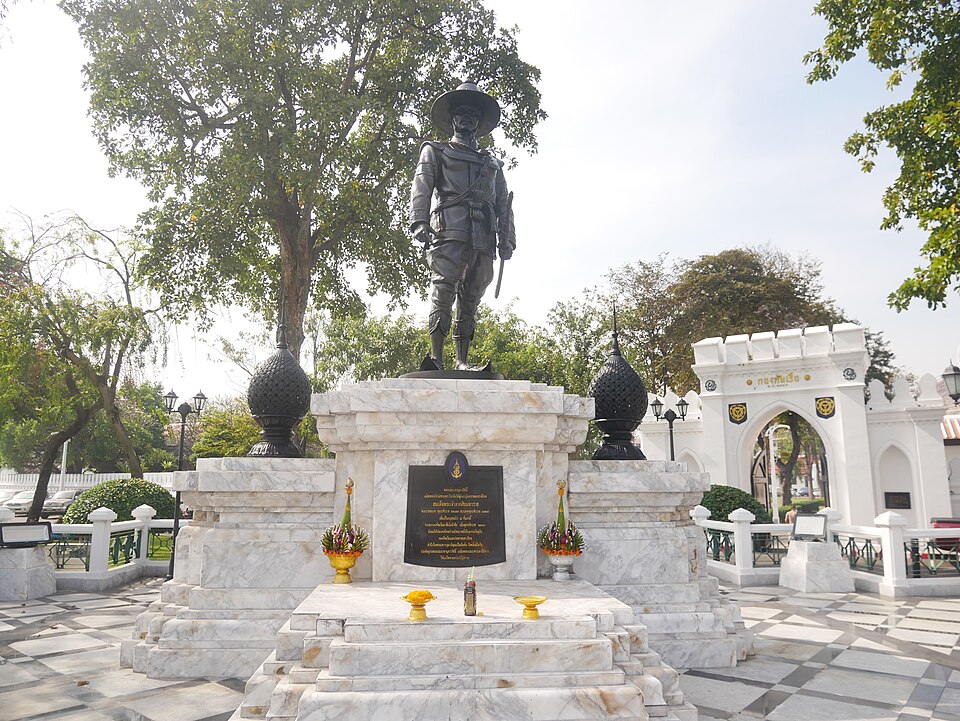
This is an active military headquarters before it is a heritage site, and every trap follows from that. Access is by prior arrangement with the foundation; there is no gate you can walk through, no ticket window and no published hours, and a visitor who arrives unannounced will be stopped at the perimeter. Carry passport or identity documents, because the navy checks them. Expect the possibility that a visit is cancelled or curtailed at short notice for a naval or state occasion — the compound is used for ceremonies and Wichaiprasit Fort for ceremonial cannon fire. The foundation's website carries a 2013 copyright line and its published information has not moved since, so telephone rather than email if the answer matters, and telephone during Thai office hours. Inside, remember that the Taksin shrine is a place of worship in constant Thai use and the Throne Hall is a functioning ceremonial room, not an exhibit; follow whatever the escort says without negotiating. Dress modestly and in closed shoes.
Checked 2026-08-25
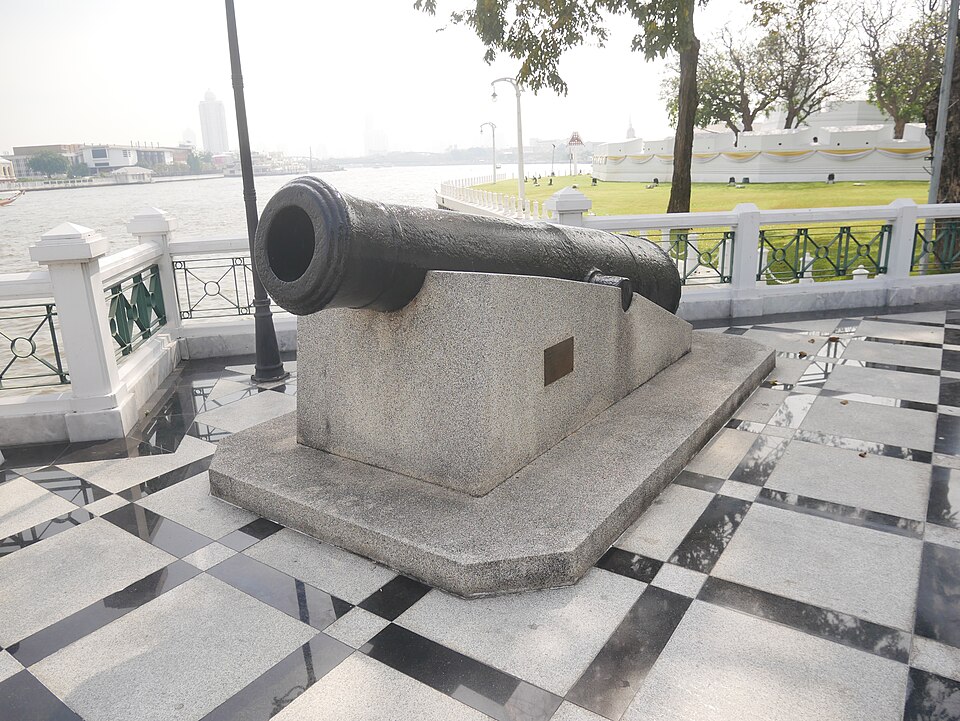
Assume that photography inside the Royal Thai Navy Headquarters is restricted and ask before raising a camera anywhere in the compound; naval installations, personnel, vehicles and the fort's working equipment are not subjects, whatever the light is doing. Where permission is given, the interesting frames are architectural rather than panoramic: the T-plan Throne Hall of 1768 with its open northern pavilion, the mixed Thai-Chinese detailing on the larger of the two Chinese residences, and King Pinklao's Western-style house, which photographs as a piece of nineteenth-century American colonial architecture that has no business being in Thonburi. Wichaiprasit Fort and its flagpole are the one part of the palace that can be photographed freely, because they are visible from the river: a Chao Phraya boat or the Tha Tien crossing gives a clean view of the fort's water face without anyone needing to be asked.
Checked 2026-08-25
No. The palace stands inside the Royal Thai Navy Headquarters. The Phra Racha Wang Derm Restoration Foundation, whose office is on the ground floor of King Pinklao's residence inside the palace, is the contact for arranging a visit; its site publishes no walk-up arrangement, no opening hours and no fee.
No admission is recorded. The fee is not stated on wangdermpalace.org in either English or Thai — the introduction, ancient sites, exhibition, map and contact pages were all read and none names a price or an opening time.
King Taksin's. He had it built in 1767 and it was his only palace during the Thonburi period. Later Chakri princes lived here, and after the last of them died King Rama V gave it to the Royal Thai Navy, inaugurating a naval academy on the site on 20 November 1905.
The 1768 Throne Hall, Wichaiprasit Fort, two Chinese-style residences now holding a Thai weapons collection and an exhibition on Taksin's reign, King Pinklao's Western-style residence with its library, ceramics and old currency, the shrine of King Taksin, and the 1999 building housing whale bones found beneath the older shrine.
The foundation names bus route 57, which passes in front of the Royal Thai Navy; parking inside the navy complex for private cars; and the ferry between Tha Tien pier and the Wat Arun pier, Tha Yai Puek, which its map page prices at 3 baht per person.
Allow ninety minutes inside. The compound holds six or seven separate buildings, four of them with exhibitions worth reading, plus the Throne Hall and the fort and the walking between them.
Loading the interactive map…
The interactive map could not be loaded.
Last updated:
Source: OpenStreetMap contributors, Wikidata ·