


4 min walk · Paris 16e Arrondissement
Église Notre-Dame de l'Assomption de Passy
- High
- Place of worship
Language · 1 published
Nature site · Paris 16e Arrondissement, Paris
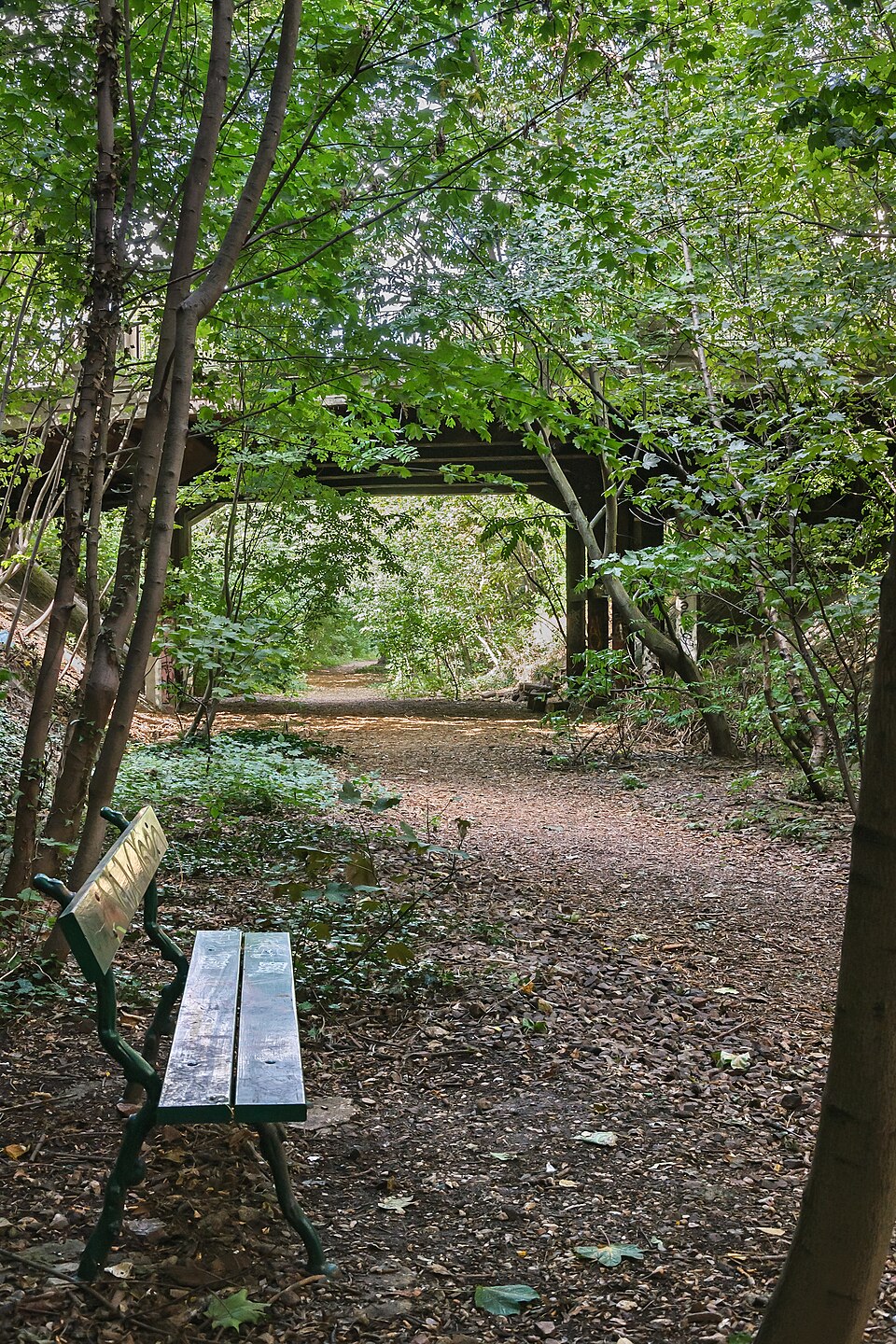
The Petite Ceinture du 16e is a surviving stretch of the Petite Ceinture, the circular railway built between 1852 and 1869 to link Paris's mainline terminus stations for freight and passengers around the edge of the city.
Passenger service on the line wound down through the early twentieth century as the Metro took over local trips and stopped almost entirely by 1934; freight use continued on parts of the line for decades longer before the whole circuit fell out of use. This 16th-arrondissement section, running near the old Auteuil viaduct, is one of several stretches the city has since opened to walkers as a linear path rather than left fenced off.
Checked 2026-08-24 · Source
There is no building to enter: the route follows the old rail cutting and embankment, with sections of original track, ballast and, in places, disused platform edges still visible along the path.
Decades of disuse have let vegetation take over the corridor, and the 16th arrondissement stretch is managed partly as an informal wildlife corridor, with self-seeded trees and undergrowth along the old cutting distinct from the manicured planting of a formal Paris park nearby.
The full Petite Ceinture ran around 32 kilometres in a rough circle just inside the city's 1840s fortifications, with stations that were often shared with, or built close to, today's outer Metro stations, since both systems were solving the same problem of moving people around the edge of a growing city.
Checked 2026-08-24 · Source
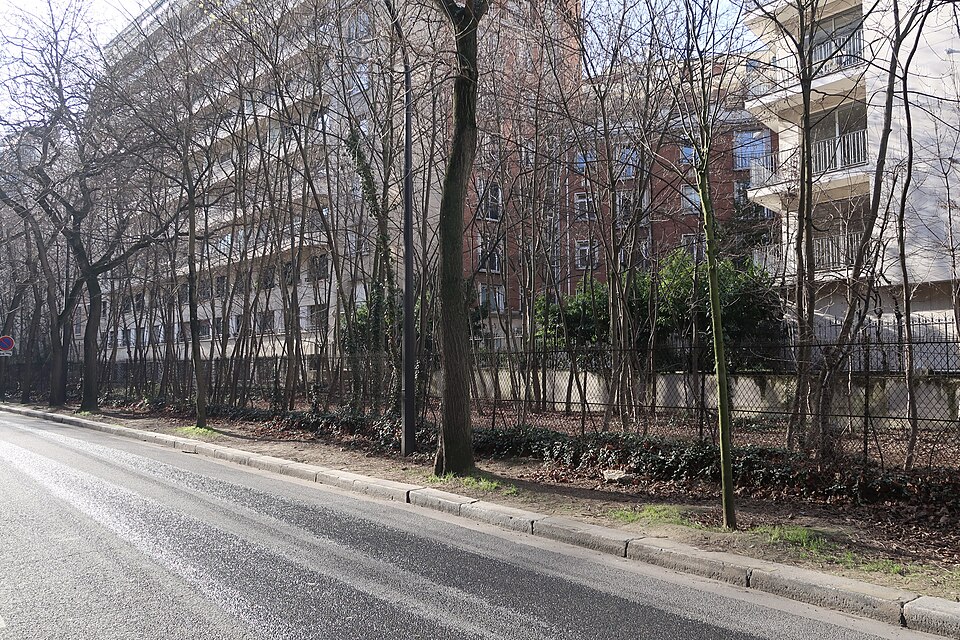
Thirty to forty-five minutes covers the opened stretch in this arrondissement at an easy walking pace.
The Petite Ceinture is not continuous for walkers across the whole city -- long stretches elsewhere remain closed or fenced -- so this section is a self-contained walk rather than the start of a longer unbroken route around Paris.
It suits a short add-on to a longer day in the 16th arrondissement rather than a destination walk planned on its own, given how brief the opened stretch is compared with the full 32-kilometre historic circuit.
Checked 2026-08-24 · Source
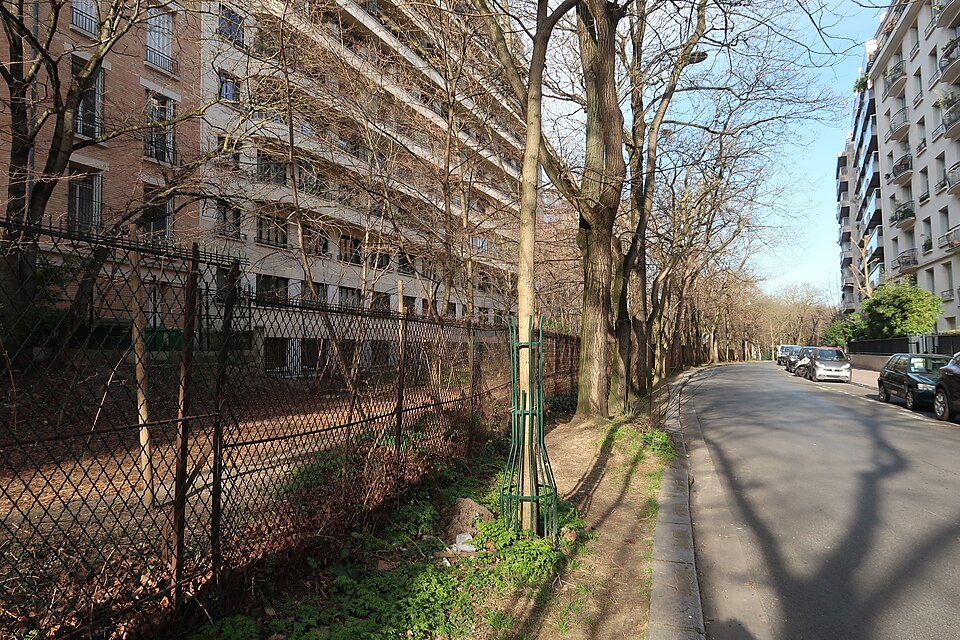
Daylight hours only: like the other opened Petite Ceinture sections, this stretch is not lit and closes to visitors after dark on a gate schedule set by the city.
Spring gives the fullest view of the self-seeded greenery reclaiming the old rail cutting; a dry day is worth choosing generally, since the unpaved sections of the path can turn muddy after rain.
Checked 2026-08-24 · Source
There is no ticket and no door beyond the access gates the city has installed at the entrances to control opening hours; entry is free within those hours.
Not recorded: a precise current gate-hour table for this specific stretch; the hours posted at the entrance gate are the reliable reference on the day.
Checked 2026-08-24 · Source
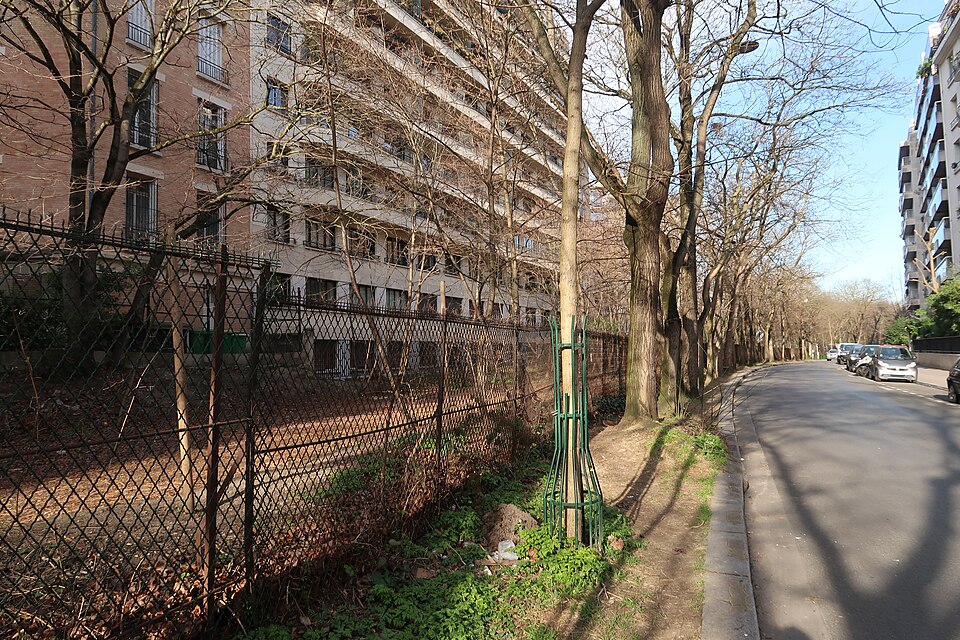
The nearest stations depend on which end of the opened stretch is the entry point; Metro stops in the Auteuil and Porte d'Auteuil area of the 16th arrondissement, on Line 9 and the RER C, sit closest to this section.
Access is on foot only through the gated entrances the city has cut into the old railway fencing; there is no vehicle or cycle access to the corridor itself.
The nearby Auteuil area also carries other physical traces of the old line -- disused bridges and cutting walls visible from the surrounding streets -- for anyone approaching from a direction other than the marked entrance gates.
Checked 2026-08-24 · Source
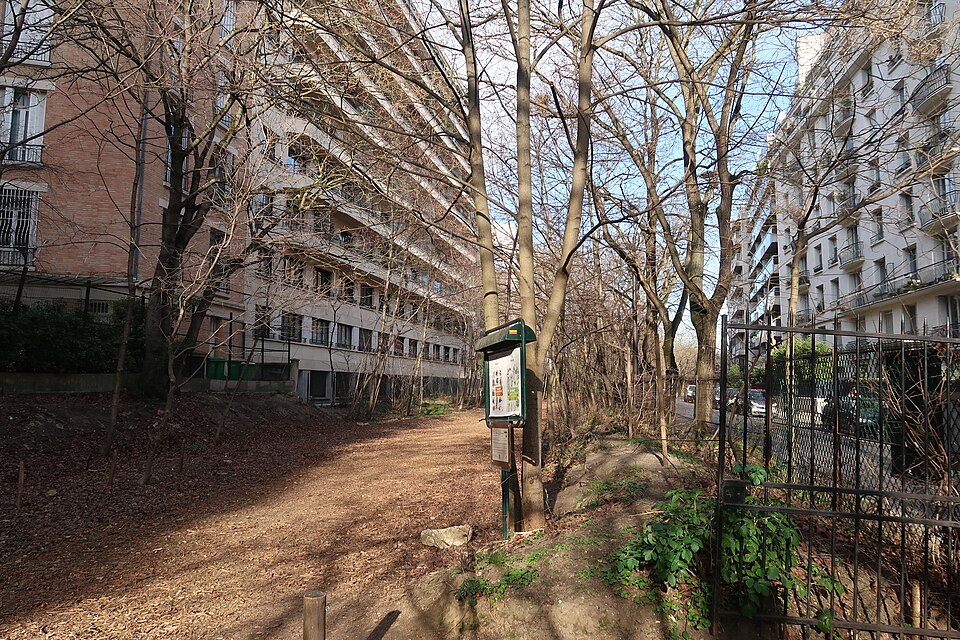
The path surface is uneven in places, following the old ballast bed rather than a paved footpath, and is not step-free or suitable for a standard pushchair without care.
Some adjoining sections of the old Petite Ceinture remain closed and fenced off for safety reasons -- old tunnels, unstable embankments -- and climbing a fence to continue past the end of the opened stretch is both against the rules and a real safety risk given the age of the structures.
Checked 2026-08-24 · Source
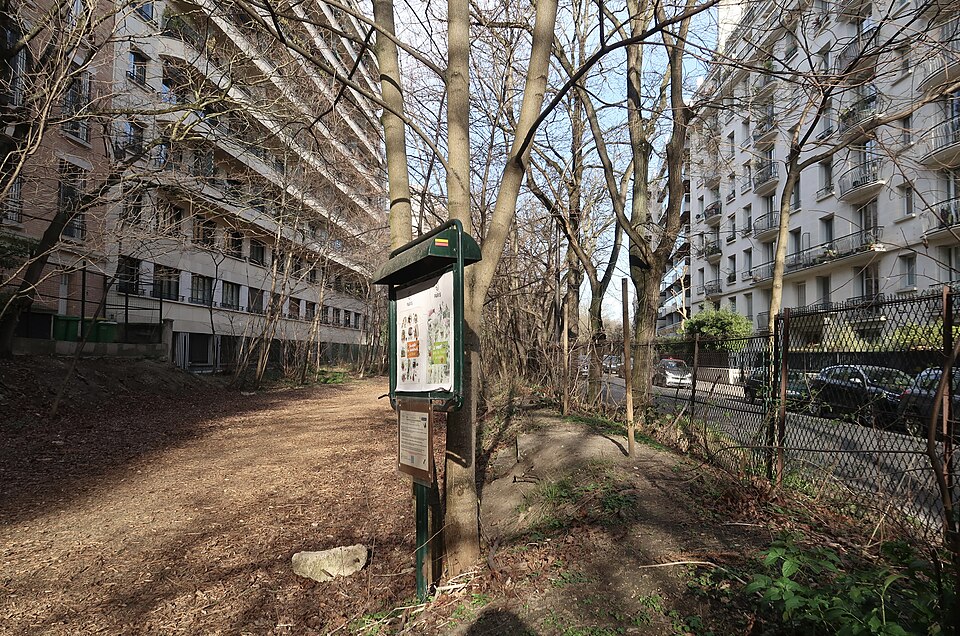
The contrast between rusted rail hardware and the vegetation that has grown over it through decades of disuse is the corridor's defining image, distinct from any formal park in the city.
Low afternoon light along the cutting brings out the texture of the old ballast and retaining walls; a wider shot along the straight run of the old track bed shows the corridor's original rail alignment most clearly.
Moss and ivy over old signal posts and platform edges give a close-up subject distinct from anything found on a paved Paris park path.
Checked 2026-08-24 · Source
A circular railway, built between 1852 and 1869, linking Paris's mainline stations for freight and passenger traffic around the edge of the city.
Passenger service wound down through the early twentieth century and had stopped almost entirely by 1934, as the Metro took over local trips.
Yes, entry is free within the gate hours posted at the entrances; there is no ticket.
No. Only certain sections, including this one in the 16th arrondissement, have been opened; long stretches elsewhere remain closed or fenced.
No, it follows the old ballast bed and is uneven in places, so it is not fully step-free or reliably pushchair-friendly.
Loading the interactive map…
The interactive map could not be loaded.
Last updated:
Source: OpenStreetMap contributors, Wikidata ·