


2 min walk · Paris 19e Arrondissement
Pan statue
- High
- Art and culture venue
Language · 1 published
Nature site · Paris 19e Arrondissement, Paris
Parc des Buttes-Chaumont
| Monday | 07:00 – 22:00 |
|---|---|
| Tuesday | 07:00 – 22:00 |
| Wednesday | 07:00 – 22:00 |
| Thursday | 07:00 – 22:00 |
| Friday | 07:00 – 22:00 |
| Saturday | 07:00 – 22:00 |
| Sunday | 07:00 – 22:00 |
Checked 2026-08-24 · Source
Parc des Buttes-Chaumont sits on ground that had no reason to become a park: a bare, chemically poor hill called Chauve-Mont that once held the Gibbet of Montfaucon, where hanged criminals were displayed from the thirteenth century until 1760, and that later served as a refuse dump, a horse-carcass yard and a gypsum quarry.
Baron Haussmann picked the exhausted quarry site for a new public park to serve the growing 19th and 20th arrondissements annexed to Paris in 1860, and his engineer Adolphe Alphand built it between 1864 and 1867 — the same team behind the Bois de Boulogne and Bois de Vincennes. Explosives sculpted the old quarry into an artificial fifty-metre cliff and grotto around a new lake, and the park opened on 1 April 1867, timed to the Paris Universal Exposition of that year.
At 24.7 hectares it is the fifth-largest park in Paris, after the Bois de Vincennes, the Bois de Boulogne, Parc de la Villette and the Tuileries Garden.
Checked 2026-08-24 · Source
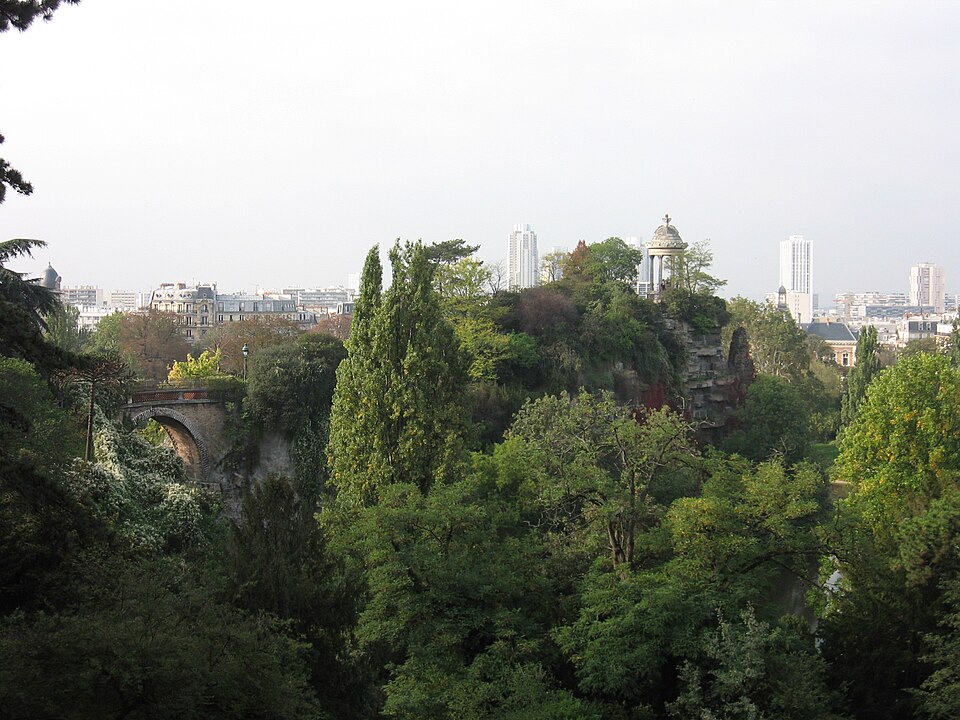
The Ile de Belvedere, a rocky island rebuilt from the old gypsum quarry, sits in the middle of a 1.5-hectare artificial lake; two bridges cross to it, and a steep 173-step stairway climbs through an artificial grotto from the lake shore to the clifftop.
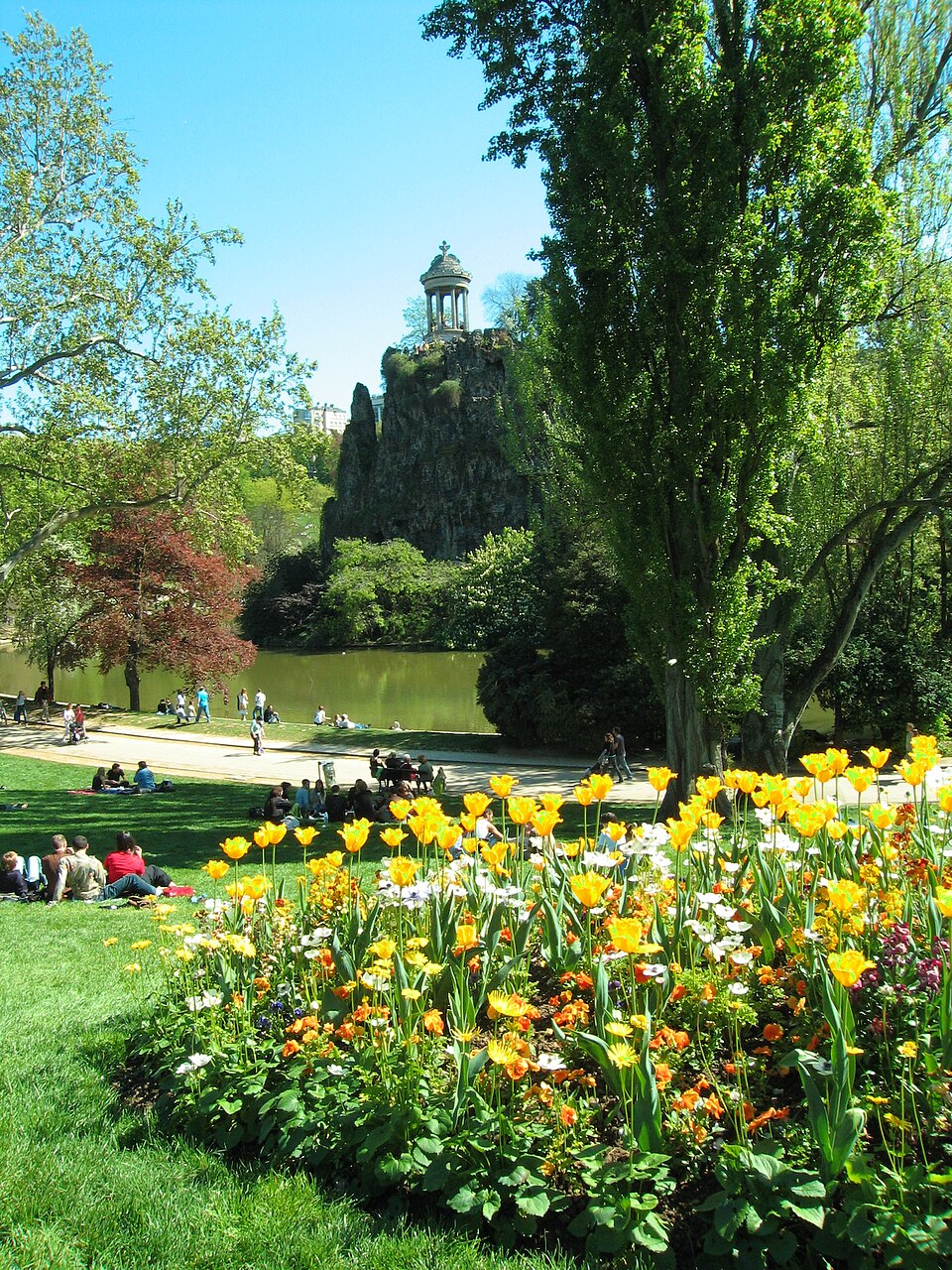
At the top stands the Temple de la Sibylle, city architect Gabriel Davioud's miniature copy of the ancient Roman Temple of Vesta at Tivoli, fifty metres above the water — the single most photographed feature in the park.
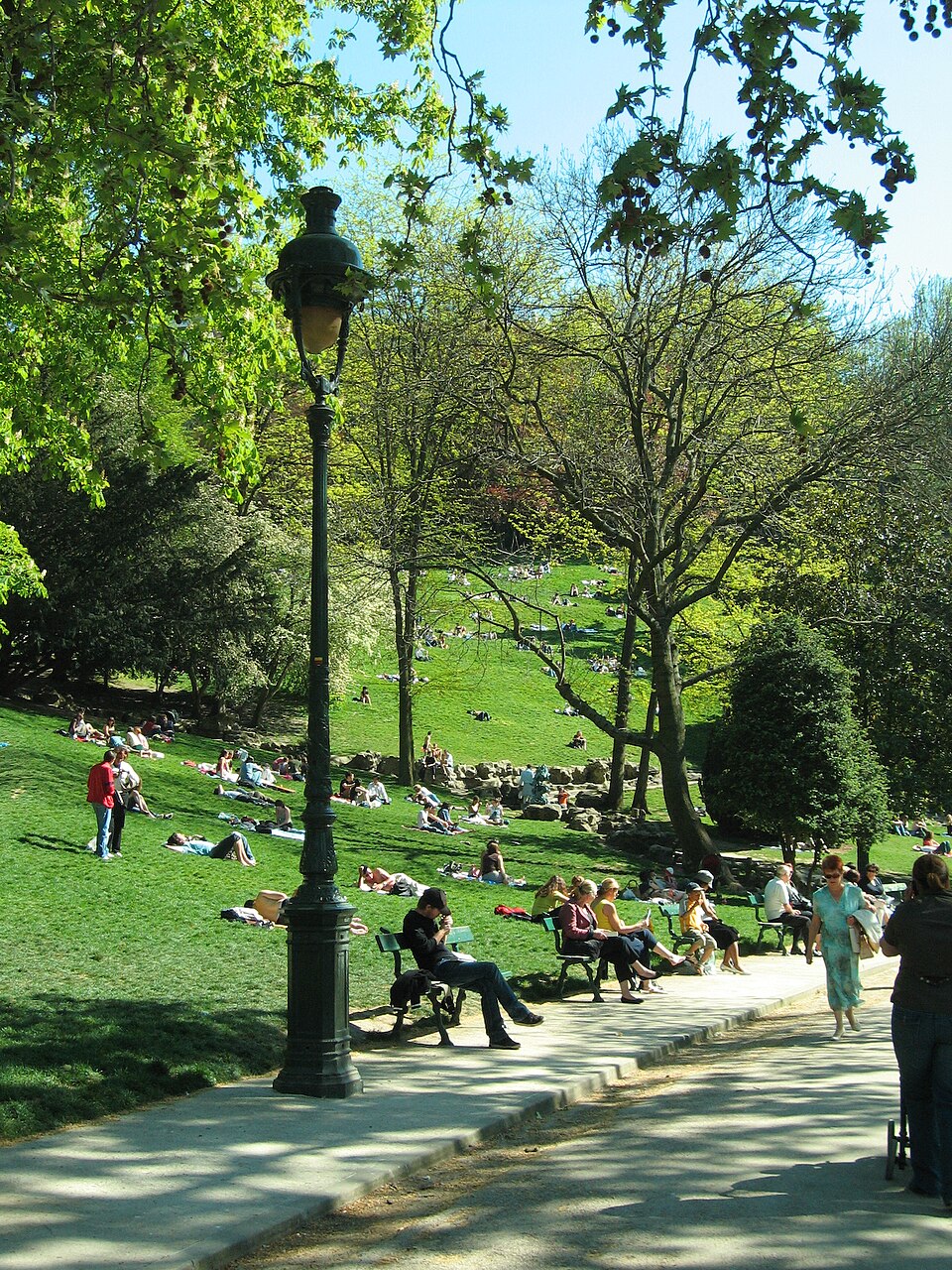
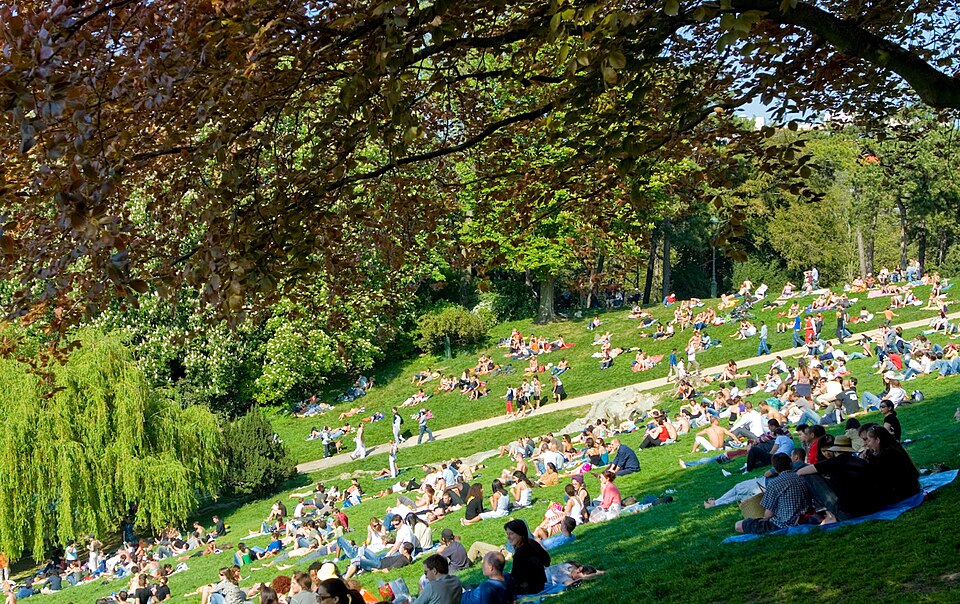
Chief gardener Jean-Pierre Barillet-Deschamps planted the sloping lawns and the tree cover that now shade most of the paths, and hydraulic pumps installed during construction still lift water from the Ourcq canal to feed a waterfall near the grotto.
Checked 2026-08-24 · Source
Forty-five minutes to an hour for the main loop around the lake and up to the Temple de la Sibylle; two hours covers the full 5.5 km of roads and 2.2 km of paths at a relaxed pace with time to sit on the sloping lawns.
The steep hillsides mean more climbing than a flat Paris square; the stairway through the grotto is the steepest single stretch.
Checked 2026-08-24 · Source
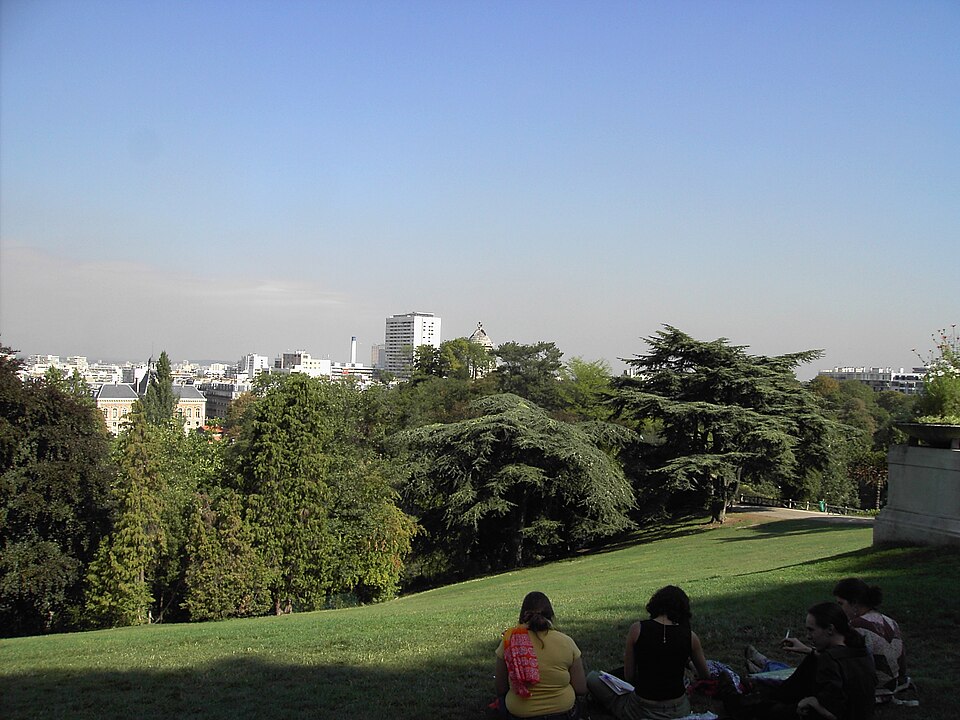
Weekday mornings are quiet; the park fills with local families and picnickers on warm weekend afternoons, since it functions as neighbourhood green space for the 19th arrondissement first and a sightseeing stop second.
Like every Paris municipal park it closes at a posted dusk-linked hour that shifts through the year, from roughly 20:00 in winter to 22:00 or later in summer; the exact time is posted at each gate rather than fixed.
Checked 2026-08-24 · Source
Free. Parc des Buttes-Chaumont is a public park run by the city of Paris, open to anyone during its posted hours with no admission charge and no ticket at any gate.
Several entrances open onto rue Manin, rue Botzaris and rue de Crimee, and each keeps the same posted hours as the others — there is no separate paid entrance anywhere around the park.
Checked 2026-08-24 · Source
In the 19th arrondissement, northeastern Paris, between the Belleville and Botzaris neighbourhoods.
Buttes Chaumont and Botzaris stations, both on line 7bis, sit at the park's western and southern edges; Laumiere, on line 5, reaches the southwestern gate within a five-minute walk.
Checked 2026-08-24 · Source
The gates close at the posted dusk time, which the city changes through the year; arriving close to closing risks being asked to leave before finishing the climb to the Temple de la Sibylle.
The stairway through the grotto is steep, uneven underfoot in wet weather, and has no lift alternative to the clifftop — a visitor who needs step-free access should stay on the lower lakeside paths.
Cycling and rollerblading are restricted to marked paths, and dogs must stay on a lead and off the central lawns, the same rules as most Paris municipal parks.
The site's quarry origins mean the ground beneath the lawns is not uniformly solid; the city has fenced off a handful of subsidence-prone slopes at various times over the decades, and any fenced area should be respected rather than treated as a shortcut.
Checked 2026-08-24 · Source
The Temple de la Sibylle above the lake, framed from one of the two footbridges or from the water's edge, is the standard shot and works best in the soft light of early morning before the crowds arrive.
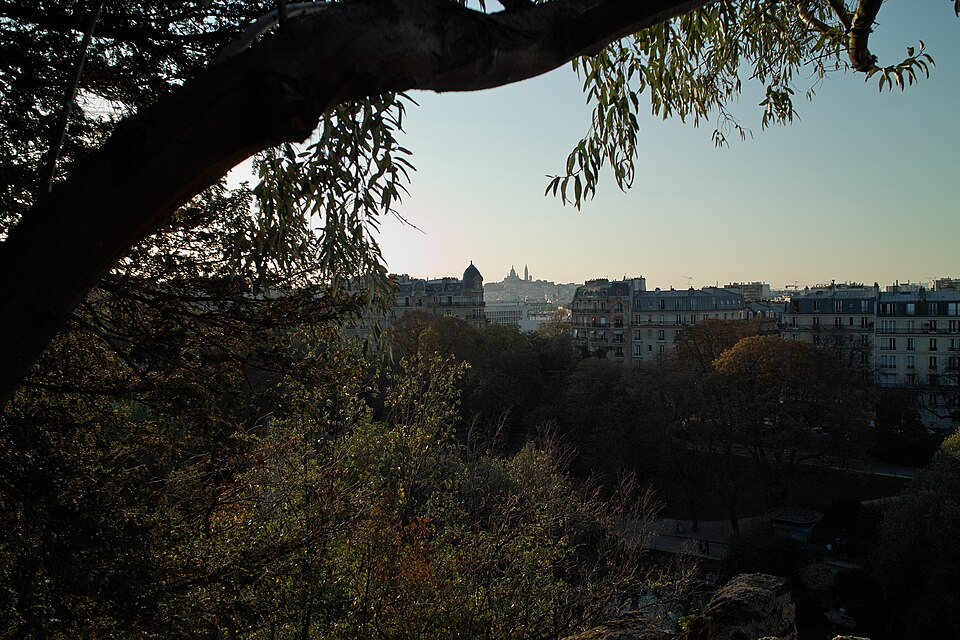
The view from the clifftop over the lake and the northeastern rooftops of Paris is a wider, less obvious alternative that most visitors miss because it needs the grotto stairway climb to reach it.
Checked 2026-08-24 · Source
A bare, chemically poor hill used for public executions until 1760, then a refuse dump and a gypsum quarry; the quarry was exhausted by the 1860s when Haussmann chose it for the park.
1 April 1867, timed to that year's Paris Universal Exposition.
A miniature copy of the ancient Roman Temple of Vesta at Tivoli, built by architect Gabriel Davioud on the clifftop above the lake, fifty metres up.
Yes. It is a public city park with no admission charge and no ticket at any gate.
Buttes Chaumont or Botzaris, both on line 7bis, at the park's western and southern edges.
24.7 hectares, making it the fifth-largest park in Paris.
Loading the interactive map…
The interactive map could not be loaded.
Last updated:
Source: OpenStreetMap contributors, Wikidata ·