


2 min walk · Paris 16e Arrondissement
Jardin du Ranelagh
- High
- Nature site
Language · 1 published
Museum · Paris 16e Arrondissement, Paris

| Monday | Closed |
|---|---|
| Tuesday | 10:00 – 18:00 |
| Wednesday | 10:00 – 18:00 |
| Thursday | 10:00 – 21:00 |
| Friday | 10:00 – 18:00 |
| Saturday | 10:00 – 18:00 |
| Sunday | 10:00 – 18:00 |
Checked 2026-08-24 · Source
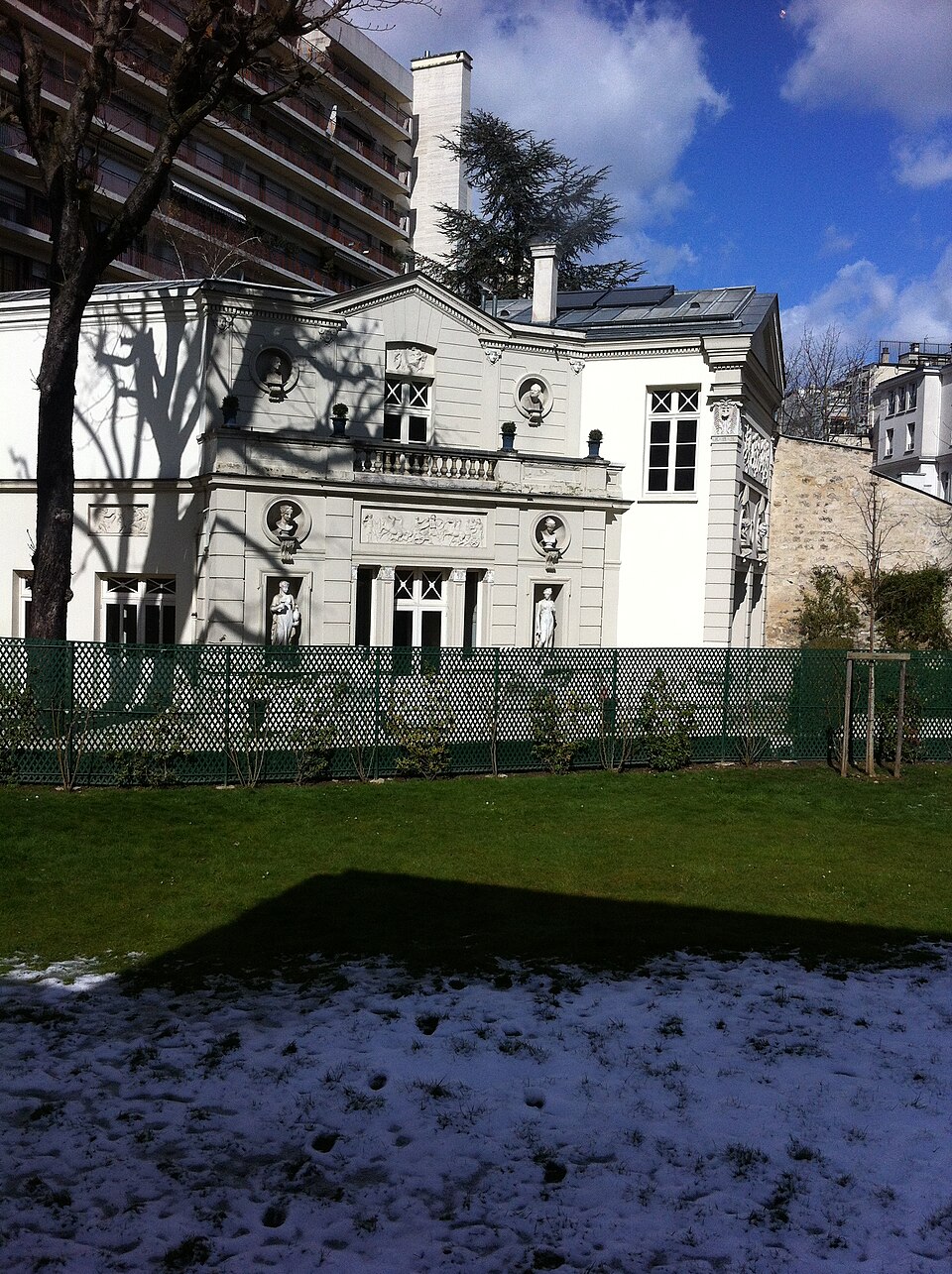
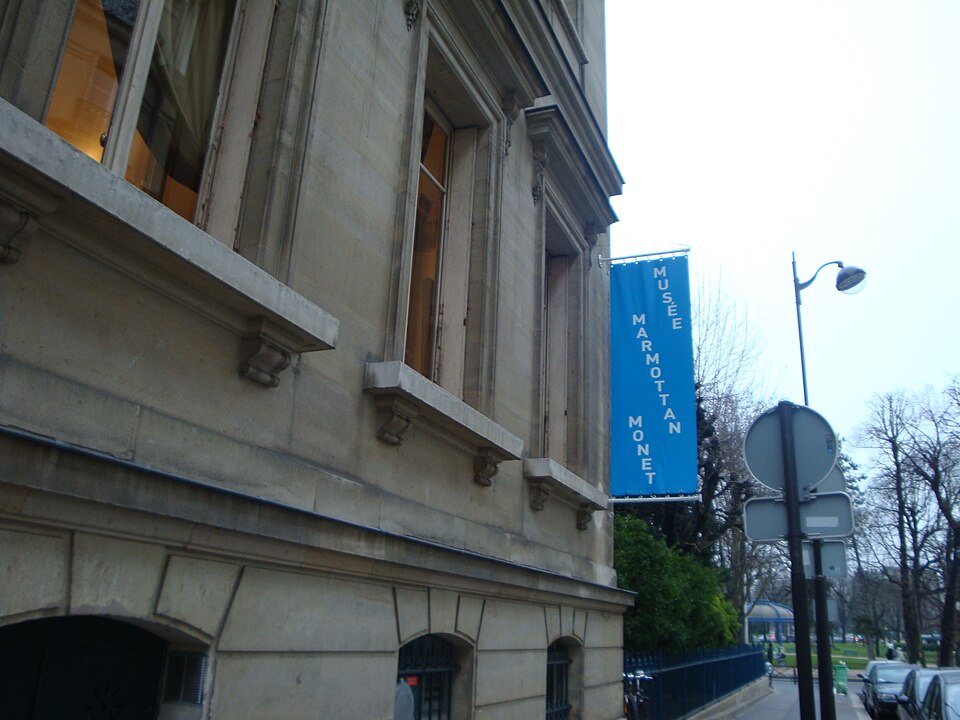
The Musee Marmottan Monet occupies a former hunting lodge built for the Duke of Valmy on the edge of the Bois de Boulogne, bought in the late nineteenth century by the businessman Jules Marmottan and later expanded by his son, the art historian Paul Marmottan, who left the house and his own collection of Napoleonic-era art to the Academie des Beaux-Arts on his death in 1932.
Its Monet holdings grew enormously in 1966, when Monet's younger son Michel, who had no direct heirs of his own, bequeathed his father's studio collection: works Monet had kept for himself rather than sold during his lifetime. That gift makes the museum's Monet collection the largest in the world by number of works, over 300 paintings, drawings and pastels spanning his entire career from early Le Havre harbour scenes to his last, near-abstract garden canvases. Paul Marmottan's own founding collection focused on the First Empire, Napoleonic-era furniture, portraits and decorative art, a period the Monet gift later overshadowed in the public's mind but which still fills much of the house, presented in period rooms rather than in the plainer white-cube style used for the Monet basement.
Checked 2026-08-24 · Source
The basement gallery holds Impression, Sunrise, the 1872 harbour scene at Le Havre whose title, mocked by a critic reviewing the first Impressionist exhibition in 1874, gave the movement its name; alongside it hang late Water Lilies and Japanese Bridge canvases from Monet's own studio, several left unfinished at his death in 1926 and never intended for sale.
Upper floors hold the Wildenstein collection of medieval and Renaissance illuminated manuscripts and First Empire furniture, entirely unrelated to the Monet gift, plus works by Berthe Morisot, whose own estate later passed largely to this museum, along with Gauguin, Renoir and Sisley.
Checked 2026-08-24 · Source

Ninety minutes: the Monet basement alone rewards thirty to forty minutes given how many canvases hang there, and the upper floors of manuscripts, furniture and other Impressionists add the rest of a leisurely visit. Visitors coming specifically for the Monet holdings and skipping the Wildenstein manuscript rooms can do the whole trip in closer to an hour.
Checked 2026-08-24 · Source
Open 10:00 to 18:00 Tuesday, Wednesday, Friday, Saturday and Sunday, and 10:00 to 21:00 on Thursday, closed Monday, checked against the museum's own site on 24 August 2026. The Thursday evening slot is the quietest time to see the Monet basement, since day-trippers have generally left by then.
Checked 2026-08-24 · Source
Full admission is 14 EUR per person, checked on the museum's own site on 24 August 2026. As with most French museums of this kind, reduced rates for under-26 EU residents and free entry for under-18s are common, though this museum's own current eligibility list was not individually verified during this check, so confirm before assuming a discount applies.
Checked 2026-08-24 · Source

La Muette, on line 9, is the closest station, a ten-minute walk through residential streets at the edge of the 16th arrondissement toward the Bois de Boulogne; the museum is not on a main tourist route, which is part of why it stays uncrowded relative to what it holds compared with the Musee d'Orsay's much larger Impressionist rooms. Muette also connects to the RER C, giving a direct option for visitors coming from central Paris without changing lines.
Checked 2026-08-24 · Source
The building was broken into and robbed of five paintings, including Impression, Sunrise, in October 1985; all five were recovered from a Corsican hideout in 1990 and are back on display, but the episode is why security and bag checks at the entrance are stricter than the museum's small size might otherwise suggest.
Checked 2026-08-24 · Source

Photography without flash is generally permitted in the permanent collection; the basement Monet gallery is dimly lit to protect the canvases from light damage, which makes a steady hand or a phone's low-light mode more useful there than a bright flash photo would be in any case, since flash is not permitted. The upper-floor period rooms, by contrast, are lit more brightly and photograph more easily, which is part of why many visitors save them for after the basement rather than before, once their eyes have adjusted back to normal light from the deliberately dim conditions kept downstairs, which the museum maintains year-round rather than only during particularly bright summer days, a curatorial choice consistent across the whole basement gallery.
Checked 2026-08-24 · Source
Monet's son Michel bequeathed his father's personal studio collection in 1966, over 300 works Monet had kept rather than sold, on top of what the museum already held.
Yes, the 1872 painting that gave Impressionism its name hangs in the basement Monet gallery.
Yes, in October 1985 five paintings including Impression, Sunrise were stolen; all five were recovered from a Corsican hideout in 1990.
10:00 to 18:00 Tuesday, Wednesday, Friday, Saturday and Sunday; 10:00 to 21:00 Thursday; closed Monday.
14 EUR per person.
Medieval and Renaissance illuminated manuscripts, First Empire furniture from the Wildenstein collection, and works by Berthe Morisot, Gauguin, Renoir and Sisley.
Loading the interactive map…
The interactive map could not be loaded.
Last updated:
Source: OpenStreetMap contributors, Wikidata ·