Folies Bergere is a cabaret music hall at 32 Rue Richer in the 9th arrondissement, opened on 2 May 1869 as an opera house called Folies Trevise, designed by architect Plumeret and modelled on London's Alhambra music hall.
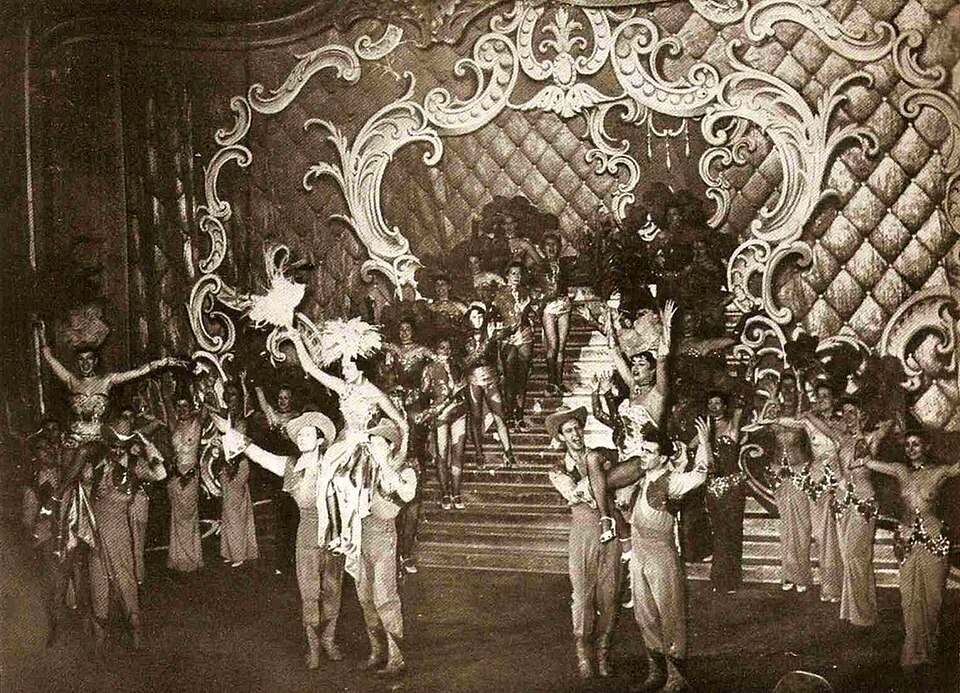
It took its present name on 13 September 1872, after the nearby Rue Bergere, once the Duc de Trevise objected to the original name. Under manager Edouard Marchand it invented the music-hall revue format in 1886, and under Paul Derval, who ran the house from 1918 for 48 years, its revues became known for extravagant costumes, elaborate sets and a signature use of scantily dressed or nude performers.
Josephine Baker caused a sensation here in 1926 dancing in a costume of string bananas in the revue La Folie du Jour, and the venue's roll of stars over the decades includes Maurice Chevalier, Mistinguett and Fernandel. Edouard Manet's 1882 painting A Bar at the Folies-Bergere, showing a barmaid at the venue's own counter, is one of the most reproduced paintings of the era.
The term folies originally described the pleasure houses built from the late eighteenth century near large cities to discreetly shelter the affairs of the bourgeoisie and aristocracy, and the venue's borrowed name reflects the entertainment it was built to provide from the start rather than any later rebranding.
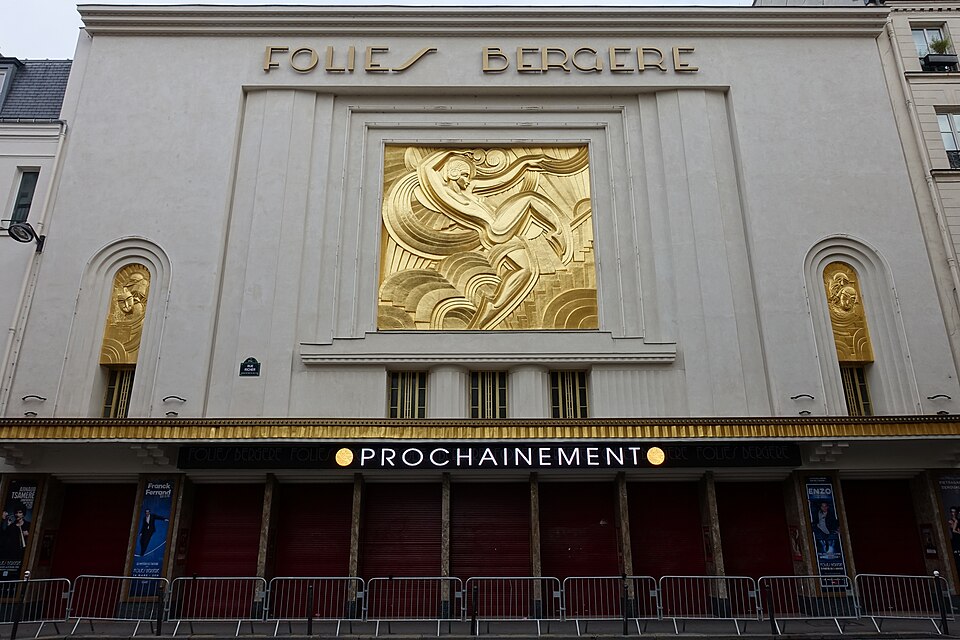
The current facade dates to a 1926 remodel by artist Maurice Pico in Art Deco style, one of several Parisian theatre facades redone in that manner during the same decade, and it remains the building's most photographed feature independent of any show inside.
The auditorium has hosted the revue format continuously since the 1880s, through the Belle Epoque peak of the 1890s to 1920s, and the venue still operates today, though the specific production, cast and running times change through the year and are set by the venue's current booking calendar rather than fixed here.
Michel Gyarmathy, a Hungarian-born designer, worked at the Folies Bergere for 56 years designing its posters and sets, one of the longest single-venue tenures of any designer in Parisian theatre history, and his run there spans the venue's shift from the Belle Epoque revue tradition into its twentieth-century programming.
A full revue or theatre performance runs roughly ninety minutes to two hours including an interval, following the pattern of a standard music-hall show; the current programme's exact running time is set by whatever production is booked and is published on the venue's own ticketing page rather than fixed year to year.
Evening performances are the normal format for a cabaret and theatre venue of this kind; specific show dates, times and the current production are not independently confirmed here and should be checked on the venue's own site before booking.
The venue has run continuously since the nineteenth century through changes in ownership and format, so a dark night is unusual rather than typical, but not guaranteed on any given date.
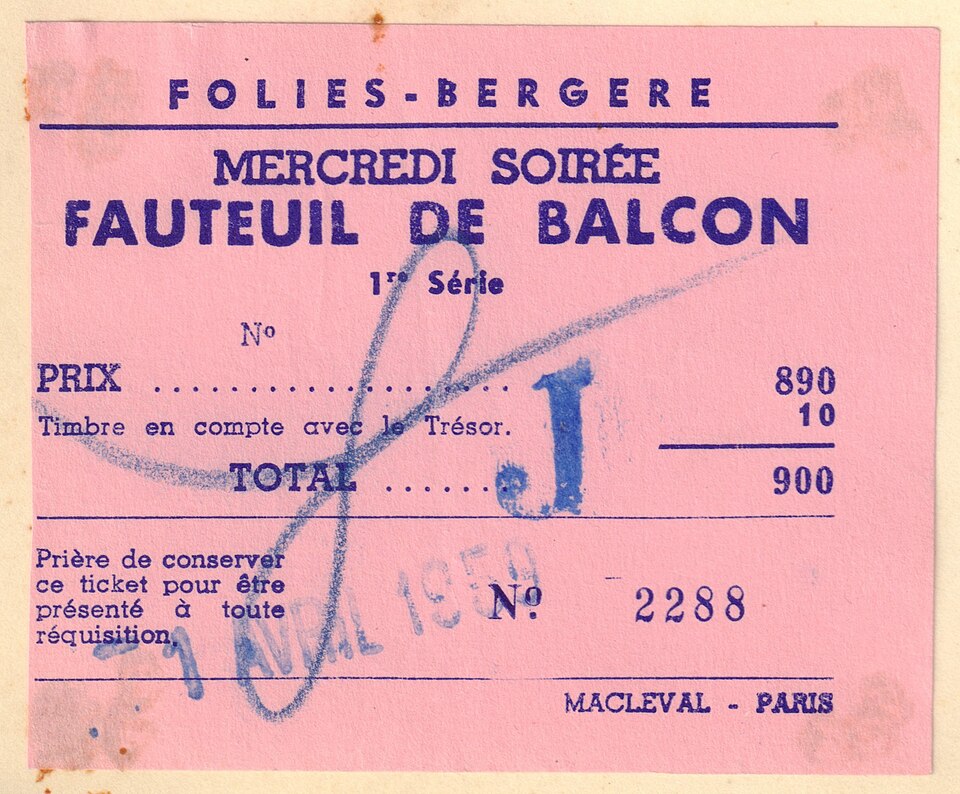
Not recorded. Ticket prices vary by production, seating category and date the way any working theatre's do, and no single figure from the venue's own site could be confirmed as current at the time of writing; check the venue's own booking page before planning a visit.
32 Rue Richer, 9th arrondissement, between the Grands Boulevards and Rue du Faubourg Poissonniere.
Cadet station, line 7, and Grands Boulevards, lines 8 and 9, both reach it within a five-minute walk, and the venue's own entrance faces directly onto Rue Richer at street level, with no separate stage-door detour needed for ticket holders.
This is a working theatre with a changing programme, not a museum with fixed opening hours — arriving without a booked ticket for a specific performance means there is nothing to see inside.
The building's history includes a long run of nude and semi-nude revue performance; a visitor sensitive to that content should check what the current production actually contains before booking, since the format has varied over the venue's history.
The 1926 Art Deco facade on Rue Richer is the standard exterior shot and photographs well at night when its lettering and lights are on.
Photography inside the auditorium during a performance is standard theatre etiquette territory — generally restricted once the show starts, and any specific house rule is stated on the ticket or at the door for whatever production is running.
Nothing non-essential is set before you choose, in regions where consent is required. If you decline, ads still appear but they are non-personalised, and analytics is switched off entirely.