
_-_Flickr_-_dalbera.jpg)


.jpg)
2 min walk · Paris 19e Arrondissement
Le Trabendo
- Notable
- Nightlife venue
Language · 1 published
Art and culture venue · Paris 19e Arrondissement, Paris

Read from the OpenStreetMap access tags; anything not listed has no tag recorded.
Set the group type to family in the planner and the day window contracts to about three quarters of a solo day.
The Philharmonie de Paris is a concert hall clad in a swirl of aluminium panels shaped like birds in flight, built to give the city's main orchestra a home purpose-built for symphonic sound.
Architect Jean Nouvel designed the building, which opened in January 2015 after delays and cost overruns that made headlines through its construction. It sits in the Parc de la Villette in the northeastern 19th arrondissement, next to the older Cité de la Musique building from 1995, which now operates as a second wing under the same institution.
The hall is named in the tradition of Pierre Boulez, the French composer and conductor closely associated with the push for a purpose-built Paris concert hall, and its main auditorium carries his name.
Checked 2026-08-24 · Source
The Grande Salle Pierre Boulez, a roughly 2,400-seat vineyard-style auditorium wrapping the stage on multiple levels, and — in the adjoining Cité de la Musique building — the Musée de la Musique, a museum of historic instruments.
The auditorium's vineyard layout, terraced seating blocks stepping up around a central stage, is the same acoustic model used by Berlin's Philharmonie and was chosen to bring audiences physically closer to the orchestra than a traditional shoebox hall does. The building is home to the Orchestre de Paris, which performs its main season here.
Moveable acoustic canopies and reflector panels above the stage let the hall's engineers retune the space for different repertoire, from a full symphony orchestra to smaller chamber ensembles, rather than leaving it fixed to one acoustic profile. The building also hosts rehearsal spaces and education studios that are not part of the public visitor route.
Checked 2026-08-24 · Source

Two to two and a half hours for a concert, including interval; add time before or after for the Musée de la Musique next door if a visit combines both.
A concert here runs on the performance's own schedule rather than a self-paced visit, so the time commitment is fixed by the programme booked rather than by choice once the doors close.
Checked 2026-08-24 · Source
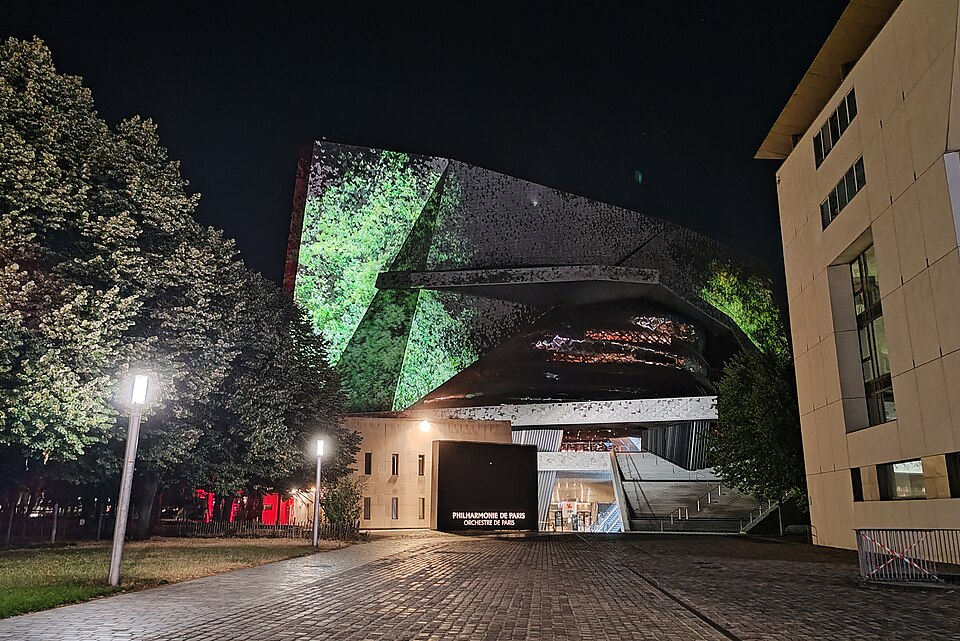
Whichever evening a concert on the season's programme is booked — the hall does not run daytime open visits outside of scheduled events and occasional guided tours.
The Orchestre de Paris's main season runs through the autumn, winter and spring; summer is quieter for concerts, though the venue and Musée de la Musique next door often stay open on a reduced footing.
Checked 2026-08-24 · Source
Concerts are ticketed per performance. Current rates are not published on the sources this page uses and are not reproduced here.
The Musée de la Musique next door sells its own separate admission for the instrument collection, distinct from a concert ticket for the Grande Salle.
Checked 2026-08-24 · Source

Inside the Parc de la Villette, in the 19th arrondissement in the northeast of the city.
Porte de Pantin, on Métro line 5, sits directly at the edge of the park closest to the hall, and Porte de la Villette on line 7 serves the park's other side, closer to the Cité des Sciences at the northern end.
Checked 2026-08-24 · Source
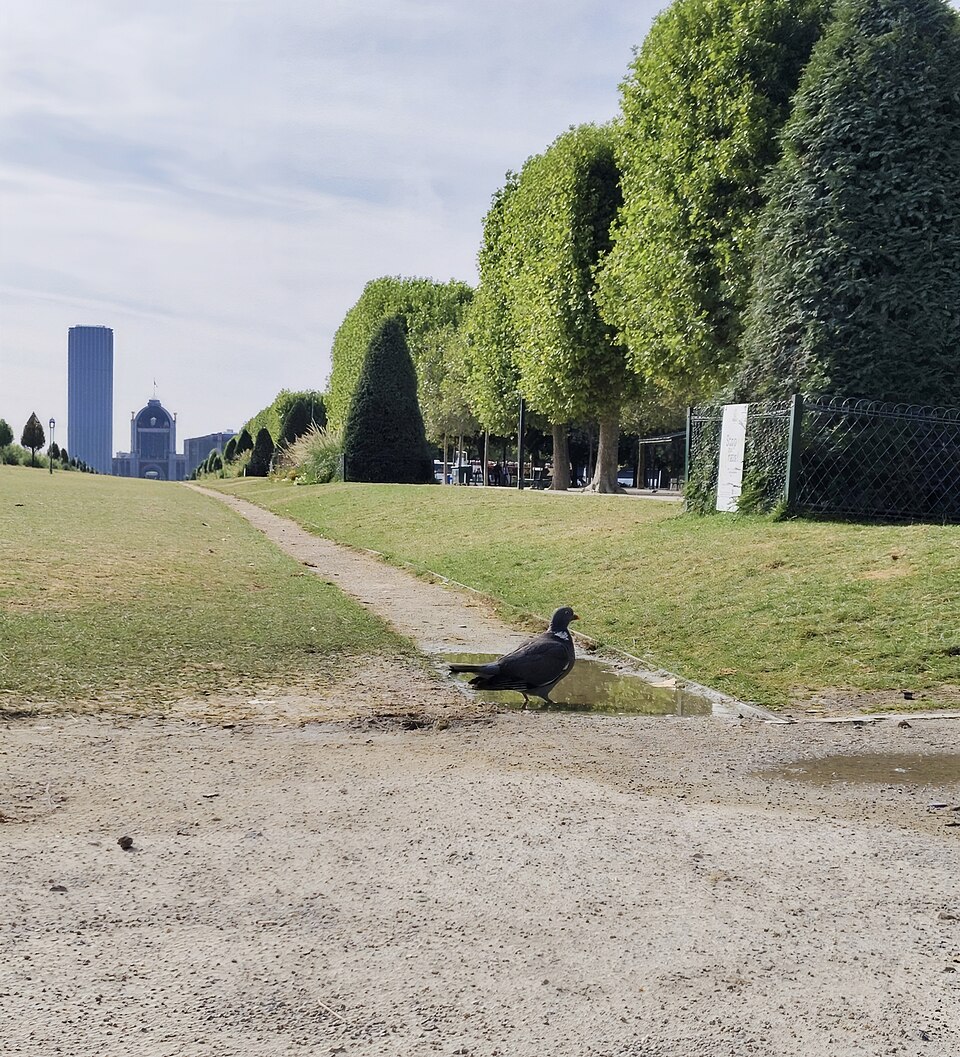
The Parc de la Villette is a large site and the Philharmonie sits at one edge of it, some distance from the park's other attractions, so arriving with enough time to walk from the Métro before a performance starts matters more here than at a hall closer to a station door.
Doors typically close once a performance begins, and latecomers are held until a suitable pause rather than seated immediately, which is standard concert-hall practice but worth planning around given the walk from the station.
The building's scale and its position at the edge of the park can make the entrance harder to find on a first visit than the size of the venue suggests, so allowing extra time on an unfamiliar first trip is worth doing rather than assuming the walk from the Métro is short.
Checked 2026-08-24 · Source
The building's exterior, the aluminium bird-motif cladding catching daylight from any angle across the open ground of the Parc de la Villette, is the more photogenic subject than the interior, where photography during a performance is not permitted.
The sweeping rooftop terrace, reachable outside performance times, gives a wide view back over the park and is the better vantage point for a photograph that takes in the whole structure rather than a single façade.
Checked 2026-08-24 · Source
January 2015, after a construction period marked by delays and cost overruns.
Architect Jean Nouvel, known for the aluminium panelling shaped in a bird-in-flight motif that covers the building's exterior.
Roughly 2,400, in the Grande Salle Pierre Boulez, arranged in a vineyard-style layout of terraced seating blocks around the stage.
No, but they are adjoining and operate together — the Cité de la Musique, opened in 1995, sits next door and now functions as a second wing housing the Musée de la Musique.
The Orchestre de Paris, which holds its main season at the Philharmonie.
Loading the interactive map…
The interactive map could not be loaded.
Last updated:
Source: OpenStreetMap contributors, Wikidata ·