.jpg)


1 min walk
Tsūtenkaku
- Must see · Heritage site
- Viewpoint
Language · 1 published
Historic monument · Osaka
新世界
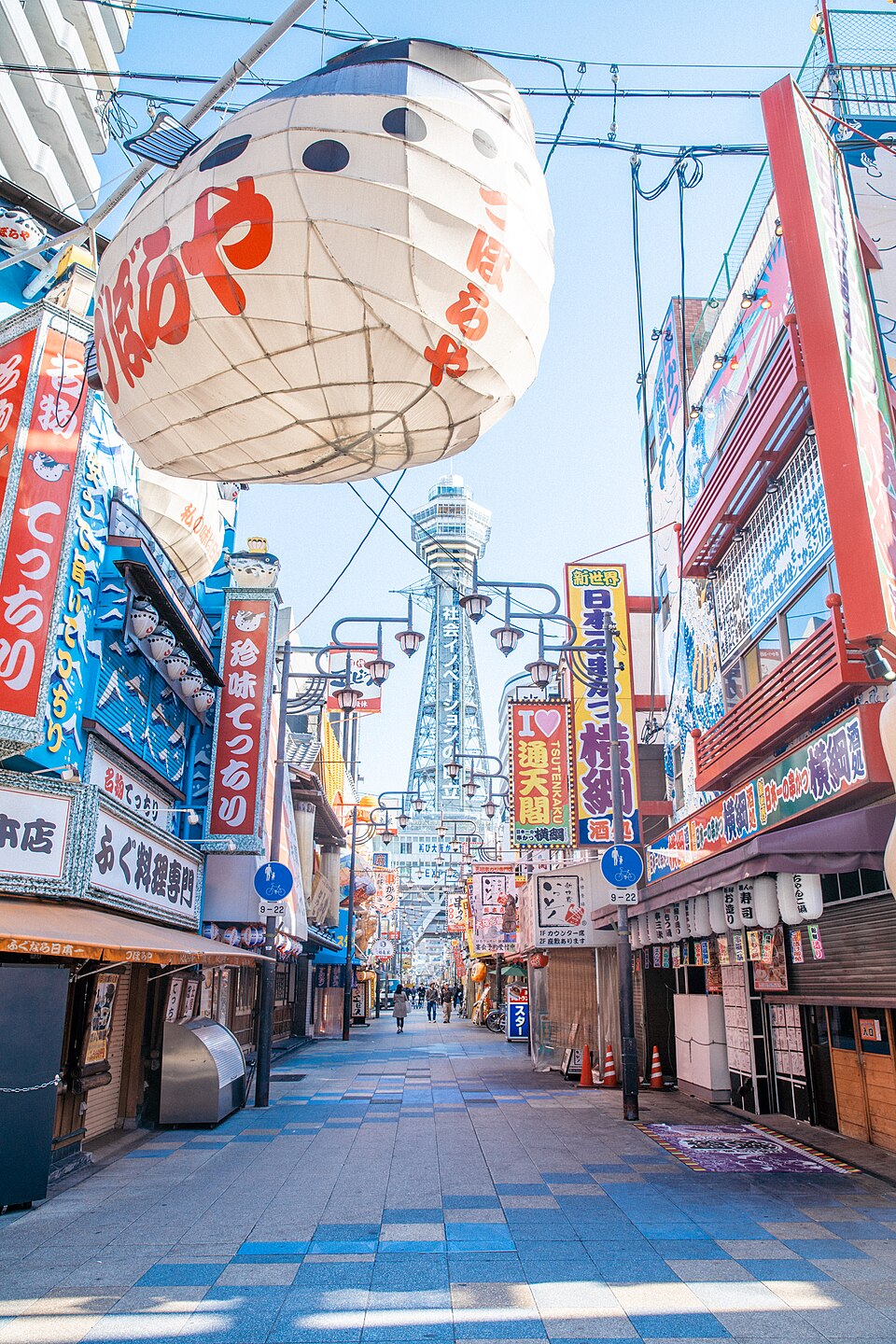
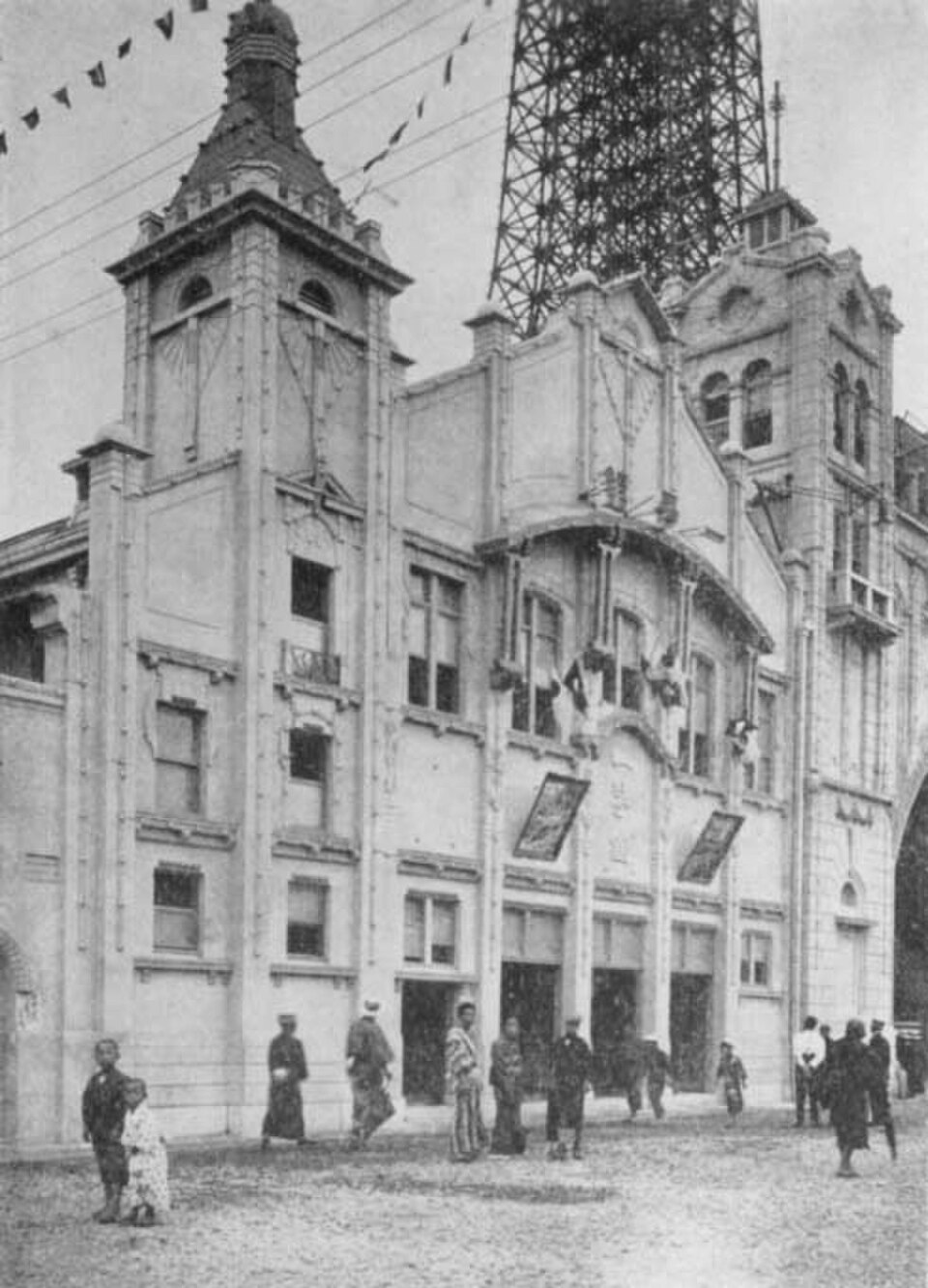
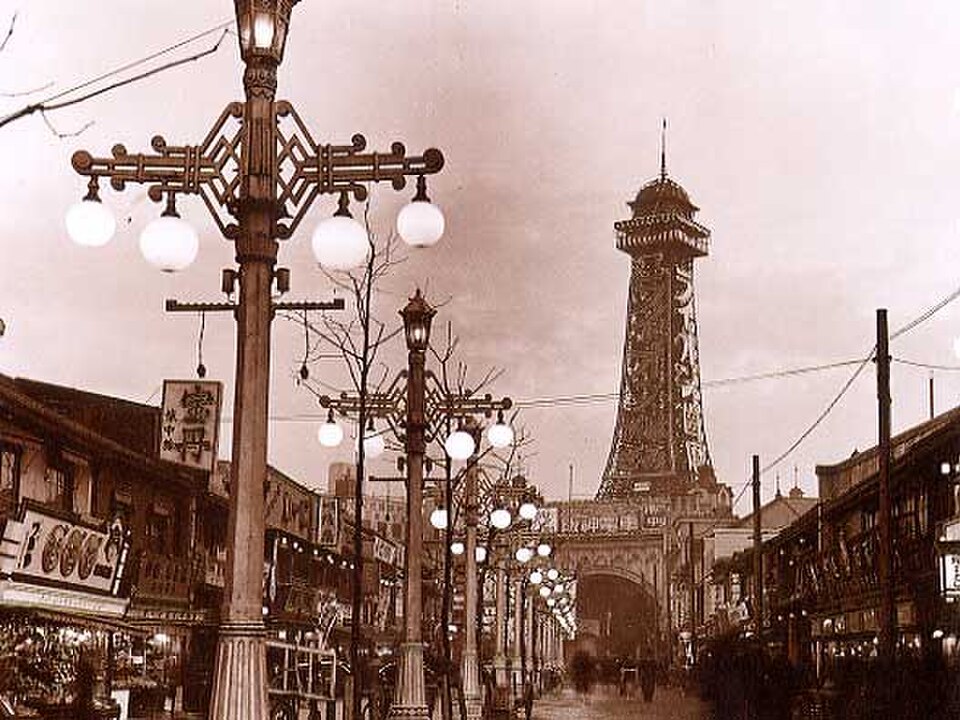
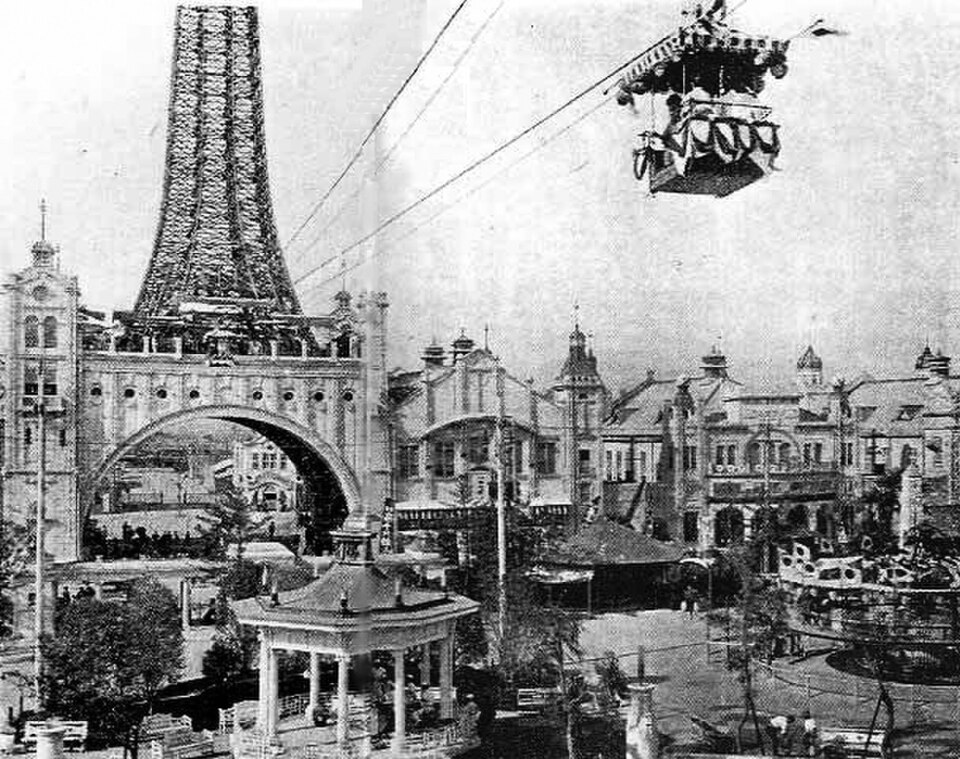
Shinsekai is a small neighbourhood in Naniwa ward, pressed between Tennoji Park on its east side and Nishinari on its south, and it is one of the few parts of Osaka people travel to for the street itself rather than for a building standing on it. The name means "New World", and the place was built to earn it. The neighbourhood was created in 1912 on ground that the Fifth National Industrial Exhibition had opened up in 1903, and it was laid out as deliberate theatre: the northern half modelled on Paris, the southern half on New York, Coney Island in particular, with a Luna Park amusement park at its foot that ran from 1912 until 1923. The first Tsutenkaku, 64 metres tall, took the Eiffel Tower for its upper stage and the Arc de Triomphe for its base, and an aerial tramway carried passengers between it and Luna Park. Fire damaged the tower in 1943 and it was taken apart; what stands today is a 103-metre replacement completed in 1956 to a design by Tachu Naito, the engineer behind Tokyo Tower. Shinsekai then spent decades as a cheap entertainment quarter for the labourers rebuilding the city, acquired a rough reputation, and has been climbing back for about twenty years. That history is why it looks as it does: nothing here has been restored to a period, and the hand-painted boards and fried-food smell are accumulated rather than curated.
Checked 2026-08-26 · Source
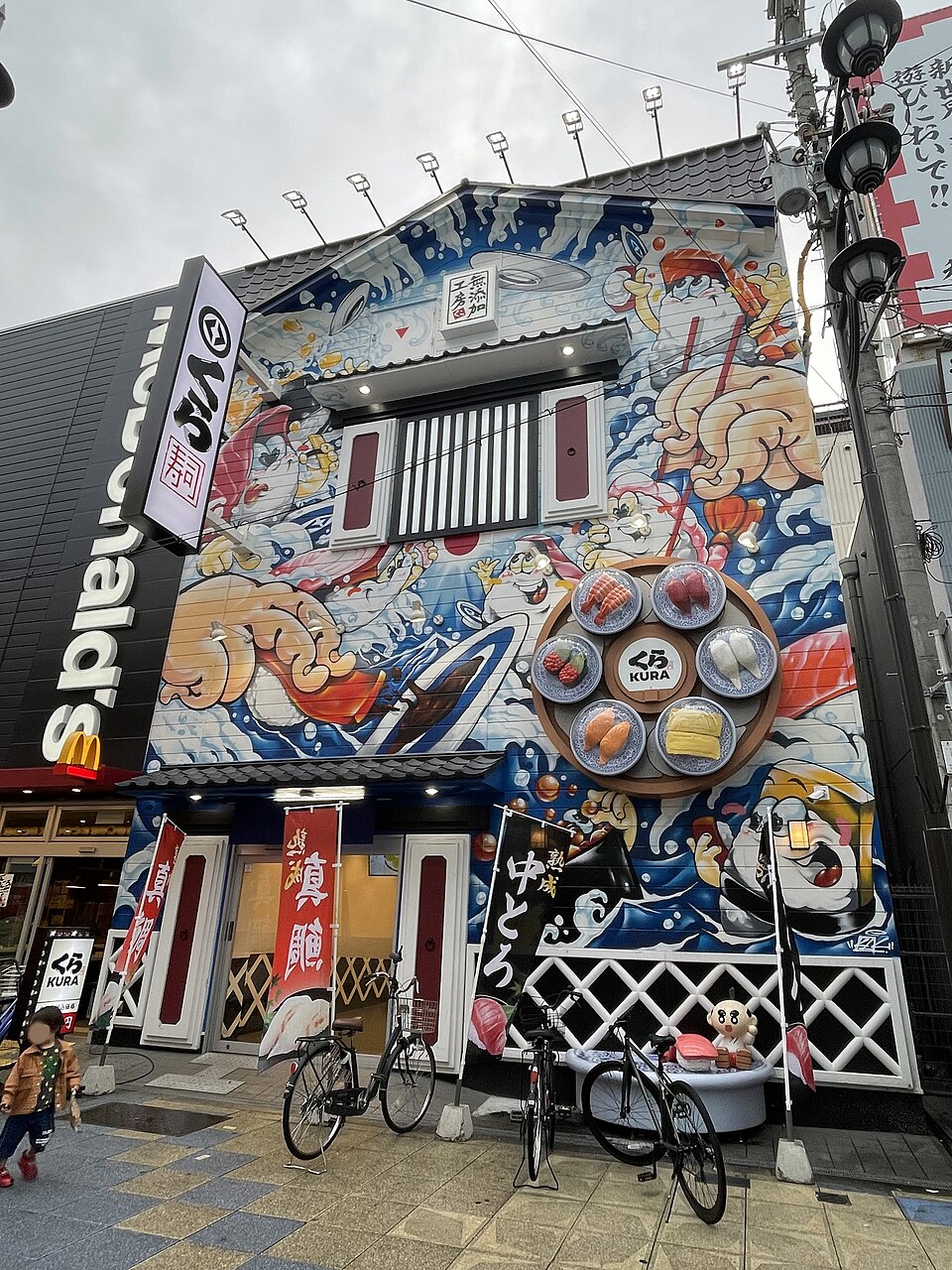
The spine of the district is Janjan Yokocho, an arcade of roughly fifty shops running 130 metres north to south. Osaka's tourism bureau names kushikatsu counters, doteyaki places, and go and shogi clubs as what fills it, and that mix is accurate: eating houses and small gambling-adjacent halls sit side by side, most of them narrow enough that a queue forms on the pavement. Kushikatsu — meat, fish and vegetables breaded on short skewers and deep-fried to order — is what the neighbourhood is known for rather than the fugu the lanterns advertise, though several blowfish restaurants still trade here. Tsutenkaku itself is the fixed point at the centre, and it is more than an observation deck: the bureau records enka performances by regional singers every Monday in the Tsutenkaku Theatre underneath the tower, and manzai and Kamigata rakugo at Tsutenkaku Theatre TENGEKI on Saturdays and Sundays, with Shochiku performers also appearing at weekends. The other thing people come for is the signage. Billiken, the seated grinning good-luck figure adopted by the tower, and the oversized illuminated lanterns above the restaurants are the two backdrops the bureau expects visitors to photograph, and on weekends and public holidays coach groups arrive to do exactly that. Luna Park and the cinemas that once drew the crowds are long gone; the streets and the tower are what remain.
Checked 2026-08-26 · Source
Allow ninety minutes for Shinsekai on foot. Neither Osaka's tourism bureau nor any operator publishes a suggested visit length for the district, so ninety minutes is this guide's editorial judgement rather than a recorded figure. It is built from the geography: Janjan Yokocho is 130 metres end to end, the grid of streets around Tsutenkaku takes another ten minutes to walk twice over, and the rest of the time goes on standing still — reading a menu board, waiting for a counter seat, eating six or eight skewers, and photographing the tower from the two or three angles that work. Under an hour is enough only if a visitor eats nothing, which misses the point of coming. Going up Tsutenkaku is a separate commitment on top of that. The tower now runs a timed-entry reservation system and its own material warns that a wait can build on the day and that tickets can sell out from late afternoon, so budget sixty to ninety minutes for the tower including the queue, and buy online beforehand if the schedule is tight. A visitor combining the district, a kushikatsu meal and the observation deck should therefore set aside half a day rather than an hour, and is better off arriving with no fixed next appointment.
Checked 2026-08-26
The district has no opening hours of its own. Osaka's tourism bureau lists both business hours and holidays for Shinsekai as varying by store, so nothing about the streets as a whole is guaranteed open or shut at a given time, and individual counters keep their own closing days. Tsutenkaku is the one anchor with published hours: the general observation deck runs 9:00 to 21:45 with last entry at 21:15, the special outdoor observatory the same 9:00 to 21:45 with last entry at 21:35, the second-floor official shop and the basement Wakuwaku Land to 21:30, and the third-floor select shop only to 19:30. The bureau records the tower as open year-round, and the operator publishes no annual closure, though it notes that hours can change or the tower close unexpectedly, and announces such changes on its own social account. Evening is the better visit. The lanterns and neon are the reason the district photographs the way it does, and the tower is open late enough that a visitor can eat first and go up afterwards. Weekends and public holidays are the busiest, when coach groups arrive; the tower's own guidance warns that tickets can sell out from the evening onwards, so a weekend visitor who wants the deck should book ahead rather than turn up.
Checked 2026-08-26 · Source
Walking Shinsekai costs nothing. It is a public neighbourhood of ordinary streets, and the tourism bureau's entry for it carries no price field at all, where its entry for Tsutenkaku carries one — so the money in a visit here goes on food and on the tower, not on entry. Tsutenkaku's operator publishes its tariff in full. The general observation deck is 1,500 yen for an adult of 15 or over and 800 yen for a child aged 5 to 14. A disability discount brings that to 1,300 and 700 yen, applied at the on-site ticket counter on presentation of a disability, rehabilitation, mental health or atomic-bomb survivor's handbook, and extended to one accompanying person. Group rates of 1,400 and 700 yen for parties of ten or more, and school-group rates of 1,300 and 700 yen, are published but group reservations are currently suspended, so groups queue with everyone else. Tickets require a timed-entry reservation, and the operator recommends buying online in advance; holders of the Osaka Amazing Pass and similar passes reserve their entry slot at the counter on the day. The special outdoor observatory is sold only as a set with the general deck, and the Tower Slider and Dive & Walk attractions are charged separately on top of the deck price. Refunds, reissues and re-entry are not available.
Checked 2026-08-26 · Source
No car is needed and none is wanted. The address is the Ebisu-Higashi area of Naniwa-ku, Osaka 556-0002, and three separate rail systems put a visitor at its edge. Osaka Metro's Sakaisuji Line stops at Ebisucho, which the tourism bureau describes as directly adjacent to the district — the exit opens onto it. Dobutsuenmae, served by both the Midosuji and Sakaisuji lines, is a three-minute walk, which matters because the Midosuji line is the one running down the spine of the city from Umeda and Namba. Shin-Imamiya, on the JR Osaka Loop Line and the Nankai Line, sits to the west: the bureau gives six minutes on foot from there to Tsutenkaku, while Wikipedia's figure for the walk from its east exit into the neighbourhood is ten minutes, so allow the longer of the two. Nankai's line from Kansai Airport passes through Shin-Imamiya, which makes Shinsekai an unusually easy first or last stop on a trip. The bureau publishes no parking information for the district and the streets are narrow, busy and in places pedestrian, so driving in is a poor idea even with a car available. The bureau's contact number for the area is 06-6643-6322, and it records that guiding services are available.
Checked 2026-08-26 · Source
The pufferfish lantern is the trap. Osaka's tourism bureau still names a giant pufferfish lantern as one of the things Shinsekai is famous for, but the best-known one belonged to the fugu restaurant Zuboraya, whose Shinsekai main branch closed in 2020; Japanese Wikipedia now describes Zuboraya in the past tense, and the local Shinsekai news site reported the lantern being taken down on 3 September 2020. Other restaurants here still hang illuminated fugu, so a visitor will see one — but not that one, and not on the corner the older photographs show. The second thing to know is the kushikatsu sauce rule: the communal stainless pot on the counter is shared by every customer, and a skewer is dipped once, before eating, never again. Shops sign it, and it is the one piece of etiquette a visitor is certain to be corrected on. Third, hours vary shop by shop with no district-wide pattern, so a specific counter cannot be relied on to be open — bring a second choice. Fourth, weekends and public holidays bring coach parties into a 130-metre arcade. And Shinsekai sits directly against Nishinari, where Osaka's homeless population is concentrated; the area is not dangerous to walk, but it is visibly poor, and a visitor expecting a themed street will find a working one.
Checked 2026-08-26
Shinsekai is a street photographer's district and a tripod photographer's problem. Tsutenkaku's operator lists photography that occupies a fixed spot with a tripod among the acts prohibited inside the building, so the tower's decks are hand-held only; the same list covers flames, smoking and unauthorised live streaming of the interior. Outside, the constraint is different — Janjan Yokocho is 130 metres of narrow arcade with shopfronts trading on both sides, and setting up in it blocks a working business. The best pictures here need nothing but a phone and the right hour. Go at dusk, when there is still colour in the sky behind the tower and the signs have already come on; the density of illuminated signage over a small area is the whole subject, and it flattens out under midday sun. The tower reads best from the middle of Tsutenkaku Hondori looking north, where the street frames it, and from further back on the south side where the whole 103-metre structure fits in. Billiken and the fugu lanterns are the two figures the bureau expects visitors to pose against, and the queues for them build at weekends. Inside a kushikatsu counter, ask before photographing staff or other diners: these are small rooms, and the person at the next stool is eating dinner.
Checked 2026-08-26 · Source
Shinsekai is a public neighbourhood and has no opening hours of its own. Osaka's tourism bureau lists both business hours and holidays for the district as varying by store, so each counter, arcade and shop keeps its own times and closing days. The one anchor with published hours is Tsutenkaku: its general observation deck opens 9:00 to 21:45 with last entry at 21:15, the special outdoor observatory 9:00 to 21:45 with last entry at 21:35, and the tower is recorded as open year-round.
Walking the streets of Shinsekai is free. The tourism bureau's entry for the district publishes no admission price, where its entry for Tsutenkaku publishes one, and the streets are ordinary public ones. Going up Tsutenkaku is charged: 1,500 yen for an adult of 15 or over and 800 yen for a child of 5 to 14, with a disability rate of 1,300 and 700 yen. Everything else a visitor spends here goes on food.
Allow ninety minutes for the district on foot, including a kushikatsu meal. No operator or tourism body publishes a suggested visit length for Shinsekai, so ninety minutes is this guide's editorial judgement, built from the size of the place: Janjan Yokocho is 130 metres long and most of the time goes on standing still rather than walking. Add sixty to ninety minutes if the observation deck is part of the plan, because the tower runs timed entry and a queue can build.
No car is needed. Ebisucho station on the Osaka Metro Sakaisuji Line is directly adjacent to the district, and Dobutsuenmae, on both the Midosuji and Sakaisuji lines, is a three-minute walk. Shin-Imamiya, served by the JR Osaka Loop Line and the Nankai Line from Kansai Airport, lies to the west — the tourism bureau gives six minutes on foot to Tsutenkaku, Wikipedia ten minutes into the neighbourhood. No parking is published for the district and the streets are narrow and busy.
Not the famous one. Osaka's tourism bureau still lists a giant pufferfish lantern among the things Shinsekai is known for, but the best-known lantern hung over the fugu restaurant Zuboraya, whose Shinsekai main branch has closed — Japanese Wikipedia describes the restaurant in the past tense, and the local Shinsekai news site reported its lantern being removed on 3 September 2020. Other fugu restaurants in the district still hang illuminated pufferfish signs, so a visitor will see one, just not that one.
It is strongly advised. The operator has introduced a timed-entry reservation system: every ticket carries a reserved entry time, and it recommends buying the advance online ticket, warning that waiting times can build on the day and that tickets can sell out from the evening onwards. Holders of the Osaka Amazing Pass and similar passes cannot book online and must reserve an entry time at the on-site counter. Group reservations are currently suspended, so parties queue as individuals.
Loading the interactive map…
The interactive map could not be loaded.
Last updated:
Source: OpenStreetMap contributors, Wikidata ·