
.jpg)
.jpg)


.jpg)
6 min walk
Grand Cathedral of the Virgin Mary of Osaka
- Must see
- Place of worship
Language · 1 published
Historic monument · Osaka
城中焼亡埋骨墳
| Monday | 09:00 – 18:00 |
|---|---|
| Tuesday | 09:00 – 18:00 |
| Wednesday | 09:00 – 18:00 |
| Thursday | 09:00 – 18:00 |
| Friday | 09:00 – 18:00 |
| Saturday | 09:00 – 18:00 |
| Sunday | 09:00 – 18:00 |
Checked 2026-08-26 · Source
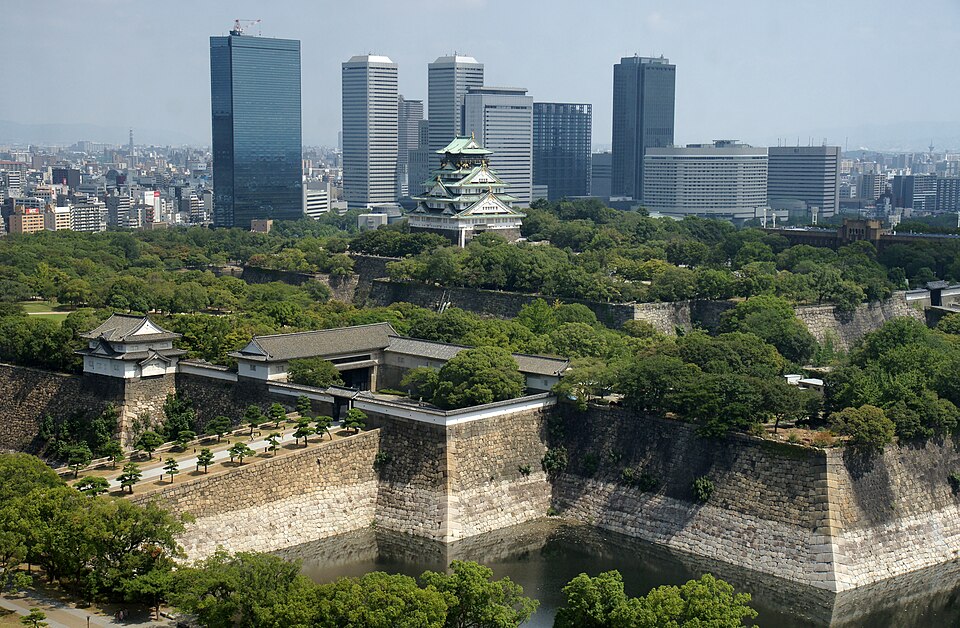
Osaka Castle is a walled compound in Chuo Ward whose centrepiece, an eight-storey keep, is a museum rather than a surviving castle interior. The operator traces the site to the Ishiyama Honganji temple fortress that fought Oda Nobunaga; Toyotomi Hideyoshi began building his castle here in 1583, it fell in the Summer Siege of Osaka in 1615, the Tokugawa shogunate started rebuilding it in 1620, and the keep burned in the upheaval of the Meiji Restoration. The grounds then passed to the army and were laid out as a public park only after the war. Everything a visitor walks past today - the stone walls, the moats, the Otemon gate, the Tamon Yagura and Sengan Yagura turrets - is Tokugawa-period or later. The compound is a nationally designated Special Historic Site and most of those old structures are Important Cultural Properties. The keep itself is the third on the spot, raised in 1931 with money donated by the citizens of Osaka, listed as a Registered Tangible Cultural Property in 1997 and designated a Tangible Cultural Property by the City of Osaka in 2025. It has been a museum since the day it opened, and the Toyotomi and Sengoku material it holds is what fills the display floors inside. Expect a concrete building with a lift, not a wooden castle.
Checked 2026-08-26 · Source
The keep is numbered floor by floor and toured upward. The first floor is the entrance, with a theatre room running five short programmes on Hideyoshi and the castle, subtitled in Japanese, English, Chinese and Korean, and a museum shop. The second floor is an information corner on castles in general, with full-size replicas of the shachi and fuko ornaments carried by the present building; it is also where the helmet and surcoat try-on takes place. The third and fourth floors hold the historical collection - objects connected to Hideyoshi and other Sengoku-period material, rotated roughly every two months - together with a full-size reconstruction of Hideyoshi's portable golden tea room and models of the castle as it stood under the Toyotomi and under the Tokugawa. The fifth floor reconstructs the Summer Siege with a miniature of Sanada Yukimura's troops against Matsudaira Tadanao's and two panorama screens that read the famous folding screen scene by scene, again in four languages. The sixth floor is a closed corridor with nothing to see. The seventh tells Hideyoshi's life in dioramas. The eighth is the observation deck, fifty metres up, with a second shop. Outside the keep, the Toyotomi Stone Wall Museum, opened in 2025, takes visitors underground to a wall of the 1583 castle uncovered in 1984.
Checked 2026-08-26 · Source

Allow two hours for the castle as a whole. The keep takes most of that: the exhibition floors are compact but dense, the fifth-floor panorama screens run several minutes each, and the eighth-floor deck holds people longer than they plan for. Ninety minutes covers the climb, the displays and the view at an unhurried pace, and cutting it to an hour means walking past the third and fourth floors rather than reading them. Add twenty to thirty minutes for the Toyotomi Stone Wall Museum, which is a separate building and a separate descent underground. Then add the approach, which people routinely forget: the park is large, the keep stands at its centre, and the walk in from the nearest station gates takes a good fifteen minutes, the last of it climbing through the inner gates. Two things shape the timing inside. There is one lift, and everyone except wheelchair users and visitors with walking difficulties rides it upward only, as far as the fifth floor; the fifth to eighth floors and the entire descent are stairs. And the ticket queue is the variable nobody controls - the operator warns it may cap the queue earlier than the published last-admission time when the building is full. Arriving under an hour before closing is the plan that reliably fails.
Checked 2026-08-26
The keep opens 9:00 to 18:00, with last admission at 17:30; those hours changed on 1 April 2025 and the operator publishes one set of them for the whole year rather than summer and winter timetables. There is no weekly closing day. The only closure is the New Year period, 28 December to 1 January, which applies to the Toyotomi Stone Wall Museum as well. Because the last-admission time can be brought forward when the building fills, the operator's own caution is worth taking literally: the queue may be capped before 17:30. The first hour after opening is the calmest part of the day and the only reliable way to reach the eighth-floor deck without waiting behind a crowd at the rail, and it also puts the interior visit ahead of the coach groups, which the operator asks to phone in advance precisely because congestion is the recurring problem here. The park around the keep is a cherry-blossom site, so the last week of March and the first half of April bring the year's heaviest visitor numbers to the grounds and to the ticket window with them. Nothing on the operator's pages promises evening opening, seasonal late nights or an illumination timetable, so plan the interior around 18:00 and treat anything later as an event rather than a rule.
Checked 2026-08-26 · Source
Admission to the keep is 1,200 yen for adults and 600 yen for university and high-school students, who must show a student card - without one the adult rate applies, and students visiting from abroad are asked for an ISIC card. Junior-high-school age and younger enter free on proof of age; a student handbook or insurance card is accepted, and visitors aged 15 or under from abroad are asked for a passport. These rates also changed on 1 April 2025. Groups of fifteen or more paying visitors pay 1,080 yen per adult and 540 yen per student. School parties led by teaching staff pay 480 yen per high-school pupil for fifteen to ninety-nine people and 450 yen from a hundred, with junior-high age and below free, and the accompanying teachers of those younger groups free on proof of employment. Osaka city residents aged 65 and over, and holders of a disability, welfare or atomic-bomb survivor's certificate together with one carer, enter free on presentation of the document; the Mirairo ID app is accepted in place of the physical booklet. The same ticket is what admits a visitor to the Toyotomi Stone Wall Museum. Tickets can be bought in advance through the operator's web ticket page, and at the window the keep takes cash in yen, the major credit cards, transport and other e-money, and QR payment. No entry reservations are taken.
Checked 2026-08-26 · Source
The address is 1-1 Osakajo, Chuo-ku, and no car is needed - rail lands a visitor at the edge of the park from every direction. On the Osaka Metro, the Tanimachi Line stops at Tanimachi 4-chome, exit 1-B, and Temmabashi, exit 3; the Chuo Line stops at Tanimachi 4-chome, exit 9, and Morinomiya, exits 1 and 3-B; the Nagahori Tsurumi-ryokuchi Line stops at Morinomiya, exit 3-B, and Osaka Business Park, exit 1. On JR, the Osaka Loop Line stops at Morinomiya and Osakajokoen, and the Tozai Line at Osakajo-kitazume. Keihan trains stop at Temmabashi. Osaka City Bus route 62, which runs from Osaka Station by way of Yodoyabashi and Temmabashi towards Abenobashi, stops at Osaka-jo Otemae and Babacho. The Aqua-bus water buses call at Osaka Castle Port and Hachikenyahama. From every one of these the keep is a walk of some length across the park, so allow for it. Drivers leave the Hanshin Expressway Route 13 at Hoenzaka from the Kobe side or Morinomiya from the Higashi-Osaka side. The two car parks, Osakajokoen-mae with 171 spaces and Morinomiya with 143, are open all day and charge 400 yen an hour on weekdays and 500 yen at weekends and on public holidays between 8:00 and 22:00, and 200 yen an hour overnight.
Checked 2026-08-26 · Source
The lift is the thing to plan around. Inside the keep it runs upward only, as far as the fifth floor, under staff direction; the fifth to eighth floors and the whole way down are stairs. Wheelchair users and visitors who find walking difficult may use it in both directions on every floor, and there is a second lift outside the building on the same terms. The keep lends five wheelchairs, first come and no reservations, and the deck on the eighth floor can be reached in one. Pushchairs are discouraged because the upper floors narrow and crowd, and staff will take one at the gate for nothing. There are no coin lockers in the building; the ticket desk holds bags at 100 yen a piece, taking them in from 9:00 to 17:30 and asking for them to be collected by 18:00. Free audio guides in Japanese, English, Korean and Chinese are lent from the information counters until 17:00 and are due back by 17:30. The keep is run as a museum, so eating and drinking, loud conversation, sitting on the floor and walking while looking at a phone are all asked against. At the Toyotomi Stone Wall Museum there are no toilets, and the operator warns that viewing can be suspended without notice if the wall's condition demands it.
Checked 2026-08-26 · Source
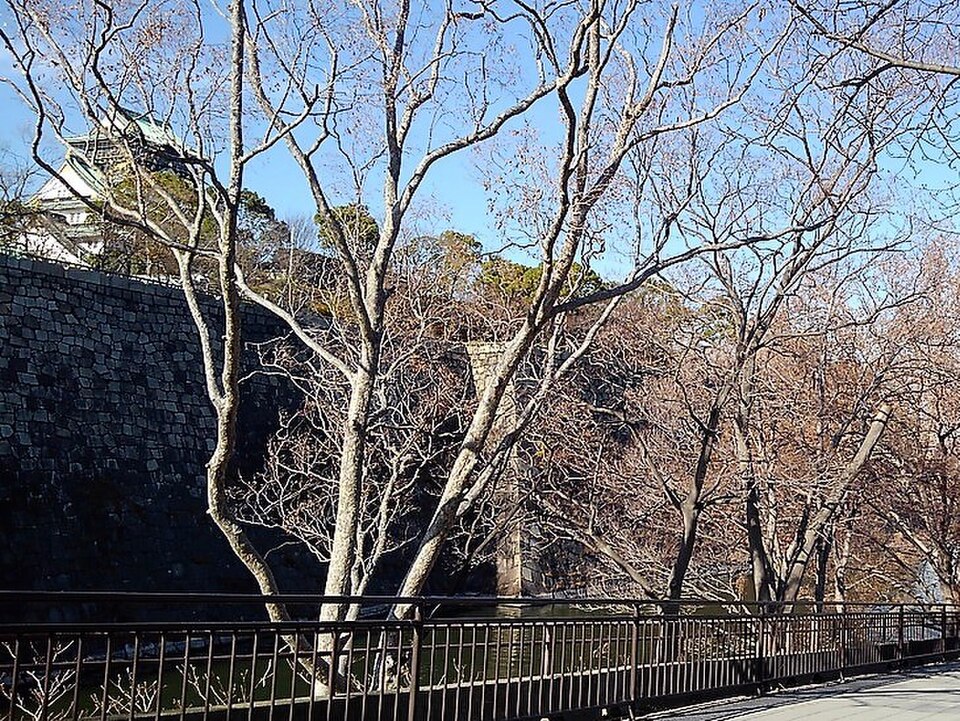
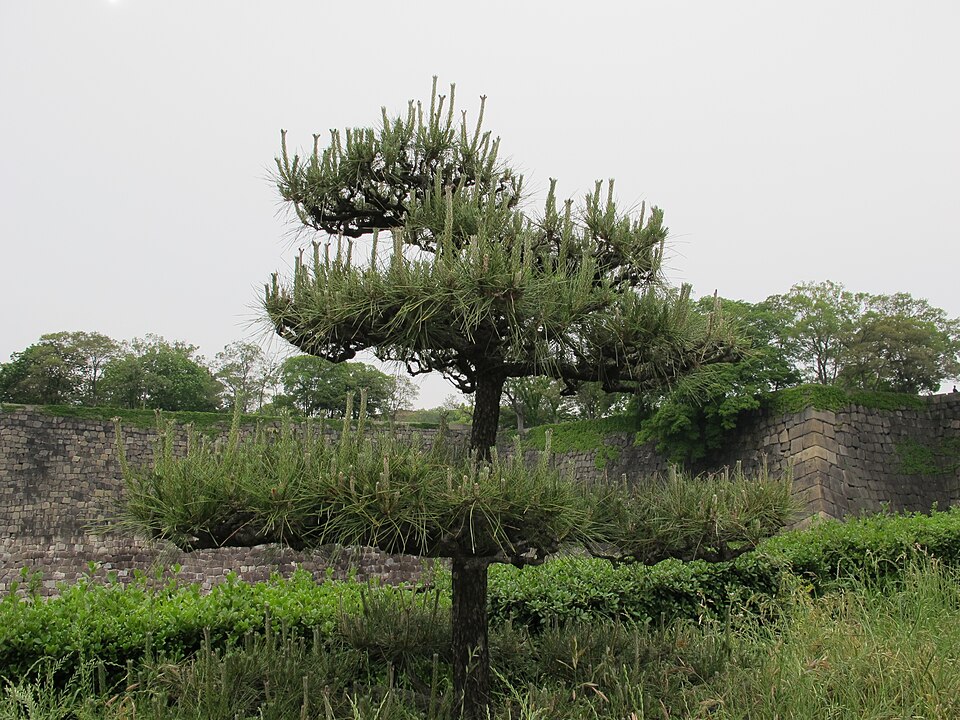
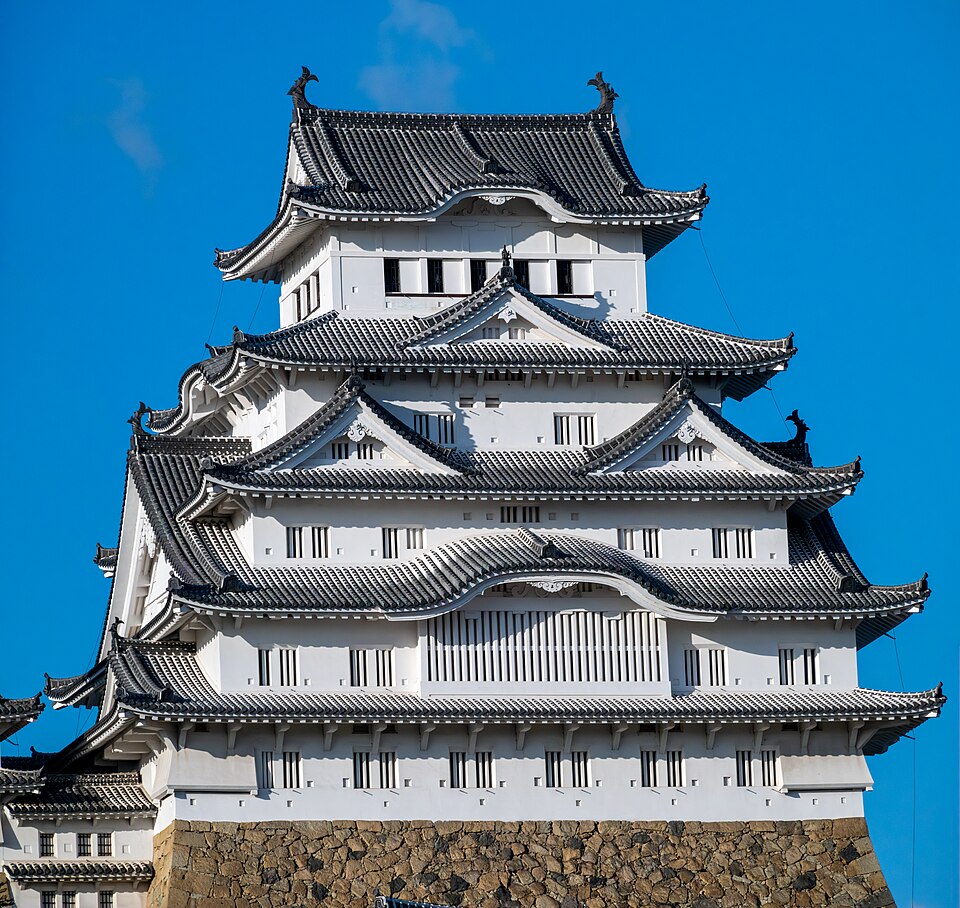
Photography is allowed in most of the keep but not everywhere: the operator marks no-photography areas and asks that camera equipment large enough to block other visitors' view is left alone, which in practice rules out tripods on the exhibition floors. Those floors are dim by design, since the material on the third and fourth is rotated historical collection, so a fast lens or a steady hand does more good than a flash aimed at a case. The eighth-floor deck, fifty metres up, is the interior photograph most people come for, and it is open air rather than glazed; the rail crowds at the corners facing the city, and the first hour after opening is when there is room to stand. Outside, the building is the subject, and the sides of it catch the sun at opposite ends of the day - the east face in the morning, the west face in the late afternoon - so the direction of approach decides whether the gold ornaments read or silhouette. The Tokugawa-period stone walls and the moats below them photograph better in low sun than at noon, when the water goes flat. In the Toyotomi Stone Wall Museum the wall is underground and lit for preservation rather than for cameras, so expect long exposures and no flash.
Checked 2026-08-26 · Source
The keep opens at 9:00 and closes at 18:00, with last admission at 17:30. Those hours took effect on 1 April 2025, and the operator publishes the same times all year rather than separate summer and winter timetables. The operator also warns that when the building is busy it may close the ticket queue earlier than 17:30, so the last half-hour is not a time to rely on. The Toyotomi Stone Wall Museum keeps the same 9:00 to 18:00 hours with the same 17:30 last entry.
No. There is no weekly closing day. The only published closure is the New Year period, 28 December to 1 January, and it applies both to the keep and to the Toyotomi Stone Wall Museum. There is no midday break either - the keep stays open straight through from 9:00 to 18:00.
Adults pay 1,200 yen and university or high-school students 600 yen on production of a student card; without a card the adult rate applies, and students from abroad are asked for an ISIC card. Junior-high-school age and younger enter free with proof of age. Groups of fifteen or more paying visitors pay 1,080 and 540 yen. Osaka city residents aged 65 and over, and holders of a disability, welfare or atomic-bomb survivor's certificate with one carer, enter free on presentation of the document. The window takes cash in yen, credit cards, e-money and QR payment, and tickets can also be bought in advance online.
No. The operator states that entry to it requires the castle keep's admission ticket, and it keeps the keep's hours and its New Year closure. It is a separate building, reached on foot, where a stone wall of Hideyoshi's 1583 castle - uncovered by excavation in 1984 and buried under about six metres of Tokugawa-period fill - is viewed from below ground. It opened in 2025. There are no toilets inside it, and the operator warns that viewing may be suspended without notice if the condition of the wall requires it.
Two hours covers the castle properly: about ninety minutes inside the keep, twenty to thirty for the Toyotomi Stone Wall Museum, and a walk of roughly fifteen minutes each way across the park from the nearest station gates. Ninety minutes inside is an unhurried pace over eight floors, and much less than that means passing the third and fourth floor collection rather than reading it. Arriving less than an hour before closing does not work, because the queue can be capped before the stated last-admission time.
There is a lift inside the keep and a second one outside, both used under staff direction. For most visitors the inside lift runs upward only and stops at the fifth floor, leaving the fifth to eighth floors and the entire descent as stairs. Wheelchair users and visitors with walking difficulties may use it in both directions on every floor, and the eighth-floor observation deck can be reached in a wheelchair. The keep lends five wheelchairs on a first-come basis with no reservations, and Osaka Castle Park lends more.
Loading the interactive map…
The interactive map could not be loaded.
Last updated:
Source: OpenStreetMap contributors, Wikidata ·