
_Berlin_08.jpg)


5 min walk
Berlin Central Station
- Must see
- Historic monument
Language · 1 published
Museum · Berlin
| Monday | 10:00 – 18:00 |
|---|---|
| Tuesday | Closed |
| Wednesday | 10:00 – 18:00 |
| Thursday | 10:00 – 20:00 |
| Friday | 10:00 – 18:00 |
| Saturday | 10:00 – 18:00 |
| Sunday | 10:00 – 18:00 |
Parsed from OpenStreetMap opening hours on 2026-08-26.
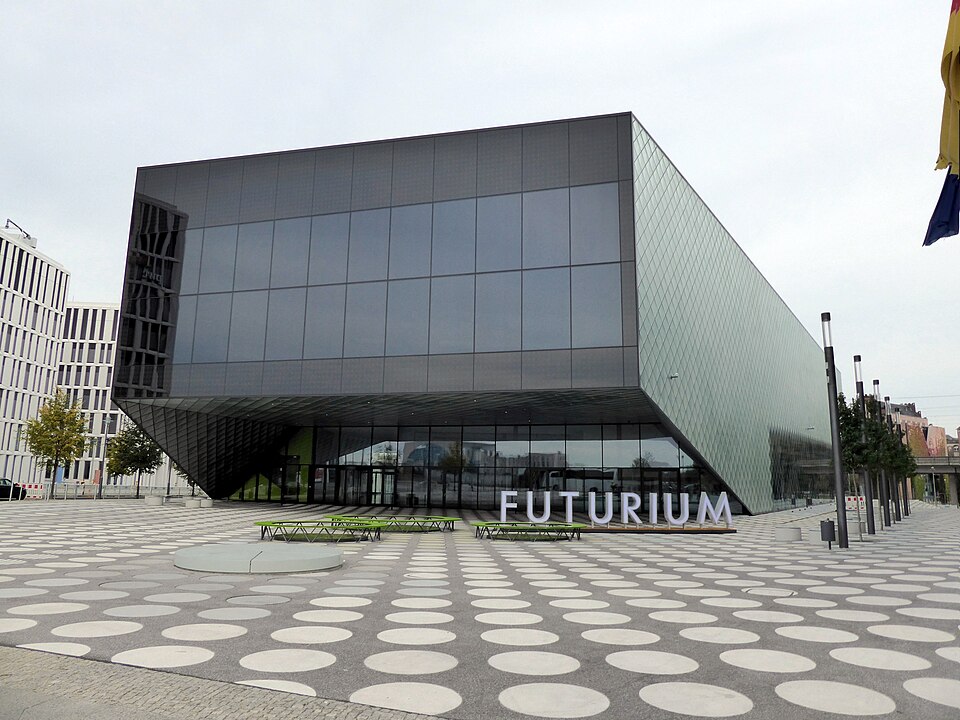
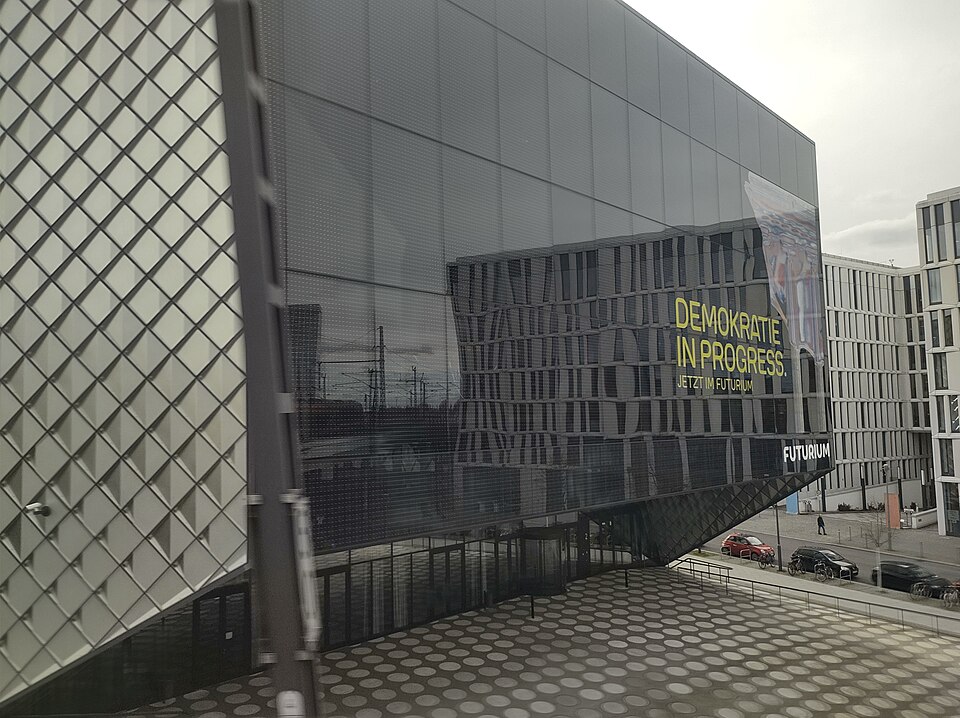
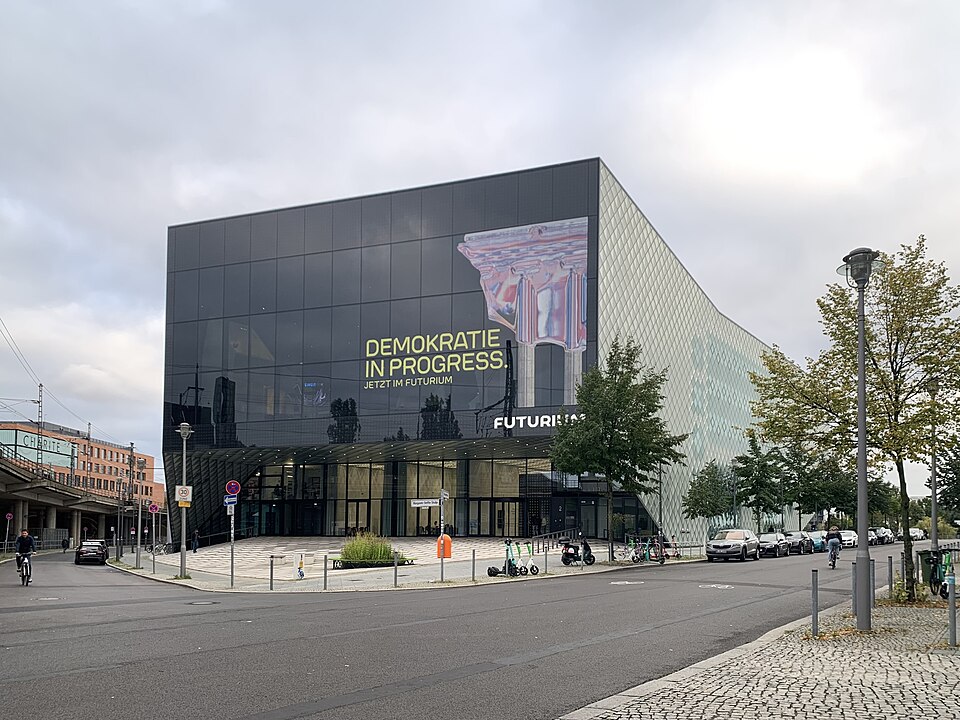
Futurium is a museum and exhibition space in Berlin dedicated to exploring possible futures. It opened in 2019 near the Hauptbahnhof on the site of a former freight station. The institution presents itself as a place for debate and discovery, examining how we might live, work, and coexist in coming decades. Its mission centers on questions of technology, sustainability, and society rather than collecting historical artifacts. The building features striking contemporary architecture with a distinctive facade. It serves as both a public forum and an interactive experience, positioning itself at the intersection of science, culture, and civic engagement for visitors of varying backgrounds.
Checked 2026-08-26
The interior contains exhibition spaces spread across multiple levels, presenting scenarios and prototypes related to future living. Visitors encounter interactive displays, model environments, and thought-provoking installations addressing themes such as urban development, energy, food systems, and digital transformation. The museum emphasizes participation, encouraging guests to contribute their own perspectives on desirable futures. A forum area hosts discussions, workshops, and events. There are also spaces for temporary exhibitions and collaborative projects. The design facilitates movement between contemplative and active zones, with areas suited to both individual exploration and group engagement throughout the building.
Checked 2026-08-26
Most visitors allocate between one and a half to three hours for a meaningful visit, depending on engagement level with interactive elements. Those participating in scheduled discussions or workshops should extend accordingly. The exhibition rewards unhurried exploration, as many installations invite sustained interaction rather than passive observation. Visitors with strong interest in futures studies or technology may prefer longer stays. School groups and organized tours typically operate on structured timelines. The spacious layout prevents excessive crowding at individual exhibits, though peak periods may affect pacing. Planning for flexibility allows fuller appreciation of participatory components without rushing through the thematic displays.
Checked 2026-08-26
Operator-confirmed hours are Not recorded pending review. Visitors should consult official channels before planning attendance. Berlin's variable climate makes indoor attractions appealing year-round, though summer brings increased tourist volume to the city generally. Weekday mornings typically offer quieter conditions for contemplative engagement with exhibits. The museum's location near Hauptbahnhof provides accessibility regardless of seasonal conditions. Special events and temporary exhibitions may influence timing preferences for repeat visitors. Evening programming occasionally extends standard hours. Checking current schedules remains essential, as cultural institutions periodically adjust operations. The surrounding area offers complementary activities for building extended itineraries around a visit.
Checked 2026-08-26
Operator-confirmed prices are Not recorded pending review. Admission policies may vary for permanent exhibitions versus special presentations. Reduced rates for designated groups are common at German cultural institutions but require verification. Online reservation systems sometimes operate for capacity management. Free entry periods or annual passes may be available through promotional programs. Visitors should confirm current pricing structures through official communication channels before arrival. Payment methods and cancellation terms warrant advance clarification. Group bookings typically require advance arrangement. The institution's funding model, combining public and private support, may influence accessibility initiatives and pricing philosophy over time.
Checked 2026-08-26
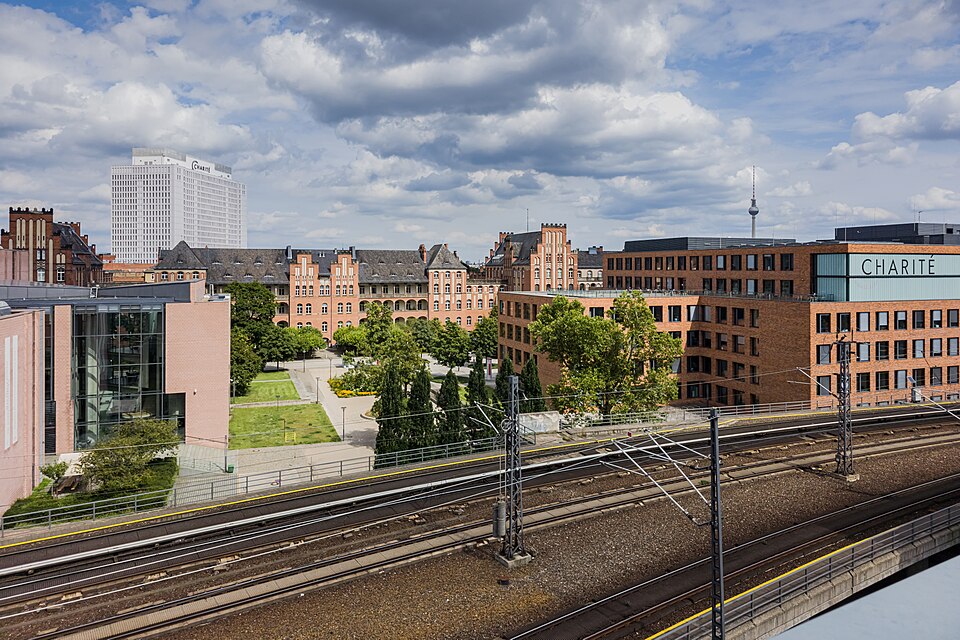
Futurium occupies a prominent position near Berlin Hauptbahnhof, the city's principal railway station. This location ensures exceptional public transport connectivity via regional trains, S-Bahn, U-Bahn, trams, and buses serving the station complex. Pedestrian access is straightforward from the Hauptbahnhof exits. Cyclists find infrastructure throughout the government district. Limited private vehicle parking exists in this central area; public transport strongly recommended. The Spree River and major government buildings provide orienting landmarks. From Alexanderplatz or Brandenburg Gate, walking times remain manageable for able visitors. The museum's deliberate siting in this transit-rich zone reflects accessibility intentions in its planning.
Checked 2026-08-26
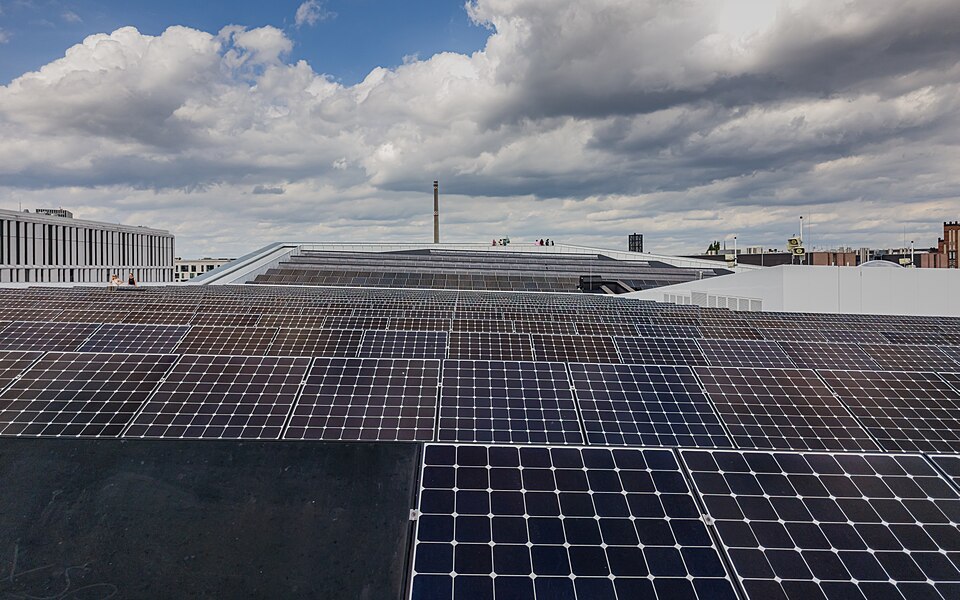
The participatory nature of exhibits may involve data collection or opinion recording; privacy-conscious visitors should note disclosure practices. Some installations address potentially unsettling future scenarios including environmental degradation or technological surveillance, which may affect sensitive visitors. The building's modern architecture includes open staircases and levels requiring vertical circulation. Crowding concentrates around popular interactive stations during peak visitation. Temporary exhibition closures for rotation occur periodically. Discussion events may operate in German primarily, though English materials are often available. The surrounding government district has heightened security presence and occasional access restrictions during official events that could affect approach routes.
Checked 2026-08-26
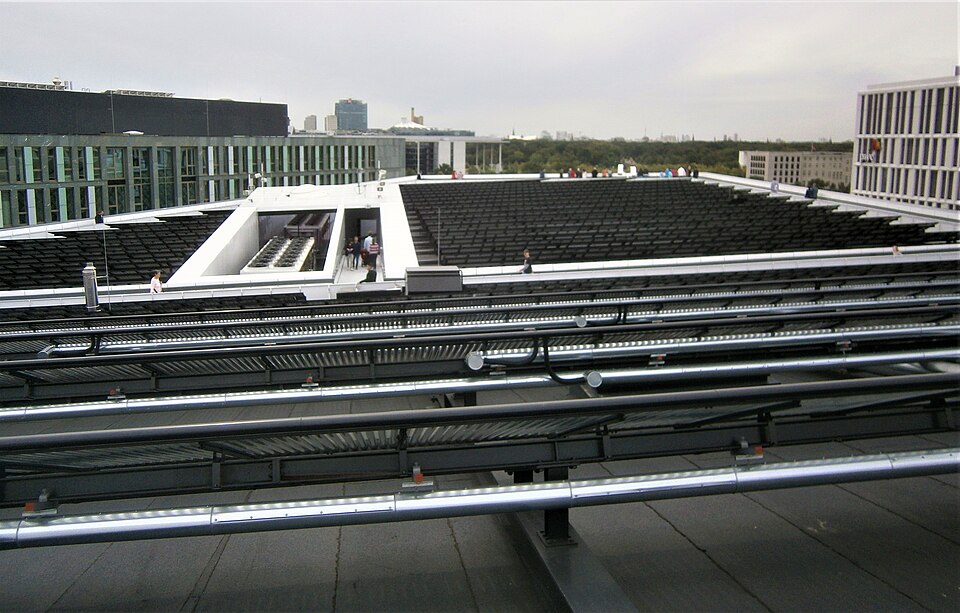
Photography policies vary by exhibition zone, with some installations restricting image capture for copyright or experiential preservation reasons. Visitors should observe posted signage and staff guidance regarding permitted equipment and flash usage. The architectural interior offers geometric compositions and light effects suitable for photography where allowed. Interactive displays may photograph poorly due to screen refresh rates or lighting conditions. Respect for other visitors' privacy and experience remains essential when capturing images in participatory spaces. Commercial or promotional photography typically requires advance institutional authorization. Social media sharing should consider whether depicted individuals have consented to appearance in publicly distributed images.
Checked 2026-08-26
The interactive and participatory design appeals to younger visitors, though some conceptual content addressing complex societal questions may resonate more with older children and adolescents. Hands-on elements provide engagement across age ranges.
Not recorded. Visitors should inquire directly regarding current multimedia offerings, as institutions periodically update interpretation services and language availability.
Not recorded. The Hauptbahnhof vicinity and surrounding government district contain numerous dining options at various price points for pre- or post-visit meals.
Not recorded. Large bags may be restricted in exhibition spaces; visitors should confirm storage provisions when planning what to carry.
Modern German public buildings typically incorporate accessibility features, but specific provisions including lift dimensions and accessible restroom locations are Not recorded pending direct verification.
The forum and event spaces suggest rental possibilities, but specific policies, capacities, and availability are Not recorded pending direct inquiry to the institution.
Loading the interactive map…
The interactive map could not be loaded.
Last updated:
Source: OpenStreetMap contributors, Wikidata ·