Humboldt Forum
The Humboldt Forum occupies the rebuilt Berlin Palace on Schlossplatz, at the eastern end of Unter den Linden and across the Lustgarten from the Berlin Cathedral.
- Must see
- Museum
Language · 1 published
City guide · Germany
Berlin is polycentric and much larger than its central monument cluster suggests. Mitte contains Museum Island, the Brandenburg Gate and the government district; Charlottenburg forms a western centre around its palace and shopping streets; Kreuzberg, Friedrichshain and Neukolln extend south and east. Major Cold War sites, parks and museums are dispersed, so a useful itinerary follows districts and rail corridors.
Ranked by importance — sitelinks, pageviews and heritage status, not editor preference.
100 places match
Category
Typical visit duration
The Humboldt Forum occupies the rebuilt Berlin Palace on Schlossplatz, at the eastern end of Unter den Linden and across the Lustgarten from the Berlin Cathedral.
The Berlin Wall Memorial occupies 1.4 kilometres of Bernauer Strasse, the street where the border between Wedding and Mitte ran directly along the front doors of the East Berlin houses.
The Topography of Terror is an outdoor and indoor history museum in Berlin, Germany. It stands on the former site of the Gestapo and SS headquarters, the central instruments of Nazi persecution.
The Pergamon Museum is a major art museum on Museum Island in Berlin. Its local name is Pergamonmuseum. The building houses reconstructed monumental buildings from ancient civilisations, including the Pergamon Altar, the Market Gate of Miletus, and the Ishtar Gate.
The Neues Museum is a museum building on Museum Island in Berlin, Germany. It was constructed between 1843 and 1855 according to plans by Friedrich August Stüler.
The Alte Nationalgalerie is a prominent art museum on Berlin's Museum Island, a UNESCO World Heritage site. Its neoclassical temple design, completed in 1876, houses nineteenth-century paintings and sculptures.
The Bode-Museum stands on the northern tip of Museum Island in Berlin, its domed structure visible across the Spree river. Opened in 1904 and originally named the Kaiser-Friedrich-Museum, it was renamed in 1956 after its first director, Wilhelm von Bode.
The Jewish Museum Berlin is a major cultural institution dedicated to two millennia of German-Jewish history and culture.
Futurium is a museum and exhibition space in Berlin dedicated to exploring possible futures. It opened in 2019 near the Hauptbahnhof on the site of a former freight station.
The DDR Museum is an interactive museum in Berlin dedicated to everyday life in the former German Democratic Republic. Located on the Spree River near Museum Island, it presents the history and culture of East Germany through immersive exhibitions.
Urban Nation is a museum dedicated to urban contemporary art in Berlin. It occupies a distinctive building that serves as a venue for street art and graffiti culture.
The James Simon Gallery serves as the main entrance building for Berlin's Museum Island, a UNESCO World Heritage site. Named after Jewish art patron James Simon, the structure was designed by British architect David Chipperfield.
The Altes Museum is a neoclassical museum building on Museum Island in Berlin. Designed by Karl Friedrich Schinkel and opened in 1830, it was originally constructed to house the Prussian royal collection of classical antiquities.
The Gemäldegalerie Berlin, locally known as Gemäldegalerie am Kulturforum, is a major art museum in Berlin, Germany.
The Allied Museum documents the history of the Western powers in Berlin from 1945 to 1994. Located in the former American sector of Dahlem, it occupies a distinctive site that includes a former U.S.
The Berlin-Hohenschönhausen Memorial is a museum and memorial site located in the Lichtenberg district of Berlin. It occupies the grounds of a former Soviet and later Stasi remand prison that operated during the German Democratic Republic period.
The Kunstgewerbemuseum, or Museum of Decorative Arts, is one of Berlin's significant cultural institutions dedicated to applied arts and design. It forms part of the Staatliche Museen zu Berlin, the national museum complex.
Source: OpenStreetMap contributors, Wikidata ·
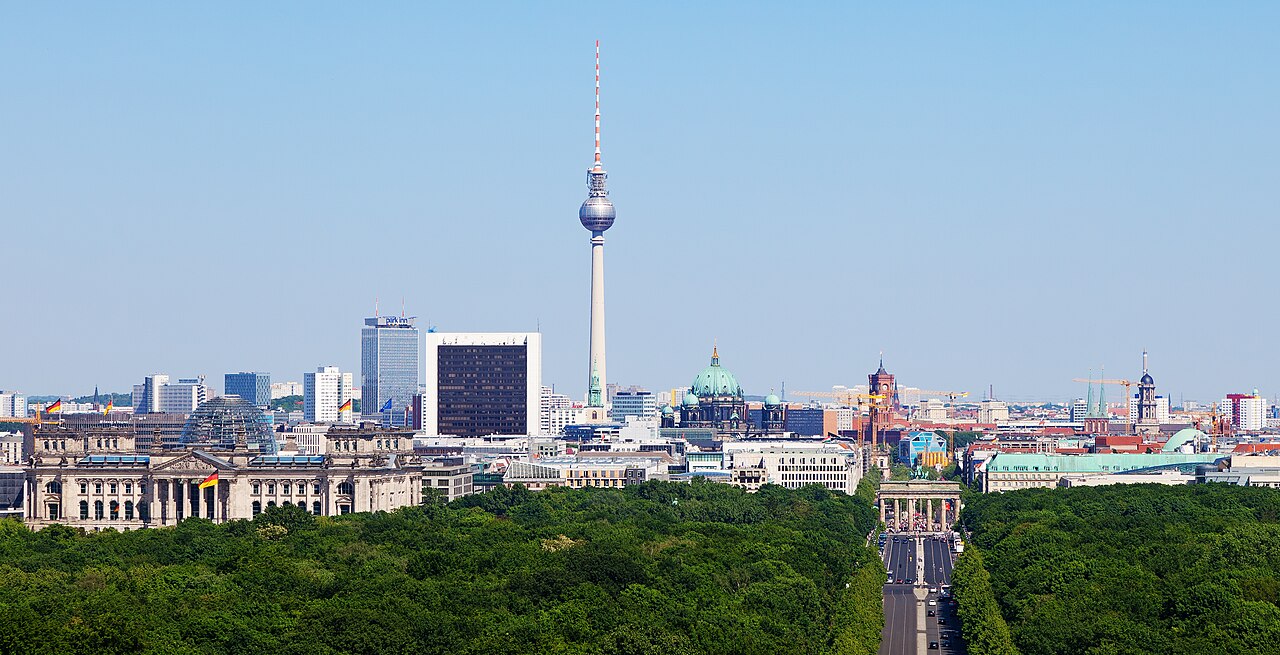
Mitte is the main first-visit anchor, stretching from Alexanderplatz and Museum Island west toward Unter den Linden, Brandenburg Gate and Tiergarten. Kreuzberg lies south, Friedrichshain east, and Charlottenburg forms a separate western centre. The S-Bahn Ring is a useful boundary for the inner city, but important sites also sit beyond it. Avoid combining opposite outer districts in the same half-day.
Checked 2026-08-26
Use S-Bahn and U-Bahn trains for long movements, with trams and buses filling gaps between rail corridors. Berlin uses fare zones A, B and C; the airport and nearby Potsdam are in zone C. Tickets are valid across participating modes within the purchased zones, but paper or app tickets must meet the stated activation rules. Walk once you reach a district cluster.
Checked 2026-08-26
A fixed duration is not recorded. Plan by district: Mitte, a western cluster, an eastern or southern neighbourhood, and any specialised museum or outer site that matters to you.
Mitte contains many headline sights, but Berlin is polycentric. Charlottenburg, Kreuzberg, Friedrichshain and outer memorial or palace sites require separate rail journeys.
Use S-Bahn and U-Bahn for cross-city travel, then trams, buses or walking within districts. One zonal ticket can cover participating modes for the chosen validity area.
Berlin Brandenburg Airport is in zone C. A journey between the airport and the central city therefore needs a ticket whose zones include C as well as the destination area.
Treat Potsdam as a separate excursion. It lies outside Berlin's central districts and in fare zone C, so it needs dedicated travel time and the correct ticket coverage.
Set your days, your pace and the hours you actually want to be out. The planner works around closing days and travel time, and leaves room to eat.