

.jpg)


2 min walk · Paris 15e Arrondissement
jardin des Mères-et-Grands-Mères-de-la-Place-de-Mai
- High
- Nature site
Language · 1 published
Historic monument · Paris 15e Arrondissement, Paris
| Monday | 00:00 – 23:59 |
|---|---|
| Tuesday | 00:00 – 23:59 |
| Wednesday | 00:00 – 23:59 |
| Thursday | 00:00 – 23:59 |
| Friday | 00:00 – 23:59 |
| Saturday | 00:00 – 23:59 |
| Sunday | 00:00 – 23:59 |
Parsed from OpenStreetMap opening hours on 2026-08-24.
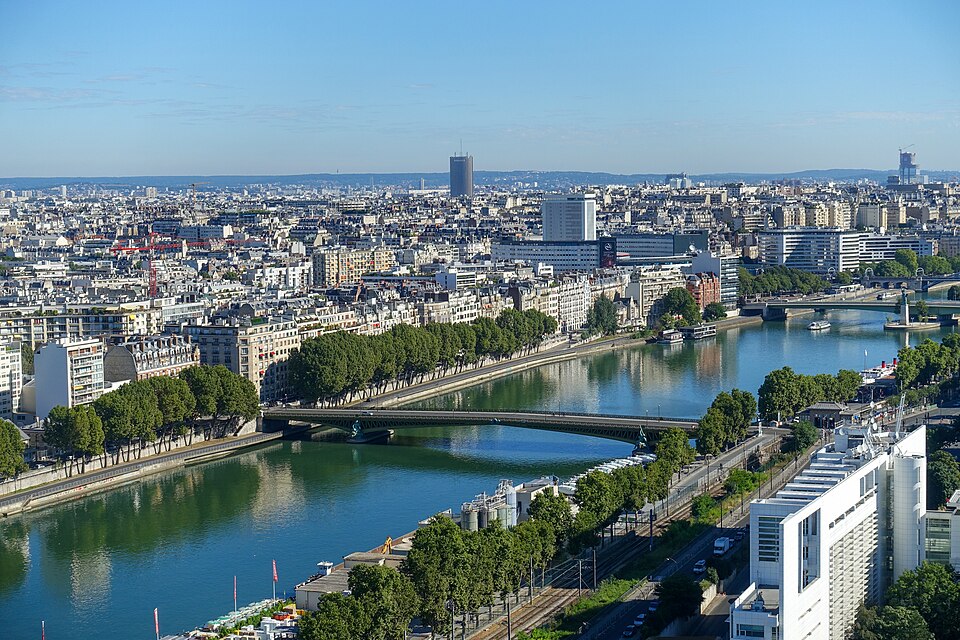
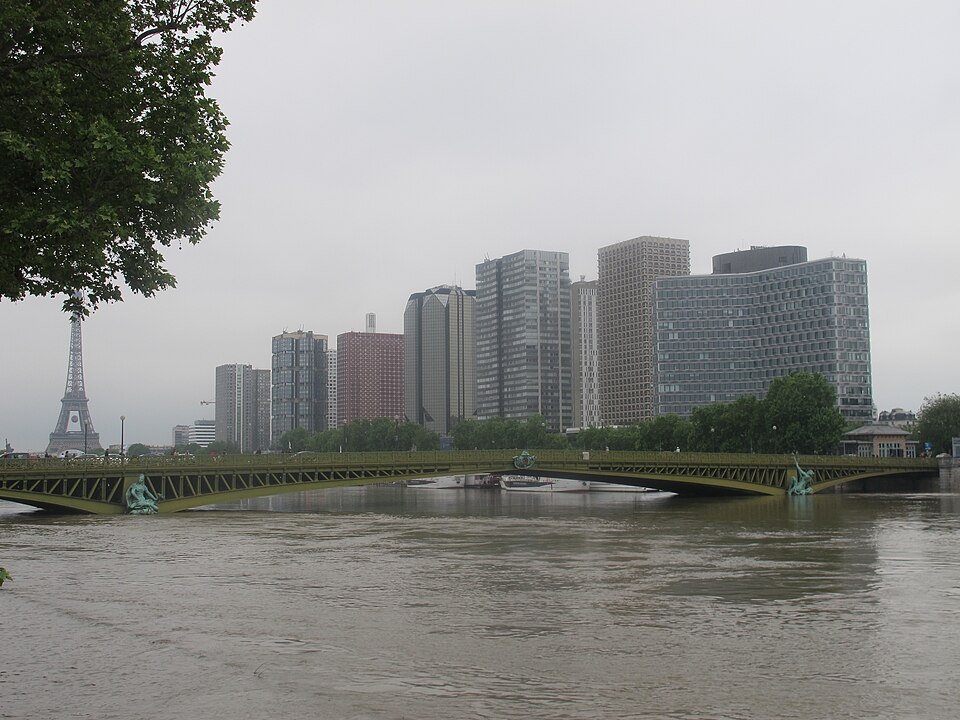
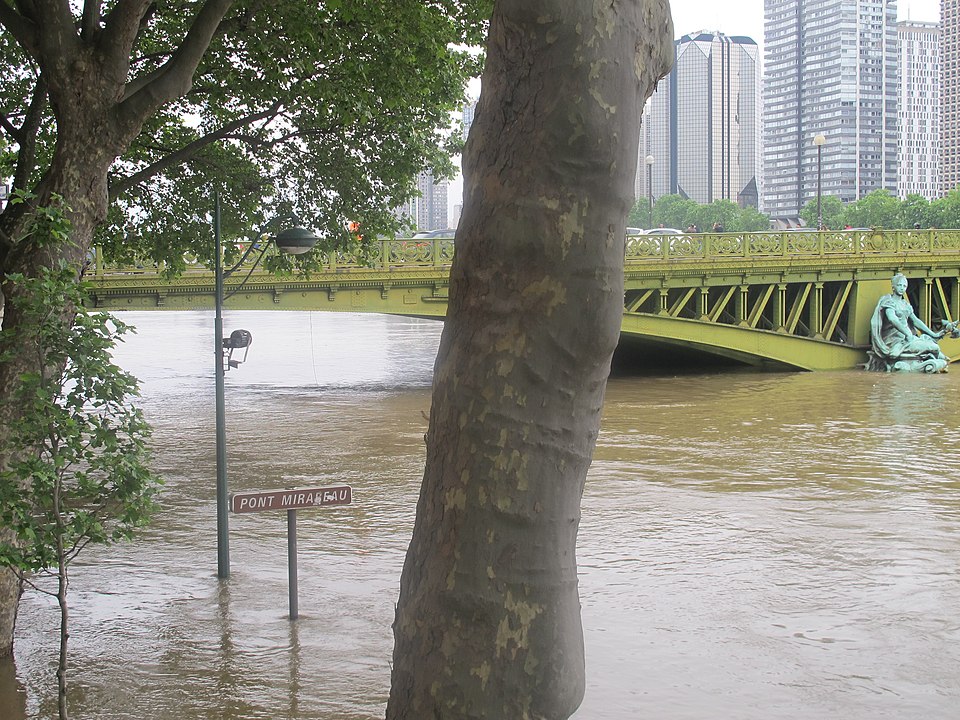
Pont Mirabeau carries a road and pedestrian walkways across the Seine between the 15th and 16th arrondissements, built between 1893 and 1897 under the chief engineer Paul Rabel using a steel arch design that was, at the time, one of the longest metal spans over the river.
It is best known outside engineering circles for Guillaume Apollinaire's 1912 poem Le Pont Mirabeau, which opens "Sous le pont Mirabeau coule la Seine" and set the bridge into French literary memory as a meditation on love and time passing.
The bridge sits downstream of the Eiffel Tower, at a bend where the Seine turns south past the western edge of the 15th arrondissement towards Boulogne-Billancourt.
Checked 2026-08-24 · Source
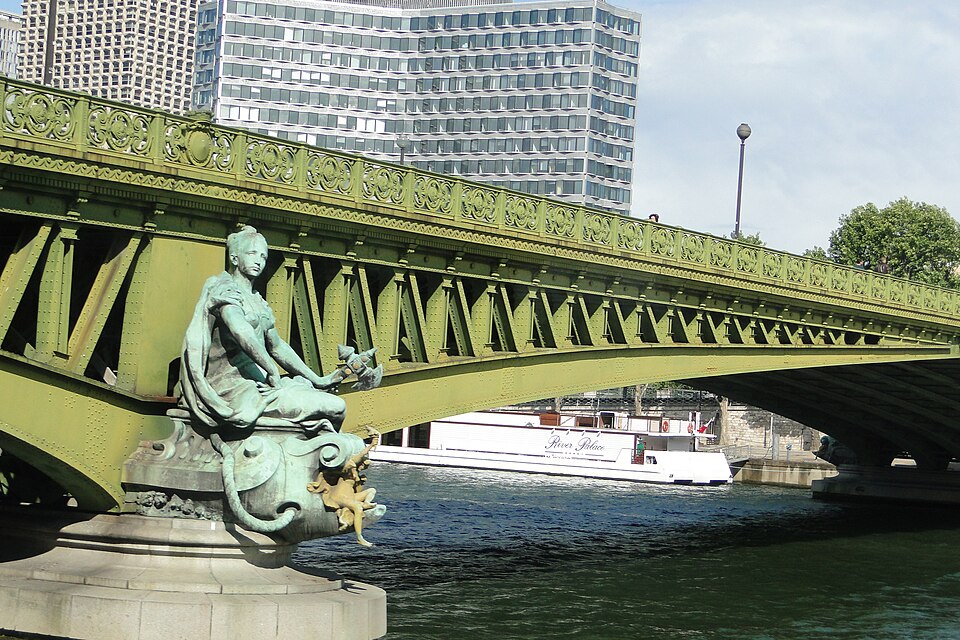
There is no interior to a road bridge — the structure to look at is on its piers rather than inside anything. Four allegorical bronze groups sit at the pillars, decorative sculpture added to soften an otherwise purely functional steel span, including a figure representing the City of Paris by the sculptor Jean-Antoine Injalbert.
The other allegorical groups on the piers represent themes appropriate to a river crossing — navigation, commerce and abundance — in the ornamental idiom typical of Third Republic civic sculpture.
A plaque carrying the opening lines of Apollinaire's poem is set into the bridge, the detail that draws literary visitors who would otherwise have no reason to seek out this particular crossing.
The steel arch construction, rather than the older masonry style used on the bridges closer to the historic centre, marks Pont Mirabeau as part of the late-19th-century wave of engineering bridges built as Paris expanded downstream, in the same technical family as the Eiffel Tower's ironwork built a few years earlier.
Checked 2026-08-24 · Source

Ten minutes to cross and read the plaque; longer to walk down to the riverbank on either side and look back up at the allegorical sculpture on the piers, which is not visible from the roadway itself.
The bridge is a stop on a longer riverside walk rather than a destination — Parc Andre Citroen sits immediately on the Left Bank side, and the walk continues along the Seine in either direction.
Checked 2026-08-24 · Source
Any time — it is an open bridge with no gate or closing hour. Sunset light along the river here, with the bridge facing roughly west-east across the Seine's bend, is a regular draw for photographers.
The riverside quays below the bridge get quieter outside weekend afternoons, which suits a slower look at the pier sculpture than a crowded crossing allows.
Checked 2026-08-24 · Source
No ticket and no door. Pont Mirabeau is a public road bridge, open to pedestrians and vehicles at all times at no cost.
There is no operator to buy from and no barrier of any kind — it is maintained by the city as ordinary infrastructure, the same as any other bridge over the Seine, and the poem plaque and the pier sculpture are viewed without a ticket the same as the crossing itself.
Checked 2026-08-24 · Source

Javel-Andre Citroen, served by the RER C, sits at the Right Bank end of the bridge. Charles Michels on Metro line 10 and Mirabeau, also on line 10, are both within a few minutes' walk of the Left Bank end.
No metro line crosses the Seine on Pont Mirabeau itself — the nearest river crossing by metro is Pont de Bir-Hakeim, one bridge upstream, carrying line 6.
Checked 2026-08-24 · Source
The pedestrian walkway is narrow and shared with cyclists, so stopping in the middle of it to read the poem plaque or take a photograph means stepping close to the railing rather than blocking the path.
The allegorical sculpture on the piers is not visible from the roadway or the walkway — it has to be seen from the riverbank below, which means a visitor staying only on the bridge deck will miss the decorative work entirely.
Checked 2026-08-24 · Source
The strongest images of the bridge's sculpture come from the Left Bank quay at water level, looking up at the piers rather than from the deck above, since the allegorical figures face outward toward the river.
Sunset gives the bend in the Seine here a warm light down the length of the water that the more famous bridges further upstream, facing a different direction, do not get at the same hour.
Checked 2026-08-24 · Source
Between 1893 and 1897, under the chief engineer Paul Rabel, using a steel arch design that was one of the longest metal spans over the Seine at the time.
Guillaume Apollinaire's 1912 poem Le Pont Mirabeau, which opens "Sous le pont Mirabeau coule la Seine", set it into French literary memory.
No. The nearest metro river crossing is Pont de Bir-Hakeim, one bridge upstream, carrying line 6.
Four allegorical bronze sculpture groups, including a figure representing the City of Paris by Jean-Antoine Injalbert, visible from the riverbank rather than from the deck.
No. It is a public road bridge, open at all times at no cost.
Set into the bridge itself, carrying the opening lines of Apollinaire's poem.
Loading the interactive map…
The interactive map could not be loaded.
Last updated:
Source: OpenStreetMap contributors, Wikidata ·