Montparnasse Tower is a 210 m office block finished in 1973, and the reaction to it is the reason Paris has not built another skyscraper in its centre since.
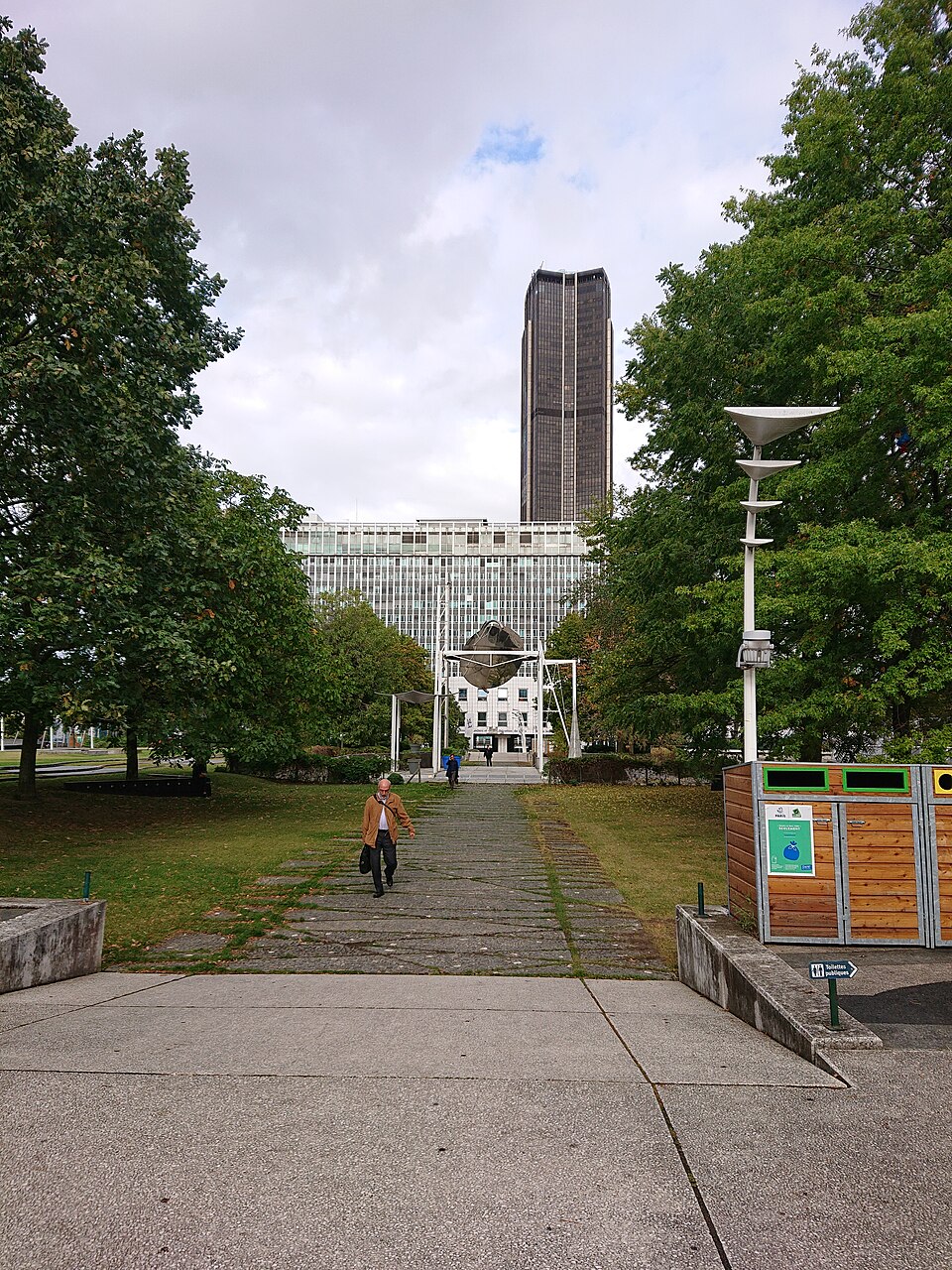
The tower rose on the site of the old Gare Montparnasse as the anchor of a redevelopment of the district, designed by a team of French architects and built between 1969 and 1973. At completion it was the tallest building in France and one of the tallest in Europe, a single dark monolith standing over the low, pale roofline of the 14th and 15th arrondissements.
The public reaction was hostile enough that Paris banned buildings over 37 m in the centre the following year, a limit that held for four decades and pushed the city's later high-rises out to La Défense. The ban was eventually eased for a handful of sites, but Montparnasse still stands alone over the skyline it was meant to start.
59 floors of offices below an observation deck that is the reason most visitors come.
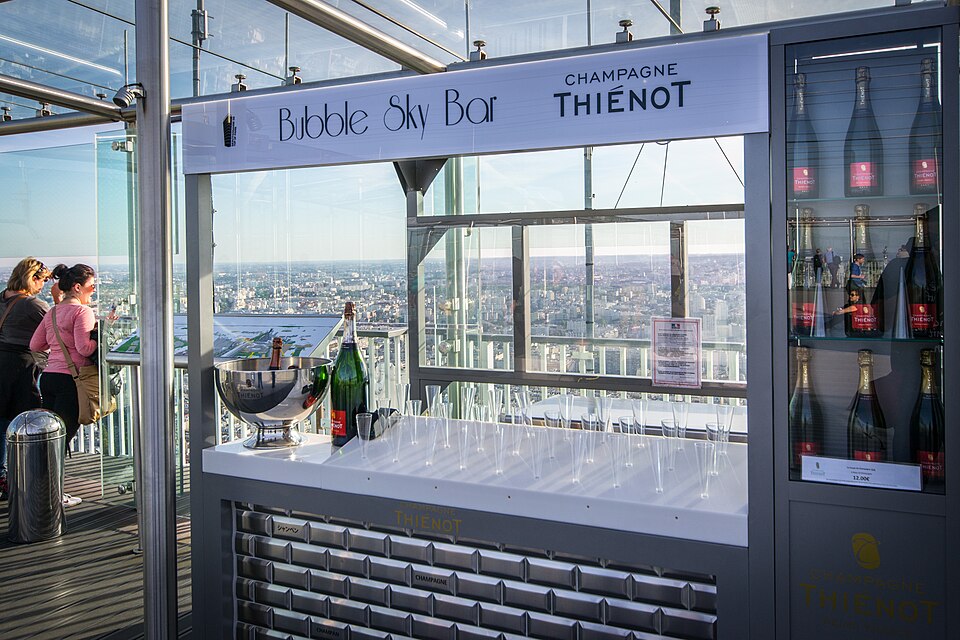
The 56th floor holds an enclosed viewing level with a small exhibition and a champagne bar, and the roof terrace above it, open to the sky and ringed by a windbreak, is the 59th and top floor at 210 m. The lift from the ground floor to the 56th runs in under forty seconds, among the fastest public lifts in Europe when the tower opened.
The building itself is otherwise a working office tower with no public access below the viewing floors — the ground-floor lobby leads straight to the express lift rather than through any part of the building most visitors would recognise as a monument.
Forty-five minutes to an hour for the full circuit of both viewing levels.
The enclosed 56th floor takes ten to fifteen minutes to walk and read the panels identifying what is visible in each direction. The open-air roof terrace is where most of the time goes, walking the full perimeter and finding the angle that lines up the Eiffel Tower, Sacré-Cœur or the Panthéon against the rest of the skyline.
The lift ride adds only a couple of minutes each way, so the time spent is almost entirely on the two floors themselves rather than getting to them.
Late afternoon into sunset, when the view includes the city lighting up rather than a flat daytime haze.
The tower's advantage over the Eiffel Tower's platforms is precisely that it is not in most photographs of the skyline, so the view from the top includes the Eiffel Tower itself as the centrepiece rather than the tower being the thing photographed. Clear evenings sell out the sunset slot fastest.
The open-air roof closes in bad weather and high wind, dropping visitors back to the enclosed 56th floor only, which is worth checking before planning a sunset visit around it.
Entry to the observation deck is ticketed, with a discount for booking online in advance. Current rates are not published on the sources this page uses and are not reproduced here.
The tower is not on the Paris Museum Pass, since the pass is built around museums and monuments rather than viewing platforms.
A combined ticket bundling the deck with other attractions is sometimes sold; whether it is worth it depends entirely on what else is on the itinerary.
Place Raoul Dautry, on top of Montparnasse-Bienvenüe station in the 15th arrondissement.
Montparnasse-Bienvenüe is one of the busiest interchanges in the Métro, served by lines 4, 6, 12 and 13, and the tower's entrance sits directly above the station concourse. Gare Montparnasse, the mainline station for western France and the TGV Atlantique, is across the square, which makes the tower a natural stop on the way to or from that station.
Being built directly into a major interchange means the walk from the platforms to the ticket desk is short and mostly indoors.
The roof terrace is open-air and unheated; wind at 210 m is noticeably stronger and colder than at street level, and the terrace can close on short notice in poor weather.
Security screening at the entrance is airport-style, with bag checks that add time on busy days.
The building is a working office tower outside the viewing floors, so there is nothing to see below the 56th floor beyond the lobby, and visitors expecting a monument to explore rather than a lift ride to a view are sometimes disappointed by how little of the tower they see.
The Eiffel Tower framed against the rest of the skyline, shot from the roof terrace's northwest corner, is the single most repeated image and for good reason — no other public viewpoint in the city puts the tower in its own photograph this cleanly.
The enclosed 56th floor's glass introduces reflections that are hard to avoid without a lens hood held flush against the pane; the open roof above it has no glass and is the better floor for a clean shot.
Sunset lines the western sky up with La Défense's towers in the distance, and after dark the city's lit monuments — Eiffel Tower, Invalides, Sacré-Cœur — read clearly against the dark rooftops between them.
Why is Montparnasse Tower the only skyscraper in central Paris?
The public reaction to its 1973 completion was hostile enough that Paris banned buildings over 37 m in the centre the following year, pushing later high-rises out to La Défense instead.
How tall is it and how fast is the lift?
210 m to the roof terrace on the 59th floor. The express lift to the 56th floor runs in under forty seconds.
Is the view better than from the Eiffel Tower?
It shows something the Eiffel Tower's own platforms cannot: the Eiffel Tower itself, as the centrepiece of the skyline rather than the vantage point.
Does the roof terrace ever close?
Yes, in bad weather or high wind, dropping visitors to the enclosed 56th floor only. Worth checking conditions before planning a visit around sunset.
Is it on the Paris Museum Pass?
No. The Museum Pass is built around museums and monuments; the tower's observation deck sells its own tickets.
Can I visit the rest of the building?
No. It is a working office tower outside the two viewing floors, and public access is limited to the ground-floor lobby and the express lift up.
Nothing non-essential is set before you choose, in regions where consent is required. If you decline, ads still appear but they are non-personalised, and analytics is switched off entirely.



.jpg)

.jpg)
