


5 min walk · Paris 12e Arrondissement
square Carnot
- High
- Nature site
Language · 1 published
Historic monument · Paris 12e Arrondissement, Paris

| Monday | 10:00 – 18:00 |
|---|---|
| Tuesday | 10:00 – 18:00 |
| Wednesday | 10:00 – 18:00 |
| Thursday | 10:00 – 18:00 |
| Friday | 10:00 – 18:00 |
| Saturday | 10:00 – 18:00 |
| Sunday | 10:00 – 18:00 |
Checked 2026-08-24 · Source
Read from the OpenStreetMap access tags; anything not listed has no tag recorded.
Set the group type to family in the planner and the day window contracts to about three quarters of a solo day.
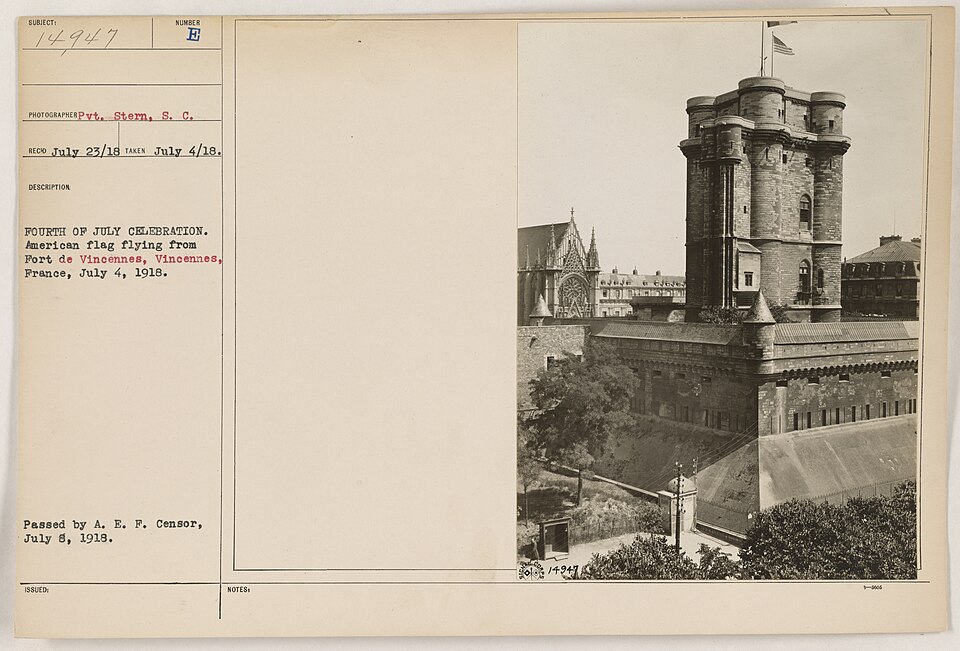
Château de Vincennes is a medieval fortress with the tallest surviving keep of any in Europe, built to keep a king safe rather than to look like a palace.
Charles V raised the donjon in the mid-14th century as a secure royal residence a short ride east of Paris, inside a walled enclosure with nine towers and a moat. It stayed a working royal seat through the Renaissance, then became a state prison through the 17th and 18th centuries — Diderot, Mirabeau and the Marquis de Sade were all held here — before turning into a military arsenal that stayed in use into the 20th century.
The site is managed today by the Centre des Monuments Nationaux, which has restored large parts of it across the 20th and early 21st centuries after decades of military use had left much of it neglected.
Checked 2026-08-24 · Source
The keep itself, the walled enclosure, and the Sainte-Chapelle de Vincennes, a Flamboyant Gothic chapel modelled on the Sainte-Chapelle in central Paris.
Construction on the chapel began in 1379 under Charles V and was not finished until the mid-16th century, under Henri II — nearly two centuries later — which shows in the stylistic shift between its lower and upper sections. Its stained glass depicts scenes from the Apocalypse.
The donjon's upper floors held the king's private apartments; the lower floors, once the prison operated, held its cells. Both are part of the visitable route, along with the surrounding curtain wall and towers.
Checked 2026-08-24 · Source
An hour and a half covers the keep, the chapel and a walk of the enclosure at an unhurried pace.
The keep's stairs and the chapel add up in a way the flat footprint of the site does not suggest from outside; visitors doing both rather than one or the other should budget the full ninety minutes rather than the shorter estimate a quick look at the courtyard might imply.
Checked 2026-08-24 · Source

A weekday morning, before coach groups and school visits fill the courtyard.
The fortress sits at the edge of the Bois de Vincennes, so a visit pairs naturally with time in the wood on either side of it; a cool morning inside the stone keep followed by an afternoon in the park's shade is a reasonable way to spend a full day out here.
Checked 2026-08-24 · Source
Entry is ticketed. Current admission rates are not published on the sources this page uses and are not reproduced here.
The site follows the Centre des Monuments Nationaux' standard pattern of paid entry to the keep and chapel with the outer courtyard freely accessible, but the specific current price bands should be confirmed on the operator's own site before travelling.
Checked 2026-08-24 · Source

On the eastern edge of Paris, at the northern corner of the Bois de Vincennes, in the commune of Vincennes, just outside the 12th arrondissement boundary.
Château de Vincennes station, the eastern terminus of Métro line 1, sits directly outside the fortress walls, making this one of the easiest historic sites in the wider region to reach without a car.
Checked 2026-08-24 · Source
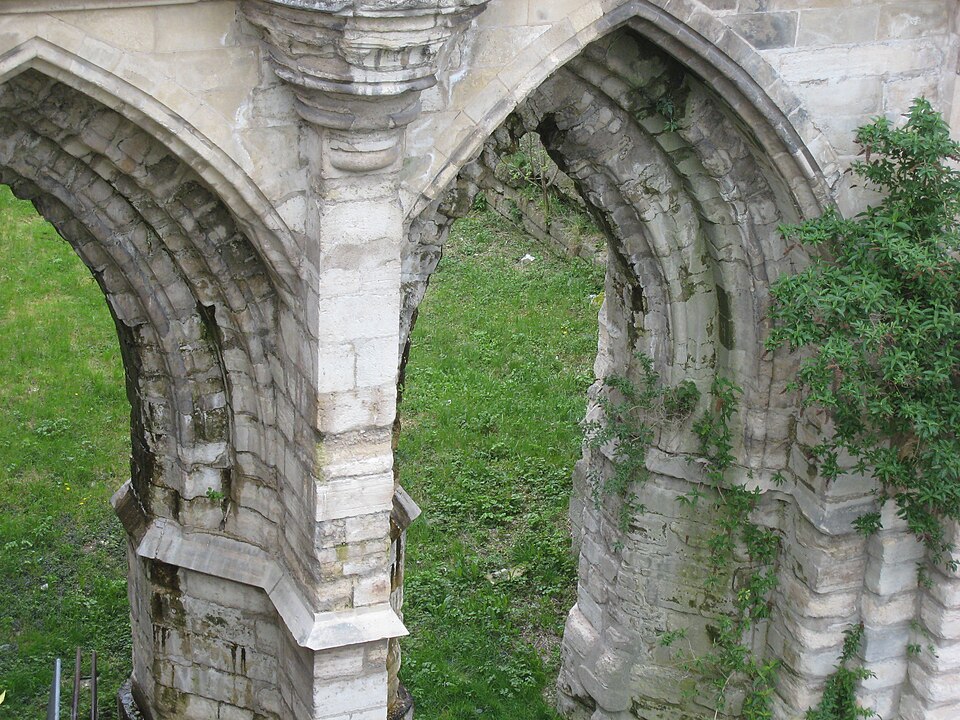
The keep's stone stairs are steep, narrow and largely original, which rules the upper floors out for anyone who cannot manage that kind of climb.
The site sits on flat, exposed courtyard ground with little shade, so a summer midday visit is warmer than the shaded park next door. Some rooms, particularly in the chapel, restrict flash photography to protect the stained glass and stonework.
The fortress is an active heritage site with ongoing restoration work in some areas, so a section that is open on one visit can be closed for conservation on the next; checking the operator's own site before travelling avoids arriving to a closed wing.
Checked 2026-08-24 · Source
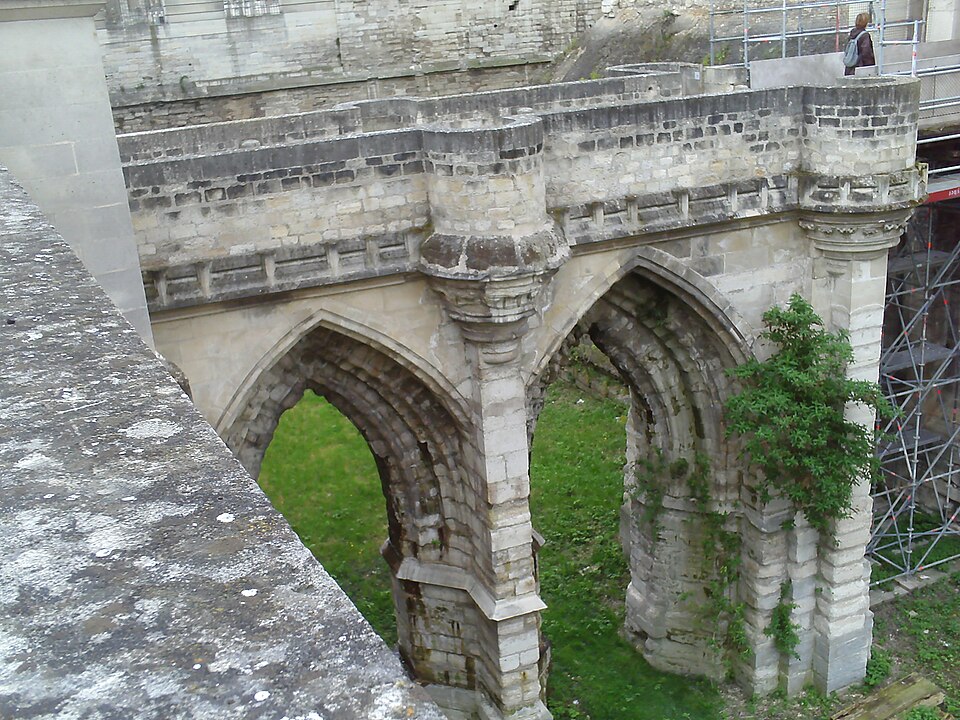
The keep seen across the moat from the outer wall, with its corner turrets against the sky, is the fortress's defining image and the one most visitors leave with.
Inside the chapel, the tall Flamboyant Gothic windows are best caught on a bright day when the stained glass throws colour onto the stone floor; a tripod is generally impractical given how the visit route moves groups through. The enclosure's nine towers, seen along the curtain wall from the outer courtyard, give a sense of the fortress's original scale that the keep alone does not.
Checked 2026-08-24 · Source
10:00 to 18:00, daily, according to the operator's own site.
It is the tallest surviving medieval fortified keep in Europe, built by Charles V in the mid-14th century as a secure royal residence.
The fortress served as a state prison in the 17th and 18th centuries; recorded prisoners include Diderot, Mirabeau and the Marquis de Sade.
No, a separate building modelled on it. Construction began in 1379 under Charles V and finished under Henri II in the mid-16th century.
Métro line 1 to Château de Vincennes, its eastern terminus, which stops directly outside the fortress walls.
Loading the interactive map…
The interactive map could not be loaded.
Last updated:
Source: OpenStreetMap contributors, Wikidata ·