


3 min walk · City of Westminster
Palace of Westminster
- Must see
- Historic monument
Language · 1 published
Historic monument · City of Westminster, London
| Monday | 09:30 – 15:30 |
|---|---|
| Tuesday | 09:30 – 15:30 |
| Wednesday | 09:30 – 15:30 |
| Thursday | 09:30 – 15:30 |
| Friday | 09:30 – 15:30 |
| Saturday | 09:30 – 13:00 |
| Sunday | Closed |
Checked 2026-08-26 · Source
Read from the OpenStreetMap access tags; anything not listed has no tag recorded.
Set the group type to family in the planner and the day window contracts to about three quarters of a solo day.
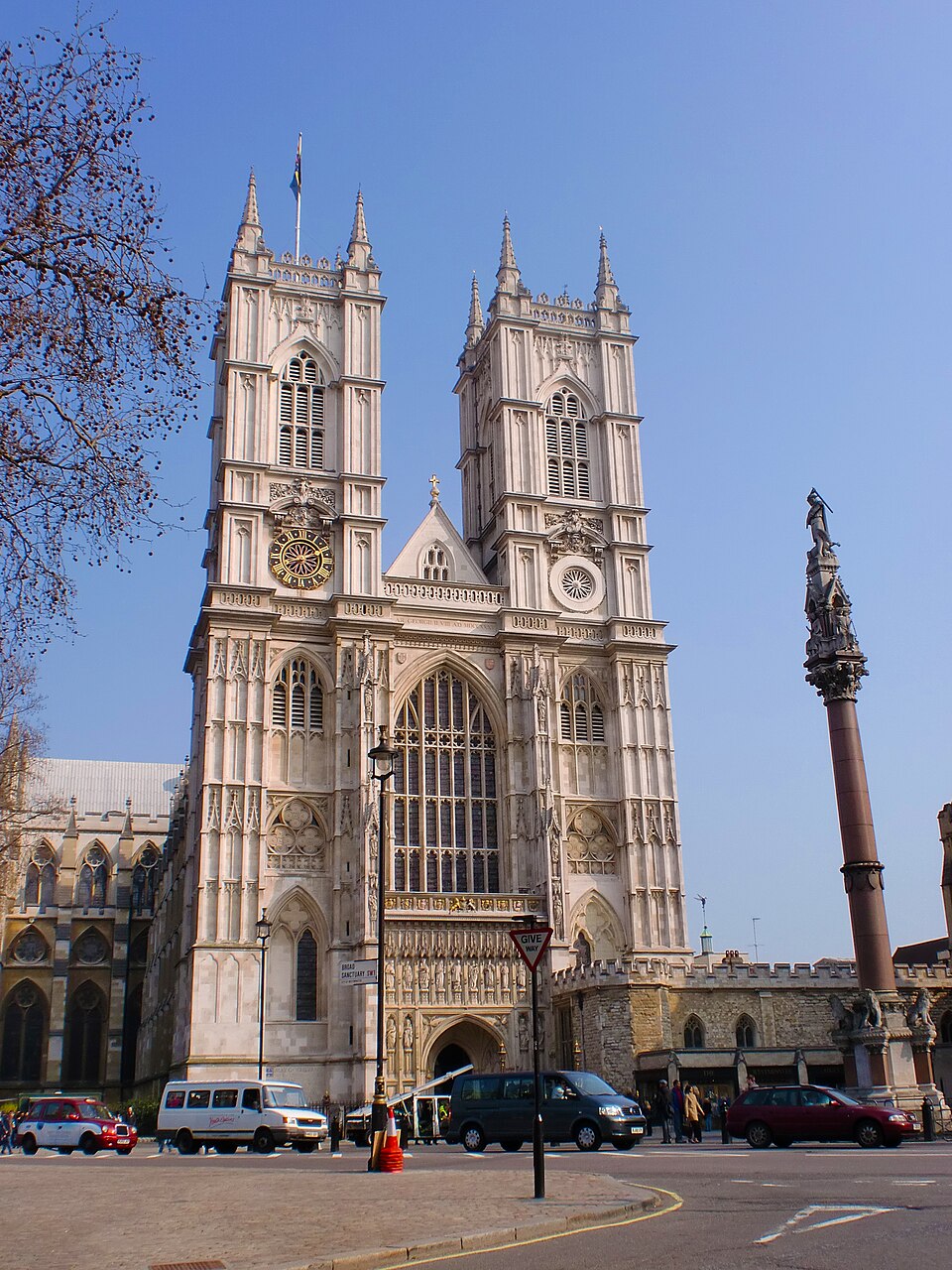
Westminster Abbey is a working Anglican church that has crowned every English and British monarch since 1066 — forty of them — and buried eighteen. It is not a cathedral and not a museum, and both facts govern a visit: services take priority over sightseeing, and the building closes to tourists entirely on Sundays. A Benedictine community was installed on the site by Dunstan and King Edgar in about 959. The church standing today was begun by Henry III on 6 July 1245 in the French Gothic manner, giving England its tallest medieval nave. Henry VII's Lady Chapel, built between 1503 and 1509, is the Perpendicular Gothic climax at the east end, its fan vault admired by John Leland as the orbis miraculum, the wonder of the world. The two western towers that most photographs frame are much later and not medieval at all: Nicholas Hawksmoor and John James completed them in the 1740s. The Abbey was inscribed as a UNESCO World Heritage Site in 1987, jointly with the Palace of Westminster and Saint Margaret's Church next door.
Checked 2026-08-26 · Source
General admittance covers the church and, importantly, the Cloisters, College Garden, Chapter House and the Pyx Chamber — four spaces that visitors often assume are extra and are not. St Margaret's Church, the parish church in the Abbey's shadow, keeps its own shorter hours of 11.00 to 15.30. The Queen's Diamond Jubilee Galleries are the exception to the single-ticket rule: they sit high in the 13th-century triforium, display the Abbey's greatest treasures, and are entered by a timed ticket bought in combination with an Abbey entry ticket at £5 for adults, free for children aged 17 and under and free for Association members. The Cellarium Café and Terrace and a Kiosk handle food, opening at 08.00 — well before the church — and the Abbey Shop runs 09.15 to 18.30, far later than the visitor route. Dean's Yard, the green enclosure the Abbey addresses itself from, is open 08.00 to 17.00 and may close at short notice for security reasons.
Checked 2026-08-26 · Source

Allow two hours. The Abbey's own answer is that most visitors spend between one and a half and two hours exploring the main highlights, rising to two to three hours for anyone who adds the Queen's Diamond Jubilee Galleries, the Cloisters and the full audio guide, and three hours or more for a genuinely relaxed pace. Two hours is the honest planning figure for a first visit that includes the Galleries. The constraint is not the closing time but the last entry, and the Abbey's visiting window is short by London standards: general admittance ends in the early afternoon, not the evening. The Abbey also operates a single-entry policy — once a visitor exits they cannot re-enter on the same ticket — so the Cellarium Café and the shop are best treated as the end of the visit rather than a break in the middle of it.
Checked 2026-08-26 · Source
Weekday mornings, Tuesday to Thursday, before midday. That is the Abbey's own answer, and it adds that arriving shortly after opening at 9.30am typically gives a calmer experience with fewer crowds. Peak times are late mornings and early afternoons, particularly at weekends and during school holidays. Sunday is not an option for sightseeing: on Sundays and on religious holidays including Easter and Christmas the Abbey is open for worship only and tourist visiting is not available. Saturday is short and its closing time moves — the published calendar showed general admittance 09:00 to 15:00 on Saturday 29 August 2026 and 09:00 to 13:00 on Saturday 5 September 2026, while the Abbey's plan-your-visit page gives Saturday as 9.30am to 3.00pm. Those figures are printed here as the Abbey published them rather than reconciled. Being a working church, the Abbey occasionally closes at short notice for special services, and during services some or all areas may close to visitors.
Checked 2026-08-26 · Source
Admission is charged and the Abbey states that it is almost entirely dependent on visitor income. Two price lists were published at the time of writing. For 17 to 24 June and 2 to 30 September 2026, adults pay £31, adults aged 65 and over £28, students £28, children aged 6 to 17 £14, and children aged 0 to 5 free. For 25 June to 1 September 2026 a temporary VAT reduction to 5 per cent under the UK Government's Great British Summer Savings campaign lowers those to £27.13 for adults, £24.50 for over-65s and students, £12.25 for children aged 6 to 17, and free for under-6s. The saving applies to full-price entry tickets only, not to paid tours, special events or other offers. The Queen's Diamond Jubilee Galleries cost £5 extra for adults and are free for children aged 17 and under. A ticket bought on the Abbey's own website can be upgraded free of charge to an annual pass allowing three visits in one year. Attending a daily service is free, and UK Armed Forces personnel and up to four family members enter free on production of valid ID.
Checked 2026-08-26 · Source
The Abbey's address is 20 Dean's Yard, London SW1P 3PA. Westminster station, on the Jubilee, District and Circle lines, is about 300 metres away — a four-minute walk by the Abbey's own reckoning — and St James's Park, on the District and Circle lines, is about 500 metres or six minutes. For mainline rail the Abbey gives Charing Cross at about 1,100 metres or sixteen minutes, London Waterloo at about 1,400 metres or nineteen minutes, and London Victoria at about 1,700 metres or twenty-four minutes. Those distances make the Abbey the easiest of the Westminster group to reach on foot from anywhere along the river, and they also mean a visitor coming from the Palace of Westminster or the Elizabeth Tower is already there. There is no cloakroom and no left luggage facility at the Abbey, so bags have to be carried through the visit; large items are best left at a mainline station before arriving.
Checked 2026-08-26 · Source
The Abbey is a church first, and the practical consequences are real rather than ceremonial. Sundays and religious holidays are closed to tourist visiting entirely. Services run through the day and can close some or all areas at any time; visitors already inside during a service are welcome to stay and observe quietly. Closures at short notice for special services are explicitly possible. The single-entry policy means one exit ends the visit. There is no cloakroom, no left luggage and no storage of any kind, and large items including big umbrellas are not permitted. Weapons, hazardous materials, cutting tools, aerosols, flammable liquids, fireworks and explosives are refused; anything doubtful should be raised with an Abbey Marshal at the gate. Pushchairs and prams are welcome and the main visitor routes are step-free, but narrow sections and individual chapels may require a pushchair to be parked temporarily. Group entry is separately timed and is not permitted between 12.00 and 13.00 at all.
Checked 2026-08-26 · Source
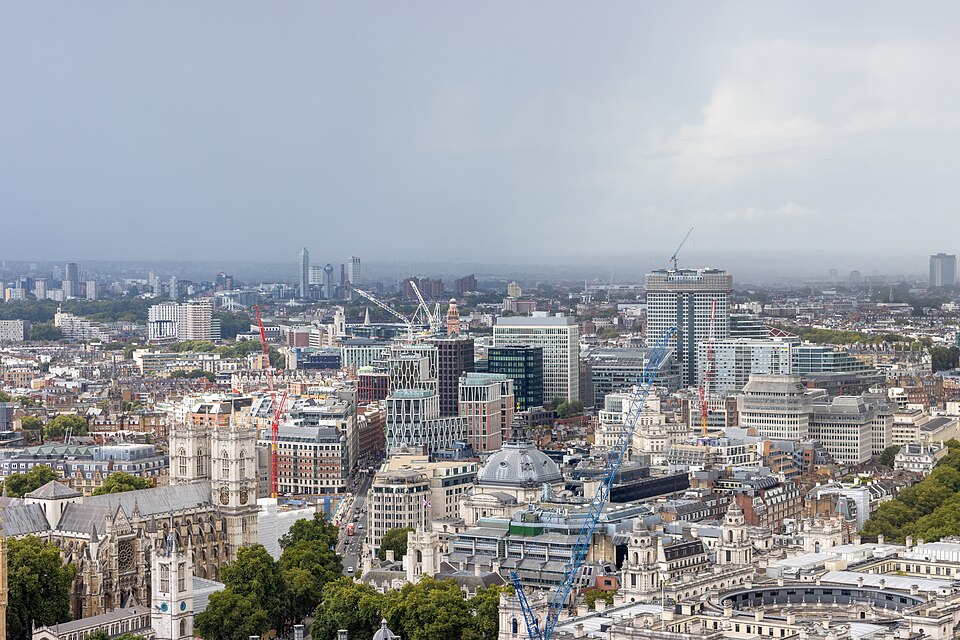
Personal photography is permitted in most of Westminster Abbey, which is a change from the blanket ban the Abbey held for many years and still surprises returning visitors. The restrictions are specific. Flash photography, video recording, selfie sticks, tripods, monopods, professional video equipment and drones are all prohibited. Photography is not permitted during services at any time and anywhere. Three places are closed to the camera permanently: the Shrine of St Edward the Confessor, St Faith's Chapel, and the Queen's Diamond Jubilee Galleries — so the Abbey's greatest treasures, up in the triforium, cannot be photographed even by ticket holders who paid the extra £5. Photographing children and young people requires the consent of an accompanying adult. The best light inside is early, shortly after the 9.30am opening, before the nave fills; the Abbey's own head conservator describes the way the light at different times of day and different seasons picks out things a regular visitor has walked past unseeing.
Checked 2026-08-26 · Source
The Abbey published two price lists for 2026. For 17 to 24 June and 2 to 30 September 2026, adults pay £31, over-65s and students £28, children aged 6 to 17 £14, and children aged 0 to 5 free. For 25 June to 1 September 2026 a temporary VAT reduction lowers these to £27.13 for adults, £24.50 for over-65s and students and £12.25 for children aged 6 to 17. The Queen's Diamond Jubilee Galleries cost £5 more for adults and are free for under-18s.
Not to visitors. On Sundays and on religious holidays including Easter and Christmas the Abbey is open for worship only and tourist visiting is not available. Attending a service is free of charge, and entry for a service is via the Great West Door.
The Abbey's plan-your-visit page gives 9.30am to 3.30pm Monday to Friday and 9.30am to 3.00pm on Saturday, with Sunday reserved for services. The Abbey's own dated calendar showed general admittance 09:30 to 15:30 on weekdays, 09:00 to 15:00 on Saturday 29 August 2026 and 09:00 to 13:00 on Saturday 5 September 2026. The two published figures for Saturday differ and are given here as the Abbey published them; check the dated calendar before travelling.
The Abbey says most visitors spend between one and a half and two hours on the main highlights, two to three hours if the Queen's Diamond Jubilee Galleries, the Cloisters and the full audio guide are included, and three hours or more at a relaxed pace. Two hours is the sensible planning figure for a first visit.
Personal photography is permitted in most areas, but not with flash, and video recording, selfie sticks, tripods, monopods, professional video equipment and drones are all prohibited. Photography is banned entirely in the Shrine of St Edward the Confessor, St Faith's Chapel and the Queen's Diamond Jubilee Galleries, and at any time during services.
Westminster station, on the Jubilee, District and Circle lines, about 300 metres or a four-minute walk. St James's Park, on the District and Circle lines, is about 500 metres or six minutes. Charing Cross is the nearest mainline station at about 1,100 metres or sixteen minutes.
Loading the interactive map…
The interactive map could not be loaded.
Last updated:
Source: OpenStreetMap contributors, Wikidata ·