

.jpg)


2 min walk · City of Westminster
National Gallery
- Must see
- Art and culture venue
Language · 1 published
Historic monument · City of Westminster, London
Read from the OpenStreetMap access tags; anything not listed has no tag recorded.
Set the group type to family in the planner and the day window contracts to about three quarters of a solo day.
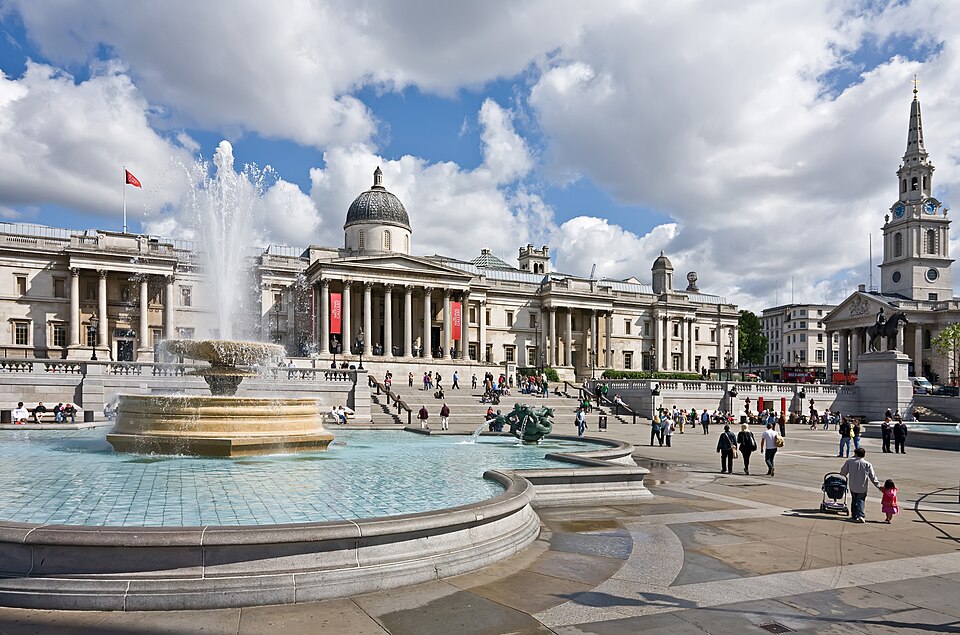
Trafalgar Square is the ceremonial public square at the top of Whitehall in the City of Westminster, owned by the King in Right of the Crown and managed by the Greater London Authority. Most of the ground it occupies was the courtyard of the Great Mews, the stables serving Whitehall Palace, from the fourteenth to the seventeenth century. The architect John Nash began developing a new street from Charing Cross to Portland Place in 1812 and intended a cultural space open to the public; the site was officially named Trafalgar Square in 1830, work began on the National Gallery in 1832, and Sir Charles Barry presented the plan that produced the square as built in 1838, including the Nelson memorial and two fountains. Nelson's Column went up in 1843, the fountains in 1845, and Landseer's bronze lions in 1867. It is also, in law, the centre of London: a point in Trafalgar Square is the datum from which distances to the capital are measured. It has been Grade I listed on the Register of Historic Parks and Gardens since 1996.
Checked 2026-08-26 · Source
The square is an inventory of monuments arranged around one column. Nelson's Column, designed by William Railton, honours Nelson's victory at the Battle of Trafalgar in 1805; the granite statue on top is by E. H. Baily, is five metres high and stands on a bronze platform cast from old guns from the Woolwich Arsenal Foundry, and four bronze panels at the base depict Nelson's battles. Landseer's four lions of 1867 guard it. Sources differ on the fountains: the Greater London Authority dates them to 1845, while Wikipedia describes the present pair as designed by Sir Edwin Lutyens between 1937 and 1939 as memorials to Admirals Jellicoe and Beatty, replacing earlier Peterhead granite fountains that went to Canada. Both accounts are printed here rather than reconciled. There are four plinths; three carry bronzes — Chantrey's equestrian George IV of 1843, Behnes's Havelock of 1861 and Adams's Napier of 1856 — and the fourth, in the northwest, is the Fourth Plinth, empty for years and now used for rotating contemporary commissions. Busts of Admirals Beatty, Jellicoe and Cunningham line the north wall, and the Imperial Measures set into the north terrace in 1876 survive by the café.
Checked 2026-08-26 · Source

Allow 40 minutes for Trafalgar Square. It is a square rather than a building, there is nothing to queue for and nothing to walk through, and 40 minutes is enough to take the north terrace steps, read the four bronze panels at the base of Nelson's Column, find the Imperial Measures by the café, look at whatever is currently on the Fourth Plinth, and sit on the fountain rim for a while. Fifteen minutes is enough for a photograph and a pass through. The reason to allow more is what adjoins it rather than what is in it: the National Gallery opens directly onto the north terrace and St Martin-in-the-Fields onto the northeast corner, and either of those turns 40 minutes into half a day. Trafalgar Square is best understood as the hinge between Whitehall, the Strand and the West End rather than as a destination in itself, and most visitors pass through it several times without planning to.
Checked 2026-08-26
Trafalgar Square is an open public square with no gates and no closing time, so the question is what is happening rather than whether it is open. Rallies and demonstrations are held frequently at weekends on political, religious and general issues; the Mayor supports that democratic tradition and grants access to the square for such causes, which means a Saturday visit may find the square full of a march rather than of tourists. Cultural celebrations, commercial events and filming are also hosted regularly and must be arranged through the Greater London Authority. Early morning is the only reliably quiet time. Two fixed dates matter: Norway has presented London with a Christmas tree every year since 1947 in gratitude for British support during the Second World War, lit at a public ceremony about two weeks before Christmas, and New Year's Eve has long drawn crowds here, although since 2003 the official fireworks have been centred on the London Eye and the South Bank instead.
Checked 2026-08-26 · Source

No admission charge and no opening hours are recorded for Trafalgar Square, and none exist to record. The square is unenclosed public space managed by the Greater London Authority, and the GLA's own page for it prints no entry charge, no gate times and no ticketing of any kind — what it does print is the process for the opposite case, that events, cultural celebrations, commercial events, rallies, demonstrations and filming must all be arranged through the GLA via its booking page. The two institutions on the square's edges are separately governed and are not covered by this entry: the National Gallery on the north side and St Martin-in-the-Fields on the northeast corner each set their own hours and their own charges, and neither was read from its operator site here. The public toilets and the café added in the 2003 works are on the square itself, at the foot of the north terrace steps; no charge for them was printed on the GLA page.
Checked 2026-08-26 · Source
Charing Cross Underground station, on the Northern and Bakerloo lines, has an exit directly in the square, which is as convenient as London gets — the Bakerloo branch was itself called Trafalgar Square until 1979. Charing Cross main line station is a minute away on the Strand side. The square sits at the top of Whitehall, so walking up from Westminster and the Houses of Parliament takes about ten minutes and is the approach that makes sense of the geography: Whitehall is the government spine and Trafalgar Square is its head. From the Strand, Covent Garden and the West End the square is reached from the east; from Piccadilly Circus it is a five-minute walk down the Haymarket. Since the July 2003 works the north terrace has been pedestrianised and connected to the National Gallery by a wide set of steps, with two lifts for step-free access, so the square is enterable from the National Gallery side without crossing traffic — which was not true before.
Checked 2026-08-26 · Source
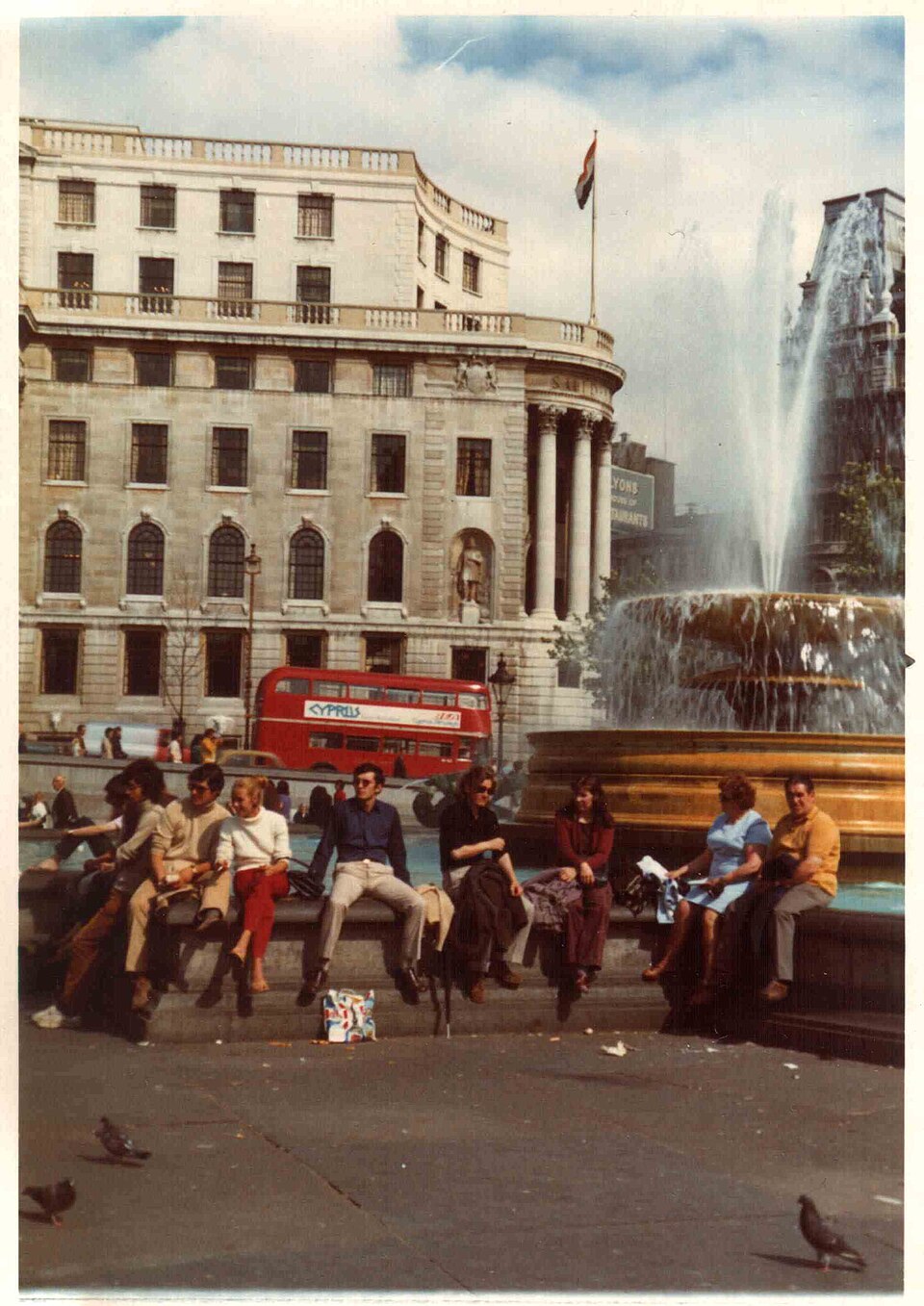
Feeding the pigeons is prohibited. Bird seed sales in the square ended in February 2001, feeding byelaws followed by 2003, and Westminster Council extended the restrictions to the pedestrianised north terrace in 2007 — this is a fine, not a request. Beyond that, the hazards are the ordinary ones of a very heavily used central square. Trafalgar Square is a centre of national protest and rallies are frequent at weekends, which is worth knowing rather than avoiding, but a visitor with small children or a tight schedule should check what is booked. The fountains operate on most days and the stonework around them is slippery when wet; climbing on the lions is common, unsupervised and how people get hurt here. The square is a working traffic island on three sides despite the north terrace pedestrianisation, so crossing to the Strand or Whitehall means crossing real roads. And the surrounding pavements are worked hard by street performers and by people running gambling games; the games are not games.
Checked 2026-08-26 · Source
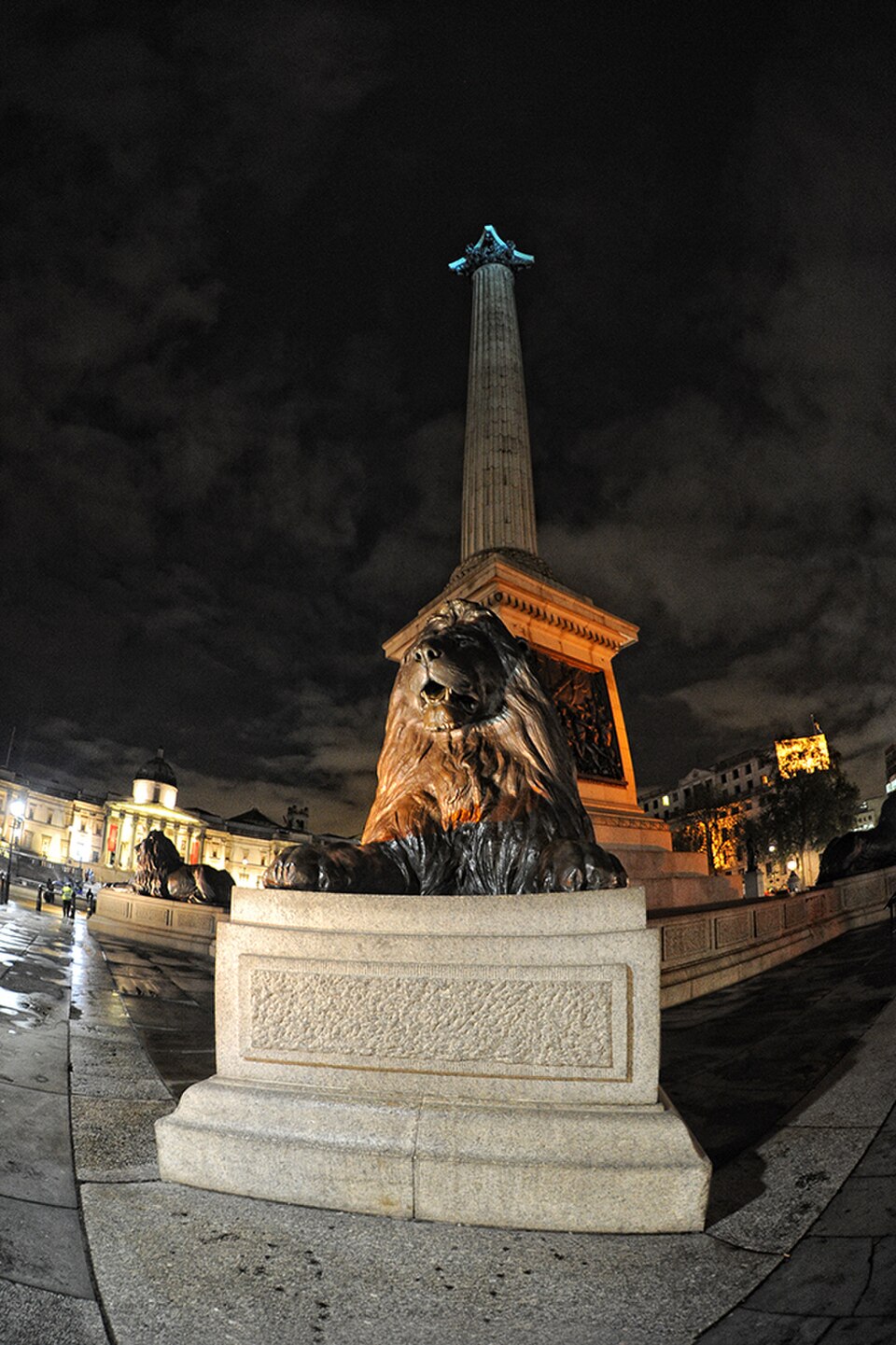
The classic frame is from the north terrace steps, looking south with Nelson's Column centred, a lion in the foreground and Whitehall running away behind — and it works best in the hour after sunrise, when the square is empty enough to see its own paving and the light comes in from the east along the Strand. In the evening the column is lit and the National Gallery front behind the photographer catches the last sun, so the reverse shot, standing at the fountains and looking north at the gallery portico, is the better dusk composition. Landseer's lions are the most photographed objects here and the least well photographed: shot from the front they are a postcard, but from directly beside the paw at ground level with the column rising behind, they become architecture. The Fourth Plinth commission changes and is worth a frame each visit for that reason alone. Long exposures of the fountains need a tripod, and a tripod in Trafalgar Square draws attention from the square's management, which handles commercial filming as a booked activity.
Checked 2026-08-26
No. Trafalgar Square is unenclosed public space managed by the Greater London Authority, and the GLA's own page for the square prints no admission charge and no opening or closing times. Events held in the square, by contrast, must be booked through the GLA.
The square is owned by the King in Right of the Crown and managed by the Greater London Authority. Westminster City Council owns the surrounding roads.
The northwest plinth was left empty for many years and is now used for rotating commissions of contemporary art, guided and monitored by a Commissioning Group Panel of specialist advisors. The other three plinths carry bronze statues of George IV, Havelock and Napier.
Charing Cross, on the Northern and Bakerloo lines, has an exit directly in the square. The Bakerloo branch was itself named Trafalgar Square station until 1979.
Feeding is banned. Bird seed sales in the square ended in February 2001, feeding byelaws were in place by 2003, and Westminster Council extended the restrictions to the pedestrianised north terrace in 2007.
The granite statue of Nelson, sculpted by E. H. Baily, is five metres high. It stands on a bronze platform made from old guns from the Woolwich Arsenal Foundry, and four bronze panels at the base of the column depict Nelson's battles.
Loading the interactive map…
The interactive map could not be loaded.
Last updated:
Source: OpenStreetMap contributors, Wikidata ·