Museum · Royal Borough of Greenwich, London
Royal Observatory
Royal Observatory Greenwich
Photograph

Opening hours
| Monday | 10:00 – 19:00 |
|---|---|
| Tuesday | 10:00 – 19:00 |
| Wednesday | 10:00 – 19:00 |
| Thursday | 10:00 – 19:00 |
| Friday | 10:00 – 19:00 |
| Saturday | 10:00 – 19:00 |
| Sunday | 10:00 – 19:00 |
Checked 2026-08-26 · Source
Access and facilities
- Step-free access · Available
Read from the OpenStreetMap access tags; anything not listed has no tag recorded.
Set the group type to family in the planner and the day window contracts to about three quarters of a solo day.
- Today
- Open today, 10:00 – 19:00
- Visit duration
- 1 hr 30 min
- Accessibility
- Step-free
- Price
- £24.00 per person
- Standing
- Must see
- Rank
- Rank 13 of 18,182
What it is
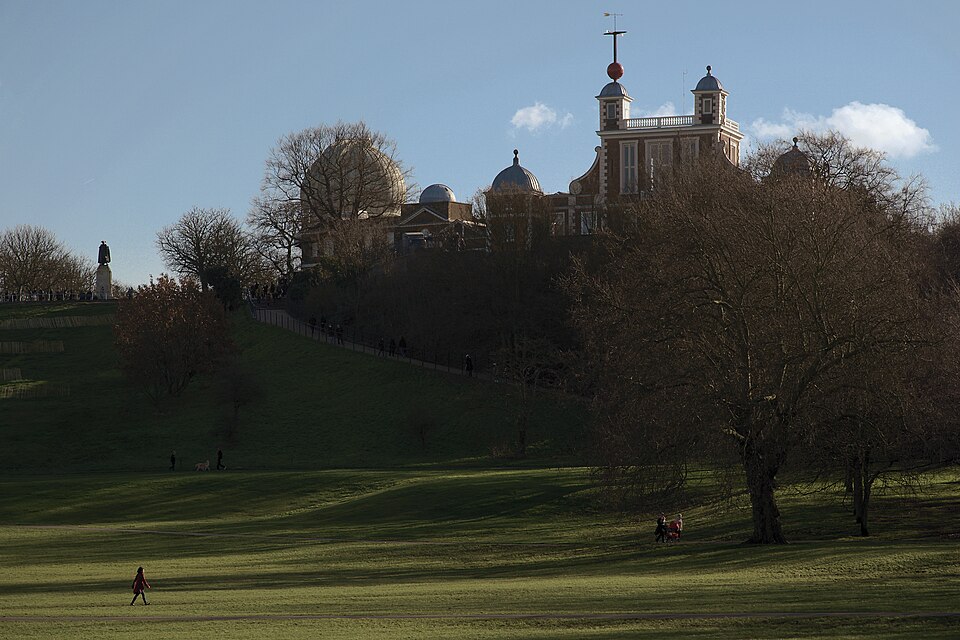
The Royal Observatory stands on the hill in Greenwich Park where Charles II commissioned it in 1675 to fix longitude at sea, and it is the reason the world sets its clocks from a line drawn through south-east London. The Astronomer Royal was created as a post at the same time, with John Flamsteed the first to hold it, charged with rectifying the tables of the heavens so that navigators could find their position. The Prime Meridian ran through the observatory's transit instrument, and in 1884 the International Meridian Conference in Washington adopted it for the whole world; Greenwich Mean Time, the ancestor of Coordinated Universal Time, takes its name from this hill. Serious astronomy left in stages during the twentieth century — the Astronomer Royal's office moved to Herstmonceux in 1948, the site was renamed the Old Royal Observatory in 1957 and only recovered its name in 1998 — and the buildings are now a museum, one of the four sites of Royal Museums Greenwich. It carries the International Astronomical Union observatory code 000, the first in the list. Unlike the free national museums at the bottom of the hill, the Observatory charges admission.
Checked 2026-08-26 · Source
What's inside
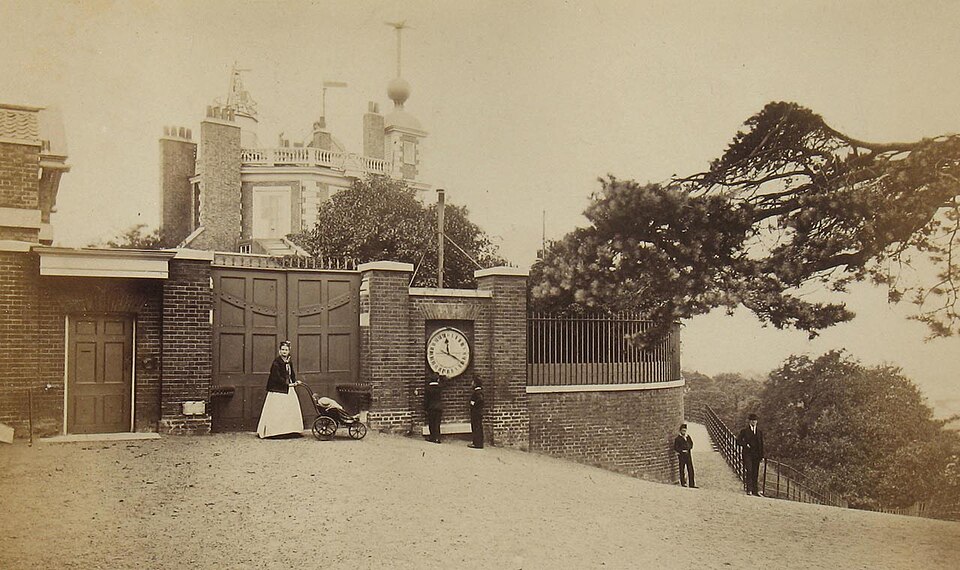
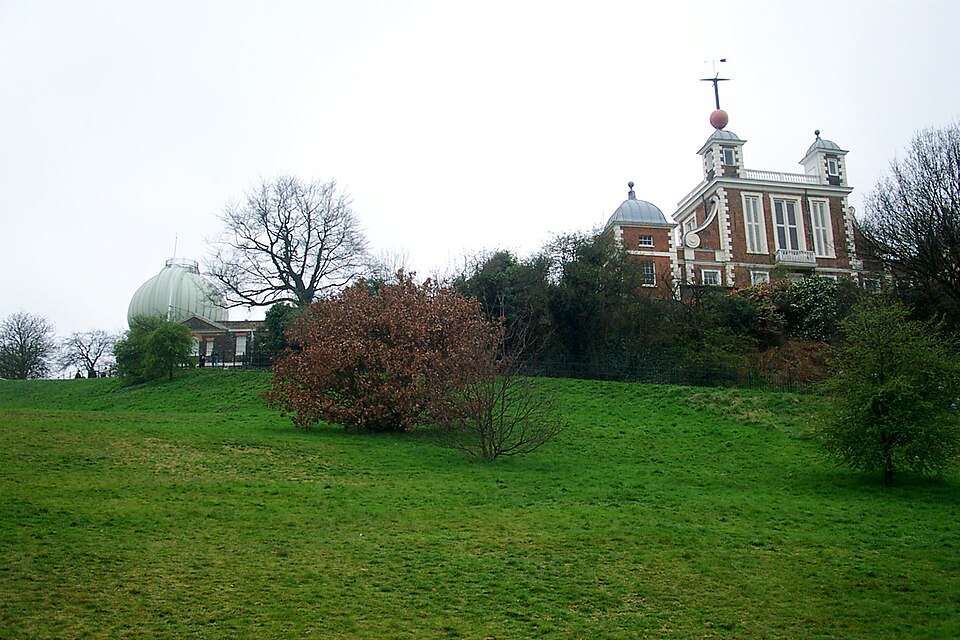
The oldest part is Flamsteed House, designed by Christopher Wren, probably with Robert Hooke, and finished in the summer of 1676 as the first purpose-built scientific research building in Britain. It was put up for £520, twenty pounds over budget, largely from recycled material and on the foundations of the earlier Duke Humphrey's Tower — which is why the building sits thirteen degrees off true north, to its first occupant's irritation. Its principal room is the Octagon Room, twenty feet high, which held two clocks by Thomas Tompion with pendulums thirteen feet long, swinging in a four-second period and keeping time to seven seconds a day, an accuracy nobody had matched. Outside, the courtyard carries the Prime Meridian line itself and the red time ball that has dropped daily since 1833 to give ships on the river a visible time signal. Under the onion dome sits the 28-inch Great Equatorial refractor of 1893, among the largest refracting telescopes anywhere. The operator's current displays include Luke Jerram's Mirror Moon. One detail rewards attention: the modern IERS Reference Meridian, adopted in 1984 and the one your phone uses, runs about 102 metres east of the brass line everybody photographs.
Checked 2026-08-26 · Source
How long to spend
Allow ninety minutes inside the Observatory, which is the duration recorded on this page, and add half an hour for the climb through Greenwich Park to reach it. The site is compact — Flamsteed House, the Meridian courtyard, the Great Equatorial dome and the astronomy galleries — and ninety minutes covers all of it at a pace that leaves room to queue for the meridian line photograph, which is the single reliable bottleneck. The audio guide is included in the ticket and adds rather than extends. A visit that also takes in the free National Maritime Museum and Queen's House at the foot of the hill becomes a half day; adding Cutty Sark on a Day Pass makes it a full one. Families should note that the walk up is steep and the reward at the top is a view rather than a playground, so it is worth doing the hill first while legs are fresh.
Checked 2026-08-26

Season and crowds
The Observatory opens daily except 24, 25 and 26 December, and its hours move with the season. In July and August it opens 10am to 7pm with last entry at 6pm; in September, 10am to 6pm with last entry at 5pm; for the rest of the year, 10am to 5pm with last entry at 4.15pm. Late afternoon in high summer is the best hour on the hill, when the coach parties have gone and the view down over the Queen's House, the Old Royal Naval College and the river towards Canary Wharf takes the low light. Winter is the honest season for the subject — it is an astronomical observatory, and the sky is dark by mid-afternoon — but the shorter 5pm closing means arriving before three. Whatever the month, the ticket carries a timed entry slot, and the operator recommends booking online in advance because tickets on the day depend on availability.
Checked 2026-08-26 · Source
Tickets
Admission from 2 September 2026 is £24 for an adult, £12 for a child aged 4 to 15, £18 for a student with valid identification, and free for under-fours and for members; £24 is the price recorded on this page. Before that date the operator ran a Greenwich Summer Savings sale at £18 adult, £9 child and £14 student, and its price table prints both the sale figure and the standard one it reverts to. A Royal Museums Greenwich Day Pass covering the Observatory and Cutty Sark was £30 adult and £15 child in the same sale, against a standard £38 and £19. The neighbouring National Maritime Museum and Queen's House are free to enter and booking is only recommended. Discounts run deep: £3 tickets for visitors receiving Universal Credit, Working Tax Credit, Child Tax Credit, Pension Credit, Employment and Support Allowance, Income Support or Jobseeker's Allowance; free carer tickets alongside a disabled visitor's ticket; and reductions with an Art Pass, Museums Association membership or English Heritage membership. The ZWO Astronomy Photographer of the Year exhibition is ticketed separately at £12 adult, £6 child and £9 student.
Checked 2026-08-26 · Source


Getting there
Greenwich is easy from central London and the Observatory is the awkward last part. The DLR stops at Cutty Sark for Maritime Greenwich in the town centre, connecting to the Underground at Bank, Canary Wharf, Tower Gateway and Stratford; the Jubilee line reaches North Greenwich, from which local buses take about 25 minutes. National Rail runs to Greenwich and Maze Hill from London Bridge and Cannon Street, and Maze Hill is the closer of the two to the Observatory. Buses 53, 54, 202 and 380 stop near it, which is the only public transport that avoids the hill. By river, Uber Boat by Thames Clippers reaches Greenwich Pier in about 20 minutes from Tower Pier, 25 from London Bridge Pier and 45 from London Eye Pier, leaving a walk up through the park. The nearest car park is inside Greenwich Park and is run by the Royal Parks; the secure car park at the National Maritime Museum, bookable with tickets, is a 20-minute walk down the hill from the Observatory. Greenwich and Maze Hill rail platforms have step-free access.
Checked 2026-08-26 · Source
What to watch out for
The hill is the thing nobody warns you about. The Observatory sits at the top of Greenwich Park and every approach except the bus climbs; the operator itself measures the National Maritime Museum car park as a twenty-minute walk back down. Step-free access is not guaranteed inside either: at the time of writing a lift is out of service and there is no step-free route to some areas of Flamsteed House, with the bookings team handling enquiries. Entry is by timed slot and tickets on the day depend on availability, so turning up unbooked in August is a gamble. Food on site is limited to stalls outside the main entrance, with the nearest café down the hill at the National Maritime Museum. And the queue at the Prime Meridian line is not for the museum but for one photograph, which is worth knowing before joining it — the line continues, unmarked and uncrowded, straight through the park below.
Checked 2026-08-26 · Source

Photography
The picture everyone comes for is a pair of feet astride the brass meridian strip, and it involves a queue in the courtyard; the picture worth having is the one taken by turning round. From the terrace outside Flamsteed House the ground falls away over the Queen's House, the twin domes of the Old Royal Naval College and the river, with Canary Wharf's towers behind — a view that compresses four centuries of London into one frame and needs nothing wider than a phone lens. It works best in the last hour before closing in summer, when the light comes in low from the west and the white Portland stone below picks it up. The Octagon Room's tall windows make the interior a high-contrast problem at midday and a pleasure in the late afternoon. The red time ball on the turret drops daily and is the only moving subject on the site; framing it against a clear sky needs a position in the courtyard well before the drop, not after.
Checked 2026-08-26
Common questions
How much is a ticket to the Royal Observatory?
From 2 September 2026 admission is £24 for an adult, £12 for a child aged 4 to 15 and £18 for a student, with under-fours and members free. During the Greenwich Summer Savings sale before that date the same tickets were £18, £9 and £14.
What time does the Royal Observatory open?
It opens daily except 24, 25 and 26 December. In July and August the hours are 10am to 7pm with last entry at 6pm; in September, 10am to 6pm with last entry at 5pm; for the rest of the year, 10am to 5pm with last entry at 4.15pm.
Is the National Maritime Museum included in the ticket?
No, but it does not need to be: the National Maritime Museum and the Queen's House are free to enter, with booking recommended. A Royal Museums Greenwich Day Pass combines the Royal Observatory with the historic ship Cutty Sark.
Can I stand on the Prime Meridian without a ticket?
The marked meridian line in the Meridian Courtyard is inside the ticketed part of the Royal Observatory. The meridian itself continues through Greenwich Park below, where it is unmarked and free to cross.
How steep is the walk up?
Steep enough to plan for. The Observatory stands at the top of Greenwich Park, and Royal Museums Greenwich puts the National Maritime Museum car park a twenty-minute walk down the hill. Buses 53, 54, 202 and 380 stop near the Observatory and are the only route that avoids the climb.
Is the Royal Observatory step-free?
Not entirely. At the time of writing a lift is out of service and there is no step-free access to some areas of Flamsteed House; Royal Museums Greenwich asks visitors with access questions to contact its bookings team before travelling.
Where it is
Loading the interactive map…
The interactive map could not be loaded.
Nearby
In Royal Borough of Greenwich
Same category
Fit it into a plan
External links
Last updated:
Source: OpenStreetMap contributors, Wikidata ·