Luogo naturale · Градска општина Врачар, Belgrado
Crveni Krst
Црвени крст
Fotografia

- Oggi
- Orari non registrati
- Durata della visita
- 1 ora
- Accessibilità
- Non registrato
- Prezzo
- Non registrato
- Posizione
- Notevole
- Rango
- Classifica 1,465 di 1,739
Informazioni su Crveni Krst
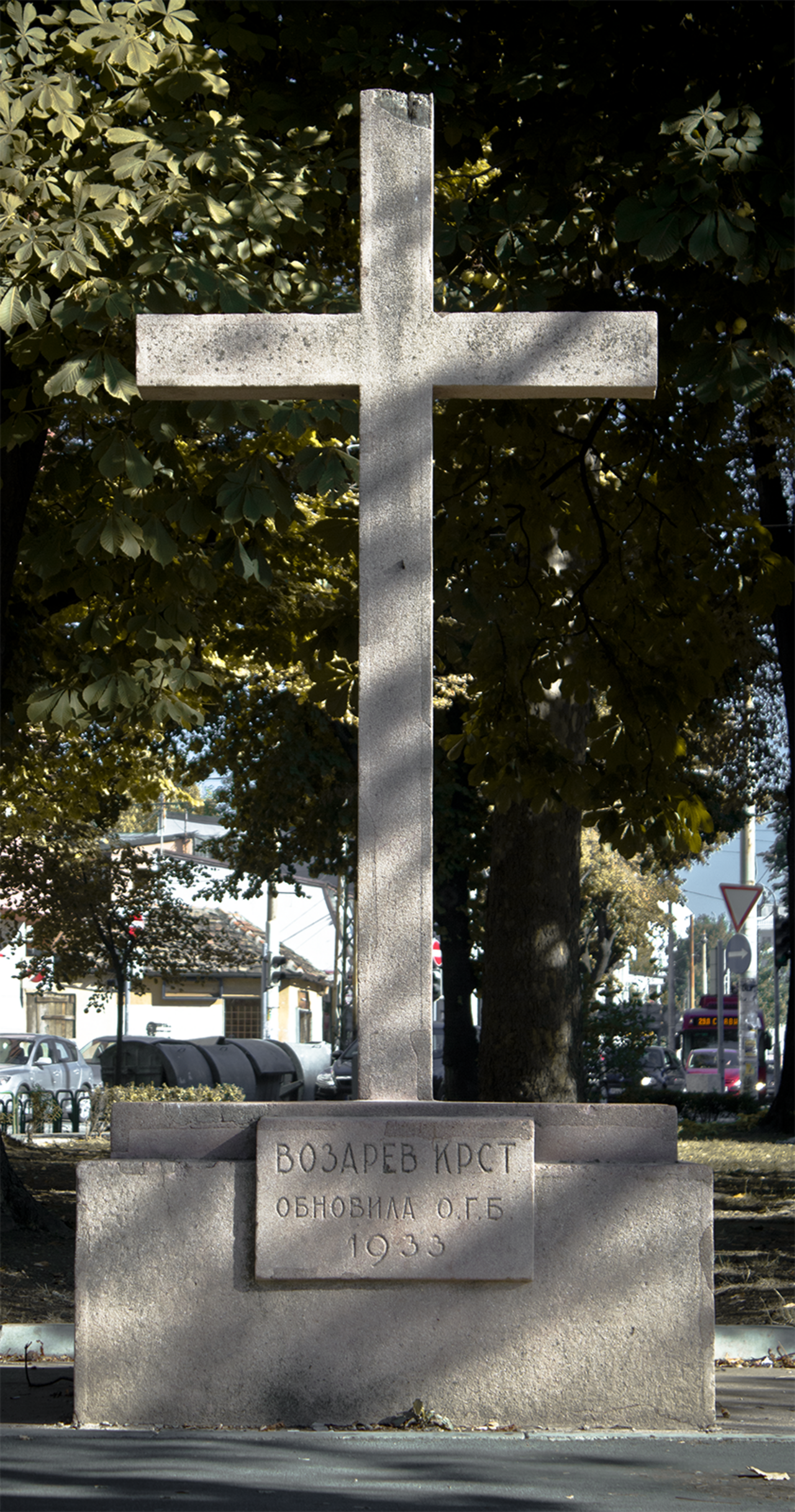
Crveni Krst is a red artificial-stone cross in a small public park in Belgrade’s Vračar municipality, between Vojvode Šupljikca Street and Mileševska Street. Its importance is unusually local: the monument is the physical reference behind the neighbourhood’s name, Crveni Krst, meaning “Red Cross”. This outdoor landmark is woven into an ordinary residential setting, where the historical object and the surrounding streets form one experience. Rather than presenting a collection or formal memorial complex, it preserves a single recognisable object whose name became part of Belgrade’s urban vocabulary. The setting makes the cross especially useful for travellers who want to understand how a modest historic marker can shape the identity of an entire neighbourhood.
Controllato 2026-09-02 · Fonte
Cosa c'è dentro
The focus at Crveni Krst is the cross and the public park around it, rather than a collection of indoor displays. The story begins in 1847, when Belgrade bookseller and printer Gligorije Vozarević erected an original wooden cross on his property. The Association of Saint Sava later replaced it with a red cross, and the deteriorated wooden structure was replaced in 1933 by the red artificial-stone cross visible today. The landmark therefore offers one concrete monument and a layered neighbourhood history. Its interest lies in the sequence of replacements and in the way the object became part of the public identity of the district.
Controllato 2026-09-02 · Fonte
Quanto tempo dedicare
Plan around 10 to 20 minutes for the monument itself. That is enough to reach the cross through the park, view it from more than one angle and take in the relationship between the landmark and the two surrounding streets. Allow longer if Crveni Krst is one stop in a Vračar walking route, since the wider neighbourhood provides the extra time. A slower visit can include close observation of the cross’s material, a pause in the park and a short mental reconstruction of its earlier wooden form. Crveni Krst also works as a brief historical pause between other Belgrade sights or transport connections, especially when your route already passes through this part of Vračar.
Controllato 2026-09-02 · Fonte
Stagione e folla
The official city research describes Crveni Krst as an open-air monument in a public park and states that it is accessible at all times, with no scheduled closure days. That makes the landmark flexible within a Belgrade itinerary rather than dependent on a museum timetable. Daylight is the most practical time for seeing the cross and following the park approaches. Morning or late afternoon may feel calmer, but those are visitor preferences, not published restrictions. The open setting lets you place the stop beside a longer Vračar walk without reserving a timed visit.
Controllato 2026-09-02 · Fonte
Biglietti
Crveni Krst is an outdoor landmark in a public park, so the visit is centred on viewing the monument in its neighbourhood setting. Plan the stop as part of a walk through Vračar, with any separate costs belonging to transport, food or other attractions on your itinerary. The absence of a recorded admission value should not be confused with a published price statement; the available operator material simply does not document one for Crveni Krst.
Controllato 2026-09-02 · Fonte
Come arrivare
The official city transport operator lists bus 83 to the Crveni Krst terminus. The monument is in the park between Vojvode Šupljikca Street and Mileševska Street, so those two streets are the useful final-location references after reaching the neighbourhood. From the surrounding public streets, continue along the park paths to the cross. Use the terminus as the named public-transport target, then orient yourself by the two streets rather than expecting a separate attraction entrance or reception point. This is a neighbourhood arrival followed by a short walk through public space.
Controllato 2026-09-02 · Fonte
A cosa prestare attenzione
Crveni Krst is a small outdoor monument in ordinary public space, so the visit is shaped by the surrounding park and neighbourhood activity. The documented access description identifies approaches from public streets and park paths and notes limited step-free access because there is no purpose-built accessible entrance. Visitors should keep clear of paths used by local park users while moving around or taking photographs. The compact setting offers little separation between sightseeing and daily movement, so treat the area as a shared public space. Weather can also affect an outdoor stop, particularly after rain when paths may be wet.
Controllato 2026-09-02 · Fonte
Fotografia
Photograph Crveni Krst as both an object and a neighbourhood marker. A close view can show the red artificial-stone material associated with the 1933 replacement, while a wider frame can include the small park and the space between Vojvode Šupljikca Street and Mileševska Street. Daylight should make the cross easier to read visually. Leave the park paths clear, and use several distances to show how this monument sits inside the everyday geography that took its name from the red cross. Try one image that makes the cross dominant and another that lets the surrounding streets explain its scale.
Controllato 2026-09-02 · Fonte
Domande comuni
Where is Crveni Krst located?
The monument stands in a park between Vojvode Šupljikca Street and Mileševska Street in Belgrade’s Vračar municipality.
When was the original Crveni Krst erected?
The original wooden cross was erected in 1847 by Belgrade bookseller and printer Gligorije Vozarević on his property.
Who erected the original cross?
Gligorije Vozarević, a Belgrade bookseller and printer, erected the original wooden cross on his property.
Why is the area called Crveni Krst?
The Association of Saint Sava later replaced the wooden cross with a red cross, and the neighbourhood took the name Crveni Krst, meaning “Red Cross”.
What happened to the original wooden cross?
After the wooden cross deteriorated, it was replaced in 1933 with a cross made of red artificial stone, the form associated with the monument today.
Which public transport serves Crveni Krst?
Belgrade city bus line 83 serves the Crveni Krst terminus, with the route information covering Vojvode Šupljikca and Mileševska.
Dov'è
Caricamento della mappa interattiva…
Impossibile caricare la mappa interattiva.
Nelle vicinanze
Inseriscilo in un piano
Collegamenti esterni
Ultimo aggiornamento:
Fonte: Contributori di OpenStreetMap, Wikidata ·