Local de natureza · Градска општина Врачар, Belgrado
Crveni Krst
Црвени крст
Fotografia

- Hoje
- Horário não registado
- Duração da visita
- 1 hora
- Acessibilidade
- Não registrado
- Preço
- Entrada gratuita
- Posição
- Notável
- Classificação
- Classificação 1,465 de 1,739
Sobre Crveni Krst
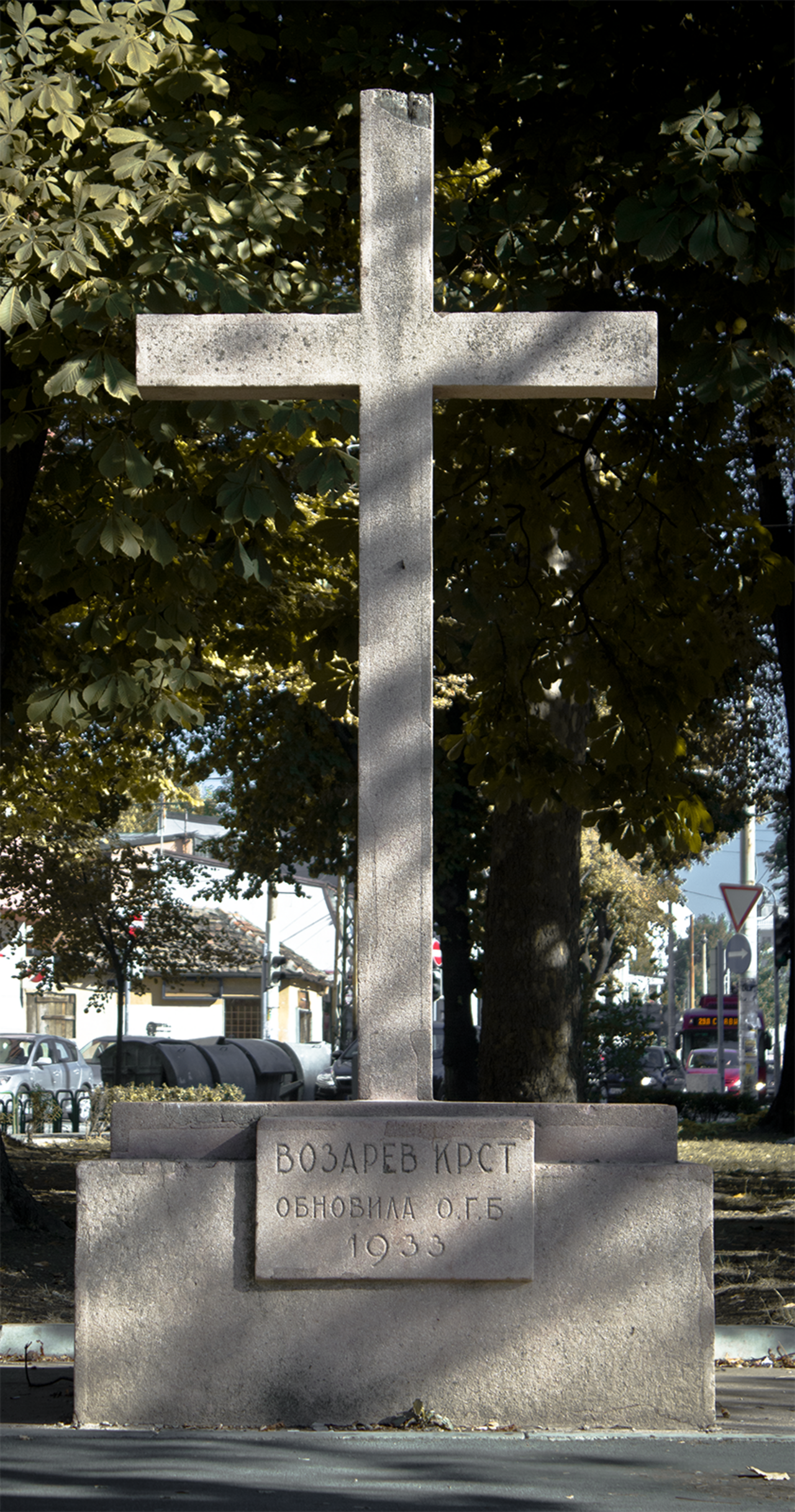
Crveni Krst is a historic red-cross monument set in a small public park in Belgrade’s Vračar municipality. The present cross stands between Vojvode Šupljikca Street and Mileševska Street, where surrounding streets and park paths provide the approach. It is an open-air landmark rather than a museum, memorial complex or staffed visitor attraction, so the visit is centred on seeing the monument in its neighbourhood setting and understanding how it gave the district its name. The compact setting makes Crveni Krst easy to add to a walk through Vračar, particularly for visitors interested in local history that remains part of everyday public space.
Verificado em 2026-09-02 · Fonte
O que há dentro
There is no interior exhibition, ticketed entrance or visitor building at Crveni Krst. The focus is the cross itself and the modest park around it. Its story begins with a wooden cross erected in 1847 by Gligorije Vozarević, a Belgrade bookseller and printer, on his property. The Association of Saint Sava later replaced it with a red cross, while the deteriorated wooden structure was replaced in 1933 by the red artificial-stone cross seen today. The landmark therefore combines a specific object with a layered neighbourhood story: the name Crveni Krst, meaning “Red Cross”, grew from the replacement cross and became attached to the surrounding area. Visitors should expect a brief outdoor historical encounter, not galleries or displays.
Verificado em 2026-09-02 · Fonte
Quanto tempo dedicar
Most visitors need only a short stop: about 10 to 20 minutes is enough to walk through the park, view the cross from different angles and read the surrounding streets as part of the landmark’s context. Allow longer if you are exploring Vračar on foot, photographing architectural details or combining the monument with nearby neighbourhood sights. Because the site is open-air and compact, your visit length depends more on the wider walk than on the monument itself. A short visit works well between transport connections or as a pause before continuing towards another Belgrade sight, while a slower neighbourhood walk gives the monument more historical meaning.
Verificado em 2026-09-02 · Fonte
Temporada e multidões
Crveni Krst has no scheduled closure days because it is an open-air monument in a public park. It can therefore be included flexibly in a Belgrade walking route rather than planned around museum opening times. Daylight is the most practical choice for seeing the cross clearly and for negotiating the park paths. Visit after rain with care, since outdoor surfaces may be wet, and remember that the surrounding public space can feel different at quieter and busier times. Morning or late afternoon can make the park feel calmer, but there is no supplied operator timetable that limits access to a particular part of the day. The monument remains a public-space stop rather than an appointment-based attraction.
Verificado em 2026-09-02 · Fonte
Ingressos
Viewing Crveni Krst is free, and no ticket is required. There is no admission desk, timed entry system or paid indoor programme associated with the monument in the supplied operator research. Treat it as a public-space stop: you can pause beside the cross without budgeting for entry, while any separate costs belong to transport, food or other attractions added to your Belgrade itinerary. This makes it an easy short visit between larger paid sights. Free access is especially useful when building a day around several brief landmarks, because Crveni Krst adds local historical interest without a booking, queue or admission decision.
Verificado em 2026-09-02 · Fonte
Chegando lá
The official city transport operator lists bus 83 to the Crveni Krst terminus. The route information places the terminus in the same neighbourhood, with the site itself in the park between Vojvode Šupljikca Street and Mileševska Street. From the surrounding public streets, continue along the park paths to the cross. Check the direction and current stop information on the operator’s route page before travelling, especially if connecting from another part of Belgrade. Bus 83 is the clearest specifically documented public-transport reference for this monument, while the park’s position between the two named streets provides the useful final-location landmark once you arrive in the area. The supplied research does not establish a dedicated car park.
Verificado em 2026-09-02 · Fonte
O que observar
Crveni Krst is a small outdoor monument, not a fully managed attraction. The supplied access research describes surrounding public streets and park paths but notes no visitor building or purpose-built accessible entrance; step-free access is therefore limited rather than guaranteed for every approach. Keep the visit considerate of ordinary park users, avoid blocking paths for photographs and do not expect toilets, staffed assistance, indoor shelter or a dedicated information desk at the monument. The public-park setting also means conditions can vary with weather and ordinary neighbourhood activity.
Verificado em 2026-09-02 · Fonte
Fotografia
The cross is best photographed as a neighbourhood landmark rather than as an isolated object. Use the park paths and the open space between Vojvode Šupljikca Street and Mileševska Street to vary your distance, then include a little of the surrounding streets to show why the monument belongs to the identity of Crveni Krst. Daylight gives the red artificial-stone surface its clearest appearance. Be mindful of pedestrians and avoid standing in access paths while framing close details. A wider composition can explain the monument’s public-park setting, while a closer view can bring out the material and colour that distinguish the 1933 replacement.
Verificado em 2026-09-02 · Fonte
Perguntas comuns
Where is Crveni Krst located?
The monument is in a park between Vojvode Šupljikca Street and Mileševska Street in Belgrade’s Vračar municipality.
When was Crveni Krst erected?
The original wooden cross was erected in 1847 by Gligorije Vozarević on his property.
Who erected Crveni Krst?
Belgrade bookseller and printer Gligorije Vozarević erected the original wooden cross on his property.
Why is the surrounding area called Crveni Krst?
The Association of Saint Sava later replaced the wooden cross with a red cross, giving the neighbourhood its present name, meaning “Red Cross”.
What happened to the original cross?
The deteriorated wooden cross was replaced in 1933 with a cross made of red artificial stone.
What public transport serves Crveni Krst?
Bus line 83 serves the Crveni Krst terminus; the official route runs through Vojvode Šupljikca and Mileševska.
Onde está
A carregar o mapa interativo…
Não foi possível carregar o mapa interativo.
Perto
Encaixe isso em um plano
Links externos
Última atualização:
Fonte: Colaboradores do OpenStreetMap, Wikidata ·