


1 min walk · Paris 6e Arrondissement
Blanche of Castille
- Notable
- Art and culture venue
Language · 1 published
Historic monument · Paris 6e Arrondissement, Paris
| Monday | 07:30 – 20:15 |
|---|---|
| Tuesday | 07:30 – 20:15 |
| Wednesday | 07:30 – 20:15 |
| Thursday | 07:30 – 20:15 |
| Friday | 07:30 – 20:15 |
| Saturday | 07:30 – 20:15 |
| Sunday | 07:30 – 20:15 |
Checked 2026-08-24 · Source
Read from the OpenStreetMap access tags; anything not listed has no tag recorded.
Set the group type to family in the planner and the day window contracts to about three quarters of a solo day.
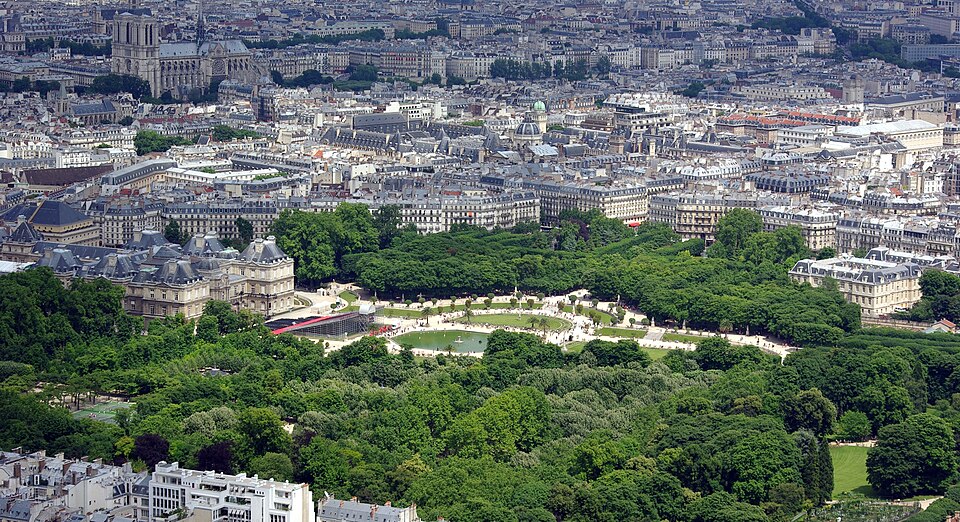
The Jardin du Luxembourg is a 23-hectare formal garden on the Left Bank, laid out from 1612 for a queen who wanted a Florentine garden in Paris and built by the French Senate, which still owns the palace at its edge.
Marie de' Medici, widow of Henri IV and regent for the young Louis XIII, commissioned both the garden and the adjoining Luxembourg Palace after her husband's assassination, modelling the design on the Boboli Gardens of her native Florence. The garden was expanded and formalised further in the 19th century under Haussmann's renovation of Paris, taking roughly its current shape and boundaries by the 1860s.
The Luxembourg Palace itself has housed the French Senate since 1799, making the garden the grounds of a working government building rather than a purely public park, though public access to the garden itself has been continuous since the 17th century.
Checked 2026-08-24 · Source
A central octagonal pond, formal terraces and parterres around the palace, and a looser, tree-lined English-style section to the south and west.
The formal terraces nearest the palace are laid out symmetrically in the French style, lined with statues of French queens and notable women, while the octagonal basin in front of the palace is where generations of Parisian children have sailed rented toy sailboats, a tradition that continues today. The Medici Fountain, a shaded grotto-style fountain from the garden's earliest years, sits in a quiet corner planted with plane trees.
Beyond the formal core, the garden holds tennis courts, an apiary, an orchard of old French apple and pear varieties, a puppet theatre, and the more informally planted English garden to the west — enough range of use that Parisians treat it as a genuine neighbourhood park rather than only a monument to walk through.
Checked 2026-08-24 · Source
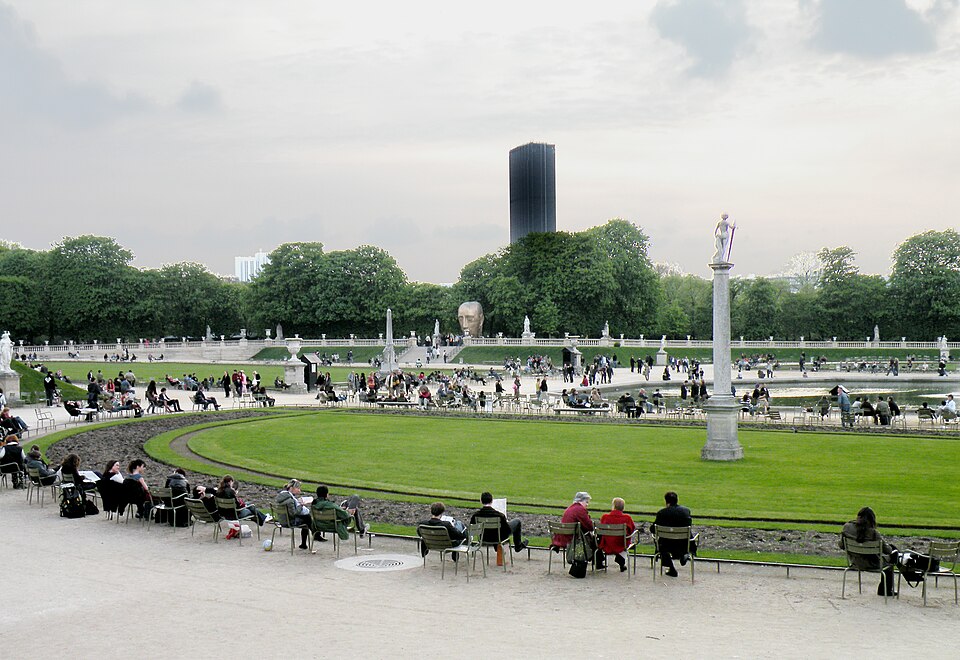
An hour for a walk through the formal core and around the pond; half a day if the point is simply to sit, as many locals do.
The garden rewards unhurried use more than a checklist visit — a bench with a book, a rented sailboat for a child at the pond, or a walk through the orchard are as much the point as seeing any specific feature. A brisk circuit of the main paths and the palace facade takes well under an hour.
The Luxembourg Museum, in a separate wing of the palace complex, runs its own ticketed temporary exhibitions and is a separate visit with its own timing.
Checked 2026-08-24 · Source
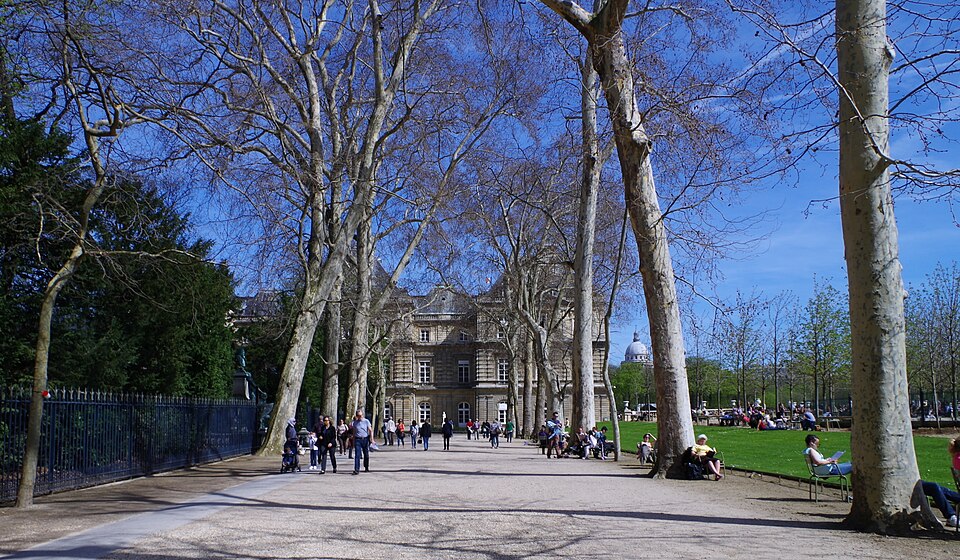
Any clear day, though spring and early summer show the garden at its most planted, with the formal beds and the fruit orchard both in flower.
The garden is free and unticketed, so there is no booking to plan around, only the crowd, which builds through a sunny afternoon and thins by early evening. Gates close at dusk and the closing hour shifts with the season, tightening the window in winter.
Weekday mornings are the quietest time to see the formal terraces without the lunchtime crowd of nearby office workers and students, since the garden sits between the Sorbonne and several government buildings.
Checked 2026-08-24 · Source
The garden itself is free, with no ticket and no timed entry.
The Musée du Luxembourg, in a wing of the palace, runs separately ticketed temporary exhibitions with rates not published on the sources this page uses and not reproduced here. The palace itself, the Senate's seat, is not generally open to the public.
Chair and sailboat rental at the pond charges a small fee, paid on the spot rather than booked in advance.
Checked 2026-08-24 · Source

Bounded by the Boulevard Saint-Michel, Rue de Vaugirard and Rue Guynemer, in the 6th arrondissement of the Left Bank.
Luxembourg station on RER B sits at the garden's northeast corner and is the most direct approach from central Paris or Charles de Gaulle airport on the same line. Notre-Dame-des-Champs and Saint-Sulpice on Métro line 4 and 12 are a short walk from the western and northern edges.
The garden sits between the Sorbonne to the east and Saint-Sulpice to the north, making it a natural midpoint on a walk across the Left Bank.
Checked 2026-08-24 · Source
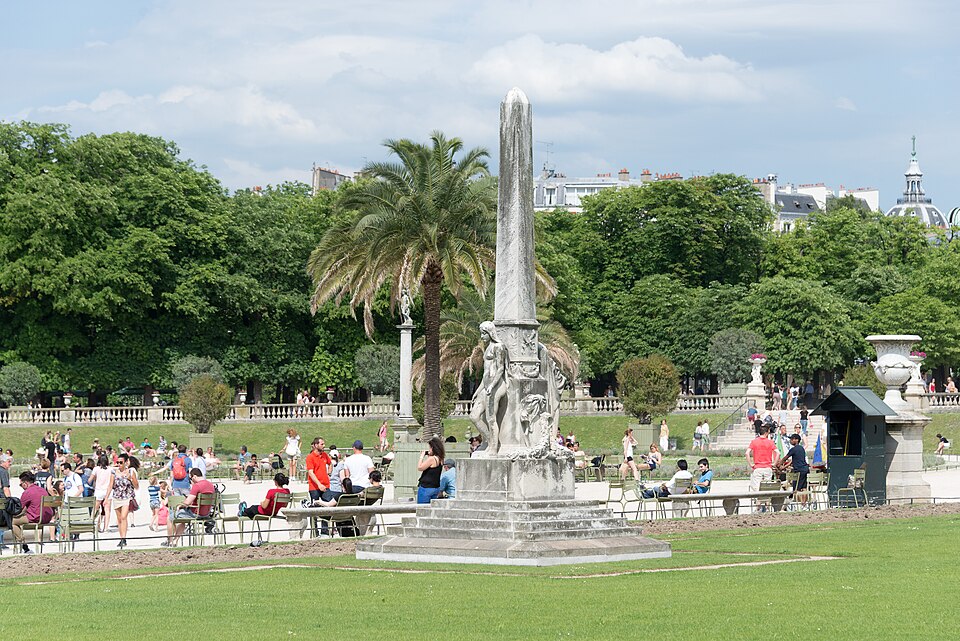
The gates close at dusk on a schedule that shifts through the year, and a walk that starts too late in the afternoon in winter can be cut short by closing rather than by choice.
The lawns are only partially open for sitting or picnicking — much of the formal grass is fenced and for view only, unlike the more permissive lawns of some other Paris parks, which surprises visitors expecting to spread out anywhere.
The garden is genuinely popular with Parisians rather than only tourists, and the best benches and the sailboat pond fill up on the first warm weekend of spring.
Checked 2026-08-24 · Source
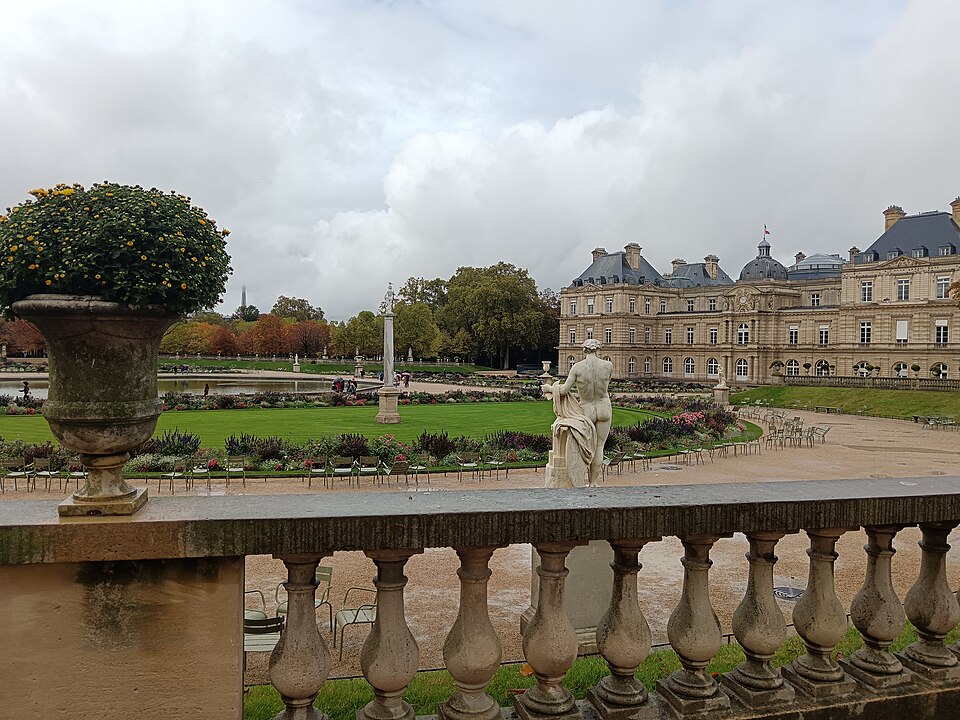
The octagonal pond with the Luxembourg Palace behind it, shot from the terrace above the basin, is the garden's signature image and includes the sailboats when they are running.
The Medici Fountain, in its shaded grotto setting with the long reflecting pool in front of it, photographs best in the dappled light under its plane trees rather than in direct midday sun.
The tree-lined allées running south from the palace toward the orchard give a formal French-garden perspective shot, especially with the trees bare in winter, when the geometry of the planting is easiest to read.
Checked 2026-08-24 · Source
Yes, entry to the garden is free and unticketed. Only the Musée du Luxembourg's temporary exhibitions, in a separate wing of the palace, are ticketed.
Marie de' Medici, widow of Henri IV, commissioned it from 1612, modelling it on the Boboli Gardens of her native Florence.
It has housed the French Senate since 1799 and is not generally open to the public.
Yes, chair and sailboat rental at the octagonal basin charges a small fee paid on the spot, a tradition going back generations.
At dusk, on a schedule that shifts through the year, tightening the visiting window in winter.
Not everywhere — much of the formal lawn near the palace is fenced for view only, unlike some other Paris parks with more open lawns.
Loading the interactive map…
The interactive map could not be loaded.
Last updated:
Source: OpenStreetMap contributors, Wikidata ·