Monumento histórico · Neubau, Vienna
MuseumsQuartier
Fotografía

Acceso e instalaciones
- Baños accesibles · Disponible
- Acceso sin pasos · Disponible
Leer desde las etiquetas de acceso de OpenStreetMap; todo lo que no aparece en la lista no tiene ninguna etiqueta registrada.
Establezca el tipo de grupo en familia en el planificador y la ventana del día se contraerá a aproximadamente tres cuartos de un día en solitario.
- hoy
- Horario no registrado
- Duración de la visita
- 30 min
- Accesibilidad
- Sin escalones
- Precio
- No registrado
- Posición
- Imprescindible
- Rango
- Rango 9 de 5,640
que es
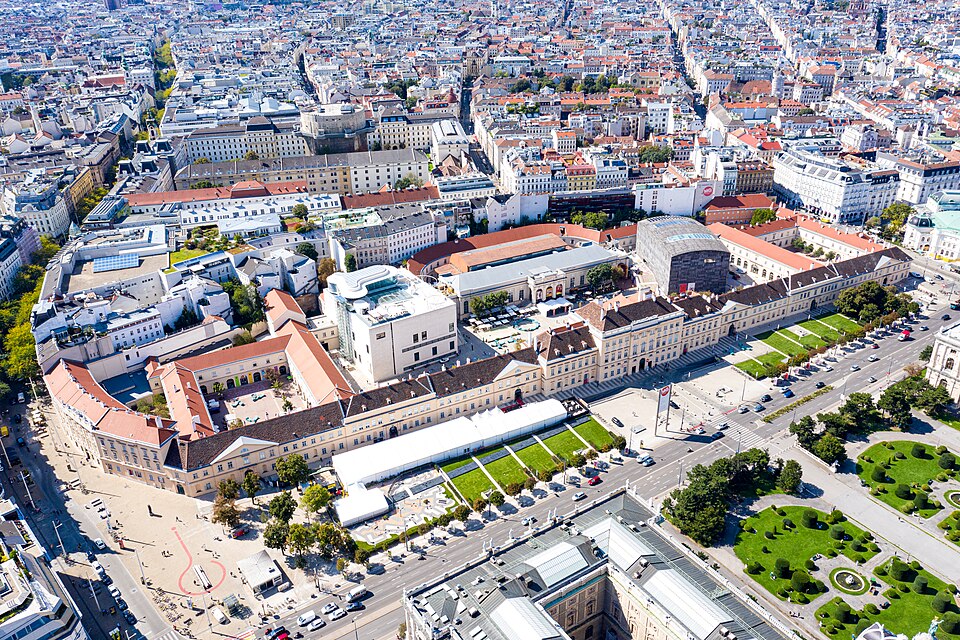
The MuseumsQuartier is one of the largest cultural districts in the world by area, roughly 90,000 square metres, built inside the former imperial court stables, the Hofstallungen, originally constructed in the early eighteenth century under plans associated with Johann Bernhard Fischer von Erlach.
The complex opened in its current form in 2001 after a redevelopment by the architects Ortner & Ortner, who inserted contemporary stone and glass buildings — the Leopold Museum's white cube and the black basalt-lava Mumok — into and around the preserved Baroque stable wings rather than replacing them.
It now houses more than twenty cultural institutions, from major art museums to independent theatres and a children's museum, making it a single address for a wide slice of Vienna's contemporary and modern cultural programming.
Comprobado 2026-08-24 · Fuente
¿Qué hay dentro?
The central courtyard is the complex's social space, dominated in warmer months by the "Enzis," long modular seating units that visitors use to sit, lie or gather in groups rather than move quickly through.
The Leopold Museum and Mumok anchor the two ends of the main courtyard as the district's largest art institutions; Kunsthalle Wien runs contemporary exhibitions in its own galleries, the Architekturzentrum Wien covers architecture and urban planning, and ZOOM Kindermuseum runs hands-on programming for children.
Quartier21, a looser cluster of studios and smaller creative spaces along the courtyard's side wings, rotates independent and project-based exhibitions rather than holding a fixed permanent collection.
Comprobado 2026-08-24 · Fuente


Cuánto tiempo dedicar
Thirty minutes covers a walk through the main courtyard and its Baroque and modern architecture without entering any single museum.
A visitor planning to see two or three of the constituent museums should treat it as a half-day to full-day destination, since each institution is a separate, fully staffed museum with its own pace rather than a single combined visit, and moving between two museums across the courtyard adds walking time on top of each museum's own visit length.
Comprobado 2026-08-24


Temporada y multitudes
The courtyard itself is open air and accessible at all hours as a public space; it is busiest on summer evenings when the Enzis fill with people staying for drinks from the surrounding bars after the museums close.
Individual museum opening hours vary institution by institution and are Not recorded here; each should be checked on its own site rather than assumed to follow one complex-wide schedule, since a venue open late on a Thursday does not mean its neighbour is too.
Comprobado 2026-08-24
Entradas
Walking through the courtyard itself is free; each museum inside the complex sells its own admission separately.
A combined MuseumsQuartier ticket covering several venues at a reduced total price is sometimes available; current combination-ticket pricing is Not recorded here and should be checked at the complex's own visitor centre, since it is separate again from any single museum's own annual membership offer.
Comprobado 2026-08-24


Llegar allí
U2 Museumsquartier station opens directly onto the Museumsplatz entrance. The complex is also a five-minute walk from U2/U3 Volkstheater station, on the opposite side, and from several tram and bus stops along the Ring.
There is no dedicated large visitor car park attached to the complex; nearby underground parking exists but on-street parking in the surrounding streets is limited and metered, and Mariahilfer Straße, one of Vienna's main shopping streets, adjoins the complex on its western side.
Comprobado 2026-08-24 · Fuente


Que tener en cuenta
Because each museum inside the complex keeps its own hours, a visitor arriving late in the afternoon may find one institution still open and its neighbour already closed for the day.
The courtyard becomes genuinely crowded on summer weekend evenings, particularly during festivals and outdoor film or music programming, when finding a free Enzi to sit on takes patience.
Some of the smaller bars and kiosks in the Quartier21 wings operate cash-only, and finding a specific small venue among the complex's many entrances and side wings takes longer than it looks on a map.
Comprobado 2026-08-24

Fotografía
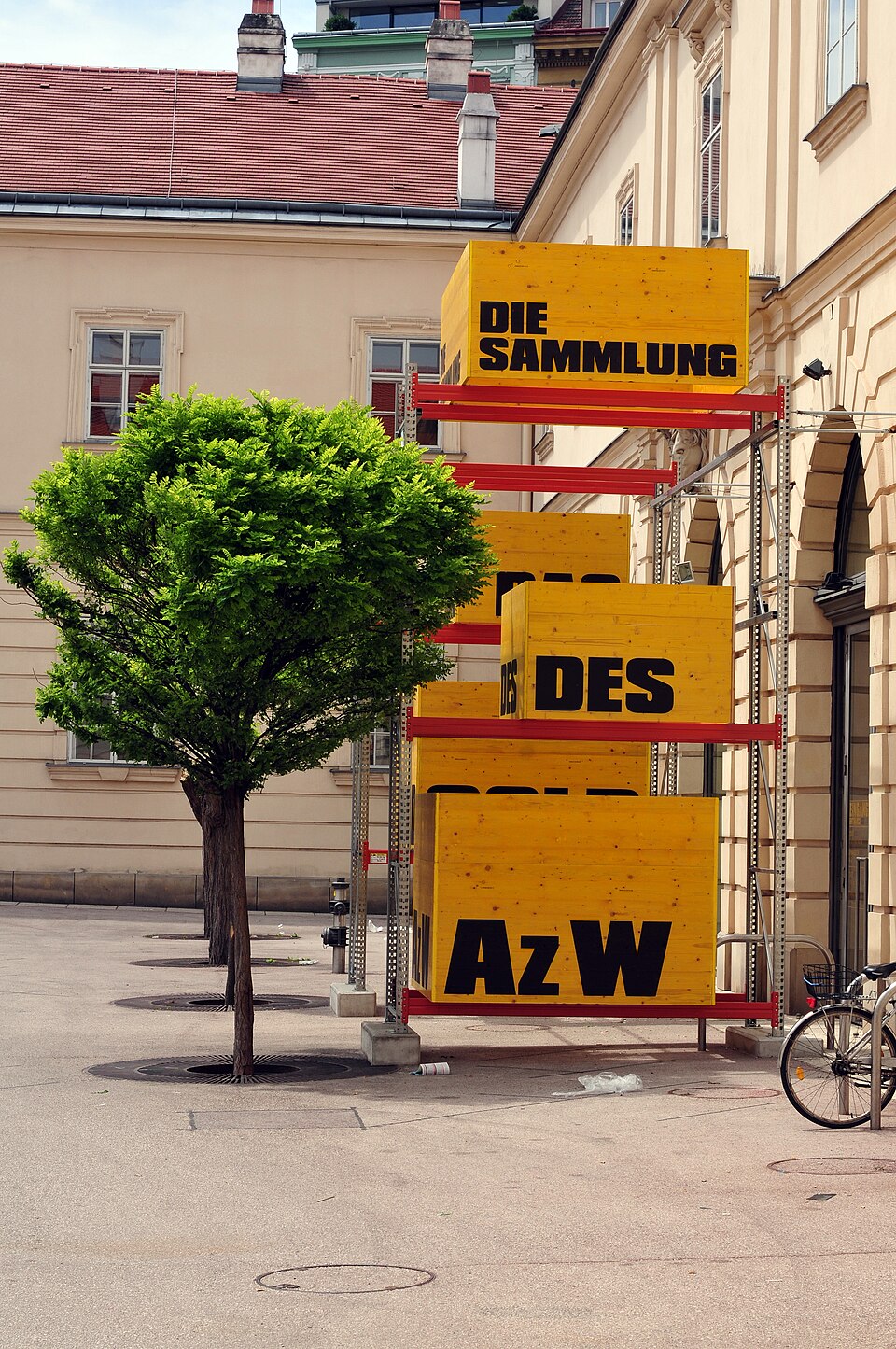
The contrast between the pale Baroque stable façade facing Museumsplatz and the stone-and-glass modern buildings behind it is the defining image of the complex, best shot from just inside the entrance looking back toward both at once.
The courtyard's Enzis, scattered with people in warm-weather light, are the shot that captures the district's use as a social space rather than only an architectural one; evening light after the museums close but before the courtyard empties gives the softest result.
Comprobado 2026-08-24
Preguntas comunes
What was this complex before it was a museum district?
The imperial court stables, the Hofstallungen, originally built in the early eighteenth century, later redeveloped and opened as the MuseumsQuartier in 2001.
What are the Enzis?
Long modular seating units in the central courtyard that visitors use to sit, lie or gather, a defining feature of the complex in warm weather.
Is entry to the courtyard free?
Yes, the courtyard itself is a public space; only the individual museums inside charge admission.
How many institutions are inside the complex?
More than twenty, ranging from major art museums to independent theatres and a children's museum.
Do all the museums close at the same time?
No, each institution keeps its own hours, so it is worth checking the specific museum rather than assuming a complex-wide schedule.
How big is the complex?
Roughly 90,000 square metres, making it one of the largest cultural districts in the world by area.
donde esta
Cargando el mapa interactivo…
No se ha podido cargar el mapa interactivo.
cerca
Encajarlo en un plan
Enlaces externos
Última actualización:
Fuente: Colaboradores de OpenStreetMap, Wikidata ·