Monumento histórico · Landstraße, Vienna
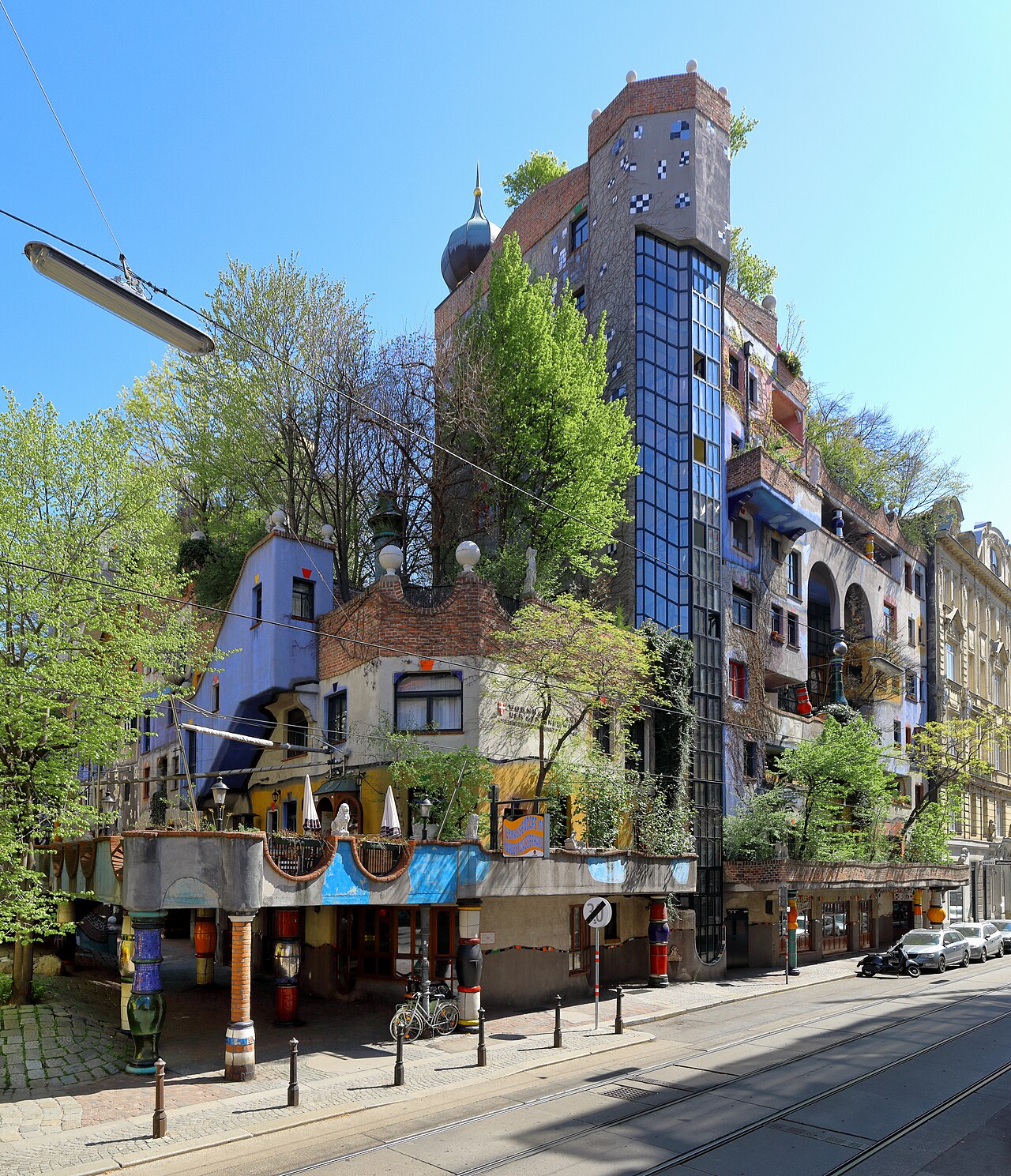
Hundertwasserhaus
Fotografía
.JPG)
Acceso e instalaciones
- Acceso sin pasos · Limitado
Leer desde las etiquetas de acceso de OpenStreetMap; todo lo que no aparece en la lista no tiene ninguna etiqueta registrada.
Establezca el tipo de grupo en familia en el planificador y la ventana del día se contraerá a aproximadamente tres cuartos de un día en solitario.
- hoy
- Horario no registrado
- Duración de la visita
- 15 min
- Accesibilidad
- Parcialmente accesible sin escalones
- Precio
- No registrado
- Posición
- Imprescindible · Sitio patrimonial
- Rango
- Rango 15 de 5,640
Acerca de Hundertwasserhaus
The Hundertwasserhaus is a council block, and people fly to Vienna to look at it.
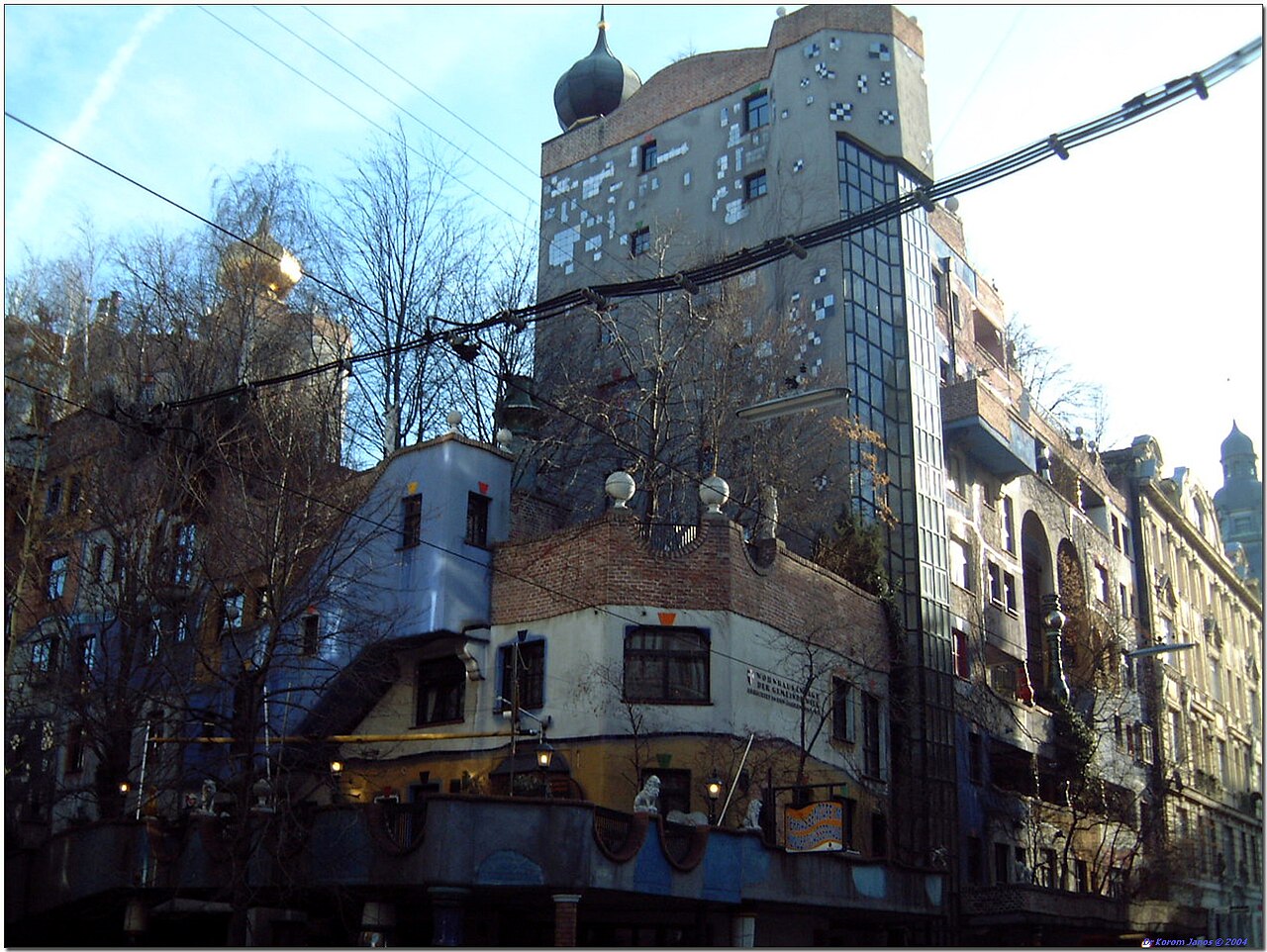
Friedensreich Hundertwasser designed it with the architect Joseph Krawina and it was built between 1983 and 1985 in the Landstraße district, at the corner of Kegelgasse and Löwengasse.
Hundertwasser rejected the first architectural drawings as exactly the levelling, straight-lined modular grid he had spent his career fighting. He took no payment for the design, saying it was worth it to prevent something ugly being built there.
In 2010 the Austrian Supreme Court ruled that Krawina was an equal co-creator, while Hundertwasser remained the sole spiritual creator of the design.
Comprobado 2026-08-23 · Fuente
¿Qué hay dentro?
Fifty-three flats, and about two hundred and fifty trees and bushes.
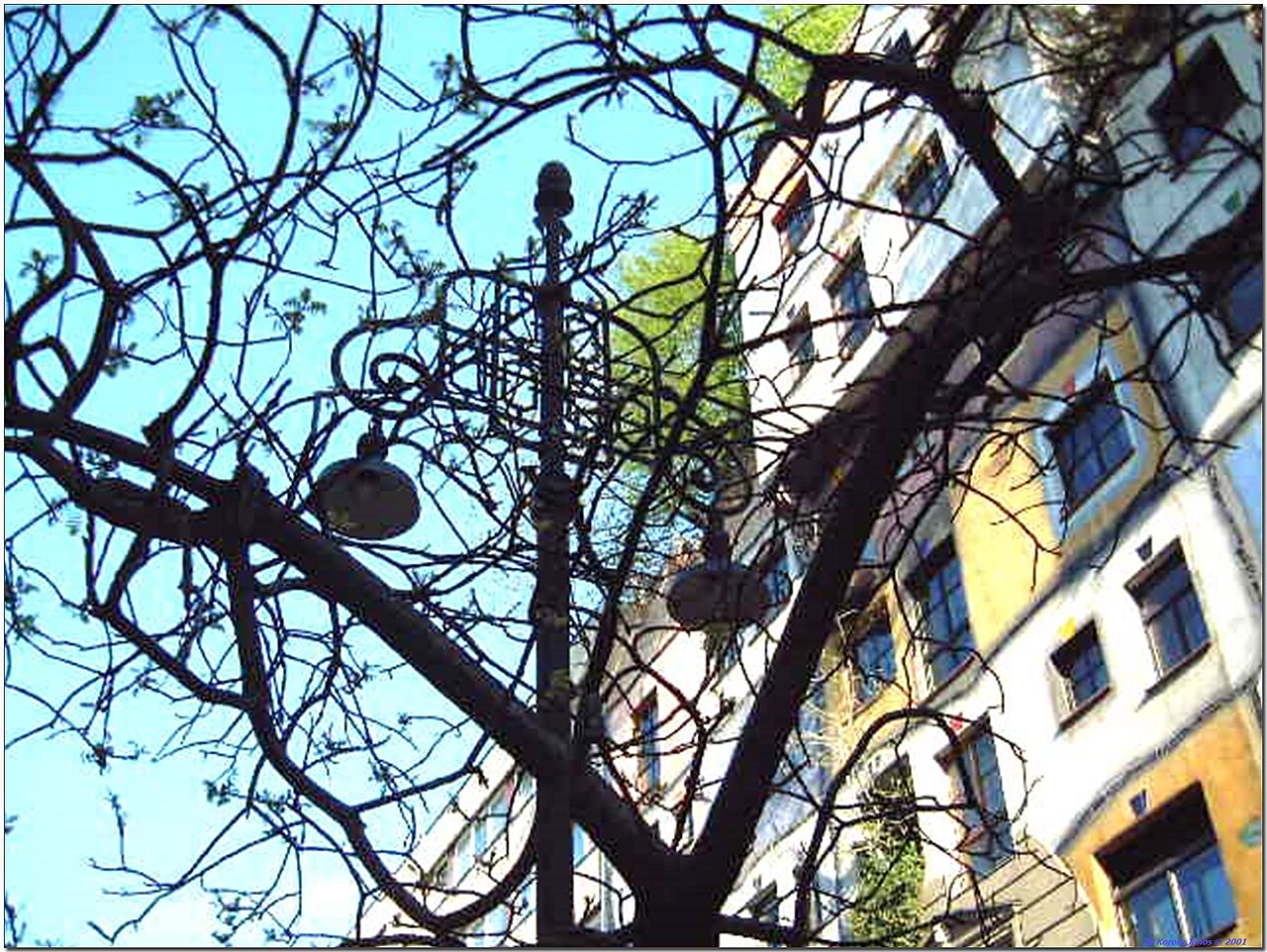
The building holds 53 apartments, four offices, 16 private terraces and three communal ones. The roof is grass. Trees grow out of rooms with their branches coming through the windows, which Hundertwasser called tree tenants and meant literally.
The floors undulate — he considered a flat floor an insult to the foot — and no two windows are the same.
None of this can be seen from inside, because people live here. What a visitor sees is the exterior from the street corner.
Comprobado 2026-08-23 · Fuente

.jpg)
Cuánto tiempo dedicar
Fifteen minutes. It is one street corner.
The building cannot be entered and there is nothing to queue for. What takes the time is walking around two sides of it and looking up.
The Hundertwasser Village opposite is a converted tyre factory fitted out in the same style, and it is a shop and a café rather than a work — twenty minutes if that.
Kunst Haus Wien, the museum Hundertwasser designed and filled with his own work, is a five-minute walk away and is a proper hour.
Together the three make an afternoon in the 3rd district, which is otherwise a residential part of Vienna that visitors have no other reason to reach.
Comprobado 2026-08-23 · Fuente

.jpg)
Temporada y multitudes
Early, before the coaches.
This is one of the most visited buildings in Vienna and the pavement outside is narrow. By mid-morning in season the corner holds a permanent group.
The planting is the point, so the building is a different thing in leaf and out of it — May to October is when the trees do what they were put there to do.
Overcast light suits the colours better than direct sun, which blows out the white and flattens the ceramic.
There is no reason to come after dark: the building is not lit and the corner is an ordinary residential junction at night.
Comprobado 2026-08-23
Entradas
Nothing to buy. The Hundertwasserhaus is private housing and there is no admission.
Kunst Haus Wien, five minutes away, is a ticketed museum; current rates are not published on the sources this page uses and are not reproduced here.
The Hundertwasser Village opposite is free to walk into and is a retail space.
Comprobado 2026-08-23 · Fuente
.jpg)
Llegar allí
The 3rd district, Landstraße, at the corner of Kegelgasse and Löwengasse, east of the Ring.
Tram 1 stops at Hetzgasse, a minute away. Landstraße on U-Bahn lines U3 and U4 is a ten-minute walk, as is Schwedenplatz on the U1 and U4 across the Donaukanal.
The U-Bahn has five lines and 109 stations over 83.9 km, running from about 05:00 to 01:00 and all night at weekends.
Comprobado 2026-08-23 · Fuente
.jpg)
Que tener en cuenta
People live here. There is no entry, no lobby to look into and no interior visit, and the residents have signs asking visitors not to ring the bells or block the door.
The pavement is narrow and the corner is a working junction with tram tracks.
The Hundertwasser Village across the road is a shop, not a museum, and is easy to mistake for the building itself in photographs.
Photographing into the windows is exactly the intrusion the residents object to.
There are no facilities of any kind at the building.
Comprobado 2026-08-23 · Fuente

.jpg)
Fotografía
The corner of Kegelgasse and Löwengasse, from the far pavement, is the only view that takes the whole building, and a wide lens is needed.
Flat overcast light suits it. Direct sun blows out the white render and kills the ceramic.
The detail is better than the whole: the columns, the tiled sections and the irregular windows reward a longer lens and a slower walk along the two street fronts.
Photographing into the windows is not acceptable — these are people's homes, and it is the one thing the residents ask visitors not to do.
Comprobado 2026-08-23
Preguntas comunes
Can I go inside the Hundertwasserhaus?
No. It is private housing — 53 apartments with people living in them. There is no lobby, no interior visit and no admission.
Who designed it?
Friedensreich Hundertwasser with the architect Joseph Krawina, built between 1983 and 1985. In 2010 the Austrian Supreme Court ruled Krawina an equal co-creator.
Are there really trees inside?
Yes. About 250 trees and bushes are planted through the building, some growing out of rooms with their branches through the windows. The roof is grass.
Why are the floors uneven?
Hundertwasser considered a flat floor an insult to the foot. The undulating floors, the irregular windows and the absence of straight lines were the whole point of the design.
Was he paid for it?
No. He took no payment, saying it was worth it to prevent something ugly being built on the site.
What else is nearby?
The Hundertwasser Village opposite, a converted tyre factory that is now a shop, and Kunst Haus Wien five minutes away, which is the museum he designed and filled with his own work.
donde esta
Cargando el mapa interactivo…
No se ha podido cargar el mapa interactivo.
cerca
Encajarlo en un plan
Enlaces externos
Última actualización:
Fuente: Colaboradores de OpenStreetMap, Wikidata ·