.jpg)
_(NBY_417987).jpg)

.jpeg)
.jpg)
3 min walk · City of Westminster
Odeon Panton Street
- Entertainment venue
Language · 1 published
Historic monument · City of Westminster, London
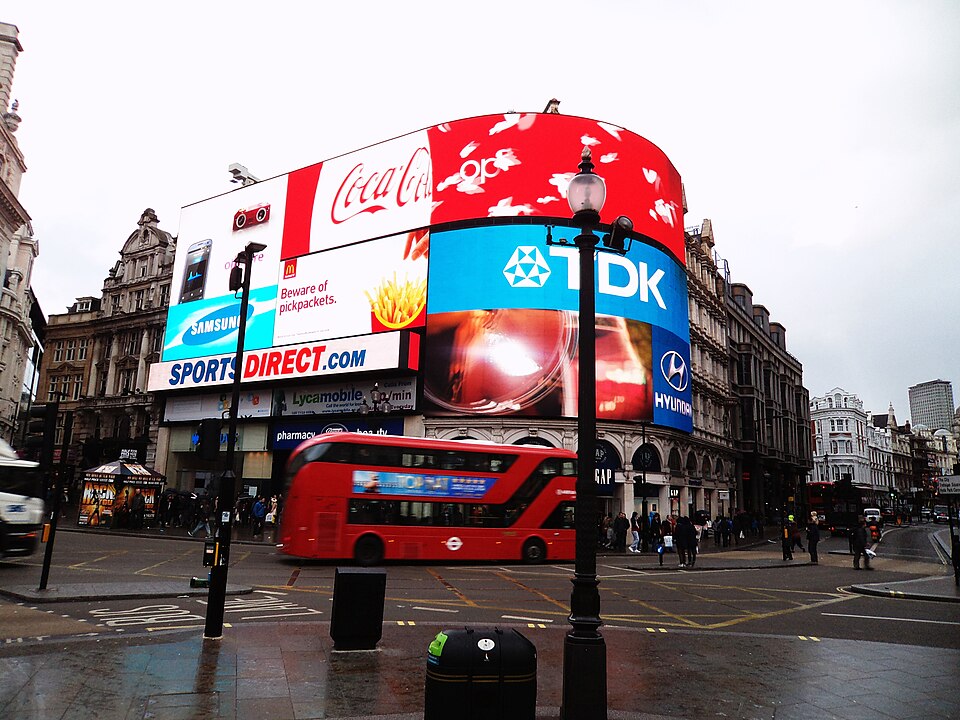
Piccadilly Circus is a road junction in the City of Westminster, not a building and not a site with a gate, and everything a visitor comes to see stands in or around the traffic. Two things anchor it. The first is the Shaftesbury Memorial Fountain, listed Grade I on 24 February 1958 and described by Historic England as a memorial fountain of 1892 to 1893 by Alfred Gilbert commemorating the philanthropist Lord Shaftesbury: a bronze octagonal fountain on a stepped platform, surmounted by a winged archer in aluminium representing the Angel of Christian Charity but, as the listing itself concedes, always popularly identified as Eros. The second is the illuminated screen on the north-west corner, which its operator, Piccadilly Lights, dates to 1908 and calls the largest advertising screen in Europe. Around them stand the curved Regent Street Quadrant, rebuilt to Sir Reginald Blomfield's design between about 1910 and 1923 over Nash's original, the domed County Fire Office closing the vista up Lower Regent Street, the London Pavilion and the Criterion. The junction is free, open at all hours because it is a public highway, and takes minutes rather than hours; it is a place to stand in, photograph and walk on from, and the buildings that ring it are the reason to look up.
Checked 2026-08-26 · Source
Read the Circus as a ring of listed structures with a fountain in the middle. Historic England's entry for the Shaftesbury Memorial Fountain praises the sculpture of the basin rather than the archer above it, calling it of remarkable naturalistic proto-Art Nouveau invention and quoting Pevsner on its 'fishes of all kinds, and every class of molluscous and crustacean life, the crab, the lobster and such like' - which is worth crouching for, because almost everyone photographs the aluminium figure and ignores the bronze. The London Pavilion on the north side, Grade II, is a former theatre of 1885 by Worley and Saunders, gutted and converted to a cinema in 1934 by Nicholas and Dixon-Spain, stucco-faced on a triangular site with a giant engaged Corinthian portico over its central pavilion. Opposite, the Criterion Theatre and Restaurant is Grade II* and by Thomas Verity, 1870 to 1874 with an 1878 to 1879 annexe; Historic England calls it a unique survival of a Victorian entertainment complex, notes the tunnel-vaulted Long Bar with its gold mosaic, and records the oddity that the auditorium sits in the basement, so scenery can only be moved through the house, there is no fly space, and the safety curtain slides up in two parts. The County Fire Office at 50 Regent Street, by Ernest Newton and completed in 1924, carries a sculptural group of Britannia and a lion above its attic storey and a copper dome with a gilded finial behind. On the pavement west of the Piccadilly and Regent Street junction stands a cast-iron police public call post of about 1935 or earlier, made by the Carron Foundry and listed in 1988 as a rare survival. And down the steps, the Underground booking hall is itself Grade II. The screen overhead is 780 square metres according to the Piccadilly Lights home page and 783.5 square metres according to its own page about the screen; both figures are the operator's and both are printed here rather than averaged.
Checked 2026-08-26 · Source
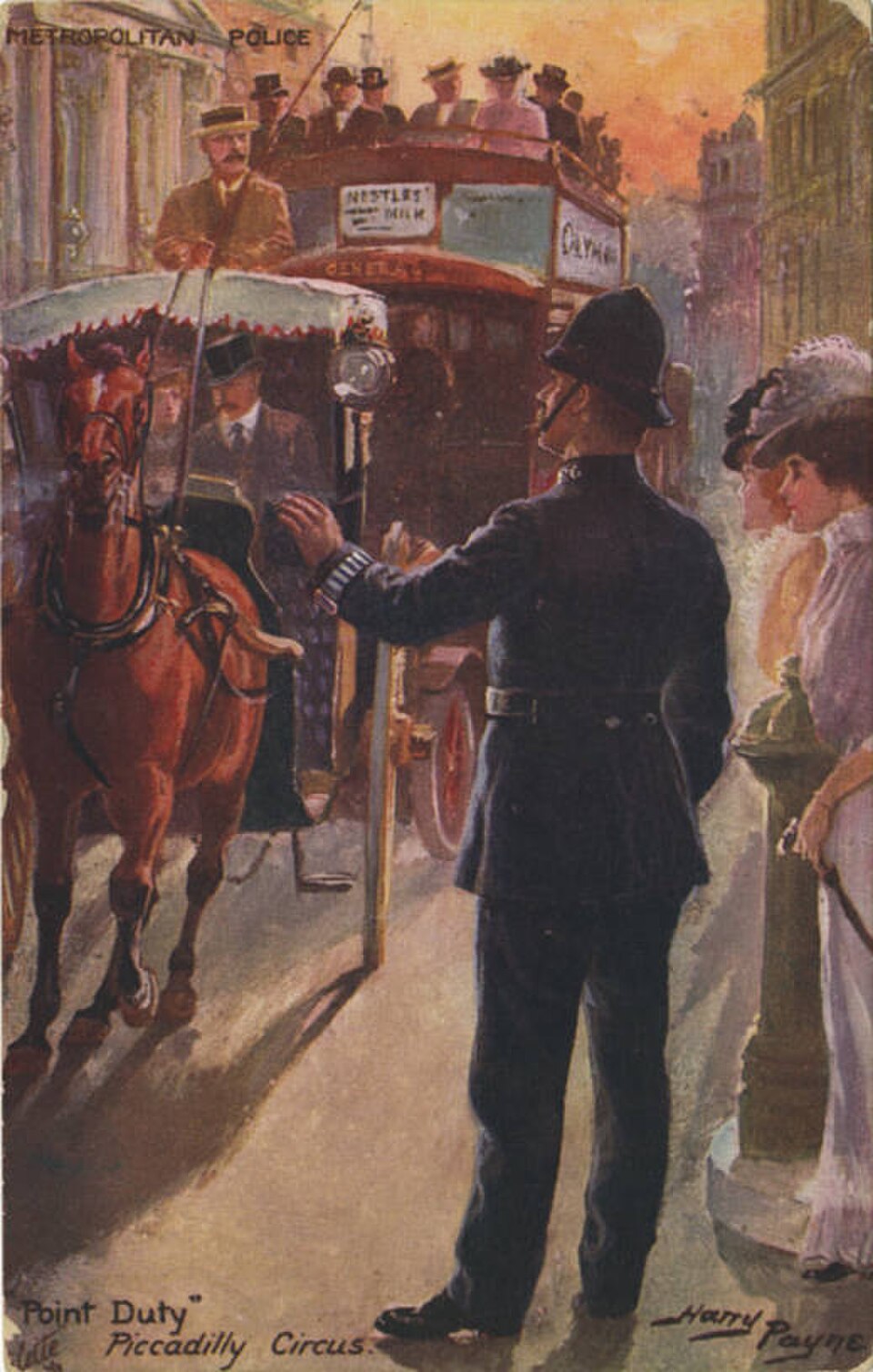
Twenty minutes is the honest figure and it is the duration recorded here. Piccadilly Circus has no operator, no route and no ticket desk, so nothing sets a length of stay: a visitor arrives, finds the fountain, waits for the screen to cycle through whatever it is showing, photographs it and moves on. That is the editorial judgement behind the 20 minutes, not a published number, because no operator publishes one. Stretch it deliberately and the Circus can absorb an hour without effort, but only by adding things: reading the Criterion's facade and its theatre entrance canopy, walking the curve of the Quadrant towards Regent Street, or going down into the Underground booking hall to look at the 1920s concourse. Anyone with a theatre ticket at the Criterion or a film at a nearby cinema is already spending their evening here and does not need a separate allowance. Anyone treating the Circus as a photograph should plan it as a stop between two other places rather than as a destination in its own right.
Checked 2026-08-26
After dark is the answer, because the thing most people came for only exists then. The Piccadilly Lights screen is the operator's own subject and it is a light source; in daylight it competes with the sky and reads as a flat panel, while at night it lights the whole north-west corner and the wet road in front of it. For crowd levels the only published guidance comes from Transport for London, whose page for Piccadilly Circus Underground Station names the quieter times at the station as 10:00 to 17:15 and after 19:15, and separately flags 06:00 to 08:00 and 16:00 to 18:00 as the busy commuter bands. That is station data rather than street data, but the two move together at a junction whose visitors mostly arrive by Tube. The practical shape of a visit follows from it: mid-morning or mid-afternoon for a quiet look at the fountain and the buildings, an hour after sunset for the screen. Note also that the Piccadilly line is the one most often disrupted here - on the date this page was checked, Transport for London had no Piccadilly line service between Cockfosters and Uxbridge for three days with replacement buses - so check the line status before relying on it.
Checked 2026-08-26 · Source

There is no admission and no ticket, because Piccadilly Circus is a public road junction rather than a managed attraction. No admission figure is recorded for this page and none is displayed, and that is deliberate: the rule on this site is that a practical fact comes from the operator's own site or it is not recorded, and Piccadilly Circus has no operator to publish one. What was checked, and what it produced, is worth stating plainly. Historic England's National Heritage List entries for the Shaftesbury Memorial Fountain, the London Pavilion, the Criterion, the Quadrant, the County Fire Office, the police call post and the Underground booking hall all confirm statutory listing and describe the fabric, but a listing carries no visiting arrangements and no charge. The Piccadilly Lights site, run for the screen's owner, sells advertising and event space beneath the screen and publishes nothing about public access to the Circus, which needs none. Transport for London's station page covers fares for the Underground, not for the street above it. Everything around the fountain that does charge - the Criterion Theatre, the cinemas, the shops - sets its own prices and is not covered here.
Checked 2026-08-26 · Source
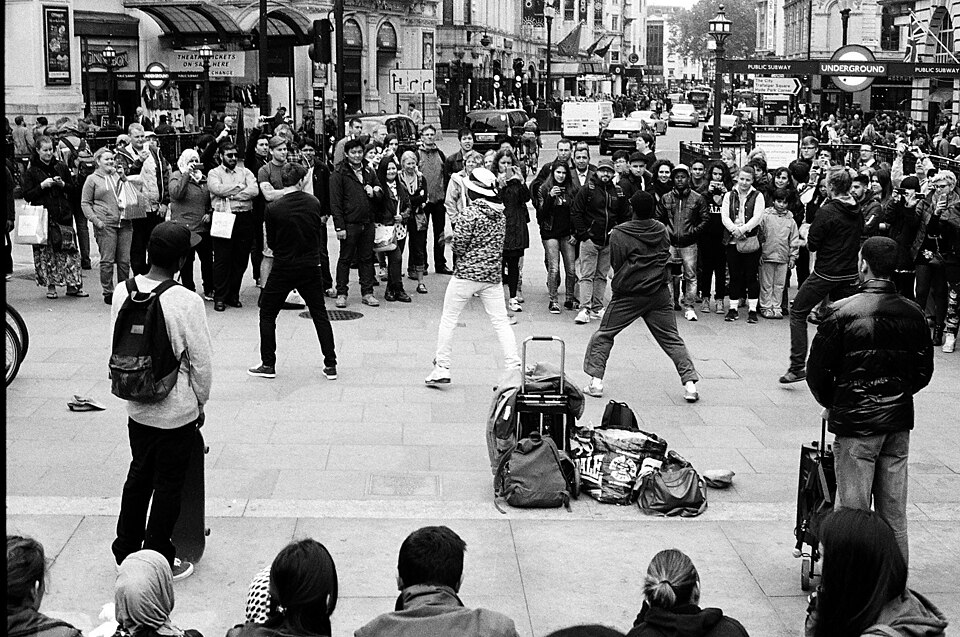
Piccadilly Circus Underground Station sits directly beneath the junction, in Zone 1, on the Bakerloo and Piccadilly lines according to Transport for London. There is no surface station building: Historic England's listing records that the only parts of the station visible above ground are the seven subway entrances, framed by bronzed Neo-Roman railings with fish-scale mouldings, turned balusters and ball finials, with panelled bronze lamp standards carrying an illuminated London Transport emblem. Those seven entrances are fed by four numbered subways off the concourse - Subway 1 to Regent Street East, set within the portico of No. 50 Regent Street; Subway 2 to Regent Street West and Piccadilly North; Subway 3 to Lower Regent Street and the fountain; Subway 4 to Shaftesbury Avenue. All of them are stairs, and the ticket hall below is reached from the platforms by escalator, so the station is not a level walk from street to train. Above ground the Circus is the meeting point of Regent Street, Piccadilly, Shaftesbury Avenue, Coventry Street and Lower Regent Street, and every one of those is a walking route to somewhere else: Regent Street curves north-west through Blomfield's Quadrant, Shaftesbury Avenue runs north-east into the theatre district, Piccadilly runs west towards Green Park. Transport for London's station facilities list for Piccadilly Circus names WiFi, cash machines, payphones, escalators and gates.
Checked 2026-08-26 · Source
The first hazard is the obvious one and it is traffic. Piccadilly Circus is a working junction where five streets meet, buses and taxis pass on all sides, and the stepped platform of the Shaftesbury Memorial Fountain - the natural place to sit and the natural place to frame a photograph from - is an island in the middle of it. Cross at the signals rather than stepping off the kerb to line up a shot. The second is congestion underground rather than overhead: the Underground station has no surface building, so all seven entrances are flights of steps down from the pavement, and Transport for London's own page names 06:00 to 08:00 and 16:00 to 18:00 as the busy periods at the station. The third is access. Nothing published by Transport for London for this station describes a step-free route, and Historic England's listing confirms the physical arrangement - subway steps from the street to a subsurface ticket hall, then escalators down to the platforms. A wheelchair user or anyone with a pushchair should plan an alternative station rather than arrive here and find out. There is no dress code, no conduct rule and no closing time, because the Circus is a public highway; the buildings around it, however, are private, and the Criterion and the cinemas admit only ticket-holders. Finally, expect the screen to be showing advertising, because that is what it is: Piccadilly Lights sells the display as a brand platform, and a visitor hoping for a neutral landmark is looking at Europe's largest commercial hoarding.
Checked 2026-08-26 · Source
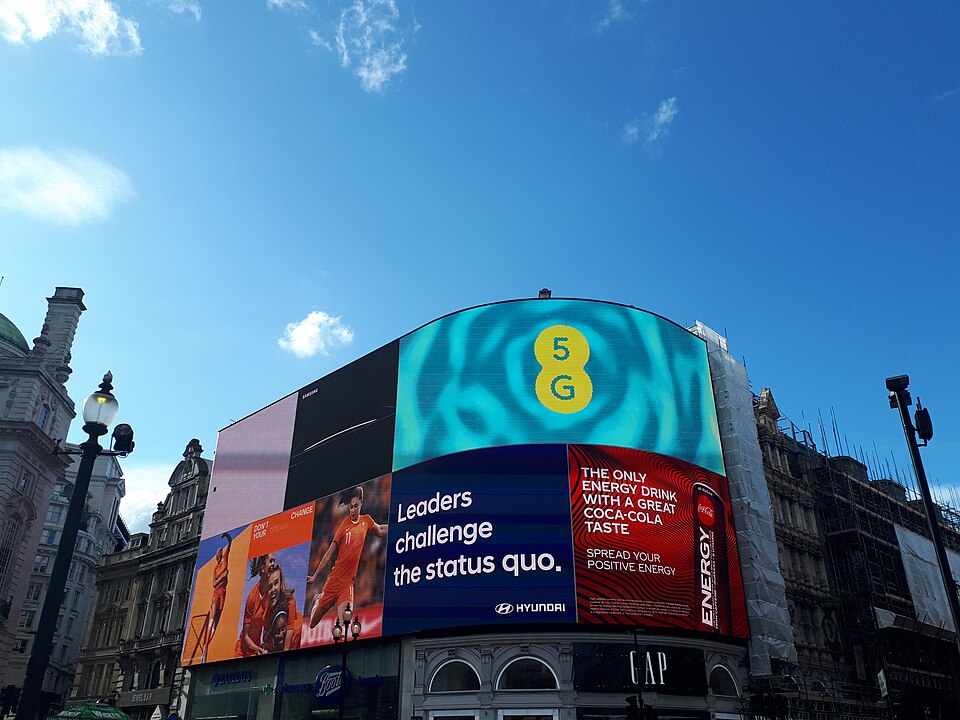
Piccadilly Circus is a public highway and no operator restricts photography here, which makes it one of the easier London landmarks to shoot and one of the hardest to shoot well. The difficulty is dynamic range: the Piccadilly Lights screen is a 780 to 783.5 square metre light source, and any exposure that keeps the fountain and the surrounding facades visible will blow the screen out to white. Expose for the screen after dark and let the street go dark around it, or shoot in the twenty minutes after sunset when the sky still holds light and the two are closer in brightness. The classic frame puts the winged archer in the foreground against the lit corner behind, which means standing on the south-east side of the fountain and shooting north-west. For the fountain itself, the detail worth a close frame is the bronze basin rather than the aluminium figure: Historic England's listing singles out its naturalistic crabs, lobsters, fish and shells as the remarkable part, and they are at eye level for anyone sitting on the steps. Daylight is better for the architecture - the Britannia and lion group and copper dome on the County Fire Office, the Corinthian portico of the London Pavilion, the curve of the Quadrant - because none of those are lit at night the way the screen is. Downstairs, the travertine concourse and the world time-zone map in its oak frame photograph well, but the station is a working one and staff may object to a tripod on a busy concourse.
Checked 2026-08-26
No. Piccadilly Circus is a public road junction in the City of Westminster, open at all hours with no gate and no ticket. No admission figure is recorded for this page because no operator publishes one: the Historic England list entries describe the listed structures but carry no visiting arrangements, and the Piccadilly Lights site sells advertising rather than access. The venues around the junction, such as the Criterion Theatre and the cinemas, charge their own prices.
Not officially. Historic England's Grade I list entry describes the Shaftesbury Memorial Fountain as a bronze octagonal fountain of 1892 to 1893 by Alfred Gilbert, commemorating the philanthropist Lord Shaftesbury, surmounted by a winged archer in aluminium representing the Angel of Christian Charity - and adds that it is 'always popularly identified as Eros'. The fountain was listed on 24 February 1958.
Its operator gives two figures on its own site and both are reproduced here rather than averaged: the Piccadilly Lights home page describes a 780 square metre curved ultra-HD display, while the site's page about the screen states 783.5 square metres and calls it the largest advertising screen in Europe. The operator dates illuminated advertising at the site to 1908.
Transport for London lists Piccadilly Circus Underground Station as a Zone 1 station on the Bakerloo and Piccadilly lines. The station has no surface building; it is entered by seven subway entrances around the junction, and the station facilities listed by Transport for London are WiFi, cash machines, payphones, escalators and gates.
Yes. The booking hall concourse and the bronzework to the pavement subway entrances are listed Grade II. Historic England records it as the 1925 to 1928 rebuilding by Charles Holden of Leslie Green's 1906 station: a subsurface elliptical ticket hall lined in cream travertine, twelve-sided columns with fluted bronze capitals, original sans-serif lettering, and a map of the world's time zones in an oak frame with an illuminated panel reading 'The world time today'. A panel records the station's opening by the Mayor of Westminster, Vivian B. Rogers, on 10 December 1928.
About twenty minutes, which is the duration recorded here and is an editorial judgement rather than a published figure, since Piccadilly Circus has no operator to publish one. That covers the fountain, the screen and a look at the surrounding facades. Add half an hour if the Underground booking hall, the curve of the Regent Street Quadrant or the Criterion's frontage are also on the list.
Loading the interactive map…
The interactive map could not be loaded.
Last updated:
Source: OpenStreetMap contributors, Wikidata ·