


1 min walk
Dubai Coffee Museum
- High
- Museum
Language · 1 published
Historic monument · Dubai
حي الفهيدي التاريخي
| Monday | 07:00 – 20:00 |
|---|---|
| Tuesday | 07:00 – 20:00 |
| Wednesday | 07:00 – 20:00 |
| Thursday | 07:00 – 20:00 |
| Friday | 07:00 – 20:00 |
| Saturday | 07:00 – 20:00 |
| Sunday | 07:00 – 20:00 |
Checked 2026-08-26 · Source
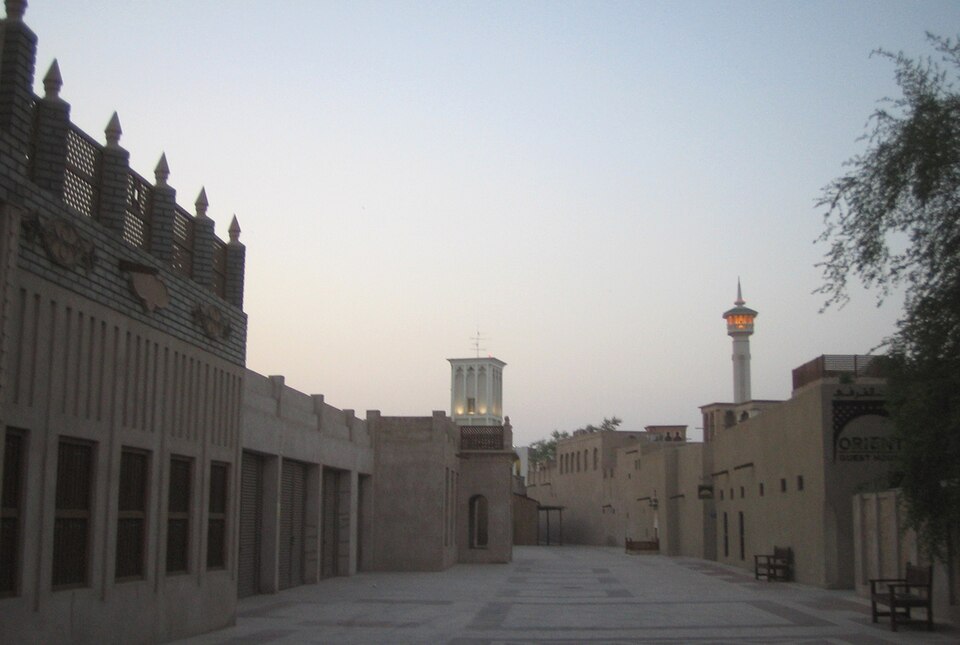
Al Fahidi Historical Neighbourhood stands on the Bur Dubai bank of Dubai Creek, a few streets of low coral-stone houses left standing while the rest of the city went vertical. Dubai Culture, the authority that runs the site, describes it as the place where the traditional style of life prevalent in Dubai from the mid-nineteenth century until the 1970s is still legible. The houses were built from coral stone, gypsum, teak, sandalwood, palm fronds and palm trunks, and many carry a barjeel, the tall square wind tower that caught whatever breeze crossed the creek and dropped it into the rooms below. They stand shoulder to shoulder, separated by sikkak, the winding alleys, and opening now and then into small public squares. Almost nothing here is decorative by accident. The authority points out that exterior openings are few, narrow and set high because the community valued privacy; that the lanes twist rather than run straight; and that the buildings face south-west toward the qibla. The quarter owed its importance to the creek, which made it the place from which Dubai was administered and its overseas trade organised, and it still sits beside the Diwan of the Ruler of Dubai. It is a working district, not a reconstructed compound.
Checked 2026-08-26 · Source
The houses are occupied rather than roped off. Dubai Culture lists art galleries, specialised museums, cultural and artistic associations, artists' spaces and cultural centres among the current tenants, and names the Sheikh Mohammed Centre for Cultural Understanding as one of them. The neighbourhood also hosts seasonal events, the Sikka Art Fair being the one the authority singles out, when courtyards that are ordinarily quiet fill with installations and temporary studios. One tenant has published hours of its own worth carrying in a pocket: the Coffee Museum, which Dubai Culture places inside the narrow lanes of the old district, opens Sunday to Thursday from 9am to 5pm and is closed on Friday, entry is free, and there is a shop on the ground floor. Its collection runs from the Ethiopian origin story of Kaldi and his goats through coffee grinders used in the First World War to old brewing pots. Beyond that single published timetable, the individual galleries and centres set their own hours and Dubai Culture does not publish them together, so a visitor planning around one specific door should confirm it directly. The alleys themselves, the squares and the wind-tower facades are the substance of the visit and need no ticket desk at all.
Checked 2026-08-26 · Source
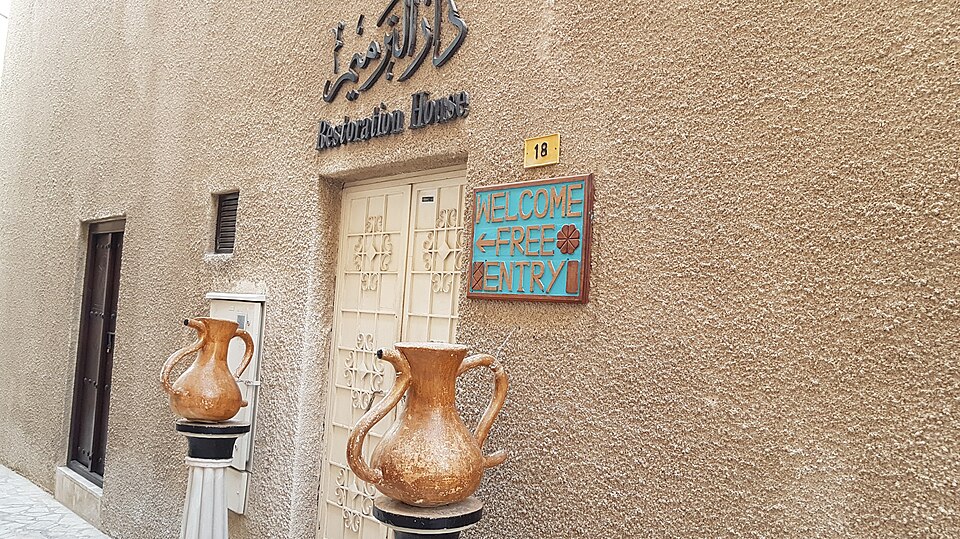
Allow ninety minutes. Dubai Culture publishes no suggested visit length for the neighbourhood, so that figure is this guide's judgement and not a number read off the operator's site. It is built from what the place actually asks of a visitor: the quarter is small enough to walk end to end in about ten minutes, and the reason to be here is that walking it end to end is exactly the wrong way to see it. The alleys double back, the squares open sideways, and the wind towers only resolve into sense when the same house is approached twice from different directions. An hour covers the lanes properly with time to sit down once. Ninety minutes covers them and allows one interior — a gallery, a courtyard cafe, or the Coffee Museum, which is free and small enough to absorb in twenty minutes. Half a day is realistic only for someone stringing several interiors together, or arriving during the Sikka Art Fair, when the courtyards hold far more than usual. Anyone with less than forty-five minutes should walk in from the creek side, take the first two squares slowly and accept the rest as unseen.
Checked 2026-08-26

The neighbourhood is open Monday to Sunday from 7am to 8pm, every day of the week, with no closed day and no midday break — those hours are Dubai Culture's own and they set the frame for everything below. The rest is judgement. The first two hours after 7am are the best of the day for most of the year: the lanes are still in shade, the light comes in low along them, and the residents and gallery staff are the only people about. The hour before closing runs it close, with warmer light and a little more life. The middle of the day is the weakest choice, and between roughly May and September it is more than a matter of taste, because the shade the alleys give is real but partial and the squares are fully exposed. The cooler months are simply more comfortable for a place whose whole point is walking slowly outdoors. Friday is worth a thought: the Coffee Museum is closed that day, and the middle of the day around prayer time is quieter in the surrounding streets. During the Sikka Art Fair the neighbourhood is busier and materially different — an argument for going, not against, but not the visit described here.
Checked 2026-08-26
Dubai Culture publishes no admission price for Al Fahidi Historical Neighbourhood. Its page for the site lists a location, a contact number and working hours and names no fee, where the same authority's page for the Coffee Museum states plainly that entry there is free and its page for Al Ahmadiya School replaces the hours with a renovation notice. So the honest position is that no ticket price is recorded here, rather than a number invented to fill the field. In practice the quarter is a set of public lanes and squares with an opening and closing time rather than a gated attraction with a ticket desk. What the authority does publish is a guided tour. Its e-service for tours of Al Fahidi says that free guided tours are provided on request and are available during working hours at heritage sites, booked by filling in a form that asks for the type of visit, the number of visitors and the preferred language, with an average completion time of one working day. Individual galleries, museums and cultural centres inside the houses set their own admission, and those are separate from anything above. Enquiries go to 800 33 222 or [email protected].
Checked 2026-08-26 · Source
No car is needed and a car is arguably a nuisance here. The neighbourhood is a pedestrian quarter — the sikkak are too narrow for vehicles — so any arrival ends on foot whatever brought the visitor to the edge of it. The Dubai Metro Green Line is the straightforward approach: Al Fahidi station sits a short walk south of the quarter, and Al Ghubaiba, one stop along, is convenient for anyone combining the visit with the creek and the bus station. The more enjoyable arrival is by water. Abras cross the creek from the Deira side to the Bur Dubai landing continuously through the day, and the walk from that landing runs through the textile souk and into the neighbourhood from the creek end, which is the direction the district was built to be entered from. This guide records no fare for the crossing, since none was read from the operator. Drivers will find paid public parking on the streets around the quarter rather than a dedicated car park, and Dubai Culture publishes no parking information for the site at all. Taxis and ride-hailing set down on Al Fahidi Street and the roads by the Diwan, a two or three minute walk from the first alley.
Checked 2026-08-26
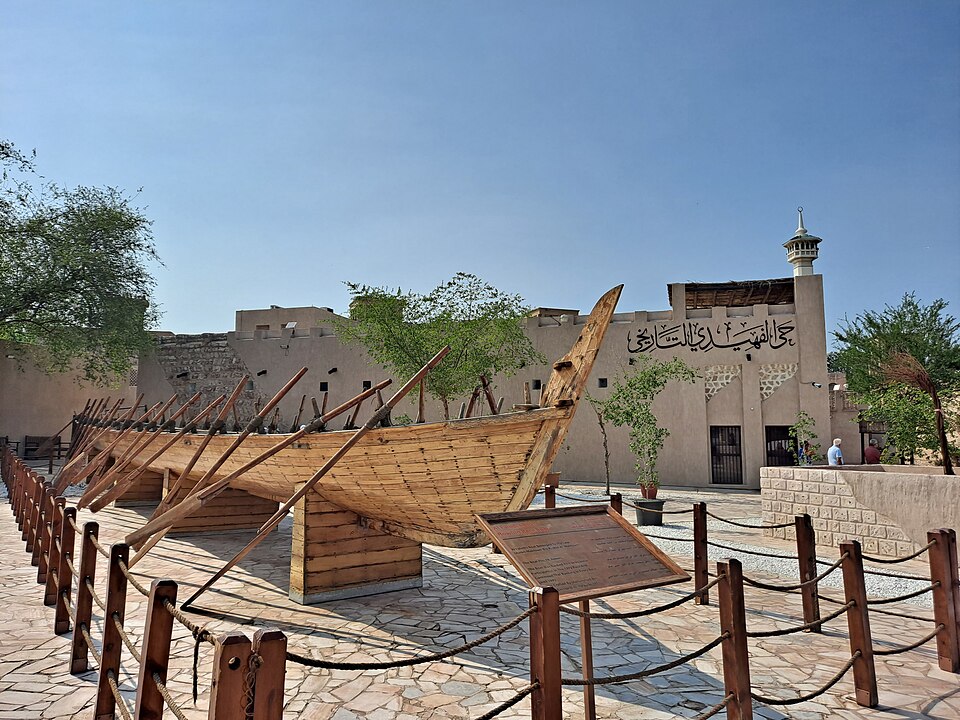
The most common disappointment here is arriving expecting a museum and finding a neighbourhood. The doors along the alleys belong to galleries, associations, offices and cultural centres that keep their own hours, and Dubai Culture does not publish those hours together, so a visit built around one specific interior needs that door confirmed in advance. The Coffee Museum's Friday closure is the one published exception to plan around. The site's own 7am to 8pm window covers the lanes, but it is not an invitation to arrive at 7.45pm and expect anything indoors to still be open. Heat is the other constant. From roughly May through September the middle of the day is punishing in the open squares, shade in the alleys is intermittent, and there is far less indoor refuge than a visitor accustomed to Dubai's malls will assume — carry water. The paving is uneven, with thresholds and steps between courtyards, which matters for wheels and for anyone unsteady. Some houses are private and residents live and work here; a courtyard that looks open may not be. The Diwan of the Ruler stands immediately adjacent, so modest dress and ordinary discretion around official buildings apply.
Checked 2026-08-26
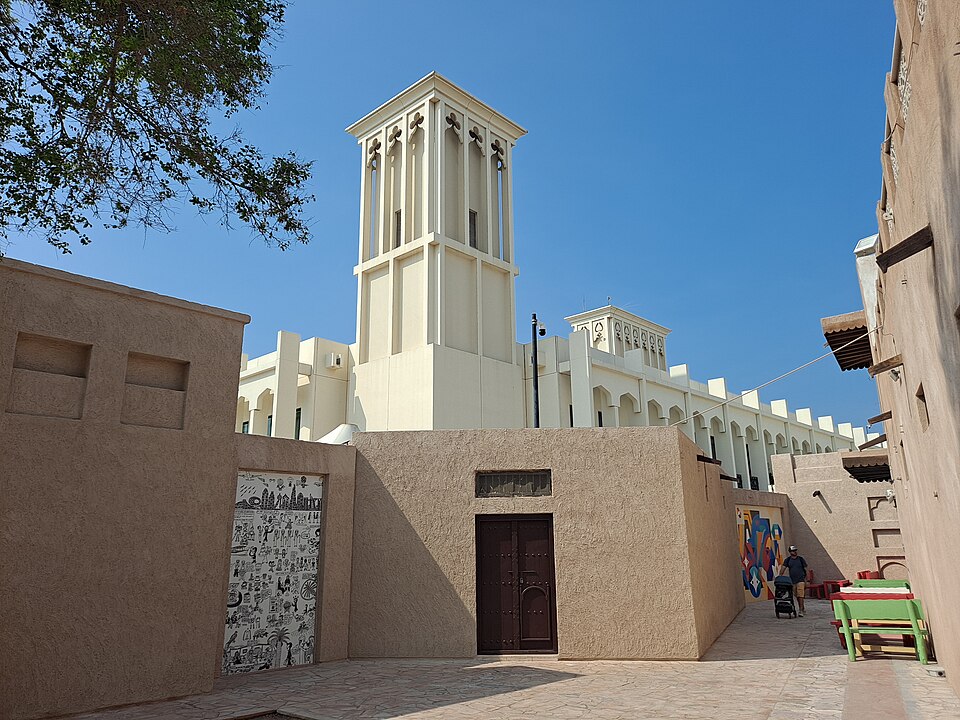
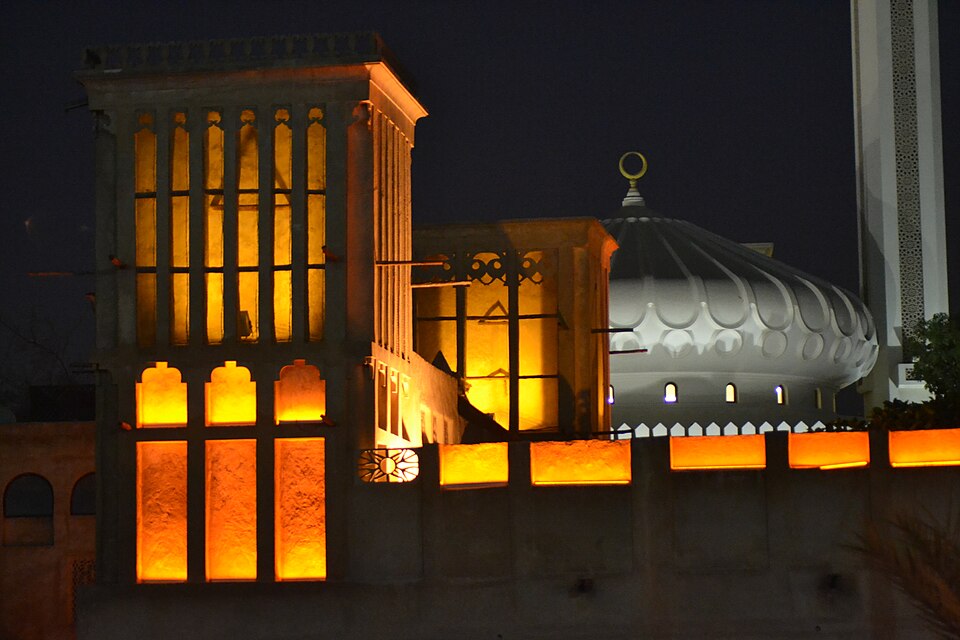
This is a place that rewards early arrival more than clever equipment. From the 7am opening until mid-morning the sun comes down the alleys at a low angle, so the lanes hold a single strip of light against long shadow and the wind towers catch it edge-on above the rooflines — the one hour when the barjeel reads as the structure it is rather than a shape against a bright sky. Midday is the weakest light of the day here: overhead sun flattens the coral-stone walls and blows out the squares while leaving the alleys black. Late afternoon brings the warmth back and fills the courtyards, and the half hour after sunset, when the lamps come on and the sky still has colour in it, is the best light for the wider views over the rooftops. A wide lens earns its place in alleys this narrow; there is rarely room to step back. The subjects that carry the neighbourhood are the towers, the carved teak doors and the layered rooflines, not people — residents, students and gallery staff are going about their day, so ask before photographing anyone, and treat an open courtyard door as private until told otherwise. Inside galleries, expect tripods and flash to need permission.
Checked 2026-08-26
Dubai Culture, the authority responsible for the site, publishes its working hours as Monday to Sunday, 7am to 8pm. That is every day of the week, with no closed day and no midday break. Those hours govern the neighbourhood itself — the lanes, the squares and the site's services. The galleries, museums and cultural centres occupying the houses keep their own timetables, which Dubai Culture does not publish in one place, so anyone visiting for a particular interior should confirm that door separately. The one tenant with hours on the authority's own site is the Coffee Museum, open Sunday to Thursday from 9am to 5pm and closed on Friday.
No admission price is recorded here, because Dubai Culture does not publish one. Its page for Al Fahidi Historical Neighbourhood gives a location, a contact number and working hours and names no fee at all, while the same authority states explicitly on its Coffee Museum page that entry to that museum is free. The quarter functions as a set of public lanes and squares with an opening and closing time rather than as a ticketed attraction. Individual galleries and cultural centres inside the houses set their own admission independently. For a definite answer before travelling, Dubai Culture takes enquiries on 800 33 222 and at [email protected].
Ninety minutes is this guide's recommendation, not a figure published by Dubai Culture, which suggests no visit length for the site. The quarter can be crossed in ten minutes, but that is not seeing it: the alleys wind, the squares open off to the side, and the same house looks different approached from two directions. An hour walks the lanes properly with one pause. Ninety minutes adds a single interior, such as the free Coffee Museum. Half a day makes sense only for someone visiting several galleries or arriving during the Sikka Art Fair, when the courtyards hold far more than usual.
Yes, and Dubai Culture states that free guided tours are provided on request and are available during working hours at heritage sites. The booking runs through the authority's e-service for tours of Al Fahidi: fill in the tour booking form, choose the type of reservation, the number of visitors and the preferred language, submit the request, and the customer is notified of its status. The service page gives an average completion time of one working day, so this is a request to make before the day of the visit rather than at the gate. No documents are required. The same service also covers virtual tours and caters for individuals, groups and institutions.
Yes. Al Fahidi Historical Neighbourhood is also known as Al Bastakiya, and the older name is still in wide use in conversation, on signage and in older writing about Dubai. Dubai Culture uses only Al Fahidi Historical Neighbourhood on its own pages for the site, in English and in Arabic, so a search of the authority's site under the older name will not find it. Anyone navigating with a map application or asking a taxi driver is likely to have more luck with Bastakiya, while anyone looking for official hours, tour bookings or contact details should search for Al Fahidi.
No. The neighbourhood is pedestrian — its alleys are too narrow for vehicles — so every arrival finishes on foot. The Dubai Metro Green Line is the simplest approach, with Al Fahidi station a short walk from the quarter and Al Ghubaiba one stop away for anyone also visiting the creek. The alternative is to cross the creek by abra from the Deira side and walk in through the textile souk, which arrives from the direction the district was built to face. This guide records no abra fare, having read none from the operator. Drivers use paid street parking nearby; Dubai Culture publishes no parking information for the site.
Loading the interactive map…
The interactive map could not be loaded.
Last updated:
Source: OpenStreetMap contributors, Wikidata ·