
4 min walk · Beyoğlu
Fındıklı Park
- High
- Nature site
Language · 1 published
Activity · Beyoğlu, Istanbul
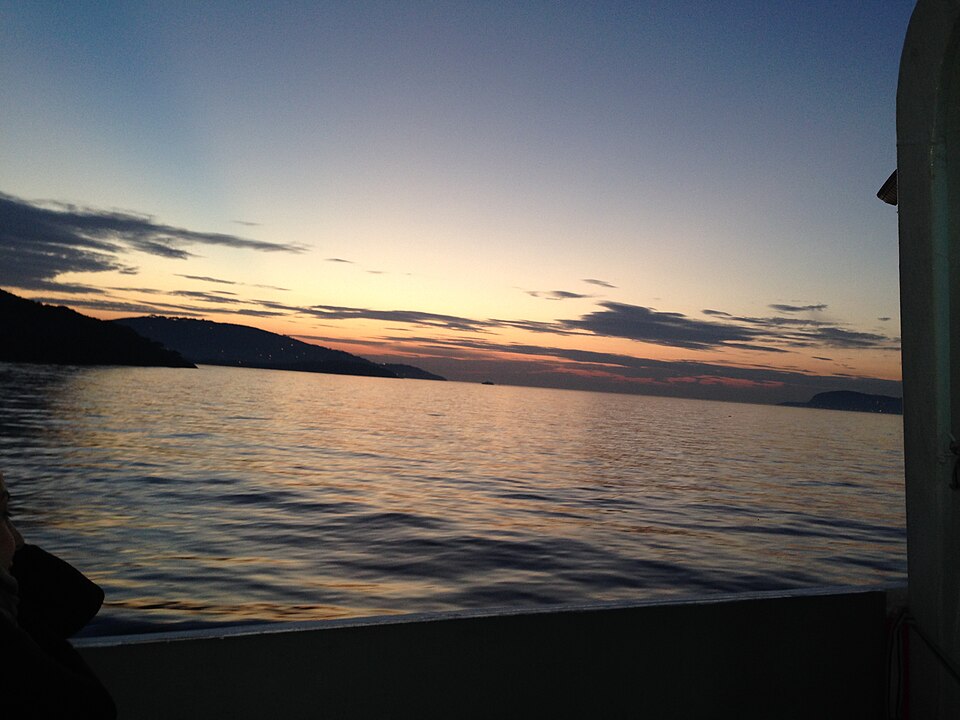
The public ferry to the Princes' Islands — Adalar, officially — nine islands in the Sea of Marmara off Istanbul's Asian shore, reachable by Şehir Hatları boat from several piers on both sides of the city.
Adalar is Istanbul's own district and its least populous, with 16,690 permanent residents across 11 km² of land (2022). Four islands carry the traffic: Büyükada, the largest, Heybeliada, Burgazada and Kınalıada, each served by its own stop on the ring routes that run between them.
The islands were an exile ground under Byzantine and Ottoman rule — out-of-favour princes and, later, deposed royals were sent there, which is where the English name comes from — before becoming a nineteenth-century resort for Istanbul's wealthy, whose wooden Victorian-era houses still stand on Büyükada.
Checked 2026-08-24 · Source
The crossing itself, and then a car-free island at the other end — the two halves of the trip are different enough that neither one is the warm-up for the other.
On the water, the ring route threads between the smaller islands before the main stops, giving a longer look at the archipelago than a direct sailing would. On Büyükada, motorised vehicles are forbidden except for service vehicles, so the island is toured on foot, by rented bicycle, or in a battery-powered electric cart that doubles as a taxi and runs round-the-island sightseeing loops. Horse-drawn carriages served the same routes until 2020, when they were phased out after a serious equine disease outbreak.
Heybeliada, the second-largest island, carries the Halki seminary, founded in 1844 as the main theological school of the Eastern Orthodox Ecumenical Patriarchate until a 1971 law closed private higher-education institutions in Turkey; the building is still maintained by its monastery and is visible from the shore path, though not open to casual visitors.
Checked 2026-08-24 · Source
A half day at minimum, a full day if the plan includes more than one island; historically the crossing from the city has been reckoned at around an hour by boat, though the exact sailing time on any given route and departure is set by the day's timetable rather than fixed.
The return sailing is a separate ticket and a separate boarding, not a round trip on the same token, so the time spent on the island is bounded by which return sailing is caught rather than by the ferry schedule itself. Checking the last return sailing of the day before setting out avoids being stranded.
Checked 2026-08-24 · Source
A weekday, and outside summer, for a quiet island; the routes run year-round but the crowd the ferry carries changes completely between a January weekday and an August Sunday.
Some ring routes only operate during the summer season, which widens the choice of sailings in the warmer months at the cost of a fuller boat and fuller island streets. Bicycle rental queues on Büyükada's main square build through a summer afternoon; renting on arrival rather than after lunch avoids the wait.
Checked 2026-08-24
An Istanbulkart tap or a single-journey token at the departure pier, the same as any other Şehir Hatları line — the islands sit inside the same fare system as the city's inner ferries, not a separate premium service.
The current fare is not published in a form this page can verify and is not reproduced here; the operator's timetable and price-tariff pages list the fare and the day's sailings together. The return leg is bought again on the island, at whichever pier the return sailing leaves from.
Checked 2026-08-24 · Source
Several piers run island services: Kabataş and Beşiktaş on the European side, Bostancı and Kadıköy on the Asian side, and Maltepe and the İDO piers at Pendik and Tuzla further out — the choice of pier decides which islands the sailing calls at, not only how long the approach takes.
Kabataş, reached by the T1 tram and the funicular from Taksim, is the most central departure point for a visitor already in Sultanahmet or Beyoğlu; Bostancı and Kadıköy suit a traveller already based on the Asian side.
Checked 2026-08-24 · Source
The last return sailing of the day is the hard limit on the trip — missing it means an unplanned night on the island, since the fare system does not sell an open return.
On Büyükada, the electric carts that replaced the horse-drawn carriages are priced per route rather than metered, and agreeing the fare before boarding avoids a dispute afterwards. Fish restaurants near the piers on all four main islands are priced for arriving passengers rather than for residents, the same pattern as at Anadolu Kavağı on the Bosphorus cruise route.
Checked 2026-08-24
Büyükada's Victorian-era wooden houses, built when the island was a nineteenth-century resort for Istanbul's wealthy, line the streets back from the harbour and photograph best on foot or from a rented bicycle, since the electric carts do not stop on request.
From the boat, the ring route's pass between the smaller islands — Kınalıada and Burgazada seen from the water rather than visited — is the shot that does not repeat once ashore on the larger islands.
Checked 2026-08-24
Nine in total, of which four carry the ferry traffic and most of the population: Büyükada, Heybeliada, Burgazada and Kınalıada.
Byzantine and later Ottoman royalty who had fallen out of favour were exiled there, which is the origin of the English name; the official Turkish name, Adalar, means simply "the islands".
No. Motorised vehicles are forbidden except for service vehicles; visitors get around on foot, by rented bicycle, or by battery-powered electric cart. Horse-drawn carriages served the same routes until they were phased out in 2020 after a serious equine disease outbreak.
Kabataş is the most central for a visitor based in Sultanahmet or Beyoğlu, reached by the T1 tram and the Taksim funicular; Bostancı and Kadıköy suit a traveller already on the Asian side.
The current fare is not published on the source this page uses; the operator's timetable and price-tariff pages list the fare alongside the day's sailings.
A Greek Orthodox theological school founded in 1844 on Heybeliada, the main school of theology of the Ecumenical Patriarchate of Constantinople until a 1971 Turkish law closed private higher-education institutions; the building is still maintained by its monastery.
Yes — the ring routes call at several islands on the same sailing, and some run additional summer-season departures, but the last return sailing of the day is a hard limit worth checking before setting out.
Loading the interactive map…
The interactive map could not be loaded.
Last updated:
Source: OpenStreetMap contributors ·