.jpg)
.jpg)
.jpg)
.jpg)
2 min walk · Beyoğlu
Yeraltı Camii
- Must see
- Place of worship
Language · 1 published
Activity · Beyoğlu, Istanbul
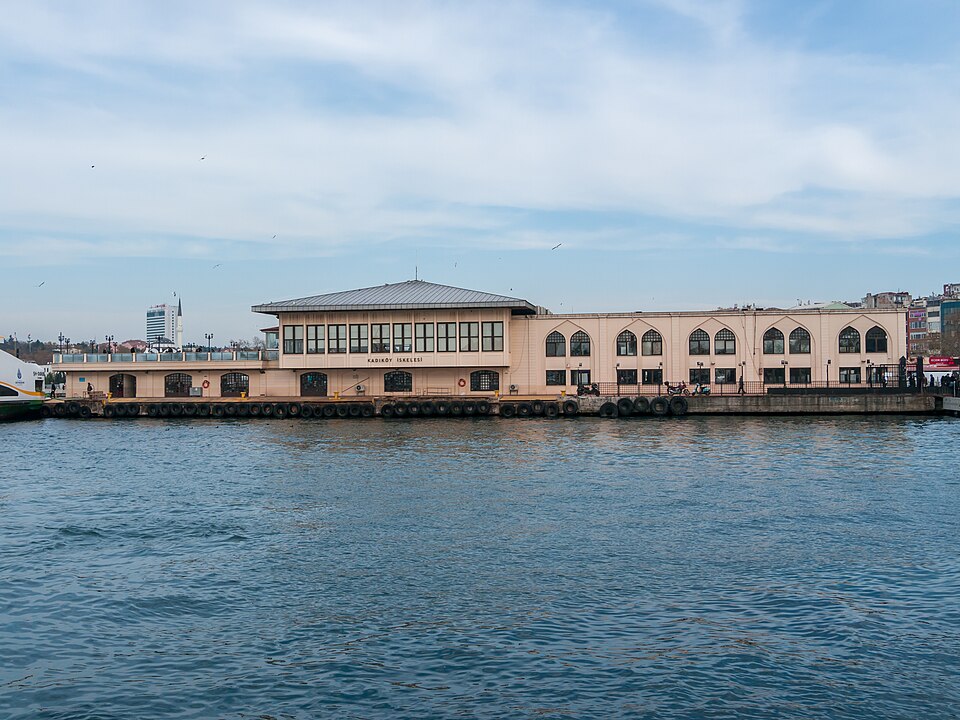
A regular Şehir Hatları commuter ferry across the Bosphorus, the everyday version of the Long Bosphorus Tour: no sightseeing stop, no turnaround at Anadolu Kavağı, just a working boat moving Istanbul residents between the European and Asian shores on a public transit timetable.
Several inner-city lines make the crossing on this pattern — Üsküdar to Karaköy and Eminönü, Kadıköy to Karaköy, Beşiktaş and Kabataş among them — sharing the same fare system and the same white-and-orange vapur fleet as the tourist routes, because Şehir Hatları runs one network rather than a separate tourist and commuter fleet.
Checked 2026-08-24 · Source
A working deck, not a sightseeing one: commuters reading on the way to work, a tea seller working the cabin, and the same crossing that has linked the two shores since long before either bridge existed.
Boats have crossed the Bosphorus for millennia, but the first private steam ferries only date to 1837; until the first Bosphorus bridge opened in 1973, the ferry was the only way across for people and vehicles alike, and it is still faster than the bridges at rush hour. The crossing itself is short enough that most passengers stay on the open deck rather than the cabin, watching one shore recede while the other grows.
Checked 2026-08-24 · Source
Under half an hour dock to dock on the shortest inner-city crossings, such as Üsküdar to Eminönü — short enough that the boat rarely reaches cruising speed before it is slowing for the far pier again.
The exact minutes for a given line and sailing are set by the day's timetable and are not reproduced here; the operator's timetable page lists the scheduled crossing time for each line. Longer inner-city lines that call at more than one pier, such as the routes running down to Kadıköy or Bostancı, take proportionally longer.
Checked 2026-08-24
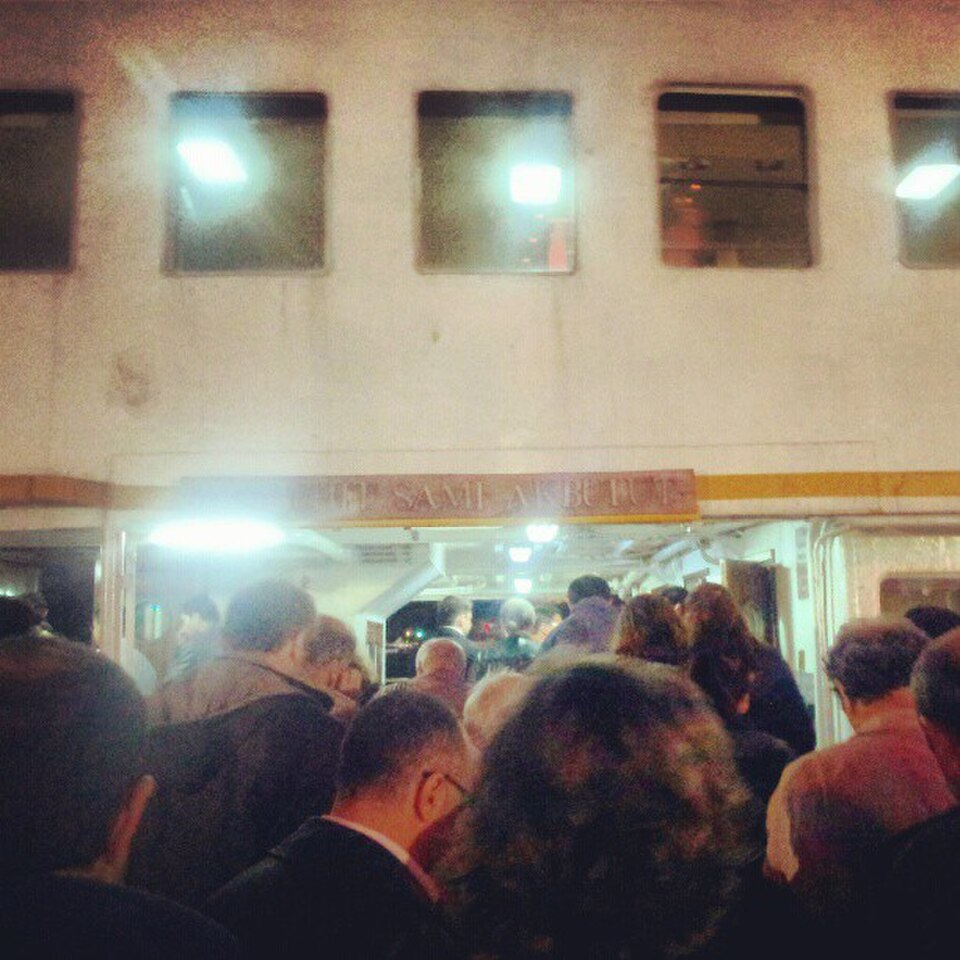
Any time of day — these lines run on a commuter frequency rather than a tourist one, with sailings through the morning and evening rush and a thinner but still regular schedule across the middle of the day.
The morning and evening rush carry the heaviest local traffic and the least space on the open deck; a visitor riding purely for the crossing rather than to get somewhere is better served by a quieter mid-morning or early-afternoon sailing, where the deck view is not competing with a full commute.
Checked 2026-08-24
An Istanbulkart tap at the turnstile, priced the same as a tram or metro ride under Istanbul's integrated transit fare — this is public transport, not a tourist product, and it is the cheapest way to cross the Bosphorus by water.
The current single-journey fare is not published in a form this page can verify and is not reproduced here; a card bought at any metro or tram station works at the ferry turnstile without a separate top-up product. A single-journey paper token is also sold at the pier for a traveller without a card.
Checked 2026-08-24 · Source
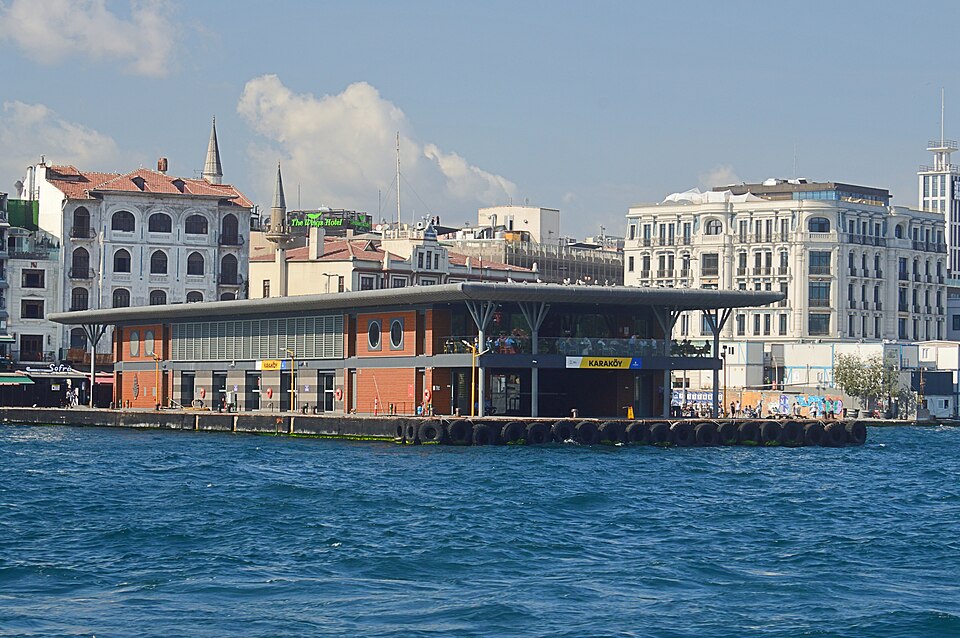
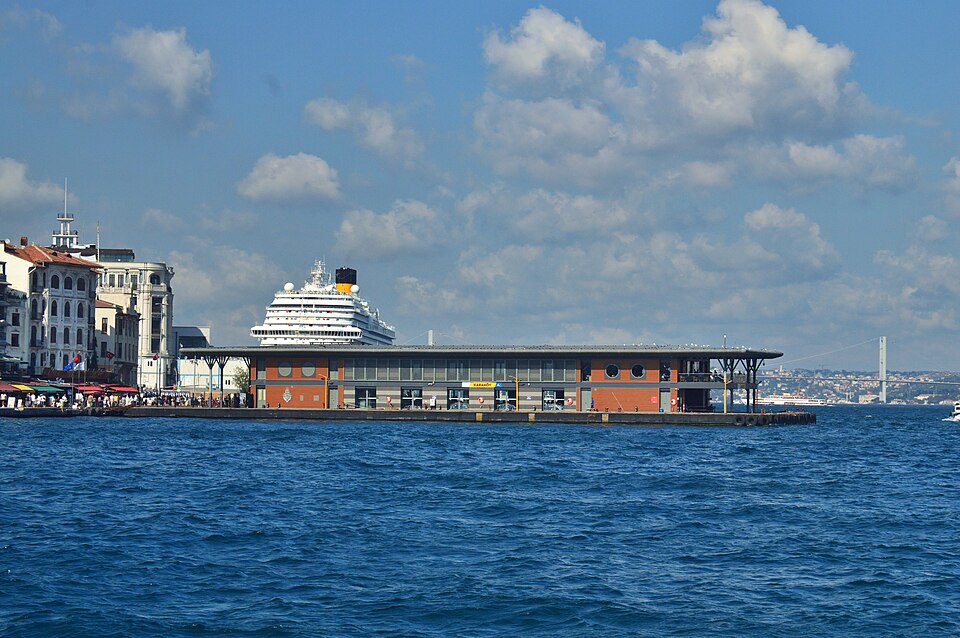
Any of the inner-city piers on either shore — Eminönü, Karaköy and Kabataş on the European side, Üsküdar and Kadıköy on the Asian side — each served by tram, metro or bus, so the ferry slots into a longer journey rather than requiring a special trip to reach it.
Eminönü and Karaköy sit within walking distance of each other on the European shore, so a traveller already in Sultanahmet or Beyoğlu can reach a crossing on foot; Üsküdar, on the Asian side, is one stop from the Marmaray tunnel under the strait, giving a choice between crossing by boat or by rail.
Checked 2026-08-24 · Source
This is a working transit line, not a tour: there is no commentary, no dedicated tourist gate at busy piers, and a boat that is full of commuters will not hold for a slow boarder.
At rush hour the open deck fills fast and standing room goes first; a traveller wanting a rail spot for photographs should board early rather than at the last call. Some piers, particularly Eminönü, serve several lines from adjacent gates, so checking the destination board before boarding avoids ending up on the wrong crossing.
Checked 2026-08-24
The historic peninsula's skyline — the Hagia Sophia and Blue Mosque domes rising behind the Galata Bridge — is the shot most crossings toward Eminönü or Karaköy deliver without any detour, best taken from the open deck rather than through a cabin window.
A crossing timed for sunset, when the light comes low and flat across the water, catches the same skyline without the midday haze that flattens it on a clear afternoon.
Checked 2026-08-24
It is a working commuter line with no sightseeing stop, running point to point on a transit timetable, rather than the Long Bosphorus Tour's round trip up the strait to Anadolu Kavağı and back.
Under half an hour dock to dock on the shortest inner-city lines, such as Üsküdar to Eminönü; the exact scheduled time for a given line is set by the day's timetable.
The same fare as a tram or metro ride under Istanbul's integrated transit system, paid by Istanbulkart tap; the current fare is not published on the source this page uses.
Several inner-city pairs run this pattern, including Üsküdar to Karaköy and Eminönü, and Kadıköy to Karaköy, Beşiktaş or Kabataş — the operator's line list names the current pairs.
Often, at rush hour: the ferry has crossed since long before either bridge existed, and it remains a faster crossing than road traffic on the bridges when that traffic is heavy.
No. There is no reservation and no assigned seating — an Istanbulkart tap or a token bought at the pier is enough, taken on a first-aboard basis like any other transit line.
Loading the interactive map…
The interactive map could not be loaded.
Last updated:
Source: OpenStreetMap contributors ·