Royal Dramatic Theatre
The Royal Dramatic Theatre, known locally as Dramaten, is Sweden's national stage for spoken drama. Founded in 1788, it stands as one of Europe's most prominent theatre institutions.
- Must see
- Art and culture venue
Language · 1 published
City guide · Sweden
Stockholm spreads across islands joined by bridges, ferries and rail, but its central visitor districts form a manageable chain. Gamla Stan, Norrmalm, Djurgården, Östermalm and Södermalm each reward a separate walking block. Public transport closes the gaps, while boats are part of the useful network rather than only sightseeing. Plan by island and district so repeated water crossings do not consume the day.
Ranked by importance — sitelinks, pageviews and heritage status, not editor preference.
100 places match
Category
Typical visit duration
The Royal Dramatic Theatre, known locally as Dramaten, is Sweden's national stage for spoken drama. Founded in 1788, it stands as one of Europe's most prominent theatre institutions.
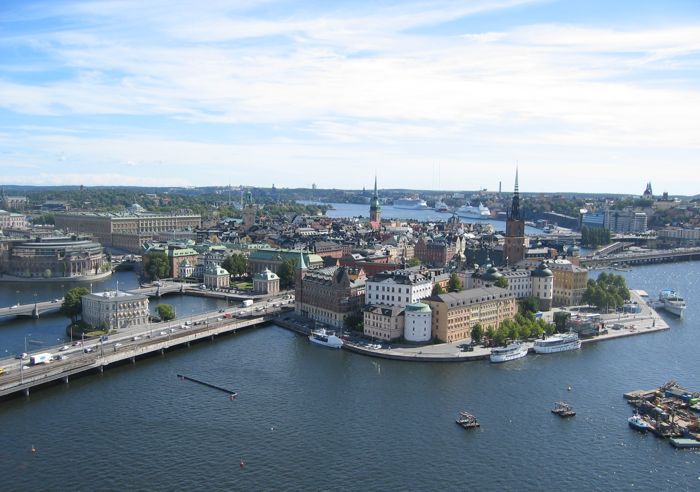
Riddarholm Church, known locally as Riddarholmskyrkan, stands as a historic church on the island of Riddarholmen in central Stockholm. It serves as the burial church of Swedish monarchs and holds significant national importance.
Storkyrkan, known in English as the Great Church, stands as the oldest church in Stockholm's Old Town. This medieval structure serves as the cathedral of Stockholm and holds significant status in Swedish royal traditions, having hosted coronations and royal weddings.
The Parliament House of Sweden, known locally as Riksdagshuset, serves as the seat of the Swedish Parliament. Located on the island of Helgeandsholmen in central Stockholm, the building houses the unicameral legislative assembly of Sweden.
Kungsträdgården is a central public park in Stockholm, situated between Hamngatan and Strömgatan in the Norrmalm district. The name translates to King's Garden, reflecting its historical origins as a royal kitchen garden established in the fifteenth century.
The Royal Swedish Opera, known locally as Kungliga Operan, stands as Sweden's national opera house and a prominent performing arts institution in Stockholm.
Millesgården is an art museum and sculpture garden located on the island of Lidingö near Stockholm. It was the former home and studio of sculptor Carl Milles and his wife, artist Olga Milles.
Stockholms stadion is a historic sports arena in Stockholm, Sweden. Built for the 1912 Summer Olympics, it remains one of the world's oldest active Olympic stadiums.
Junibacken is a children's museum and cultural attraction on Djurgården island in Stockholm. It centres on Swedish children's literature, with particular emphasis on the works of Astrid Lindgren, creator of Pippi Longstocking.
Drottningholm Palace Theatre is a historic court theatre located on the grounds of Drottningholm Palace, a UNESCO World Heritage site near Stockholm. Built in 1766, it is one of the best-preserved 18th-century theatres in Europe.
The Bergian Botanic Garden, known locally as Bergianska trädgården, is a botanical garden in Stockholm. It serves as a facility for botanical research and public education, operated in connection with Stockholm University.
Stockholm Observatory, known locally as Stockholms gamla observatorium, is a historic astronomical facility in Stockholm. The building represents an important era of scientific research in Sweden.
The Chinese Pavilion at Drottningholm, known locally as Kina slott, is a royal pavilion located on the grounds of Drottningholm Palace on the island of Lovön near Stockholm.
Rosendal Palace, known locally as Rosendals slott, is a royal palace situated on Djurgården island in central Stockholm. The palace was constructed as a pleasure palace for King Karl XIV Johan in the 1820s.
Stockholm Concert Hall, known locally as Konserthuset, is a prominent concert venue in Sweden's capital. The building serves as the primary home of the Royal Stockholm Philharmonic Orchestra.
Mälaren is the third-largest lake in Sweden and a defining geographical feature of the Stockholm region. The lake stretches westward from the capital, connecting Stockholm to inland areas through an extensive archipelago and numerous bays.
Ulriksdal Palace, known locally as Ulriksdals slott, is a royal palace situated in the Solna municipality north of Stockholm city centre.
Saint John's Church, known locally as Sankt Johannes kyrka, is a place of worship in Stockholm. The building serves religious and community functions within the city.
Katarinahissen is a historic passenger elevator in Stockholm's Södermalm district. The structure connects the lower streets near Slussen to the heights of Mosebacke and Södermalm's upper terrain.
The House of Culture, known locally as Kulturhuset, is a prominent cultural centre located in central Stockholm. It occupies a significant position within the city's cultural infrastructure, serving as a multi-purpose venue for artistic and community activities.
Berwald Hall, known locally as Berwaldhallen, is a concert hall in Stockholm, Sweden. It serves as the primary venue for the Swedish Radio Symphony Orchestra.
Edsviken is an inlet of the Baltic Sea located in northern Stockholm, forming part of the city's extensive archipelago landscape. The area represents a significant geographical feature within Stockholm's coastal environment, characterized by its marine setting and natural shoreline.
Theater Confidencen, known locally as Confidencen, is a historic theater venue situated in Stockholm. It forms part of the city's cultural landscape and represents an established performing arts location within the Swedish capital.
Adolf Fredrik Church, locally Adolf Fredriks kyrka, is a historic church in central Stockholm. The building stands as a notable religious and architectural landmark within the Swedish capital.
Karlberg Palace, known locally as Karlbergs slott, is a palace complex in Stockholm. The building holds historical significance as a military academy location and retains architectural importance within the city.
Hagaparken is a historic park located in northern Stockholm, Sweden. The park forms part of the Royal National City Park and encompasses landscaped gardens, woodland areas, and several notable buildings.
Af Chapman is a full-rigged steel ship moored on the western shore of Skeppsholmen in central Stockholm. Built in 1888 as the Dunboyne in Whitehaven, England, it later served as a training vessel before becoming a youth hostel in 1949.
Högalidskyrkan, known in English as Högalid Church, stands as a prominent ecclesiastical landmark in Stockholm. The church occupies a commanding position in the Södermalm district, visible across substantial portions of the cityscape.
Axel Oxenstierna Palace, known locally as Axel Oxenstiernas palats, stands as a historic building in Stockholm associated with one of Sweden's most influential statesmen.
Liljevalchs konsthall is an art gallery located on Djurgården in Stockholm. It was designed by architect Carl Bergsten and opened in 1916.
Råstasjön is a lake in Stockholm, locally known as Råstasjön. The area functions as a recreational destination within the urban environment. The lake and its surrounding terrain represent a natural feature accessible to residents and visitors seeking outdoor experiences.
The Stockholm Synagogue, known locally as Stora synagogan, stands as the largest synagogue in Sweden and a significant place of worship for the Jewish community in Stockholm.
Orpheus' Well, known locally as Orpheusgruppen, is a sculptural fountain installation in Stockholm. The work draws its name from the mythological figure Orpheus, the musician and poet of Greek legend.
Willy Brandts Park is a public green space in Stockholm, Sweden. Named after Willy Brandt, the former German chancellor and Nobel Peace Prize laureate, the park serves as a commemorative urban space within the city.
Bromma Church, locally known as Bromma kyrka, is a historic church building located in the Bromma district of Stockholm, Sweden.
Source: OpenStreetMap contributors, Wikidata ·
Gamla Stan is the historic hinge between the northern and southern halves of central Stockholm. Norrmalm, the main commercial and transport centre, lies immediately north; Östermalm and museum-rich Djurgården continue east. Södermalm rises south of the old town, while Kungsholmen and Vasastan extend west and northwest. The official visitor guide identifies seven central districts with distinct characters. Combine adjacent districts on foot, and treat the archipelago or distant suburbs as separate outings.
Checked 2026-08-26
Use the SL network of metro, commuter rail, tram, bus and selected local boats for moves between districts. The centre is compact enough for substantial walking, but water and rail lines determine the quickest route more than straight-line distance. Use one valid SL ticket product consistently and check the official journey planner before island connections. Djurgården can be reached by tram or ferry, while outer archipelago travel requires separate route planning.
Checked 2026-08-26
Three to four days suit a first visit. Use the first days for Gamla Stan, Norrmalm, Djurgården and Södermalm, then reserve additional time for a longer island or archipelago route.
May through September gives the most useful daylight for walking between districts and using boat connections. Winter can still work for museums and indoor culture, but outdoor sightseeing time is much shorter.
Yes, within one district and between several central islands. Bridges, hills and water make some apparently short cross-city routes slower, so use public transport when changing from one side of the centre to another.
Yes. Selected local boat services form part of the wider public transport network. Check the SL journey planner and ticket conditions for the specific route rather than assuming every sightseeing or archipelago boat is included.
Gamla Stan and Norrmalm combine naturally, while Östermalm and Djurgården make another coherent block. Södermalm deserves its own walking route, especially when viewpoints and evening stops are included.
Set your days, your pace and the hours you actually want to be out. The planner works around closing days and travel time, and leaves room to eat.