
.jpg)


.jpg)
6 min walk
Sukunahikona Shrine
- High · Heritage site
- Place of worship
Language · 1 published
Nature site · Osaka
中之島公園

| Monday | 00:00 – 23:59 |
|---|---|
| Tuesday | 00:00 – 23:59 |
| Wednesday | 00:00 – 23:59 |
| Thursday | 00:00 – 23:59 |
| Friday | 00:00 – 23:59 |
| Saturday | 00:00 – 23:59 |
| Sunday | 00:00 – 23:59 |
Checked 2026-08-26 · Source
Nakanoshima Park is the long, thin green strip at the eastern end of Nakanoshima, the sandbank island in central Osaka that the Dojima River and the Tosabori River divide around before rejoining. Osaka City, which runs it, records the park as its first urban park, opened in 1891, and gives its area as 9.6 hectares. It is administered by the Ogimachi Park Office, reachable on 06-6312-8121, and its address is 1-1 Nakanoshima, Kita-ku.
The city's own page describes it as a place where water and greenery can be felt in the middle of the city centre, and that is the honest shape of it: this is not a destination garden that a visitor travels out to, but a park that the business district on both banks walks into. Its best-known feature is the rose garden, which the operator records as roughly 310 varieties and about 3,700 plants.
One figure does not agree across sources. Osaka Convention and Tourism Bureau gives the area as 10.6 hectares and the length as about 1.5 kilometres, while the operator gives 9.6 hectares. Both were read on 26 August 2026 and both are printed here rather than blended; the operator's figure is the one to prefer.
Checked 2026-08-26 · Source
The operator lists the park's contents plainly: the Museum of Oriental Ceramics, a library, the rose garden and a lawn plaza, with toilets and a shop and restaurant on site.
The rose garden is the set piece, and the city's second page on the park singles out Barazono Bridge, which crosses directly over it, as part of the composition rather than merely a way across — the roses are meant to be looked down into from it. The lawn plaza is the other half of how the park is actually used: picnics, sitting, reading on a bench, watching the river go past. Neither of those needs planning.
The buildings are the reason the park photographs the way it does. Osaka City Central Public Hall and the Osaka Prefectural Nakanoshima Library stand along the park, and the Museum of Oriental Ceramics sits inside it. West of the park proper, the Nakanoshima Promenade runs from Yodoyabashi to Higobashi with sculptures set along it, which makes a natural continuation of a walk rather than a separate outing.
One thing to hold onto: the operator states that the facilities inside the park keep their own separate hours. The park being open is not the same as the museum or the library being open.
Checked 2026-08-26 · Source

Allow an hour. The park is one long strip rather than a network of paths, so the walk through it is essentially linear: enter at one end, follow the water, come out at the other. Covering the whole of it at a slow pace, with the rose garden and the lawn plaza and a stop on Barazono Bridge, takes about sixty minutes and does not feel rushed.
Two things stretch that. In the rose peaks of mid-May and mid-October the garden alone absorbs the time a whole visit would otherwise take, and ninety minutes to two hours is more realistic. And if the Museum of Oriental Ceramics is part of the plan, that is a separate visit with its own duration and its own ticket, not a detour inside this hour.
Two things shorten it. A visitor passing between Yodoyabashi and Kitahama on other business can cross the park in fifteen to twenty minutes and still have seen its best part. And out of rose season, with the beds cut back, thirty to forty minutes is enough.
No visit-duration figure is published by the operator; the hour above is a judgement from the park's length and layout, not a recorded number.
Checked 2026-08-26

The operator names two peaks, and they are narrow: the roses come into their best in mid-May and again in mid-October, about 310 varieties and 3,700 plants. A visit timed to either of those weeks is a materially different visit from one two weeks either side, and the mid-October flush is the less crowded of the two. The city also lists cherry among the park's flowers, which puts a third, shorter window at the start of April.
Outside those, the park is a pleasant walk rather than a sight, and that is worth knowing before building a trip around it. It stays worth twenty minutes in any month, because the river, the lawn and the buildings along the bank do not go out of season.
Time of day matters more here than in most parks. The offices on both banks empty into it at lunchtime and again at the end of the working day, so a weekday morning is the quietest it gets, and an early evening in summer is the most alive. Osaka summers are hot and humid and the park has limited deep shade; in July and August the early morning or the hour before dusk is the sensible choice.
Checked 2026-08-26 · Source
The park's opening time is recorded by the operator in one word: always open. Osaka City states the park's hours as permanently open, with the note that the facilities inside it keep separate hours of their own. There is no closed day, no seasonal change and no midday break for the park itself, and the seven-day record on this page reflects that.
No admission price is recorded here, and the reason is worth stating exactly. The operator's own pages for the park — read on 26 August 2026 at parksgreenery.city.osaka.lg.jp, the site that the park's former address at osakapark.osgf.or.jp now redirects to — publish an address, an area, an opening time, a facilities list, toilets, a shop, parking and apark office telephone number, and no fee of any kind. That template carries no fee field for any Osaka city park: the same page type for Nagai Park omits a fee too, and Nagai contains a botanical garden that is known to charge. So the absence cannot be read as a published statement of free entry, and no figure is invented here.
The Museum of Oriental Ceramics and the library inside the park are separately operated and separately charged. Read their own sites before going.
Checked 2026-08-26 · Source
The park sits on top of its stations, and no journey planning is needed. The operator lists Yodoyabashi Station on the Osaka Metro Midosuji Line and Kitahama Station on the Sakaisuji Line, and on the Keihan railway Yodoyabashi, Kitahama and Naniwabashi. Naniwabashi is the useful one for a first visit: it is the Keihan Nakanoshima Line station that surfaces at the park's eastern end, near the rose garden, rather than at the office-block end.
Midosuji is the line most visitors are already using, so Yodoyabashi is a single ride from Umeda or Namba and puts a visitor at the western end of the strip. Walking east from there through the whole park to Naniwabashi is the natural direction, and it ends where the roses are.
The operator records the parking situation in one word: none. There is no car park, and a car is not merely unnecessary here but actively inconvenient in a riverside business district. This is a place to arrive at on foot or by subway.
The park is also an easy walk from Kitahama and from the Nakanoshima cultural buildings, so it slots into a day rather than requiring one.
Checked 2026-08-26 · Source
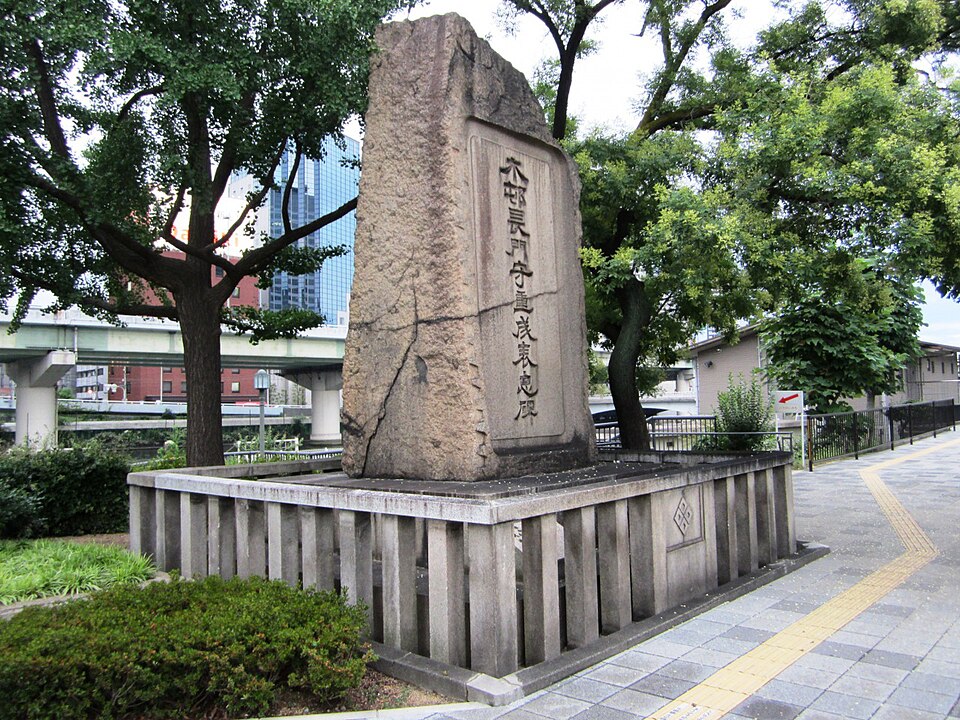
The first trap is the difference between the park and the things inside it. Osaka City records the park as always open but states plainly that its facilities keep their own hours. A visitor who reads "always open" and turns up expecting the Museum of Oriental Ceramics or the library at nine in the evening will find an open park and locked doors.
The second is the ticket gap this page cannot close. No admission figure for the park is published by the operator, and the museum inside it is separately run and separately charged; both need checking on their own sites rather than assumed from the park's entry.
The third is timing. The rose peaks the operator names — mid-May and mid-October — are the whole case for a special trip, and outside them the garden is beds rather than blooms. Building a day around the roses in August is a disappointment that a glance at the dates prevents.
The fourth is geography. The park is a long strip, and arriving at the Yodoyabashi end and turning back leaves the rose garden and Barazono Bridge unseen at the far end.
And there is no parking at all — the operator states it — so driving here is a mistake.
Checked 2026-08-26
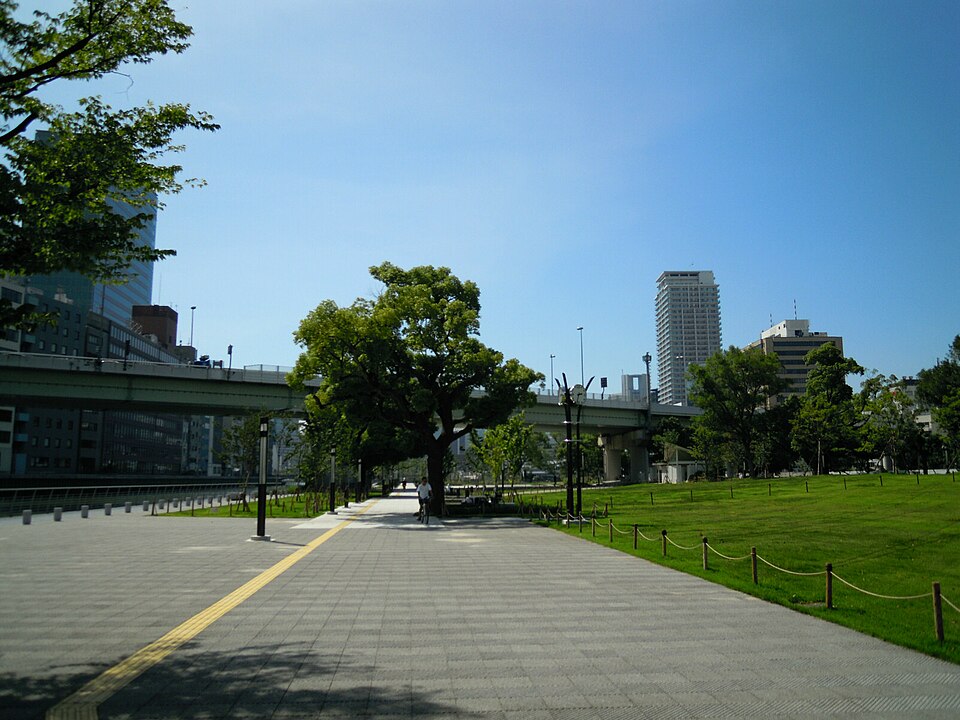
The photograph most people come for is the roses with a building behind them, and the trick is choosing which building. The red brick of Osaka City Central Public Hall and the stonework of the Nakanoshima Library both stand along the park, so a low camera position in the rose beds can put either of them above the flowers. That composition only exists in mid-May and mid-October, when the operator records the roses at their peak.
Barazono Bridge is the other obvious position, and it works differently: from up on it the garden reads as pattern and mass rather than as individual flowers, which is the better frame in weaker light or when the beds are past their best.
The river is the underrated subject. Both the Dojima and the Tosabori run tight along the park, so the water is never more than a short walk away, and late afternoon puts warm light on the north bank frontages with the current in the foreground. Morning does the same for the opposite side.
The park is open at all hours, which makes blue hour and the lit bank buildings genuinely available here in a way they are not at a gated garden. No photography restrictions are published by the operator for the park itself; the museum inside it sets its own rules.
Checked 2026-08-26
Yes. Osaka City, which operates the park, records its opening time as permanently open, with the note that the individual facilities inside the park keep separate hours of their own. There is no closed day, no seasonal variation and no midday break for the park itself. That distinction matters in practice: the park being open at nine in the evening does not mean the Museum of Oriental Ceramics or the library inside it is open, and those need to be checked on their own sites.
No admission figure is recorded on this page, because the operator does not publish one. Osaka City's own pages for the park, read on 26 August 2026, carry an address, an area, an opening time, a facilities list, parking and a contact number, but no fee of any kind — and the same page template omits fees for parks that do contain charging facilities, so the absence is not itself a statement that entry is free. The Museum of Oriental Ceramics inside the park is separately operated and separately ticketed.
Mid-May and mid-October. The operator records the rose garden as roughly 310 varieties and about 3,700 plants, and names those two periods as the peaks. The October flush is generally the quieter of the two. Outside those windows the garden is beds rather than blooms, so a trip built specifically around the roses should be timed to the dates rather than to the season in general. Osaka City also lists cherry among the park's flowers, which adds a shorter window at the start of April.
About an hour. The park is one linear strip along the water rather than a network of paths, so a slow walk from end to end taking in the rose garden, the lawn plaza and Barazono Bridge fills roughly sixty minutes. In the mid-May or mid-October rose peaks, ninety minutes to two hours is more realistic. Out of season, thirty to forty minutes covers it. No visit duration is published by the operator; this is a judgement from the park's size and layout.
Several, and the choice changes the visit. The operator lists Yodoyabashi on the Osaka Metro Midosuji Line and Kitahama on the Sakaisuji Line, plus Yodoyabashi, Kitahama and Naniwabashi on the Keihan railway. Naniwabashi, on the Keihan Nakanoshima Line, comes up at the eastern end near the rose garden and is the best choice for a first visit. Yodoyabashi puts a visitor at the western end, which makes a natural walk east through the whole park.
There is no parking and a car is not needed. The operator records the park's parking as none. The park sits directly on top of three or four rail stations in the middle of the Osaka business district, so arriving on foot or by subway is both easier and cheaper than looking for a commercial car park on either bank. Nakanoshima is also walkable from Kitahama and from the cultural buildings along the island, so the park fits into a day on foot.
Loading the interactive map…
The interactive map could not be loaded.
Last updated:
Source: OpenStreetMap contributors, Wikidata ·