Luogo di culto · Fatih, Istanbul
Bodrum Mosque
Bodrum Camii
Fotografia


- Oggi
- Orari non registrati
- Durata della visita
- 20 min
- Accessibilità
- Non registrato
- Prezzo
- Non registrato
- Posizione
- Alto · Sito del patrimonio
- Rango
- Classifica 481 di 8,133
Informazioni su Bodrum Mosque
Bodrum Mosque is the church of the Myrelaion, built around 920 by Romanos I Lekapenos as the chapel of his own palace, and it is one of the very few tenth-century churches of Constantinople still standing. Romanos meant it from the start as a burial place for his family, which was a deliberate break with the imperial tradition of interment at the Church of the Holy Apostles: his wife Theodora was buried here in December 922, his son Christopher in 931, and Romanos himself after his death in 948.
The Turkish name records what is underneath rather than what is above. Bodrum means basement or subterranean vault, and the church stands on the remains of a vast late-Roman rotunda that Romanos converted into a cistern by roofing its interior with vaults carried on at least seventy columns.
Grand Vizier Mesih Pasha turned the church into a mosque around the year 1500, in the reign of Bayezid II, and it has been one ever since. Fire reached it in 1203 during the Fourth Crusade, again in 1784 and again in 1911; restoration campaigns in 1964–1965 and 1986 brought it back into use. It stands in Laleli, in the Fatih district.
Controllato 2026-08-24 · Fonte
Cosa c'è dentro
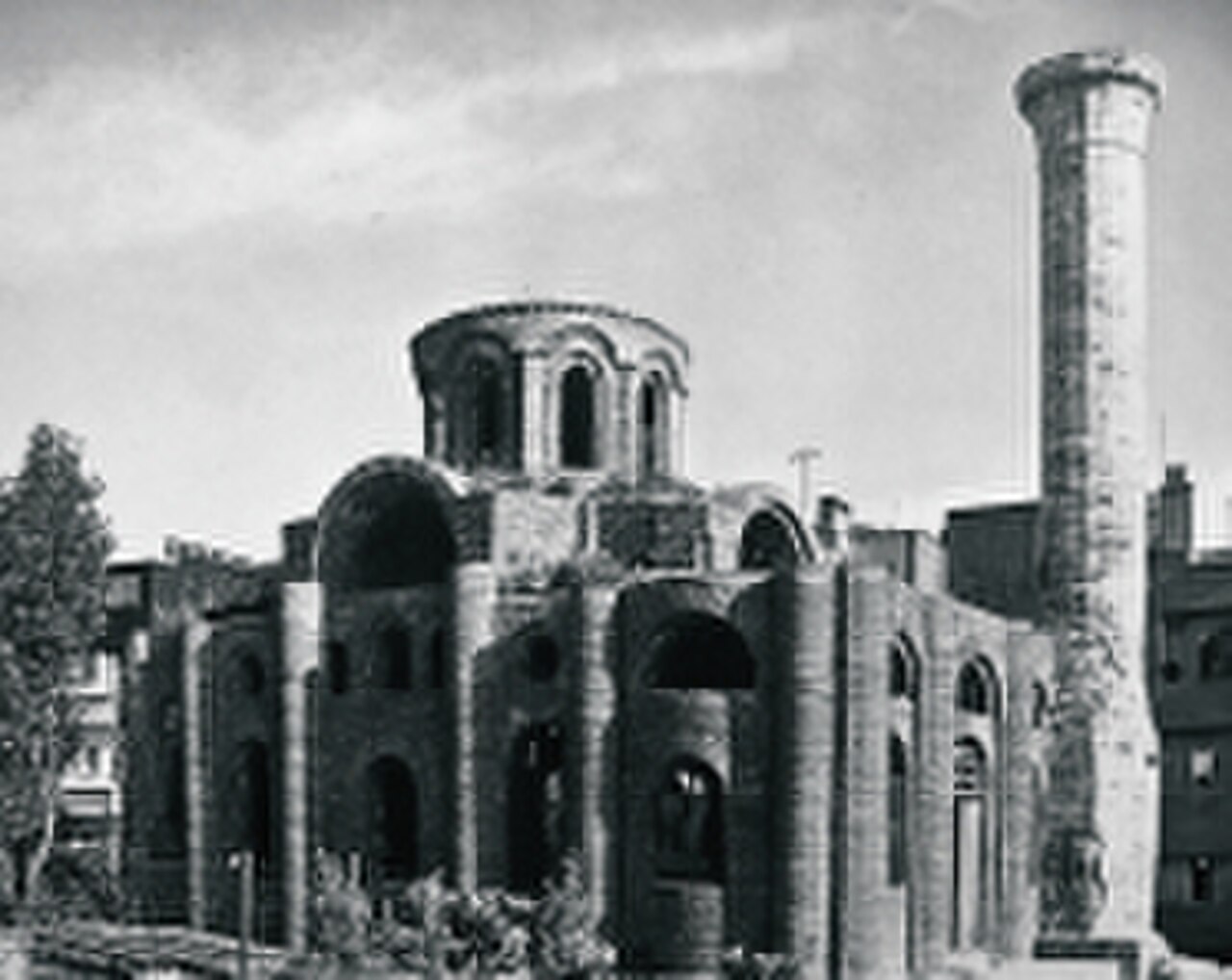
The plan is a cross-in-square — a quincunx — with a square core about nine metres a side and an overall footprint of roughly ten by seventeen metres including a three-bay narthex and a tripartite sanctuary. It is built entirely of brick, which is unusual enough to be one of the reasons the building matters to historians of Byzantine construction.
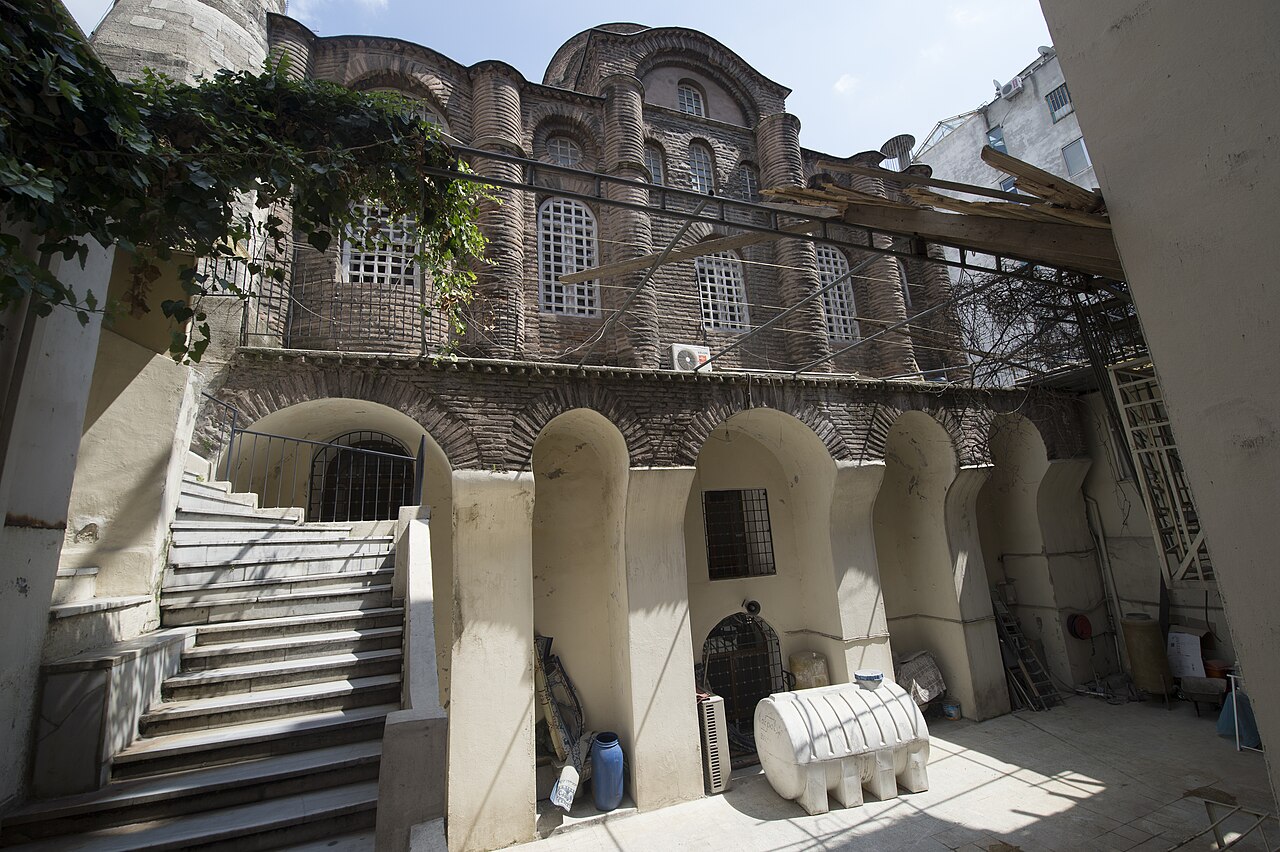
The dome and its drum carry a fluted surface, the form known as a pumpkin dome, and the exterior walls are articulated by semi-cylindrical buttresses that give the little building its ribbed, muscular silhouette. Three polygonal apses close the east end. The barrel-vaulted side naves flank the central space beneath the dome.
What is not there is as much of the story as what is. The interior was originally faced in marble and mosaic and none of it survives; the fires and the centuries stripped the church to its structure. What you look at is masonry, proportion and light, not decoration.
Beneath the building lies the substructure — a lower level echoing the plan of the upper one, built to lift the church to the height Romanos wanted, and beyond it the great rotunda-cistern with an external diameter of 41.8 metres, the second largest rotunda of the ancient world after the Pantheon. A fragmentary fresco survives down there. The substructure is not normally open to visitors.
Controllato 2026-08-24 · Fonte

Quanto tempo dedicare
Twenty minutes, and that is generous. This guide records twenty and the building supports it: a single compact prayer hall of one domed bay with almost nothing of its original decoration left, plus a circuit of the exterior to read the brick buttresses and the platform the church sits on.
The real limit is not how much there is to see but whether the door is open. Plan the visit as a stop of twenty minutes and accept that some of that may be spent outside looking at masonry because nobody is there to unlock the hall. If the substructure were accessible the calculation would be different, but it is not normally open, so the visit is the small room and the walk round it.
Fold it into a longer Laleli or Aksaray walk rather than travelling across the city for it alone.
Controllato 2026-08-24

Stagione e folla
No visiting timetable is published for this building and none is recorded here. It is a working neighbourhood mosque under the Diyanet, not a ticketed monument: the Diyanet's own mosque directory is an internal application that is not publicly readable, and the Fatih municipality's mosque list does not include this building at all.
What that means in practice is that the doors follow the five daily prayers and are locked between them at the caretaker's discretion. The reliable windows are the twenty minutes or so around each prayer time, and prayer times shift through the year with sunrise and sunset, so there is no fixed hour to write down. Look up the day's timetable for Istanbul before you set out.
Avoid the Friday midday congregation entirely — the building is small, it fills, and visitors are an obstruction rather than a curiosity. Mid-morning on a weekday, between the dawn and midday prayers, is the likeliest combination of an unlocked door and an empty room. Ramadan evenings are the worst time to try.
Controllato 2026-08-24
Biglietti
No admission position is published for this mosque by any operator, and none is recorded here. That is a statement about the sources, not a claim about the price: neither the Diyanet, nor the General Directorate of Foundations, nor the Fatih municipality publishes a fee or a statement of free entry for this building.
Working mosques in Turkey are not ticketed, and nobody sells a ticket at the door of the Myrelaion. But because no operator page says so for this building, this guide records nothing rather than asserting it. Turn up expecting a mosque rather than a museum: no counter, no barrier, no queue.
A donation box may be present inside, as it commonly is, and contributing is voluntary. If you want a guaranteed-open, ticketed Byzantine interior in the same part of the city, this is not the building to plan around.
Controllato 2026-08-24


Come arrivare
The mosque is in Laleli, on the southern slope below the main Ordu Caddesi axis, about a kilometre west of the ruins of the Great Palace and a short walk from the Marmara side of the peninsula. Mesihpaşa Caddesi — named for the vizier who converted the church — runs nearby, and the streets around it are the wholesale garment quarter.
The T1 tram is the simplest arrival: get off at Laleli-Üniversite and walk south, downhill, away from the university and towards the sea, a few minutes through the shop streets. From the M1 metro, Aksaray station is a comparable walk from the west.
If you are coming from Sultanahmet, this is an easy twenty-odd minutes on foot straight along the tram line and then down. From Eminönü, the tram again. Whichever way you arrive, the last stretch is a descent through narrow commercial streets that look nothing like a monument district — keep going. The building announces itself suddenly, sitting high on its platform above the street line, taller than its neighbours have any business letting it be.
Controllato 2026-08-24


A cosa prestare attenzione
The single hazard here is a locked door, and it is a common one. This is not a monument with a warden on duty; it is a small neighbourhood mosque that is opened for prayer and shut afterwards. Come with the exterior as your guaranteed visit and the interior as the bonus, and you will not be disappointed. Coming outside prayer times and finding nobody to ask is the ordinary outcome, not bad luck.
The platform is the second thing to plan for. The church stands raised on its substructure, so the entrance is reached up steps, and the ground around it is uneven where the old vaulting meets the modern street. It is not a comfortable arrival for anyone with limited mobility.
The neighbourhood runs on the garment trade, which means the streets are choked with handcarts and delivery vans on weekday mornings and eerily empty on Sunday. Neither state is dangerous, but the weekday crush makes the last hundred metres slower than it looks on a map.
Inside, the usual courtesies: shoes off at the door, shoulders and knees covered, heads covered for women, no walking in front of anyone praying, phones silenced.
Controllato 2026-08-24


Fotografia
Photograph the outside. That is not a consolation prize — the exterior is what survives of the Myrelaion's architecture, and the interior has been stripped of its marble and mosaic, so the brick is the subject either way.
The best angle is from the north-west, looking up at the building on its platform: from there the semi-cylindrical buttresses read as a series of vertical ribs against the wall, the fluted drum sits clearly above them, and the height of the substructure is legible instead of being cropped out. That is the view the reference photograph of this building takes, and there is a reason for it.
Brick wants side light. Late afternoon, when the sun rakes across the west face, is when the buttresses throw the shadows that make the modelling visible; flat midday light turns the whole thing into a beige lump. Early morning works from the other side.
Inside, if you get in, shoot the pumpkin dome from directly beneath — the fluting is the one piece of original decorative intent still readable. Never photograph during prayer, and ask before including worshippers.
Controllato 2026-08-24
Domande comuni
What are Bodrum Mosque's opening hours?
None are published. This is a working neighbourhood mosque under the Diyanet and no operator publishes a visiting timetable for it; the Diyanet's mosque directory is not publicly readable and the Fatih municipality's mosque list does not include this building. In practice the doors follow the five daily prayers and are locked between them.
Is there an admission charge?
No admission position is published by any operator, so none is recorded here. Working mosques in Turkey are not ticketed and no ticket is sold at this door, but because no operator page states it for this building the guide asserts nothing.
Why is it called Bodrum Mosque?
Bodrum is Turkish for a basement or subterranean vault, and it refers to what the church stands on: a late-Roman rotunda that Romanos I converted into a cistern by vaulting its interior over at least seventy columns.
Can I visit the cistern underneath?
Not normally. The substructure beneath the church, and the great rotunda with its external diameter of 41.8 metres, are not open to visitors as part of an ordinary visit. Plan on the prayer hall and the exterior.
Who was buried in the church?
Romanos I Lekapenos built it as his family's burial place. His wife Theodora was buried here in December 922, his son Christopher in 931, and Romanos himself after his death in 948 — a deliberate break with the imperial tradition of burial at the Church of the Holy Apostles.
How long does a visit take?
About twenty minutes. It is a single compact domed hall with almost none of its original marble or mosaic left, plus a circuit of the exterior; the practical limit is whether the door is unlocked rather than how much there is to see.
Dov'è
Caricamento della mappa interattiva…
Impossibile caricare la mappa interattiva.
Nelle vicinanze
Inseriscilo in un piano
Collegamenti esterni
Ultimo aggiornamento:
Fonte: Contributori di OpenStreetMap, Wikidata ·